
 Share


 Print
World leaders praise APEC meeting in social media posts
Writer: Claudia Wei | Editor: Lin Jiayi | From: Shenzhen Daily | Updated: 2026-11-26
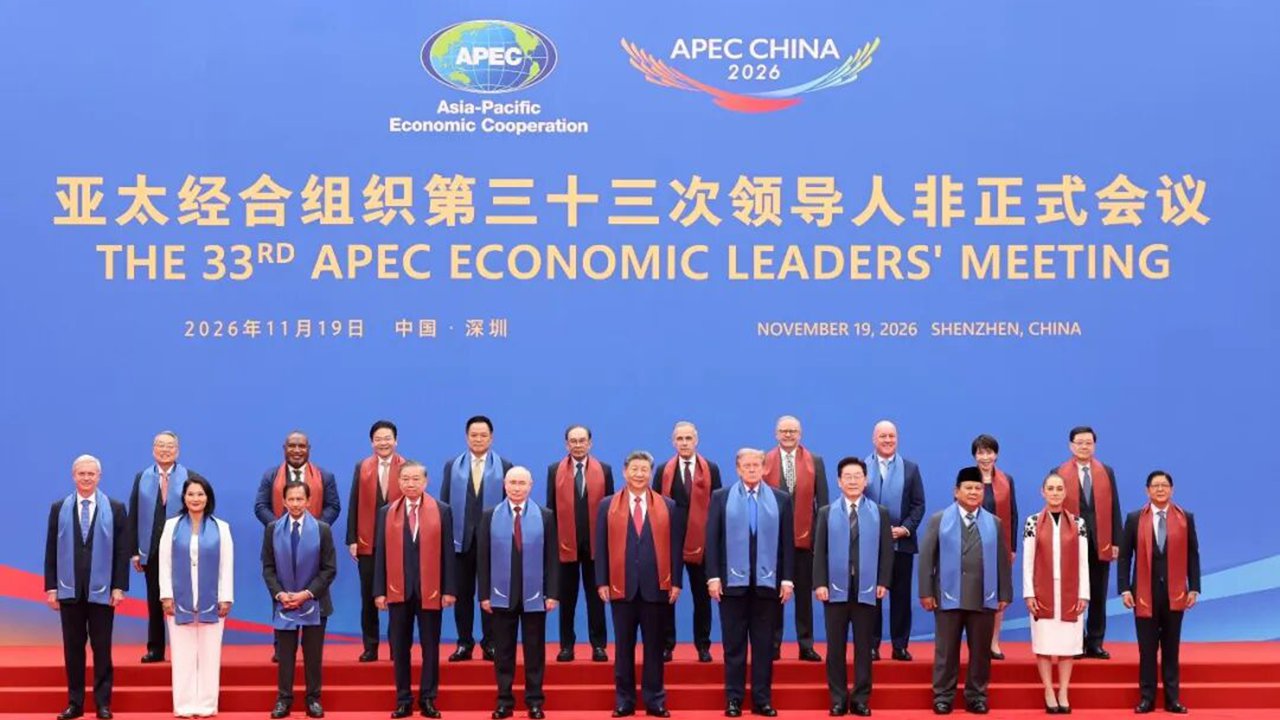
Leaders and representatives of APEC member economies pose for a group photo at the 33rd APEC Economic Leaders’ Meeting in Shenzhen on Nov. 19. Xinhua
Leaders from several APEC economies attending the 33rd APEC Economic Leaders’ Meeting in Shenzhen used social media to share their impressions and call for closer regional cooperation on trade, investment, the digital economy and development.
Their posts welcomed the summit as a platform for dialogue and reflected a shared desire to translate regional cooperation into greater economic opportunities and prosperity across the Asia-Pacific.
South Korean President Lee Jae-myung said the Shenzhen meeting had created an opportunity to revive practical cooperation in the region. He called for building on the outcomes of the previous APEC meeting in Gyeongju and advancing collaboration in areas including energy, digital development and supply chains.
Lee also highlighted infrastructure, innovation and people-to-people exchanges as ways to strengthen regional ties. He said he hoped the summit would help move forward cooperation on green energy, small and medium-sized enterprises (SMEs) and regional free trade arrangements.
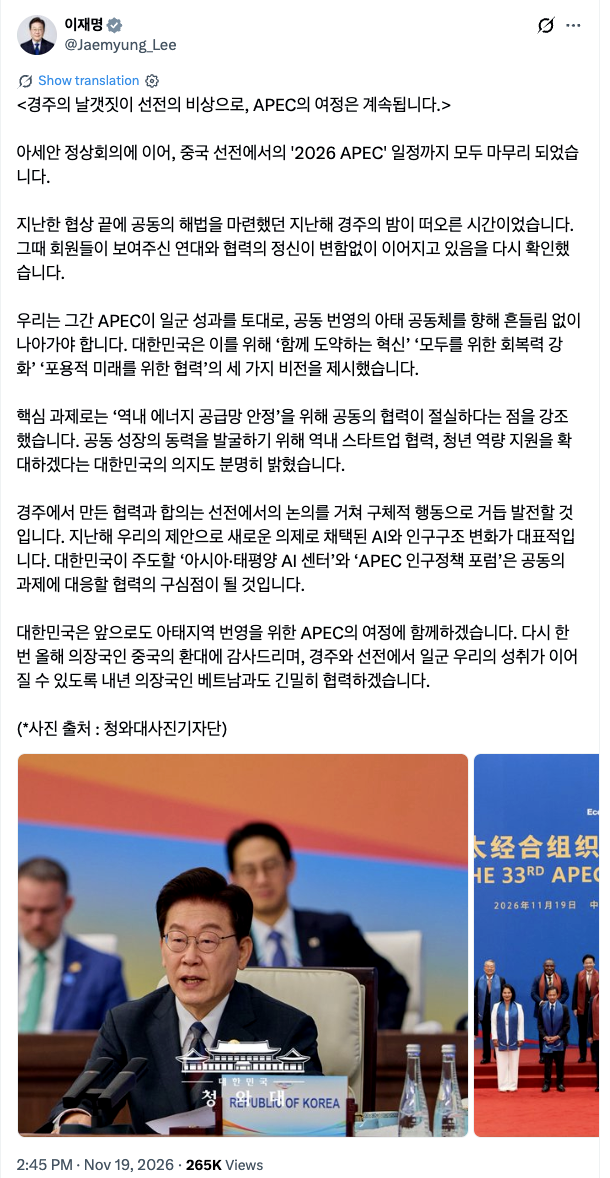
South Korean President Lee Jae-myung reflects on the outcomes of the APEC summit in Shenzhen in a post on X on Nov. 19, calling for continued regional cooperation and shared prosperity.
Mexican President Claudia Sheinbaum Pardo posted on X about her participation in the 2026 APEC CEO Summit. She said she had told global business leaders that people-centered development was achievable and that economic growth could go hand in hand with improvements in people’s lives.
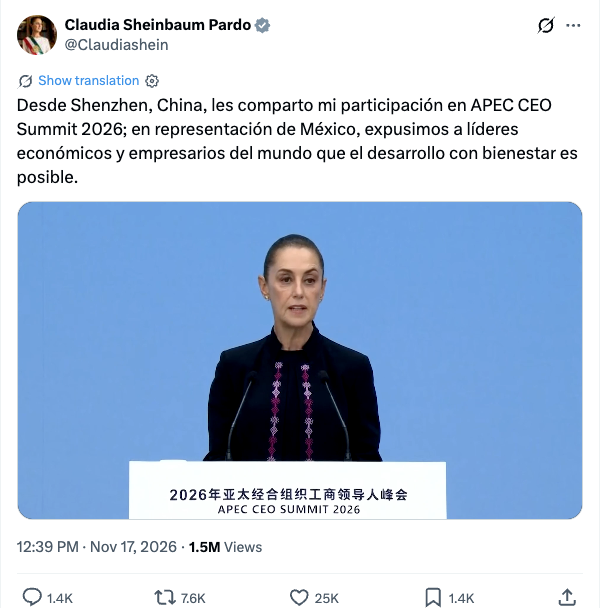
Mexican President Claudia Sheinbaum Pardo shares her remarks at the 2026 APEC CEO Summit in Shenzhen in a post on X on Nov. 17, emphasizing the importance of economic development that improves people’s well-being.
Australian Prime Minister Anthony Albanese focused on trade and employment. He said exports create jobs in Australia and described China as Australia’s most important customer. Since his government took office, more than A$20 billion (US$13.2 billion) in trade between Australia and China had been restored, he said, adding that there was significant scope to expand commercial ties. During his visit to Shenzhen, Albanese said he was working to support Australian economic growth and identify further opportunities for Australian businesses in China.
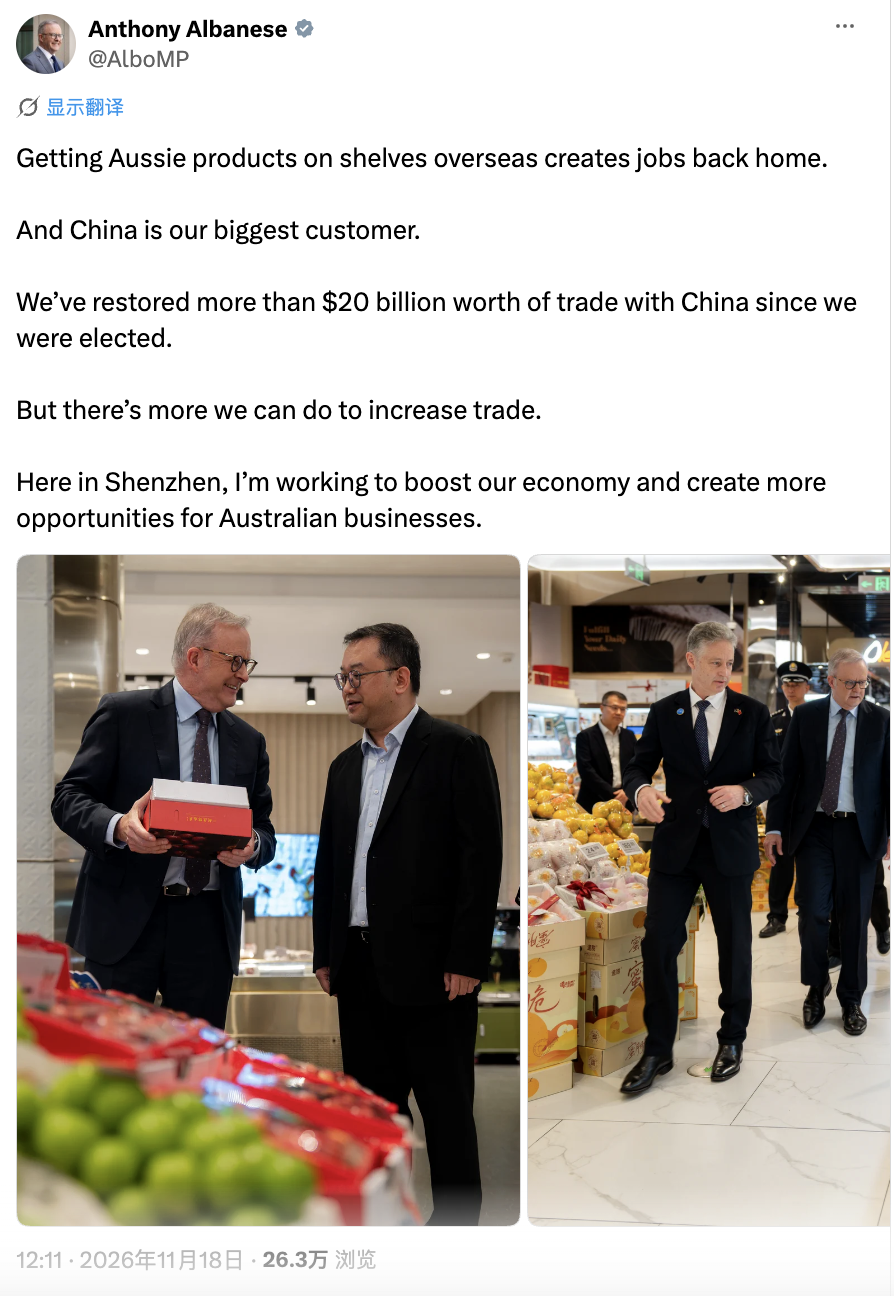
Australian Prime Minister Anthony Albanese highlights the importance of trade with China to Australian businesses and jobs in a post on X on Nov. 18, accompanied by photos from his visit to Shenzhen.
Canadian Prime Minister Mark Carney said Canada was working with Asia-Pacific partners at the summit to make regional trade simpler, more efficient and more reliable. He said economies could deepen their connections through infrastructure, institutions and people-to-people ties, helping create greater stability, opportunity and prosperity across the region.
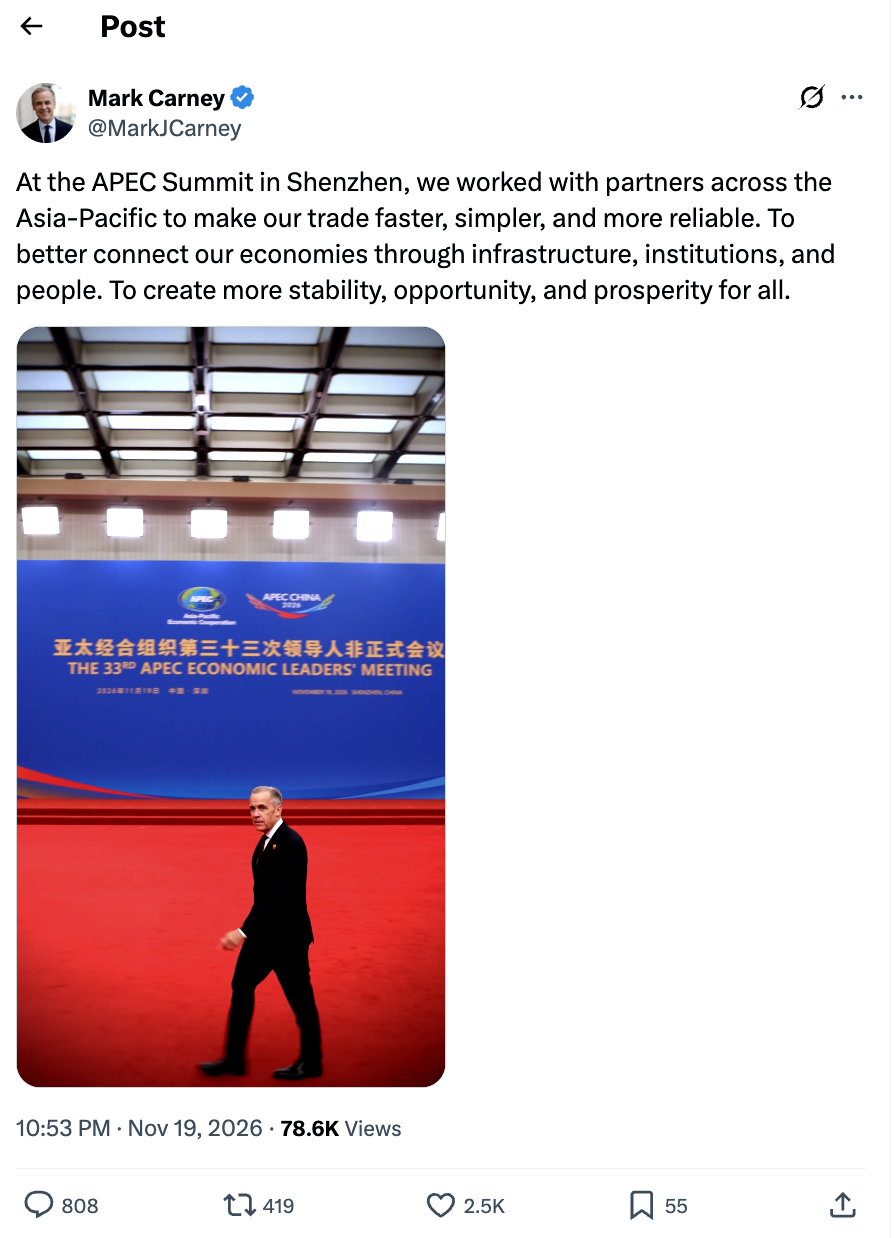
Canadian Prime Minister Mark Carney highlights the importance of facilitating regional trade and strengthening connectivity across the Asia-Pacific in a post on X on Nov. 19.
Chilean President José Antonio Kast shared two posts about his participation. One documented his remarks at the economic leaders’ meeting. In the other, he said Chile had come to Shenzhen to strengthen international cooperation and open up new trade and investment opportunities. He expressed hope that those ties would generate economic growth and create jobs in Chile, benefiting its people.
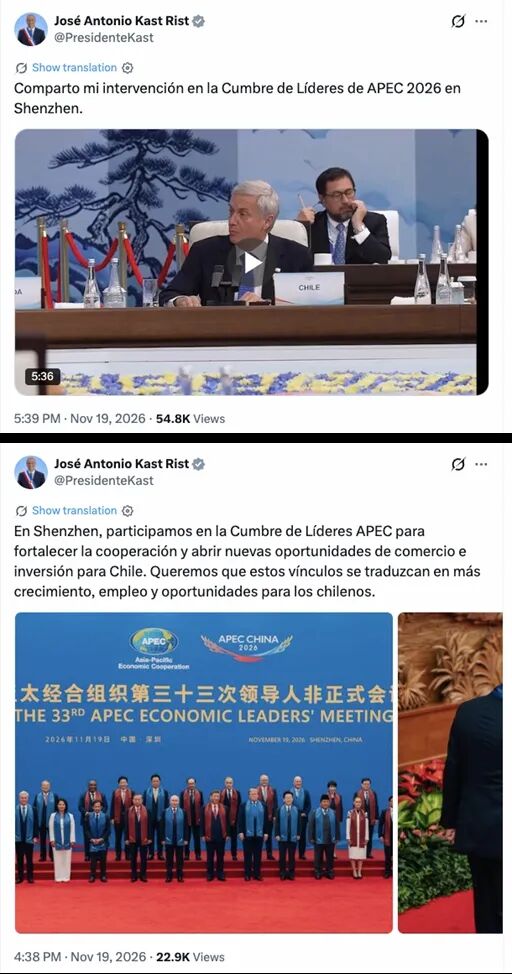
Chilean President José Antonio Kast shares two posts on X on Nov. 19 about his participation in the APEC summit in Shenzhen, highlighting Chile’s efforts to expand trade and investment opportunities through international cooperation.
Malaysian Prime Minister Anwar Ibrahim outlined Malaysia’s goals for the summit and its position on relations with China in two posts. Upon his arrival in Shenzhen, Anwar said he would work to improve the quality of regional trade and investment, expand cooperation in the digital economy and ensure small businesses shared in the benefits of Asia-Pacific growth.
Against a challenging global economic backdrop, he said Malaysia supported an open, fair and rules-based trading system. Cooperation, he added, should deliver tangible benefits, including better jobs, greater access to regional markets for local businesses and higher living standards.
At the close of the summit, following bilateral talks with Chinese President Xi Jinping, Anwar praised Xi’s role in shaping geopolitical developments, guiding relations among major powers and defending the interests of developing countries. He also congratulated China on hosting the APEC meeting, citing its infrastructure, administrative capacity and organizational coordination.
Anwar said China’s approach of treating economies equally, regardless of their size or geopolitical position, set an example for building a fairer international order that respects the dignity of all. Malaysia, he said, would continue to strengthen its strategic relationship with China on the basis of mutual respect, trust and mutual benefit, and would work with China to support prosperity and stability in both countries and the wider region.
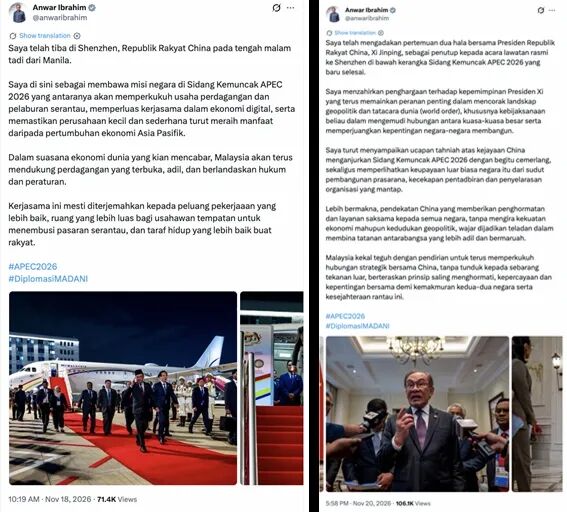
In two posts on X on Nov. 18 and 20, Malaysian Prime Minister Anwar Ibrahim outlines Malaysia’s priorities for regional economic cooperation and reaffirms its commitment to strengthening strategic ties with China.