
 Share


 Print
German artist Susanne Kutter's first major museum exhibition in China to open in Shenzhen
Writer: | Editor: Lin Jiayi | From: Shenzhen Daily | Updated: 2026-11-23
German artist Susanne Kutter's first major museum solo exhibition in China, "A Room of One's Own," will open at the Sea World Culture and Arts Center on Dec. 10.
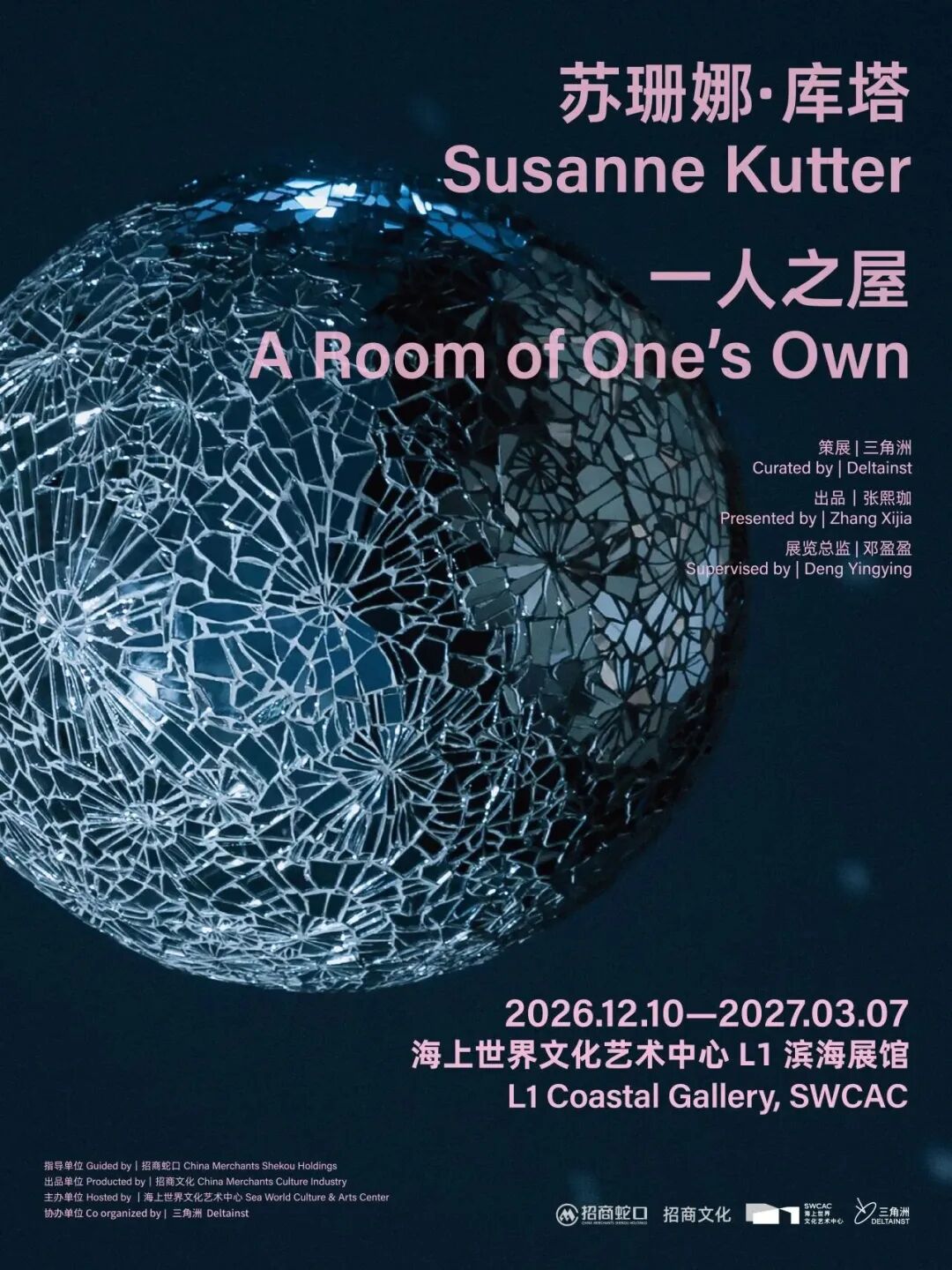
A poster for German artist Susanne Kutter's upcoming exhibition "A Room of One's Own" at the Sea World Culture and Arts Center. Photos from the event organizer
The exhibition will bring together 25 works, including video and photographic works, tablecloths embroidered with text-based designs, and neon pieces.
During a residency at the venue, the artist will also explore Shenzhen's urban environment and create several large-scale installations using locally sourced materials. These works will draw inspiration from the characteristics of the city and the exhibition space, touching on themes that have long informed her practice, including space and power, illusion and reality, and disorder and order.
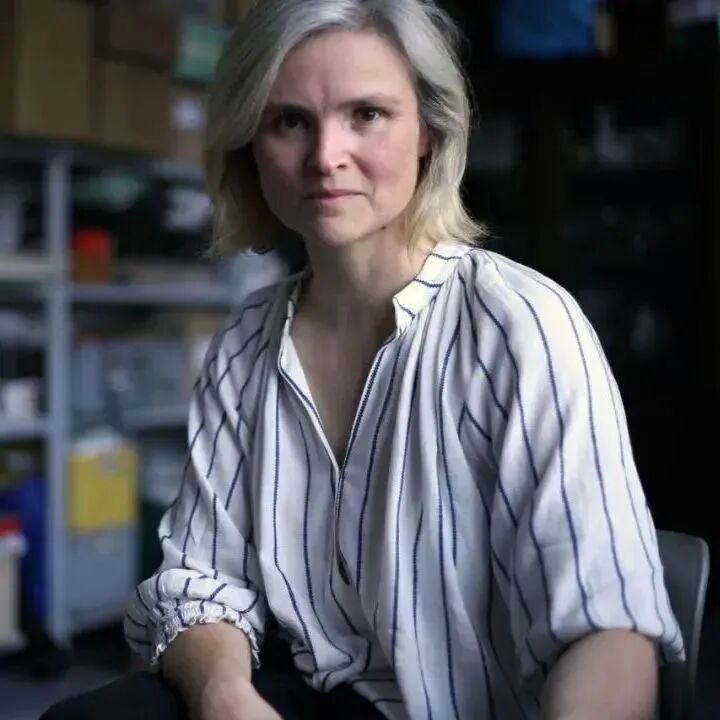
Susanne Kutter
Born in 1971 in Wernigerode in the former East Germany, Kutter moved with her family to West Germany in 1982. She first studied German language and literature at the University of Münster, before going on to study sculpture and video art at the University of Fine Arts Münster.
Kutter's practice spans installation, performance, sculpture, photography and video. She has received a number of major awards and grants, and has been invited to teach at the Berlin University of the Arts, Karlsruhe University of Arts and Design, and Bauhaus University of Weimar.
The exhibition title, "A Room of One's Own," pays tribute to British writer Virginia Woolf's 1929 essay "A Room of One's Own," in which Woolf argued that a room of one's own is more than a private corner for living and writing; it is a a practical foundation that gives women the space, time and freedom to pursue their creative work independently.
Kutter brings this idea into the present and reconsiders it in the context of contemporary life: Space can offer shelter, but it also reflects how resources are distributed. It can make people feel secure, yet quietly confine them. And when that space is suddenly destroyed, where can they go?
For many years, Kutter has created spaces in her work that exist somewhere between home and stage, ruin and refuge, often with a distinctly dystopian quality. In these spaces, people's desire for stability and continuity is repeatedly disrupted by forces beyond their control — from the laws of physics and natural ecosystems to the wider social environment.
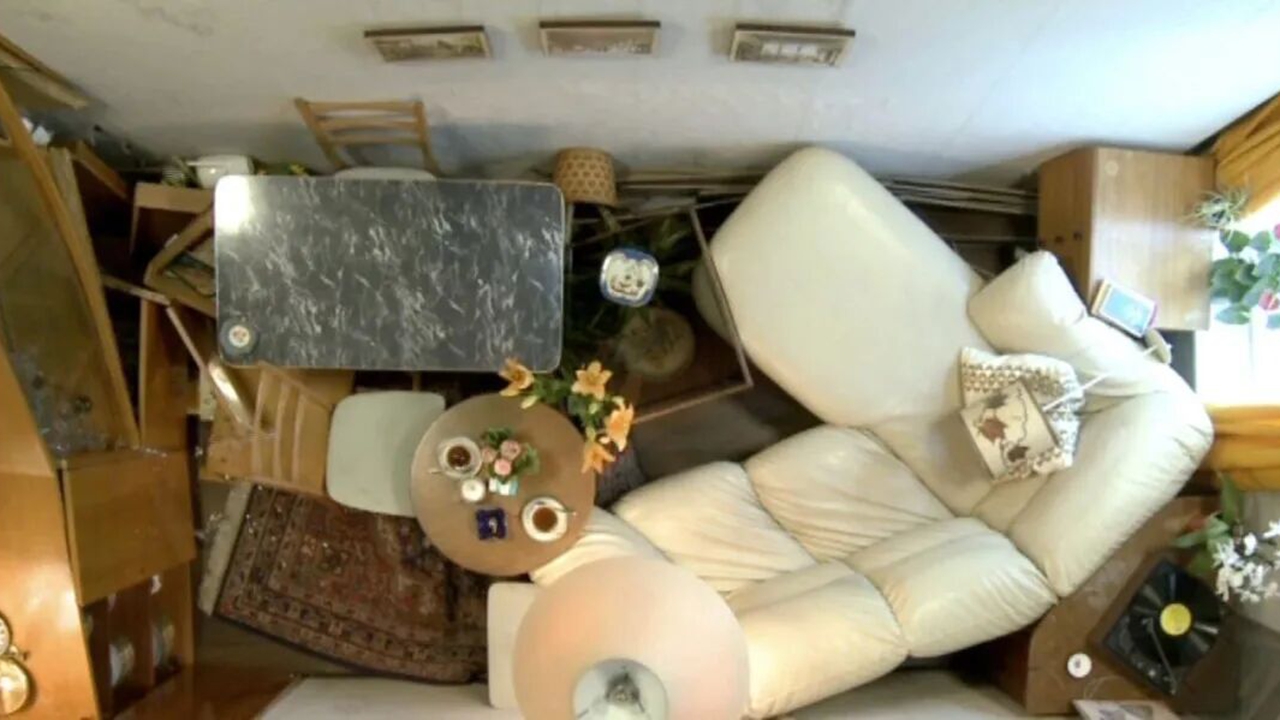
A screenshot from "Sugar Bowl" (2011).
For this exhibition, Kutter will present a new installation of her major video work "Sugar Bowl." Visitors will be able to look down on the scene from an elevated platform on the second floor. As the sound of a truck in the video grows louder, an ordinary European middle-class living room is transformed by an immense force, with everything compressed as flat as possible.
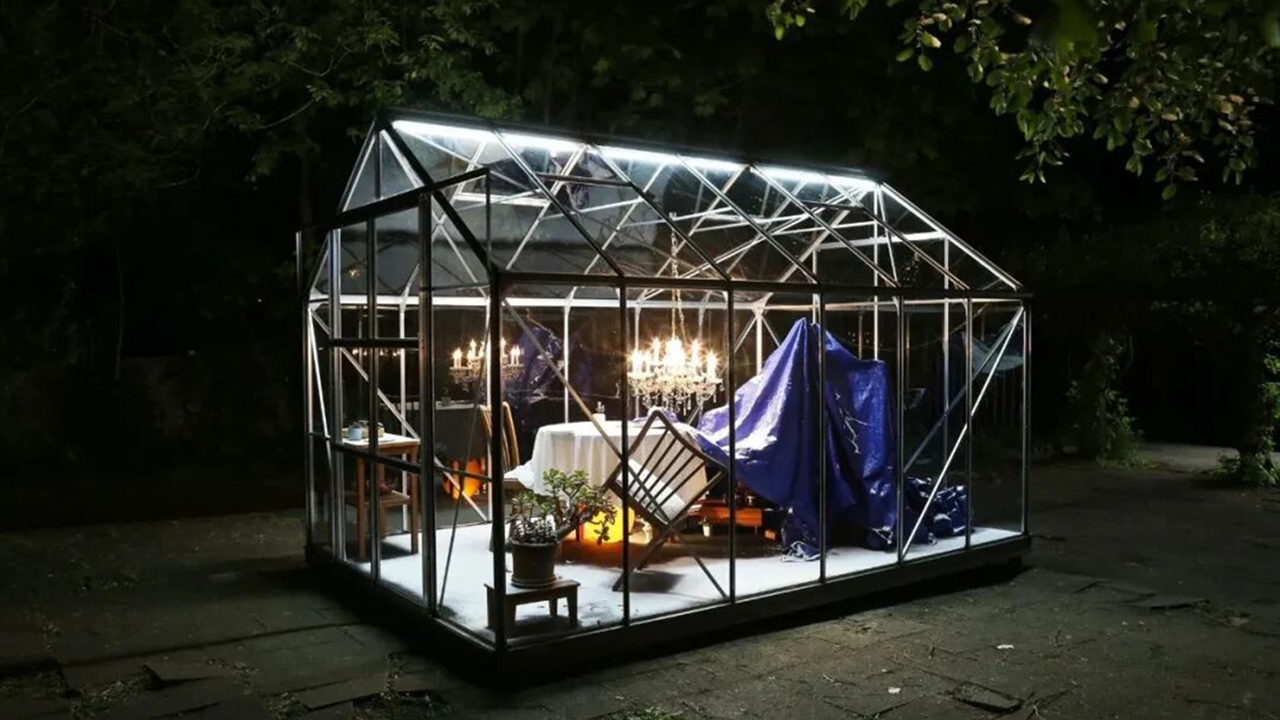
"Like a Soft Blanket over My Eyes" (2024)
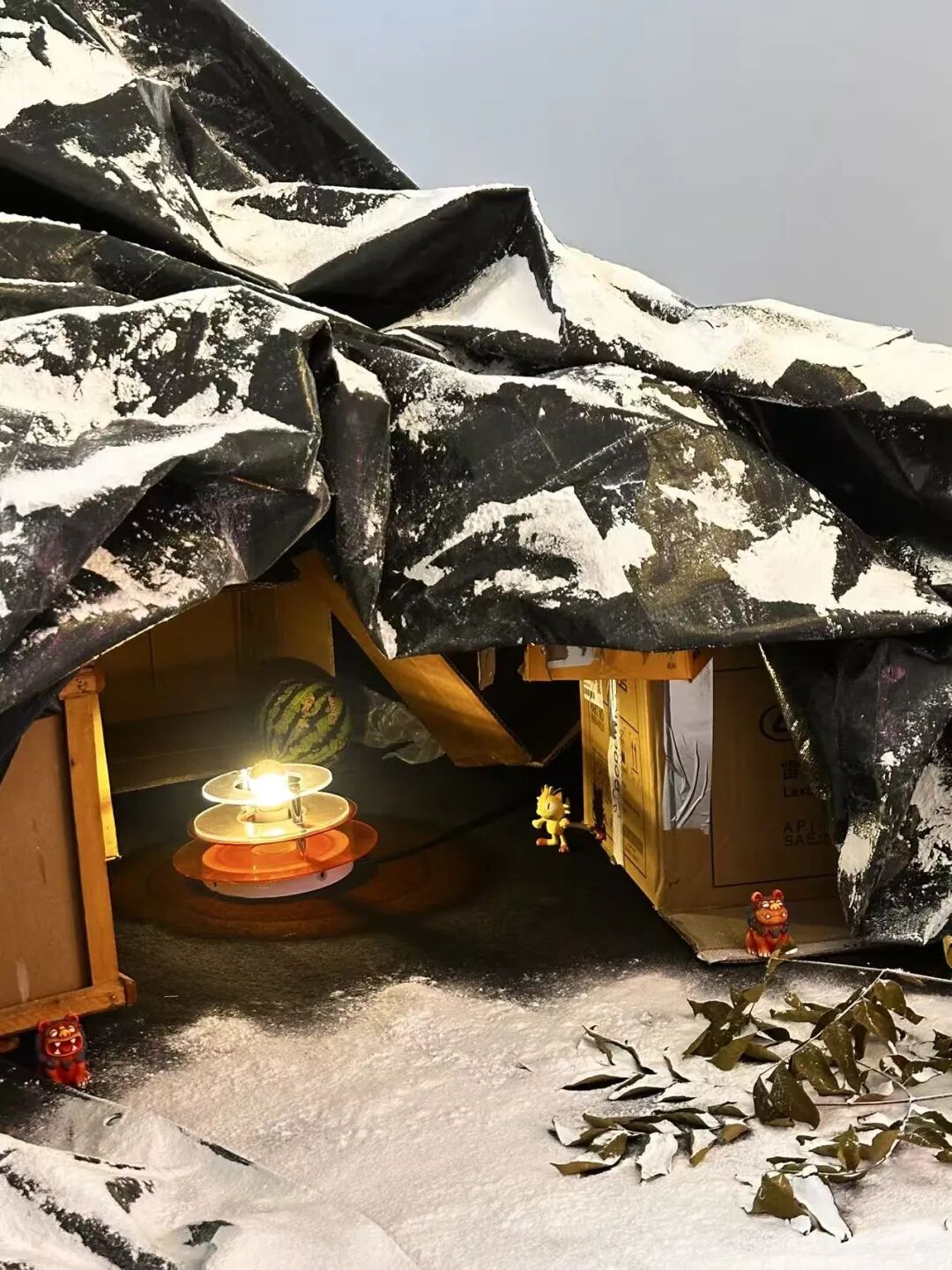
"Like a Soft Blanket over My Eyes" (2025)
In another large-scale installation "Like a Soft Blanket over My Eyes," she uses tents, carpets, a crystal chandelier, icing sugar, cardboard boxes and mirrors to construct a makeshift shelter. Visitors must walk across a floor covered in icing sugar as they enter the gallery, leaving footprints that record their passage. Behind the tent, a towering "mountain" made of cardboard boxes and plastic sheeting rises up. It resembles both a natural landscape and a ruin in the making. Softness, sweetness and danger coexist in this space, while the sense of security it offers is revealed as an illusion that could be overturned at any moment.
For Kutter, "A Room of One's Own" is never simply a dream of having a private space. It is about holding shelter and confinement, construction and collapse in tension, while allowing an illusion to retain its weight in reality even after it has been exposed. When visitors leave the exhibition, the questions that preoccupy the artist remain: Who gets to have a room of their own? What does it mean to be truly settled? And how can that security be made real rather than remain an illusion?