
 Share


 Print
'See 50 years of China, come to Shenzhen' sparks international buzz
Writer: | Editor: | From: Shenzhen Daily | Updated: 2026-11-20
The 33rd APEC Economic Leaders' Meeting was held in Shenzhen. At the welcome banquet, Chinese President Xi Jinping extended an invitation to guests from all sides "if one want to see over a few thousand years of China, go to Xi'an; five hundred years of China, go to Beijing; one hundred years of China, go to Shanghai; and 50 years of China, come to Shenzhen.”
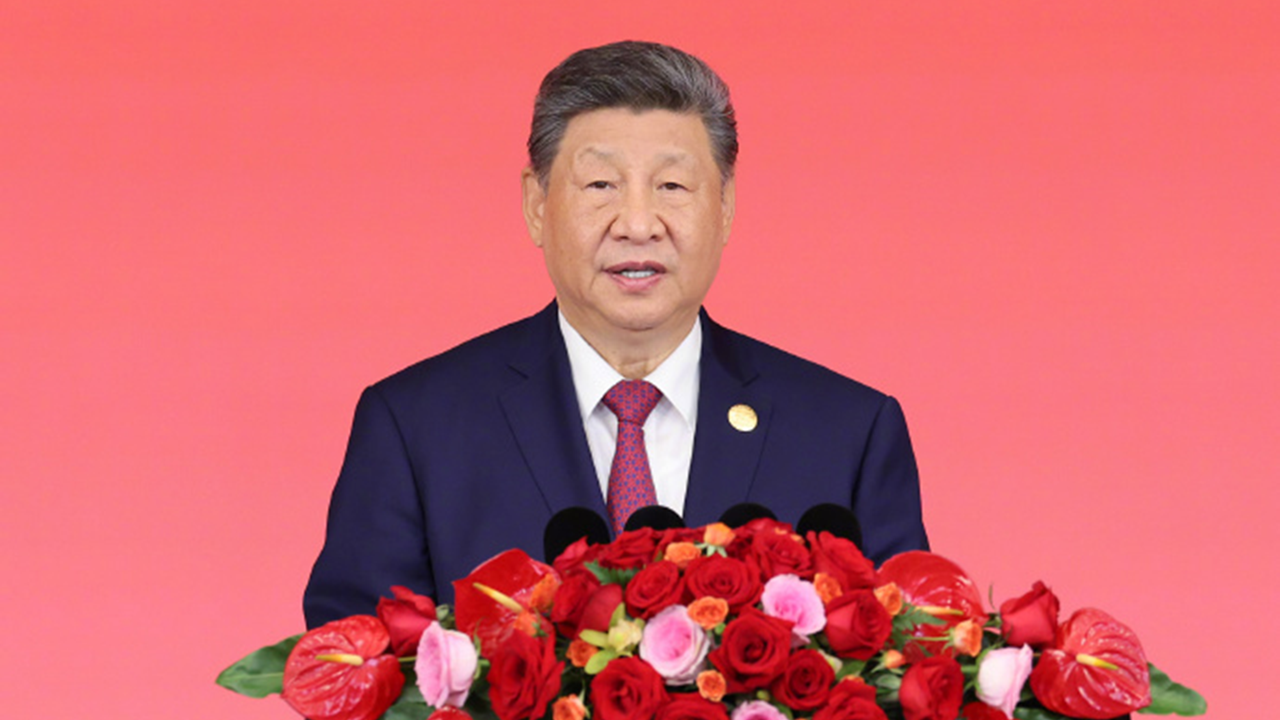
Chinese President Xi Jinping extends an invitation to guests from all sides at the welcome banquet of the 33rd APEC Economic Leaders' Meeting. Xinhua
Starting as a fishing village on the border, Shenzhen has grown into China's first industrial city with an output value of 5 trillion yuan and the first mainland city whose foreign trade volume exceeded 5 trillion yuan. It is a vivid example of Chinese modernization and a living testament to Asia-Pacific cooperation.
Chilean President Gabriel Boric noted that less than 50 years ago, Shenzhen was still a small town of fewer than 50,000 people, and today it is a global innovation hub of nearly 20 million.
"Shenzhen's development tells us that progress is not a miracle, but a matter of determination — it takes labor, effort and willpower."
Canadian Prime Minister Mark Carney observed that Shenzhen has grown from a testing ground for reform and opening-up into a global economic engine, and that this achievement owes nothing to the favor of fate or generous natural endowments, but to one bold choice after another — a future conceived here, tested here and delivered here.
José Medina Mora Icaza, President of the Mexican Business Coordinating Council, said Shenzhen has shown the world how a border town can transform into a high-tech city in just 45 years — a model for the entire world, whose experience is worth drawing upon.
Indonesian President Prabowo Subianto remarked that Shenzhen's metamorphosis stands as an example of how openness and cooperation create miracles of development, one that merits study by all Asia-Pacific economies.
Eduardo Pedrosa, Executive Director of the APEC Secretariat, pointed out that as a window of practice for open cooperation in the Asia-Pacific, Shenzhen's cross-border innovation collaboration mechanisms offer actionable experience for regional cooperation on the digital economy and green transition.
On overseas social media platforms, "I want a Shenzhenin my country" became a trending topic. Santiago Amancay, a Spanish political scholar, posted that he hoped Spain could one day enjoy prosperity like Shenzhen's. Zein Al-Ahmad, a Syrian blogger, marveled after trying the air taxi and smart fitness facilities "Foreigners would think Chinese people are living in the future."
As the core engine of the Guangdong-Hong Kong-Macao Greater Bay Area, openness is a trait written into Shenzhen's DNA.
The "Shenzhen–Hong Kong–Guangzhou" innovation cluster has ranked first in the world for two consecutive years; total R&D spending stands at 6.67% of GDP; and the city is home to more than 26,000 state-recognized high-tech enterprises, with complete industrial clusters formed in the digital economy, new energy and high-end manufacturing. Leveraging the APEC meeting as a platform, Shenzhen showcased its practices in industrial synergy and green transition to its Asia-Pacific partners, promoting the interchange of innovation resources and the sharing of trade opportunities.
Openness, innovation and cooperation have made Shenzhen's transformation possible — and they are also the defining hallmark of APEC. The praise that leaders and guests have heaped on Shenzhen is, in essence, an endorsement of the path of openness and cooperation.