
 Share


 Print
Connecting campuses, connecting futures
Writer: Halim Park, Wee Leng Hym Sonya | Editor: Cao Zhen | From: Original | Updated: 2026-11-19
A question that brought us here
As international students studying at The Chinese University of Hong Kong, Shenzhen (CUHK-Shenzhen), we have always been curious about how universities across the Asia-Pacific connect with one another, and what these connections mean for students like us.
Studying in Shenzhen has given us the opportunity to experience a city where different cultures, ideas and industries meet. So when we learned that the 2026 APEC University Leaders’ Forum would be held on our campus, we saw it as a chance to look beyond the classroom and hear directly from university leaders and scholars about the future of higher education.
The forum, jointly hosted by Tsinghua University and CUHK-Shenzhen with support from the Association of Pacific Rim Universities (APRU), brought together university leaders, policymakers and industry innovators from across the region. Discussions focused on how higher education can contribute to regional cooperation, talent development and inclusive growth.
As students, we wanted to understand one question in particular: How can these high-level conversations make a difference to our lives?
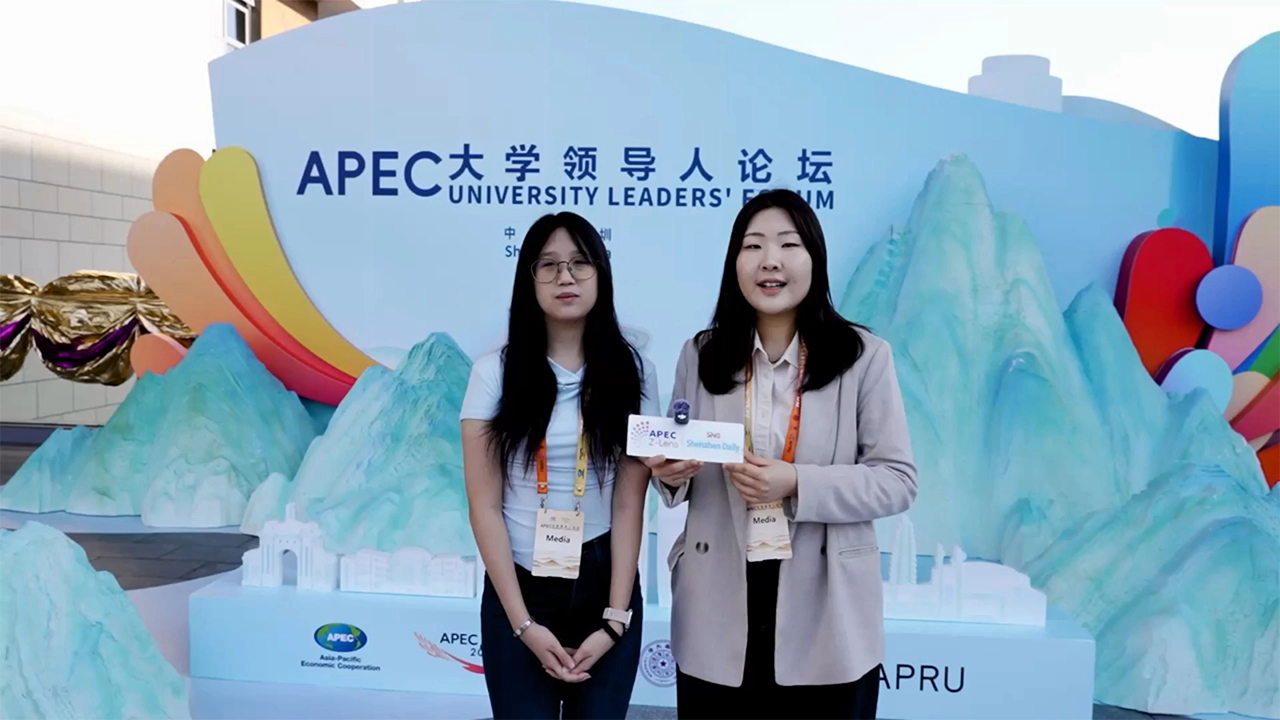
Halim Park (R) from South Korea and Wee Leng Hym Sonya from Singapore.
Universities as bridges for cooperation
One of the messages that stayed with us came from Eduardo Pedrosa, executive director of the APEC Secretariat. He described openness as central to APEC’s mission, highlighting how the forum provides a rare opportunity for economies to meet and exchange views on an equal basis.
That idea made us think about the role universities can play in bringing people and institutions together. Universities are not isolated places for teaching and research. They can also serve as bridges connecting different economies, industries and cultures.
Professor Xu Yangsheng, president of CUHK-Shenzhen, pointed out two important ways universities can contribute to Asia-Pacific cooperation: developing talent and strengthening collaboration among industry, universities and research institutions.
This is particularly relevant to Shenzhen. As a city known for innovation and its close links between research and industry, Shenzhen offers an environment where ideas can move beyond the classroom and laboratory and become practical applications.
Thomas Schneider, chief executive of APRU, offered a striking example of this innovative environment. He said that moving from an idea to a prototype can take just two weeks in Shenzhen, compared with six months in Silicon Valley. His observation gave us a clearer sense of what makes Shenzhen distinctive: the ability to turn ideas into action through close collaboration and an efficient innovation ecosystem.
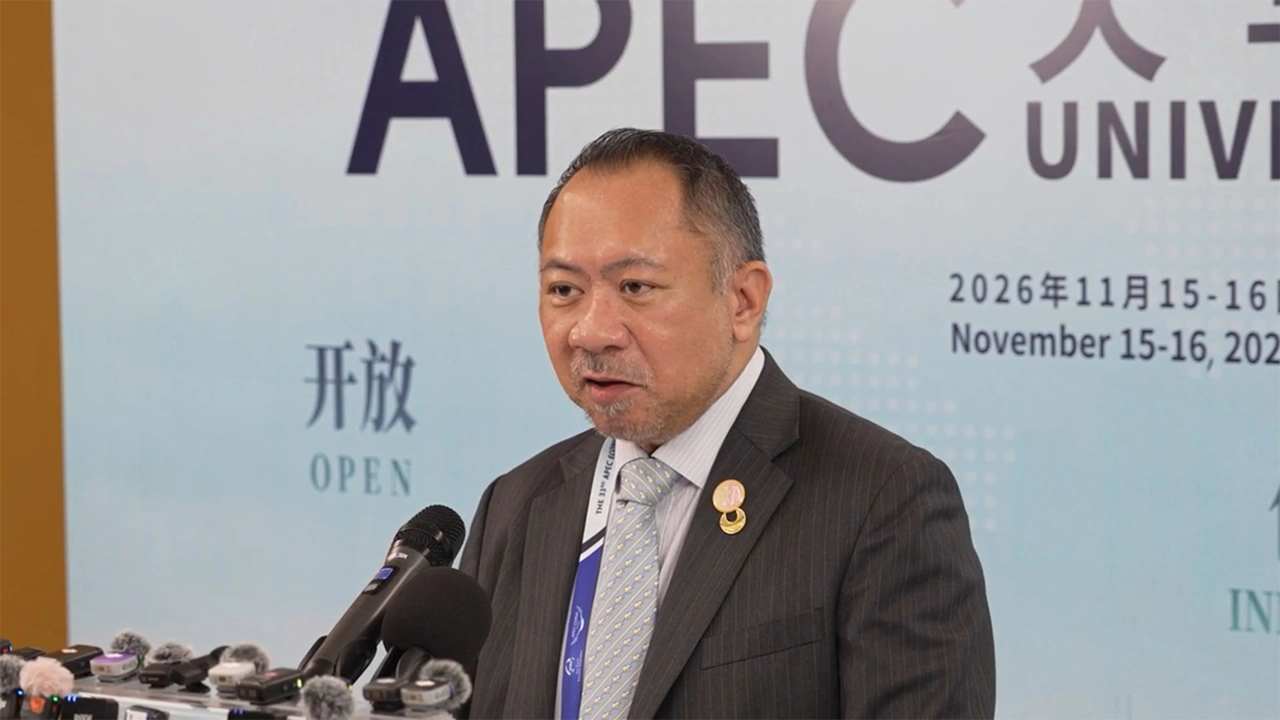
Eduardo Pedrosa
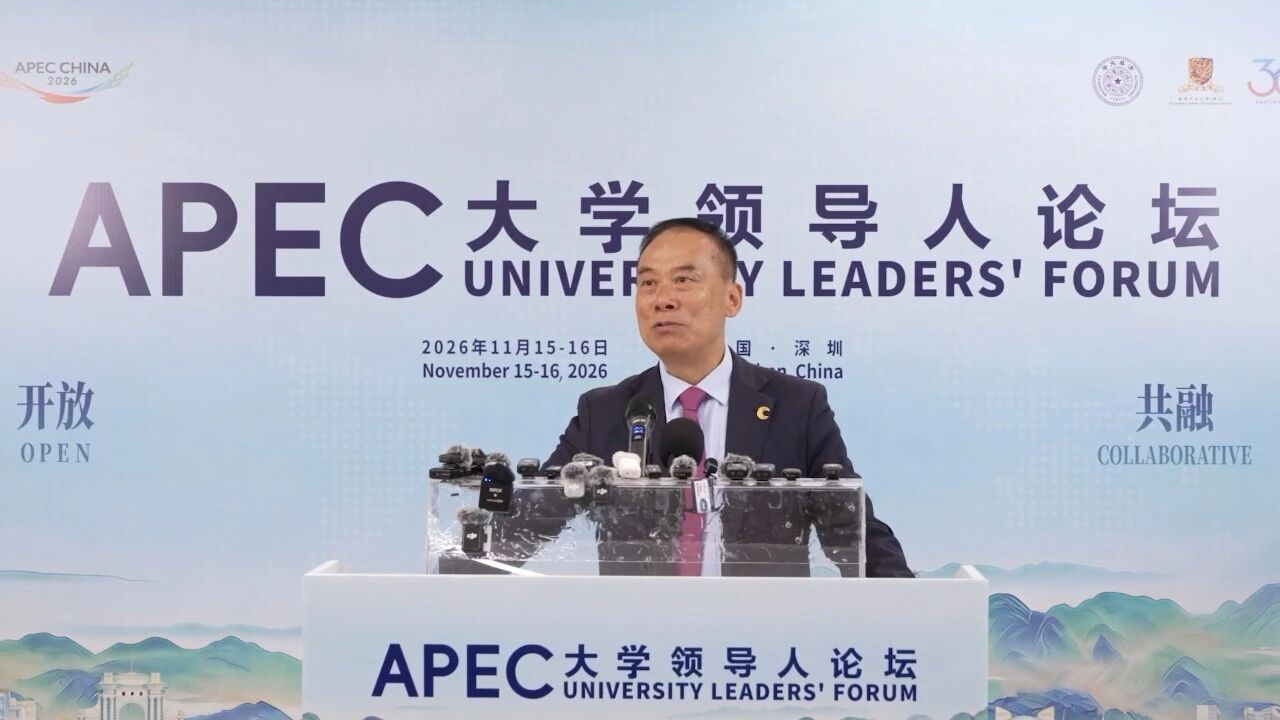
Xu Yangsheng
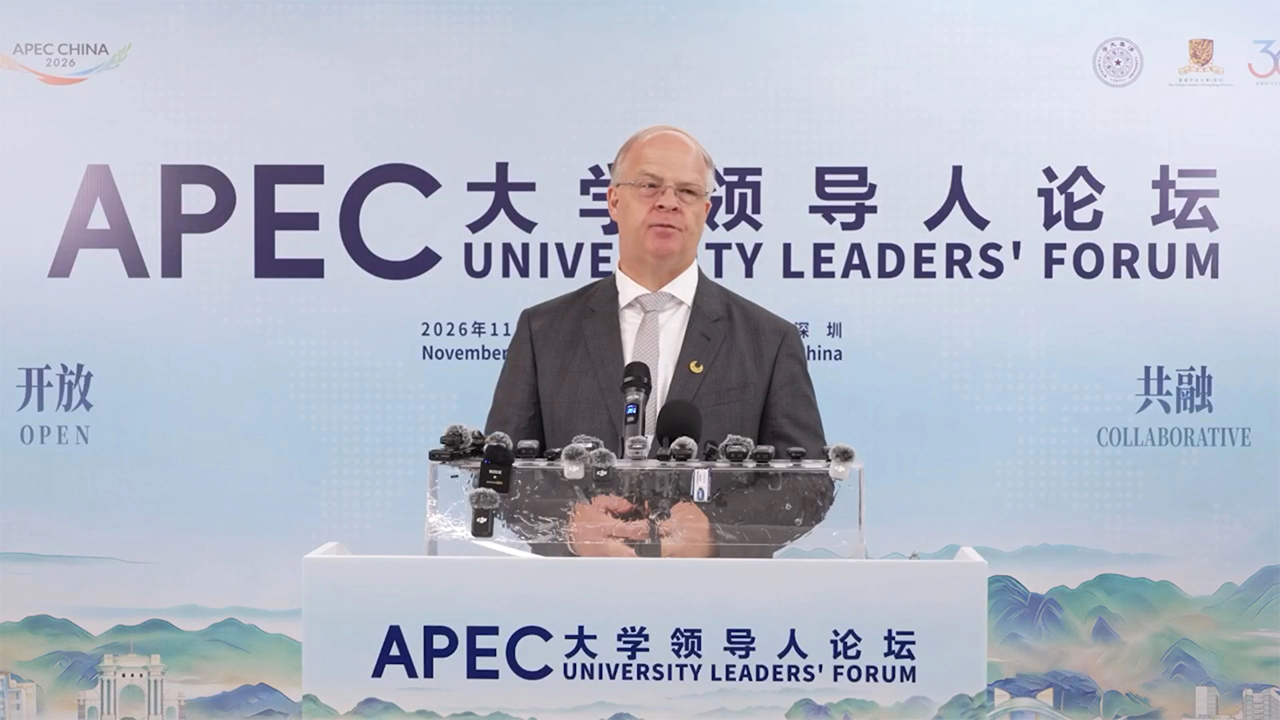
Thomas Schneider
Learning beyond knowledge in the age of AI
Another major topic was how artificial intelligence is changing education. Professor Ouyang Zheng, dean of Tsinghua Shenzhen International Graduate School, emphasized that students must remain at the center of education. He also made an important point: asking the right questions and defining problems can be even more important than simply finding solutions.
As students, we are already seeing how AI tools are changing the way we study, research and communicate. But access to advanced technology is only part of the picture. We also need to develop independent thinking and the ability to tackle complex challenges.
Professor Yurii Nesterov of CUHK-Shenzhen also stressed the importance of exchanging experiences as AI transforms many aspects of our lives. Professor Fabio Rambelli from the University of California, Santa Barbara, meanwhile, reminded us that human relationships remain essential, especially in the age of AI.
We found these perspectives particularly meaningful. Technology can help us work more efficiently, but it cannot replace the value of human understanding, communication and cooperation. Professor Christian Jungnickel of Gdansk University of Technology also noted that universities are evolving beyond simply delivering knowledge. They should help students develop critical thinking, collaborative abilities and other social competencies.
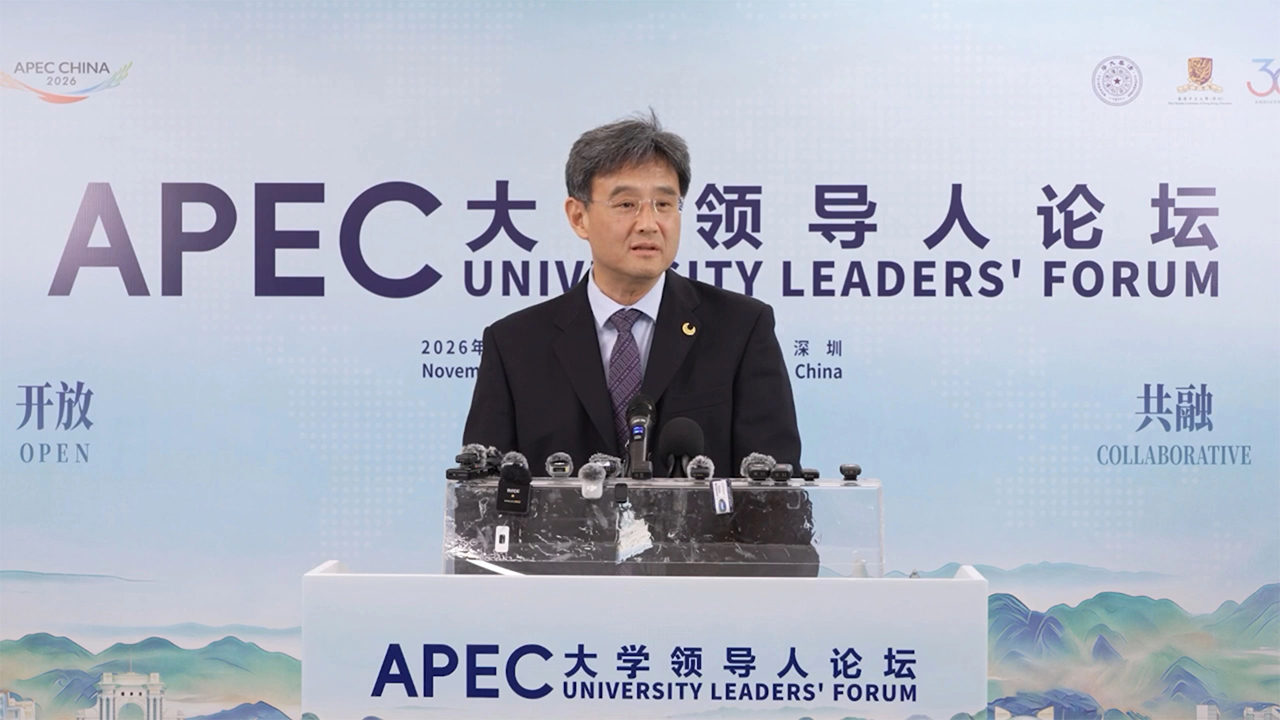
Ouyang Zheng
Making international connections count
For international students, regional cooperation is not an abstract concept. It can mean opportunities to study abroad, join exchange programs, meet people from different countries and gain first-hand experience of other cultures.
Sarah Kim from Hanyang University emphasized the importance of learning to communicate in different languages and experiencing other countries and cultures directly. Elena Odoevskaia from HSE also expressed her hope that the forum would help universities establish connections with one another.
Their comments reminded us that international exchange is not just about traveling to another country. It is about learning to understand different perspectives, building friendships and discovering opportunities through communication.
After listening to the speakers, we came away with a broader understanding of what university cooperation can achieve. It is about more than academic partnerships or technological breakthroughs. It is also about creating an environment in which students can learn from one another, explore new possibilities and become part of a wider regional community.
For us, studying in Shenzhen is already an experience of connecting cultures and ideas. Taking part in this forum made us realize that the opportunities created through cooperation among universities can reach far beyond campus.
(Halim Park from South Korea and Wee Leng Hym Sonya from Singapore now study at CUHK-Shenzhen.)