
 Share


 Print
Silk, sunshine and river mud: The story behind APEC leaders' scarves
Writer: Song Yingwen | Editor: Lin Jiayi | From: Original | Updated: 2026-11-19

Leaders and representatives of APEC economies wear red and blue silk scarves for a group photo at the 33rd APEC Economic Leaders' Meeting in Shenzhen today. Xinhua
Red and blue silk scarves added a distinctive touch to the traditional group photograph at the 33rd APEC Economic Leaders' Meeting in Shenzhen on Thursday.
Chinese President Xi Jinping wore red, while U.S. President Donald Trump and Russian President Vladimir Putin chose blue. The scarves, featuring designs inspired by the mythical Kunpeng bird, drew attention as leaders and representatives from APEC economies gathered for the photograph.
Behind the elegant accessories lies a story of Chinese craftsmanship, stretching from the silk-weaving workshops of Suzhou in eastern China to the sun-drenched dyeing fields of Shunde in Guangdong Province, where artisans have long used plant extracts and river mud to transform silk.
Two silk traditions meet at APEC
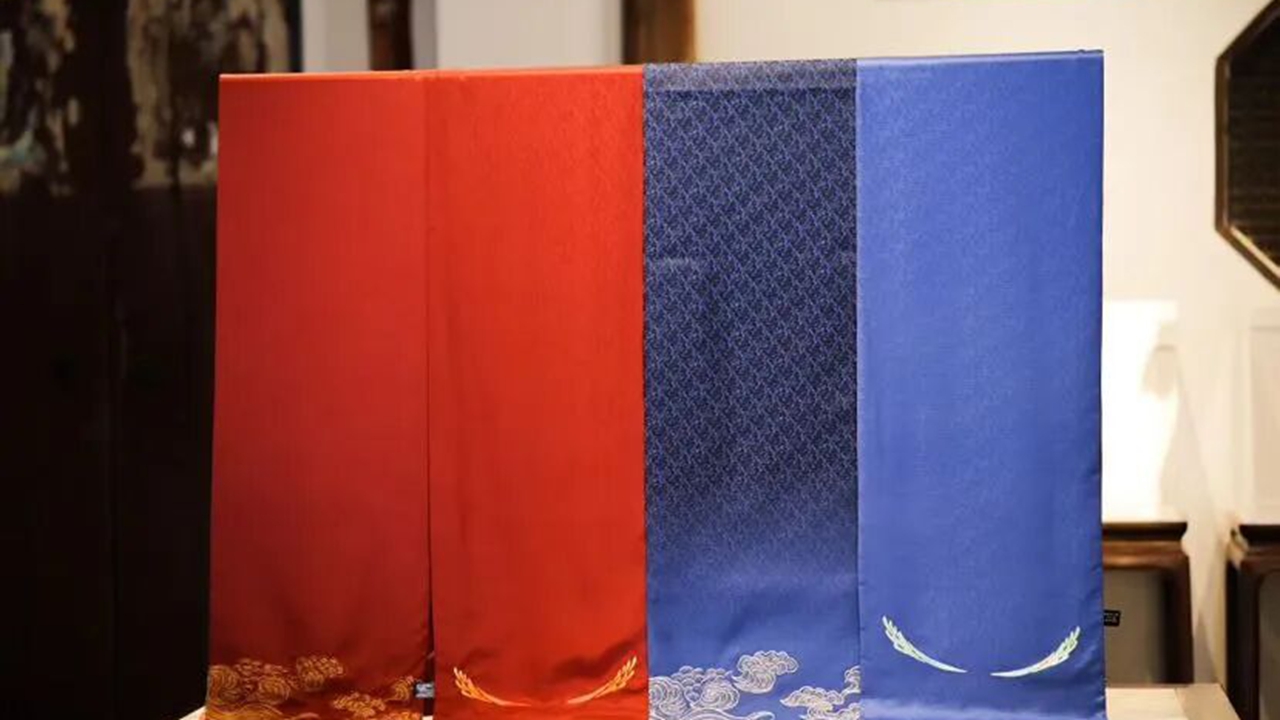
Red and blue silk scarves from the "Tongxin Hejin" collection are displayed. The scarves, combining traditional Song brocade weaving and Xiangyunsha dyeing techniques, were worn by leaders and representatives at the 33rd APEC Economic Leaders' Meeting in Shenzhen today. Zhou Zuojie
The collection, known as the "Tongxin Hejin" collection, features intricate cloud and kapok flower patterns, combining traditional Chinese motifs with contemporary design.
Suzhou-based silk maker Shangjiukai collaborated with Shunde's Chengji Xiangyunsha Cultural Co. to create the accessories. Shangjiukai founder Wu Jianhua oversaw the weaving of the decorative patterns, while Huang Tiansheng, a nationally recognized inheritor of the technique of dyeing Xiangyunsha, aka gambiered Guangdong gauze, handled the dyeing and finishing work.
Song brocade, originating in Suzhou and associated with the Song Dynasty (960–1279), is celebrated for its intricate patterns, rich textures and refined colors.
Xiangyunsha, or gambiered Guangdong gauze, is prized for something quite different: an elaborate natural dyeing process that gives silk its distinctive colors and finish.
The collaboration also produced ties and brocade sheep figurines, extending the two textile traditions beyond scarves into other accessories and decorative gifts.
The magic of sunshine and river mud
In Shunde's Lunjiao area, generations of artisans have transformed silk using a technique that relies on natural materials, favorable weather and painstaking manual work.
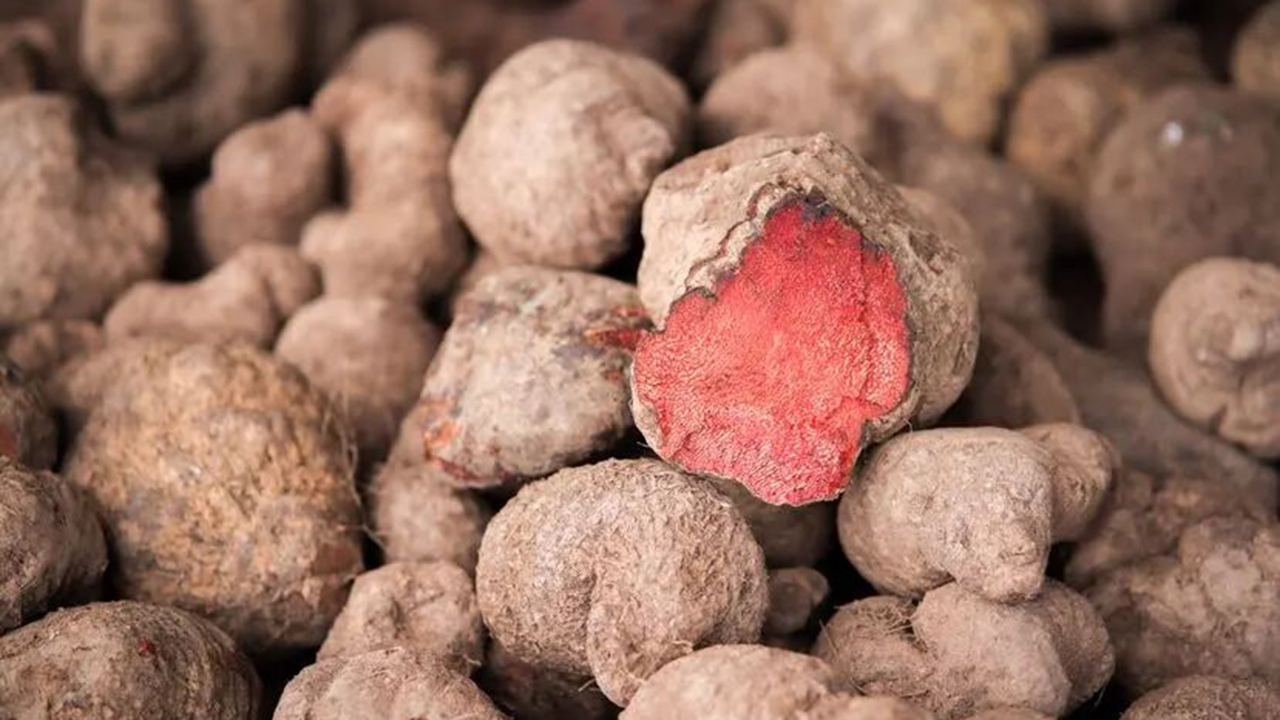
Tubers of Dioscorea cirrhosa, known in Chinese as shuliang, are used to produce the tannin-rich dye that gives Xiangyunsha silk its characteristic reddish-brown color. File photo
The process begins by repeatedly soaking silk in extracts from Dioscorea cirrhosa, a plant known in Chinese as shuliang. Its tannin-rich liquid gives the fabric reddish-brown tones before the silk is spread across grassy fields to dry under the sun.
Then comes the most unusual step: coating one side of the silk with iron-rich river mud. A chemical reaction between the iron compounds and plant tannins darkens the fabric, creating a dark, glossy surface that contrasts with the fabric's reddish-brown reverse.
The silk undergoes repeated dyeing, drying, washing and finishing. Much of the work is performed by hand, with artisans relying on experience to judge the changing color and texture of the fabric.
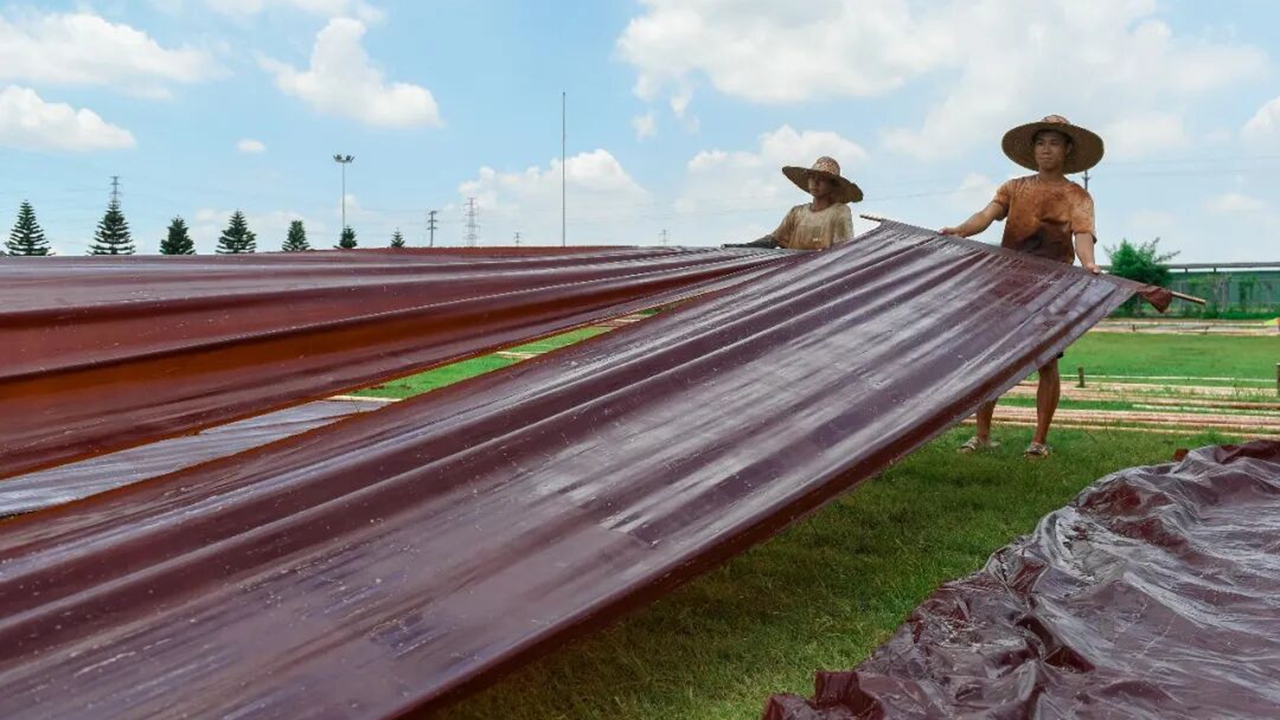
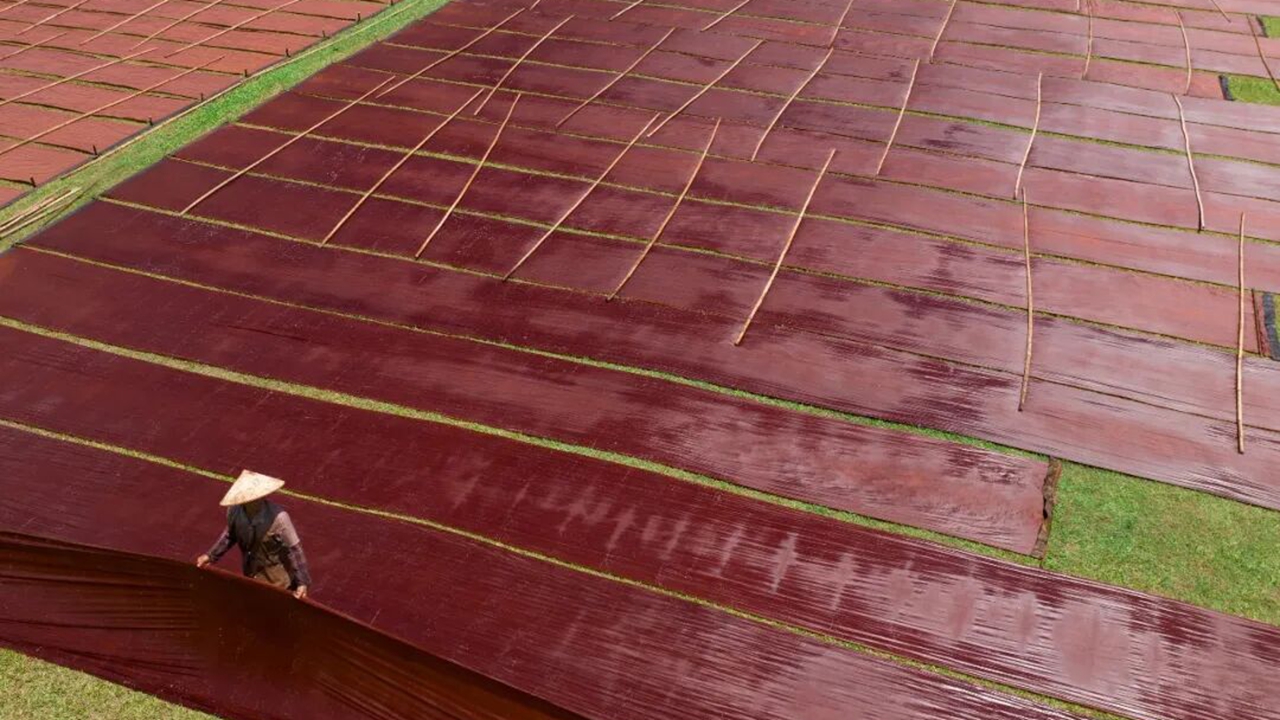
Workers spread and handle long stretches of Xiangyunsha silk across grassy fields during the traditional dyeing and drying process in Shunde, Foshan, Guangdong Province, on July 9, 2024. The centuries-old craft was featured in the scarves worn by APEC leaders in Shenzhen this year. Xinhua
Huang has spent about four decades preserving the demanding craft, which was added to China's national intangible cultural heritage list in 2008.
Historically valued for its durability, breathability and comfort in southern China's hot, humid climate, Xiangyunsha has increasingly found new uses in modern clothing and fashion accessories.
Shunde remains a major center of production. In 2025, its Xiangyunsha production capacity exceeded 10 million meters, while traditional dyeing and drying grounds covered more than 1,600 mu, or approximately 107 hectares. Local producers have also introduced quality standards and expanded into contemporary fashion design.
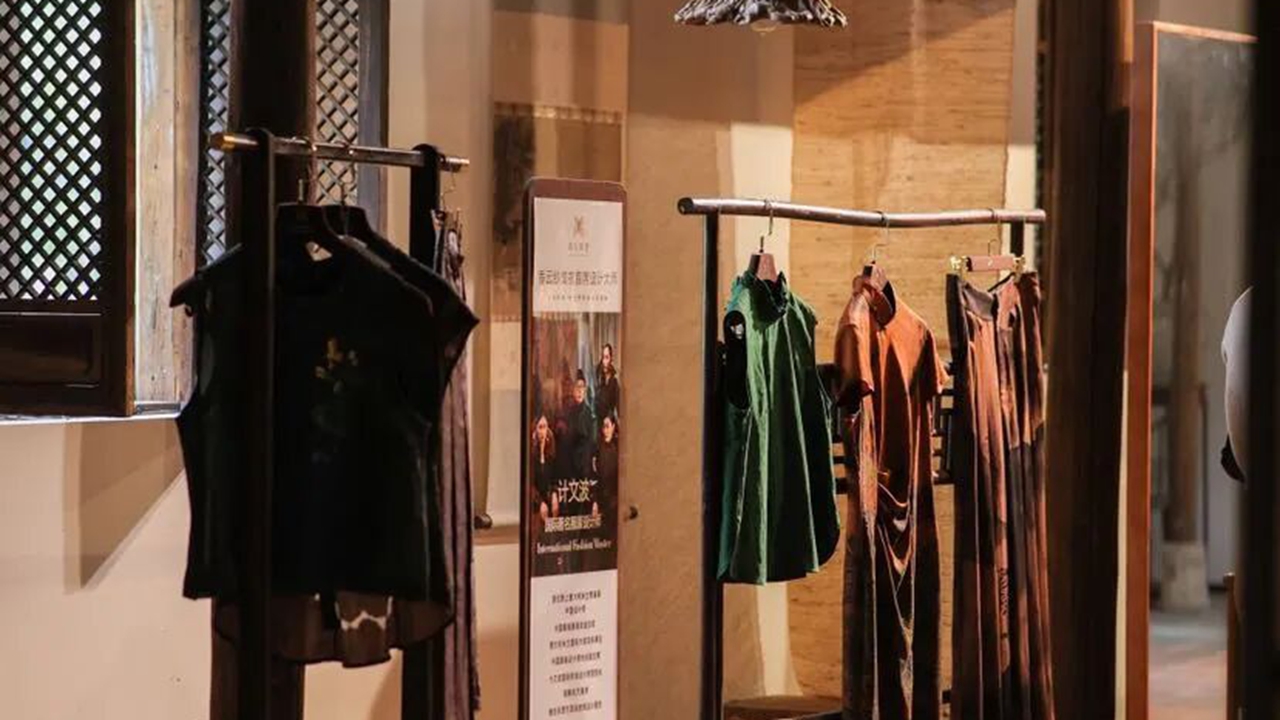
Clothing made from Xiangyunsha silk is displayed at an exhibition, showcasing contemporary uses of the traditional Chinese fabric. File photo
A tradition woven into APEC history
Traditional Chinese textiles have featured prominently at previous APEC gatherings hosted by China.
When Beijing hosted the APEC Economic Leaders' Meeting in 2014, leaders posed for their group photograph in Chinese-style jackets incorporating traditional silk craftsmanship, including Song brocade.
Twelve years later, the Shenzhen meeting has brought another interpretation of China's silk heritage into the international spotlight.
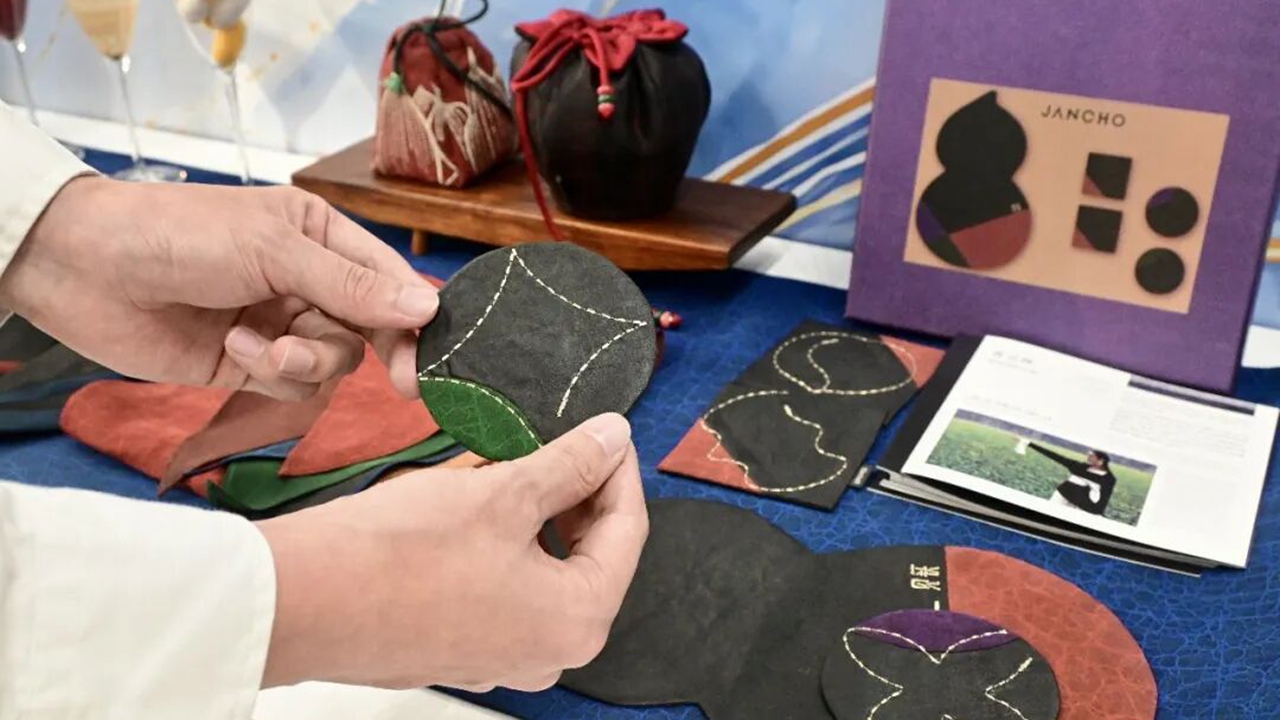
A staff member displays a sample of Xiangyunsha silk at the APEC media center in Shenzhen on Nov. 16. Xinhua
Xiangyunsha also featured in cultural activities during APEC Leaders' Week. Journalists were introduced to the craft at the APEC media center, while performers wearing Xiangyunsha appeared at the Nov. 18 welcome banquet.
For Shunde's artisans, the scarves offered an opportunity to present their centuries-old craft to an international audience.
And behind the red and blue scarves captured in Thursday's APEC group photograph lies an unlikely journey — from the looms of Suzhou and the muddy dyeing fields of Shunde to the shoulders of world leaders in Shenzhen.