
 Share


 Print
APEC brings a business boom to Huaqiangbei electronics market
Writer: Wie Jie | Editor: Lin Jiayi | From: Original | Updated: 2026-11-19
An increasing number of foreign visitors have been seen in Huaqiangbei, Shenzhen’s sprawling electronics market, in days leading to the 33rd APEC Economic Leaders’ Meeting scheduled for Nov. 18 and 19 in the city.
Some overseas shoppers arrive with lists of products to buy, others try out smart glasses, line up at tax-refund counters or wait for shipments to be packed. For merchants, the influx is creating new opportunities, and bringing overseas customers closer to the product development process.
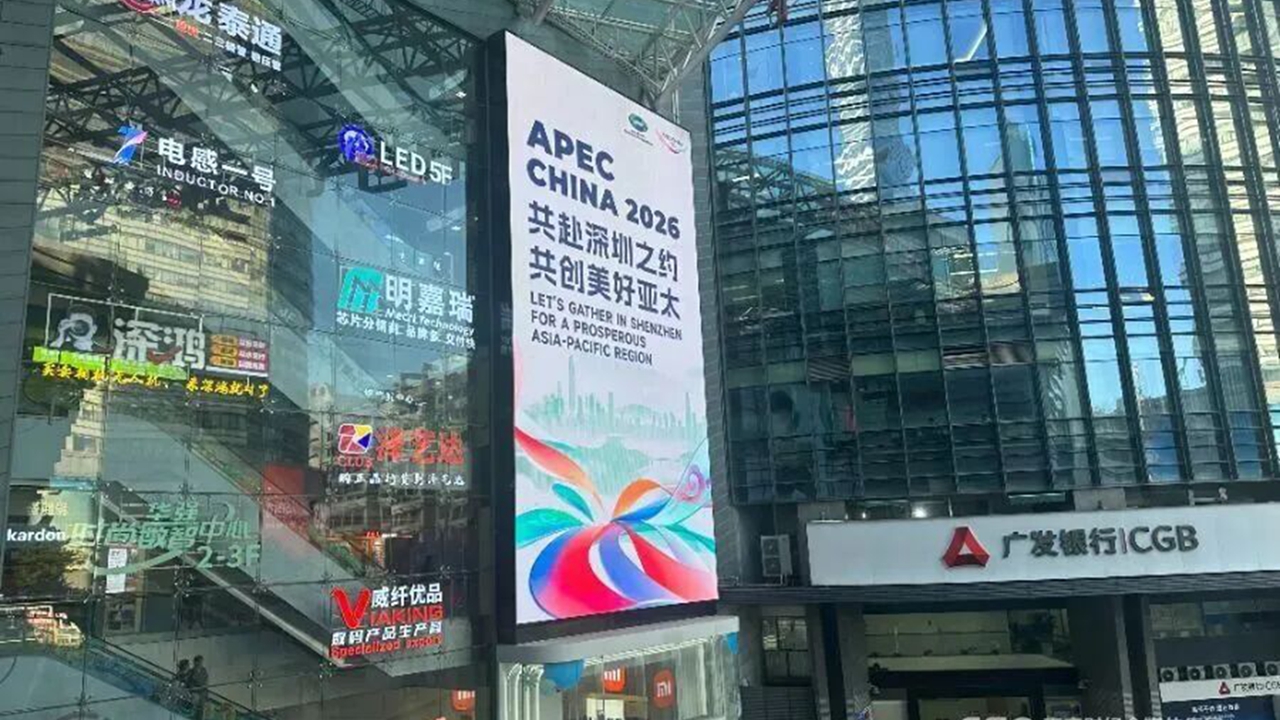
An APEC billboard is seen at the entrance of the Huaqiang Electronics World mall in Huaqiangbei. Li Jinping
Dubbed as “Asia’s No. 1 electronics street,” Huaqiangbei is home to 115,000 commercial entities and 35 specialist markets. Its supply chain spans chips, finished devices, AI glasses and drones, covering nearly 90% of consumer-electronics product categories worldwide.
Zhong Xianguang, who runs Dejiazhou Electronics at Huaqiang Electronics World Phase I, began noticing the potential earlier this year. At a January “Guangdong Products Go Global” exhibition in Huaqiangbei, his company — an AI consumer electronics developer and manufacturer — showcased smart glasses, an AI mouse and an AI translator. Nearly 30 foreign visitors came to his booth, and about half made purchases on the spot in two hours.
Since then, Zhong has opened two stores in Huaqiangbei: one in SEG Plaza focusing on wholesale, and another in Huaqiang Electronics World that combines retail with market research. Overseas sales now account for 70% to 80% of his company’s revenue, while sales have risen about 30% year on year, he told 21st Century Business Herald.
The customer base has also broadened beyond Japan, South Korea, the Middle East and Russia to include France, Malaysia, Vietnam and Thailand, as well as buyers from Chile, Brazil and Mexico.
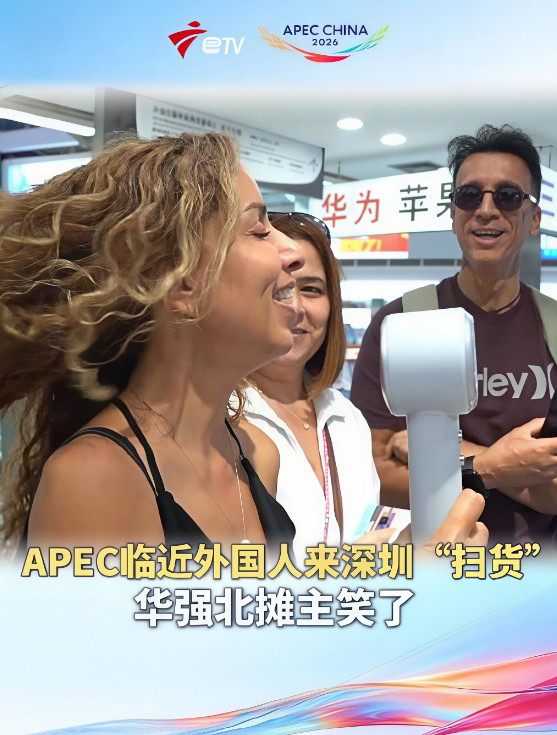
International visitors shop in Huaqiangbei.
For Zhong, international customers are more than a source of sales — they help identify what products need to change. He showed a lightweight titanium-alloy AI glasses model weighing around 20 grams, designed to feel much like ordinary eyewear. The company shifted the glasses’ center of gravity to reduce pressure on the nose and added a detachable audio module that connects magnetically to the temples.
“Many customers like the functions of smart glasses but find models weighing 40 to 50 grams too heavy,” Zhong said. His company makes small product updates each month, using feedback from buyers to keep products current.
The company is also moving beyond selling individual products. It is developing “store-in-a-box” packages for customers in Kazakhstan and Russia, including product selections, store layouts, display advice and operational guidance. Customers can first test a few sample units in their local markets, then place larger orders if the products sell well.
“We used to simply sell products to overseas customers. Now we’re trying to replicate an entire store,” Zhong said. “Customers don’t have to figure out what to stock or how to display it. We can help them test products locally, and arrange returns or exchanges for items that don’t sell.”
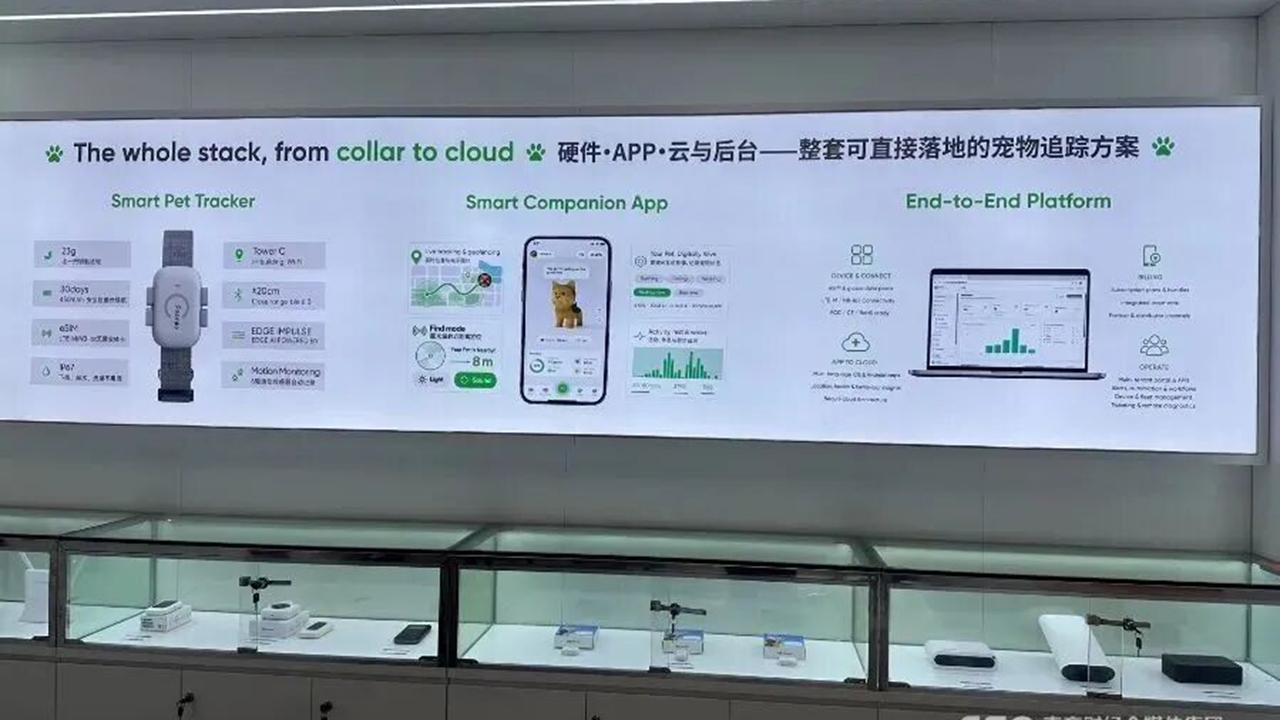
A billboard of Wewins Wireless' pet tracker in its store in Huaqiangbei. Li Jinping
Another company testing Huaqiangbei’s potential is Shenzhen Wewins Wireless Co., a wireless communications business with a 20-year history. About 80% of its staff work in R&D. Its main products include 4G and 5G wireless devices such as routers, as well as a pet tracker launched in the third quarter.
The company has traditionally found overseas customers through trade fairs such as Mobile World Congress in Barcelona, CES in Las Vegas and the Global Sources trade show in Hong Kong. During the National Day holiday this year, it opened a Huaqiangbei store to attract international customers in person.
The pet tracker is the company’s first major step into consumer electronics, sales director who gave only her given name Susie said. Aimed at markets in Europe, Australia, North America and South America, it offers up to 30 days of battery life and weighs 23 grams, features intended to make it suitable for cats and small dogs.
The company also operates servers in China's Hong Kong and Germany, and has developed its own software platform to track device activation and subscriptions. “Many competitors only provide hardware. We deliver the app, cloud services and device-management platform as well,” Susie said.
After just over a month, the store had attracted prospective customers from China's Taiwan, Venezuela, Greece and Italy. Walk-in shoppers account for about 80% of visitors, though turning initial interest into orders takes time.
“Bringing people into the store is only the first step,” Susie said. “We still need to follow up with sample testing and business discussions, so the conversion cycle can be long.”
Hope for lasting gains, not just a short-term boom
Although foreign visitors arrive in greater numbers, small and medium-sized businesses in Huaqiangbei are looking beyond the immediate boost in sales. They hope the APEC summit will leave behind practical improvements that make it easier to trade across the Asia-Pacific.
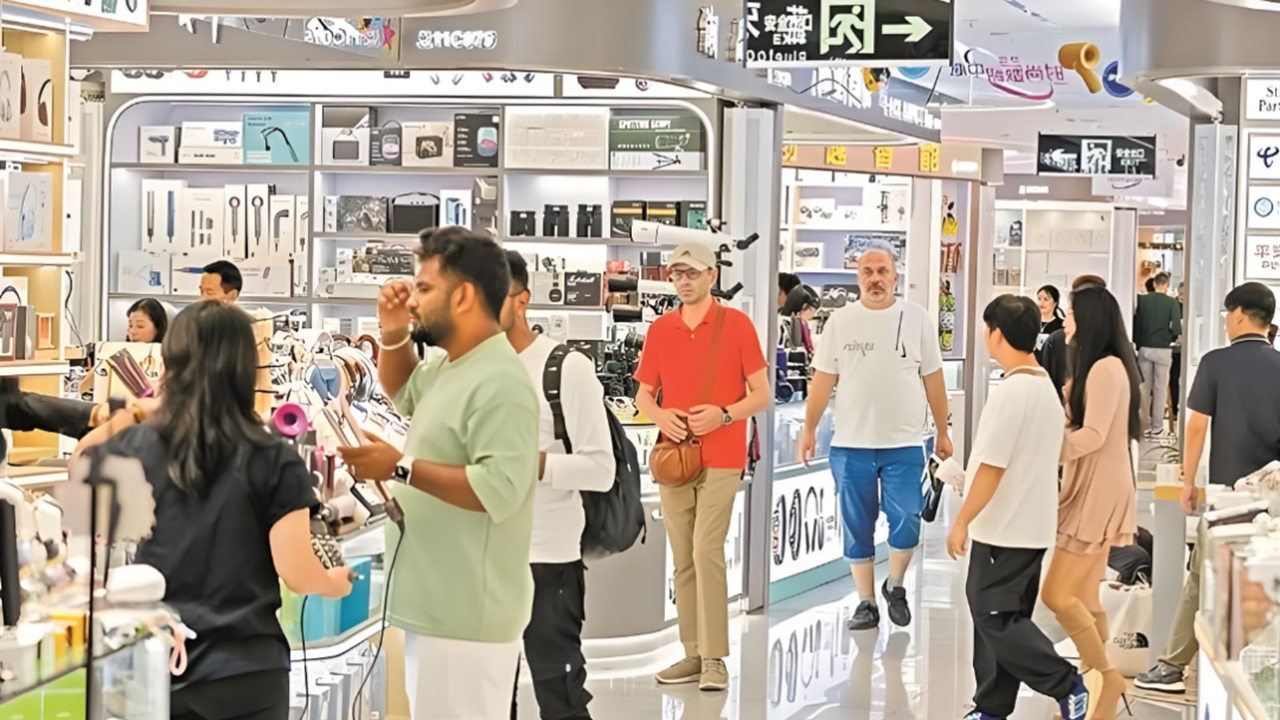
Foreign visitors are seen shopping in Huaqiangbei.
For many technology exporters, a major obstacle is the cost and complexity of meeting different economies’ communications standards. Susie called certification one of the biggest barriers facing the company.
Wireless products containing SIM cards must often pass separate mandatory tests in each export market. Japan requires TELEC certification, South Korea requires KC certification, and Indonesia and Mexico have their own standards. Across much of the Asia-Pacific, companies may need a separate approval for each market.
“Japan’s MIC does not recognize CE or FCC certification, so radio frequency tests have to be repeated,” Susie said. Certification can take three to six months and cost heavily, with engineers often required to support the process throughout.
Europe is comparatively straightforward, she said, because CE certification can cover multiple EU markets. But mutual recognition arrangements among Asia-Pacific economies remain limited.
“If APEC could promote ‘one test, multiple approvals’ — even starting with pilot projects among a few member economies — it would reduce costs dramatically for small businesses,” Susie said.
Huaqiangbei smart-glasses sellers face similar challenges. A power bank that has passed China’s mandatory CCC certification may still need to undergo South Korea’s KC process. AI glasses with cameras or audio-recording functions also face additional privacy and data compliance reviews.
Cross-border payments and trade documentation are another concern. Dejiazhou Electronics' Zhong said Russia offers promising opportunities for Chinese light-industry and electronics products, with limited local supply and a receptive business environment. But payments can be difficult to settle directly. Some transactions require routing funds through freight forwarders at extra cost, and payment problems have at times led to accounts being frozen in Huaqiangbei’s offline trade.
Shenzhen has taken steps to make payments easier as it prepared to host the APEC meeting. Huaqiangbei has opened what the city describes as China’s first service point combining departure tax refunds, currency exchange and payment assistance. Bank of Communications and China Construction Bank have introduced point-of-sale terminals that accept foreign bank cards, while China Construction Bank and Lakala are offering fee subsidies for QR-code transactions.
Across Shenzhen, 41,000 businesses now accept foreign bank cards, supported by 51,000 foreign-card POS terminals. Currency exchange services cover all currencies of APEC’s 21 member economies.
For Huaqiangbei’s business owners, such measures are a welcome start. Their hope is that APEC cooperation can go further — helping reduce duplicated certification, streamline cross-border payments and create lasting improvements for smaller companies seeking to reach regional markets.