
 Share


 Print
APEC voices from Qianhai ② | Erised: Committed to China's chip industry
Writer: Chang Zhipeng | Editor: Lin Jiayi | From: Original | Updated: 2026-11-19
Video and photos by Zhen Jianhong
In 2021, Erised Semiconductor (Shenzhen) Co. Ltd. won the gold award in the enterprise growth category of the Qianhai Guangdong-Hong Kong-Macao-Taiwan Youth Innovation and Entrepreneurship Competition, standing out among more than 1,400 entries with its micro-LED display chip project.
Five years later, the company has ranked second in China’s domestic market from 2021 to 2023 for flat-panel display driver chips for three consecutive years, with cumulative shipments exceeding 200 million chips.
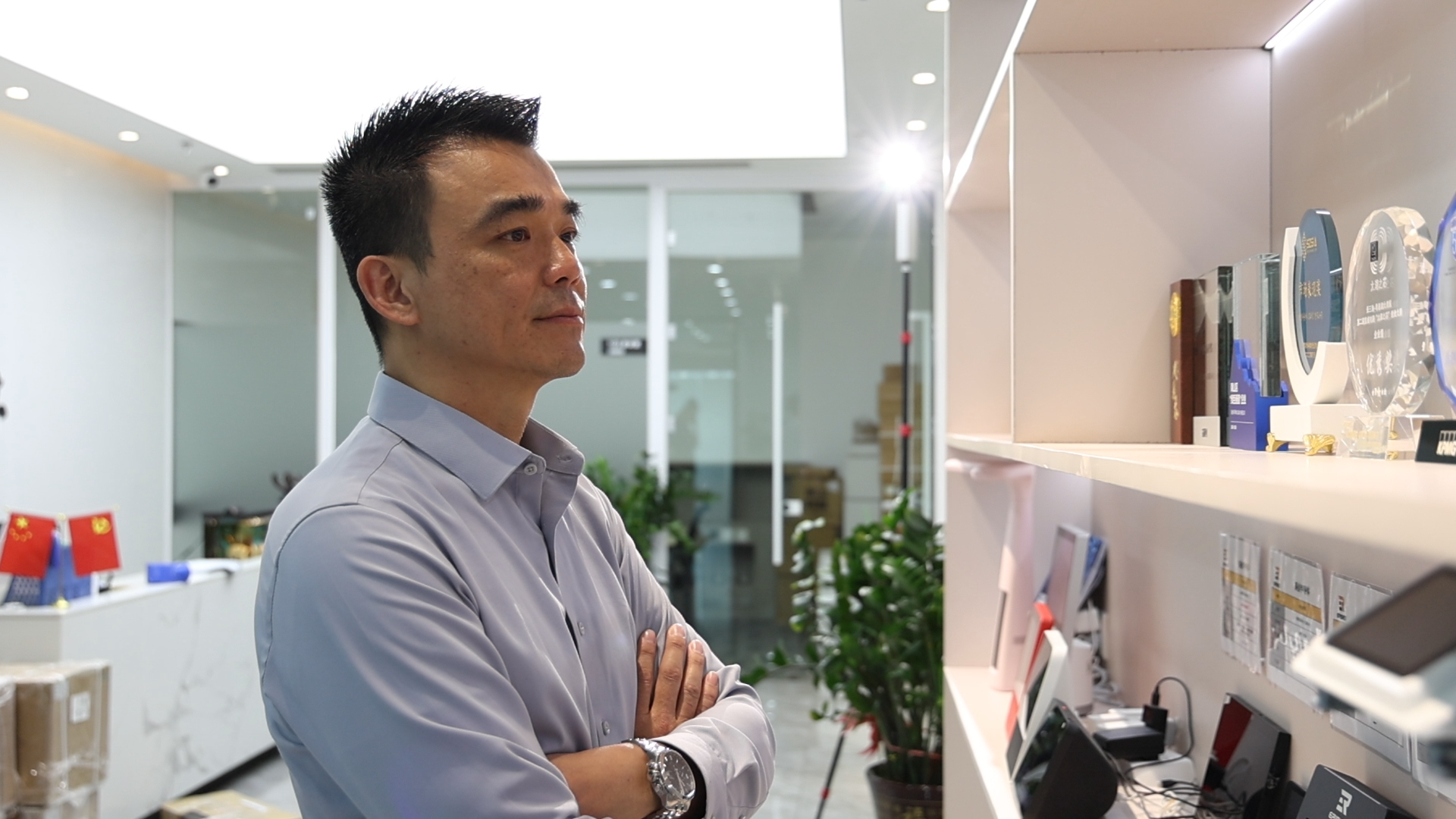
Hardan Hsieh, general manager of Erised Semiconductor's display driver business unit, looks at awards and products displayed at the company's office in Qianhai, Shenzhen.
Founded in Qianhai in 2018, Erised has a founding team whose members are mostly from Taiwan, China. Its core members previously worked at international semiconductor companies including Samsung, Texas Instruments and onsemi. The company focuses on display driver and power-management chips, pursuing in-house development and domestic alternatives to imported products. It has also begun exploring the use of optical interconnects to replace copper connections in the era of AI computing.
Hardan Hsieh, general manager of Erised’s display driver business unit, said the company’s English name, “Erised,” is “desire” spelled backward — a reminder of the team’s original aspirations. He said the team chose Qianhai for its access to the mainland’s electronics supply chain and strong demand for domestically developed chip solutions.
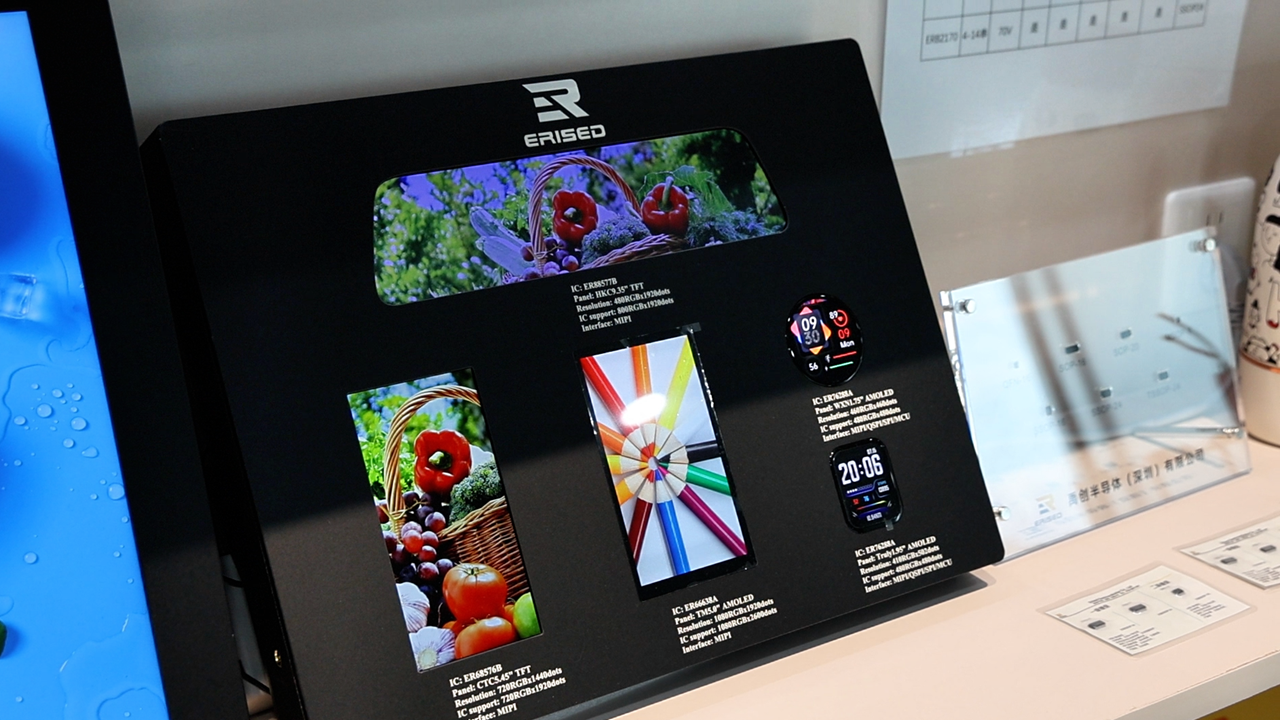
Display panels powered by Erised Semiconductor's driver chips showcase applications ranging from conventional screens to smartwatch displays. The company develops chips for TFT-LCD, OLED, Mini LED and Micro LED technologies.
Erised’s products cover display drivers for TFT-LCD, OLED, Mini LED and Micro LED screens, as well as power-management applications including battery management systems and motor drives. The company says its technology has helped challenge the dominance of overseas suppliers in high-end display driver chips and advance the domestic replacement of imported power-management chips. It has been recognized as a national high-tech enterprise and a national-level “little giant” — a designation for specialized, innovative small and medium-sized enterprises.
The company says its chips are used in the supply chains of brands including Amazon, Lenovo, TCL, Baidu, Xiaomi and ZTE. It also works with major display-panel makers such as BOE, HKC, Truly, Innolux and CSOT.
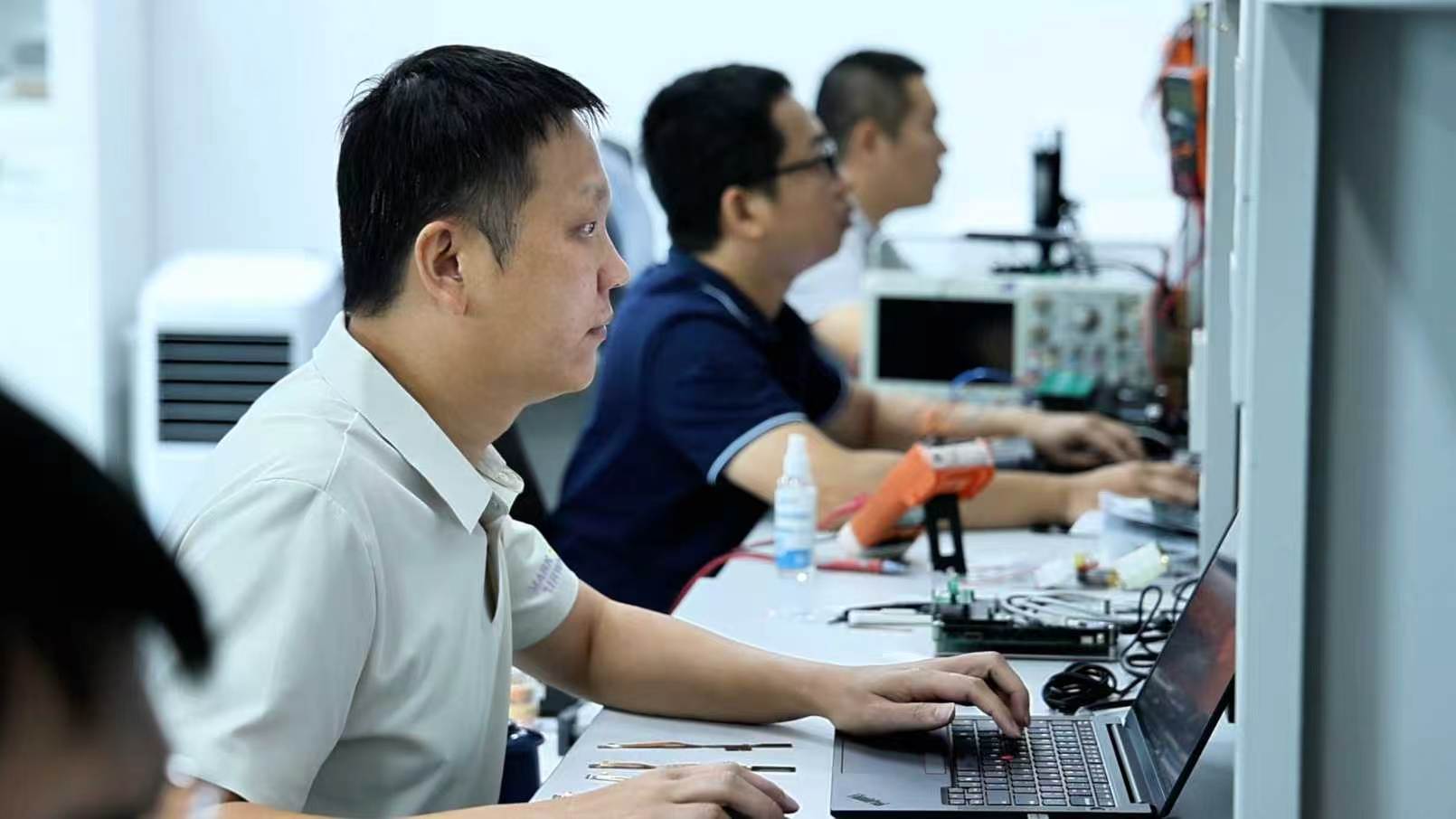
Engineers work in Erised Semiconductor's laboratory in Shenzhen. The company is expanding its research beyond display driver chips into high-speed optical interconnect technology for AI computing.
Alongside its established display-driver business, Erised is developing technology for high-speed interconnects in AI data centers. As the use of large AI models and high-performance computing grows, computing clusters require greater data-transmission bandwidth and denser connections while limiting power consumption.
At transmission speeds of 800 gigabits per second and above, the company says, traditional copper cables face limits on transmission distance and higher power consumption.Conventional laser-based optical interconnects, meanwhile, can be difficult to use in the high-temperature environments around GPUs. Erised sees a shift from copper to optical connections as a long-term industry trend.
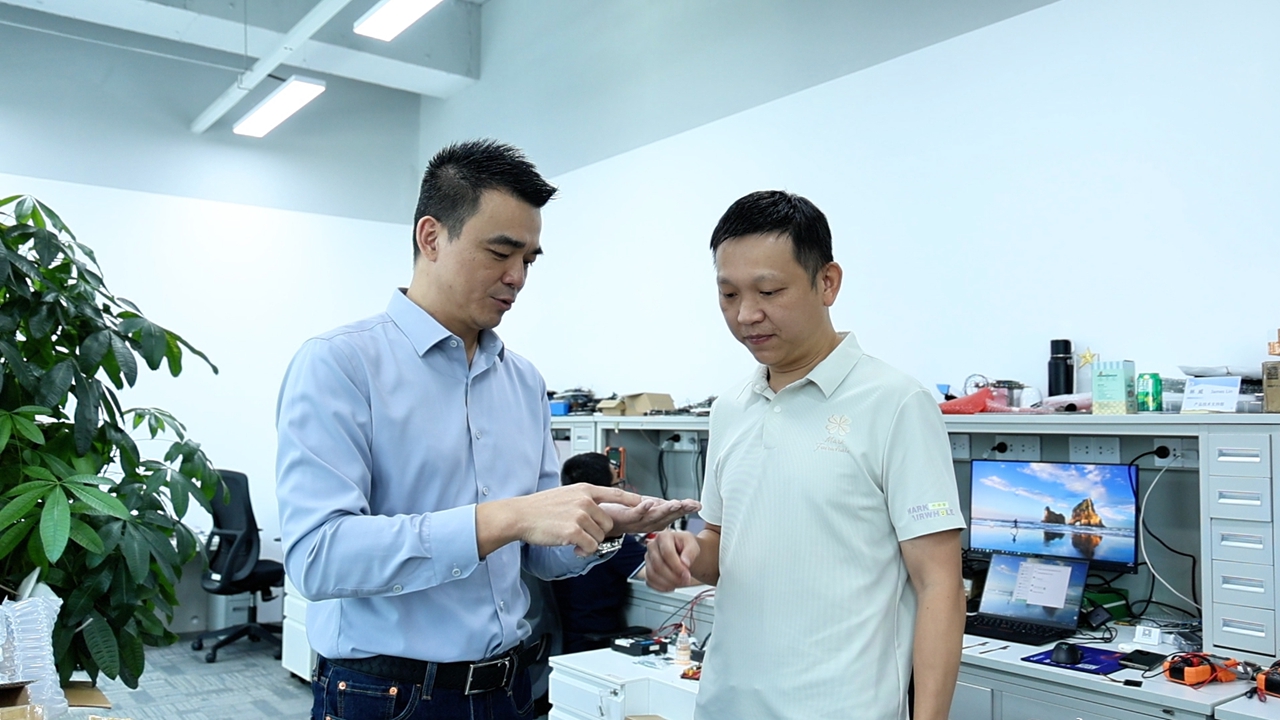
Hardan Hsieh (L), general manager of Erised Semiconductor's display driver business unit, discusses research and development work with a colleague at the company's laboratory in Shenzhen.
The company aims to adapt technology developed for display drivers to optical-transmission systems. Micro LED displays use dense arrays of light-emitting elements controlled by driver chips; Erised is working to repurpose that architecture to transmit optical signals to photodetectors. Its current research focuses on multi-channel high-speed driver chips, coordinated driving of Micro LED arrays and optoelectronic system integration.
Erised holds dozens of domestic patents and has received ISO 9001 quality-management certification. Its research project on key technologies for AMOLED display driver chips has been registered as a scientific and technological achievement with China’s Ministry of Industry and Information Technology.
In June, Erised and the Southern University of Science and Technology inaugurated a joint laboratory. The partners plan to cooperate on talent development, teaching and research in power-chip design, and to establish a longer-term industry-academia research partnership.
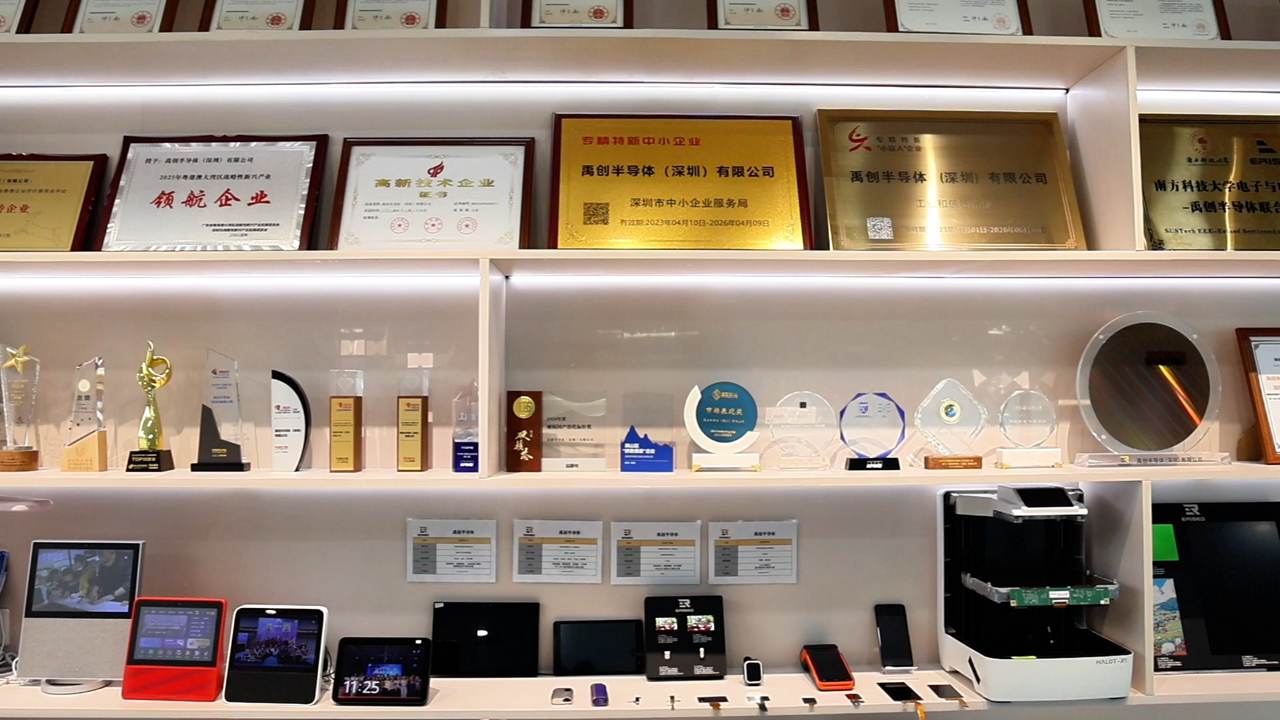
Awards, certificates and electronic products are displayed at Erised Semiconductor's office in Qianhai, Shenzhen.
Reflecting on the company’s eight years in Qianhai, Hsieh said the area’s location makes it easier to travel between Hong Kong and other cities in the Guangdong-Hong Kong-Macao Greater Bay Area, bringing the company closer to customers, suppliers and talent. He also cited support from the Qianhai Authority and tax policies for overseas talent as helpful in recruiting senior researchers and advancing the company’s technology.
The 2026 APEC CEO Summit is being held at the Qianhai International Convention Center on Nov. 17 and 18. Hsieh said the event’s focus on AI, the digital economy and green development could create opportunities for closer cooperation among businesses, universities and research institutions.
“We hope to use APEC's international platform to forge stronger industry connections, explore safer ways to share data and develop more environmentally friendly chip technologies,” he said. He added that low-power driver chips and efficient optical interconnects could support the green transition in the AI computing era.