
 Share


 Print
Sihoo sights supply‑chain, standard‑setting consensus at APEC CEO Summit
Writer: Zhang Yu | Editor: Zhang Chanwen | From: Original | Updated: 2026-11-18
The 2026 APEC CEO Summit convened at the Qianhai International Conference Center in Shenzhen from November 17‑18, drawing more than 2,000 political and business delegates representing 21 APEC member economies and 13 non‑APEC economies.
A total of 147 Shenzhen‑based enterprises took part in the high‑profile event, among which Shenzhen Sihoo Intelligent Home Co., a local smart furniture manufacturer with global footprints.
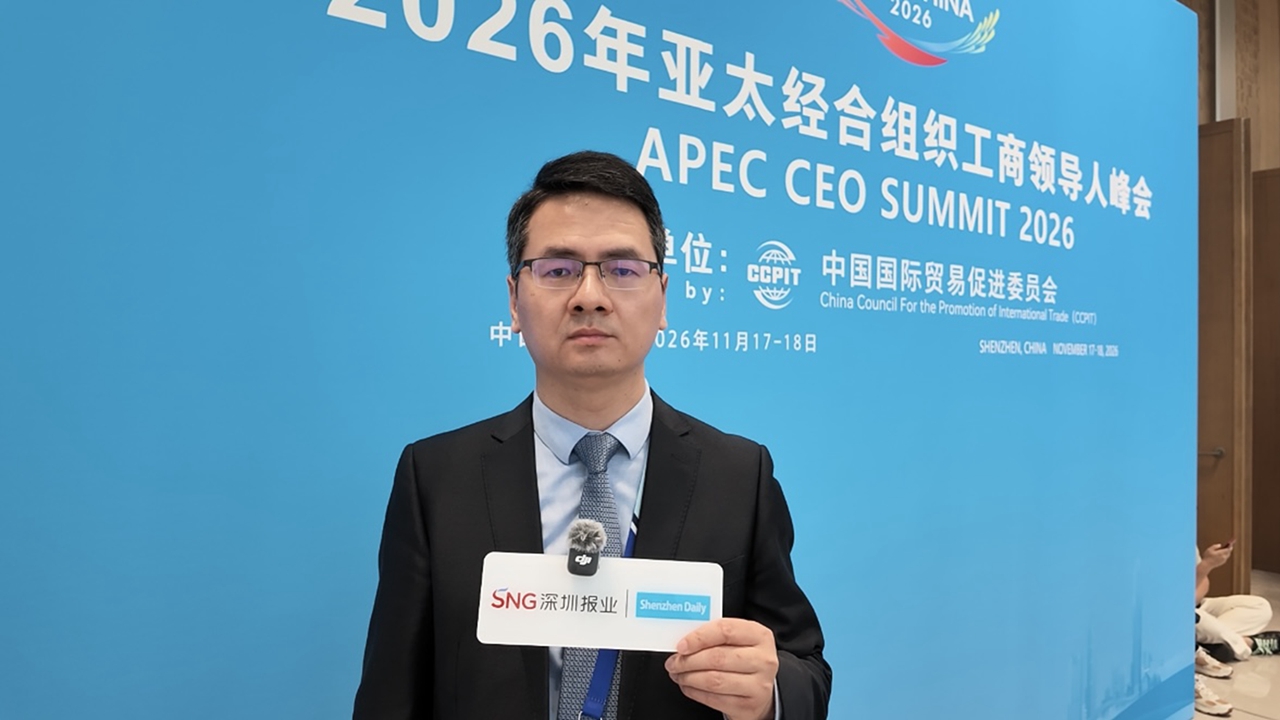
Liu Shuai, general manager of Sihoo, is interviewed by Shenzhen Daily on the sidelines of the 2026 APEC CEO Summit. Photo provided by Shenzhen Daily
In an exclusive interview on the sidelines of the summit, Liu Shuai, general manager of Sihoo, highlighted supply‑chain resilience as his top priority amid the enterprise’s “global sourcing, global manufacturing and global procurement” strategy. “As a manufacturer operating across worldwide markets, we have gained deep insights into supply‑chain practices. Building a collaborative supply‑chain ecosystem is decisive for our future growth in a diversified global marketplace,” Liu noted.
Liu pointed out two major bottlenecks facing Chinese manufacturers going global: mounting trade barriers and fragmented certification frameworks for emerging product categories across different economies. Inconsistent compliance and certification rules create tangible obstacles for cross‑border business roll‑out. He called for tangible consensus through multilateral APEC dialogues to align certification standards and compliance requirements for both traditional furniture and emerging product lines, which would greatly streamline overseas market access for manufacturing firms.
Sihoo anchors its global R&D hub in Shenzhen, assembling international designers to dissect end‑user pain points and demographic traits across overseas markets. For instance, seating ergonomics are specially adjusted to accommodate larger body physiques of consumers in foreign countries. According to Liu, the firm will keep deepening its local roots throughout its full value chain — covering product design, R&D, manufacturing and marketing — to better satisfy local consumer demands worldwide.
“The core value of this summit lies in fostering win‑win mechanisms and consensus via multilateral conversations,” Liu commented. Against the backdrop of persistent trade frictions alongside deepening multilateral cooperation, export‑oriented manufacturers eagerly expect a more stable and smooth global market ecosystem. Enterprises like Sihoo hope to leverage consensus forged at APEC to mitigate adverse impacts from trade barriers and continuously refine their global operational layout.
The summit serves as a critical platform for Shenzhen‑rooted manufacturers to voice real‑world industry challenges, seek cross‑economy rule coordination and explore inclusive growth opportunities within the Asia‑Pacific region.