
 Share


 Print
APEC voices from Qianhai ① | AI connecting people and public spaces
Writer: Chang Zhipeng | Editor: Lin Jiayi | From: Original | Updated: 2026-11-18
Video by Li Bing'er
At Shenzhen Bao’an International Airport, several giant retro game consoles made from recycled plastics hang above the departure hall, offering passengers an immersive digital art experience.
At the square of Ping An Finance Center in downtown Futian, “MirrorWood” — a tree-like algorithm-empowered installation with leaves made of mirrors and lighted branches — senses the people and activity around it in real time. Both installations, which have drawn attention for their interactive take on public space, were created by Sencity, a technology company based in Qianhai.
Sencity co-founder and CEO Steven Bai said AI’s purpose is to make public spaces more inviting. Founded in Sydney in 2016, with its design headquarters in New York, the company is using what it calls “emotional AI” to rethink urban infrastructure — bringing technology beyond screens and creating connections between people, places and culture.
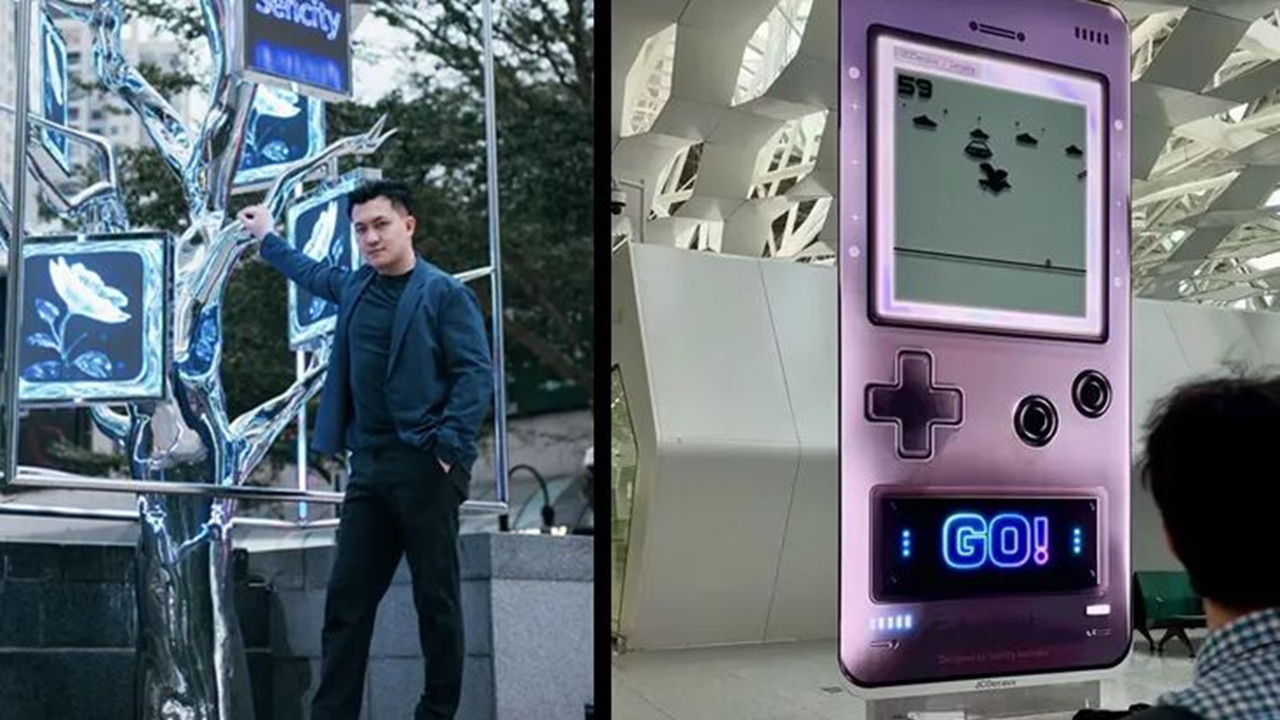
(L) Steven Bai poses with MirrorWood, Sencity's installation at Ping An Finance Center. (R) A traveler looks at Sencity’s giant retro game console installation at Shenzhen Bao’an International Airport. Photos courtesy of Sencity unless otherwise stated
Starting from a 'playable' trash bin
In 2014, when Bai was studying at the University of Sydney, he noticed a stark contrast: buildings in the city center were illuminated with striking displays, while public infrastructure around them had barely changed in decades. He began to wonder: What if a trash bin could come to life?
The result was TetraBIN, which the company describes as the world’s first interactive public infrastructure installation to combine behavioral psychology with augmented reality. Its custom embedded display and object-tracking technology detect when an item is discarded and trigger programmable feedback. The item's shape is mapped in real time to interactive content, such as a Tetris piece or food for a virtual pet. After completing the interaction, users can receive an activation code to redeem rewards online.
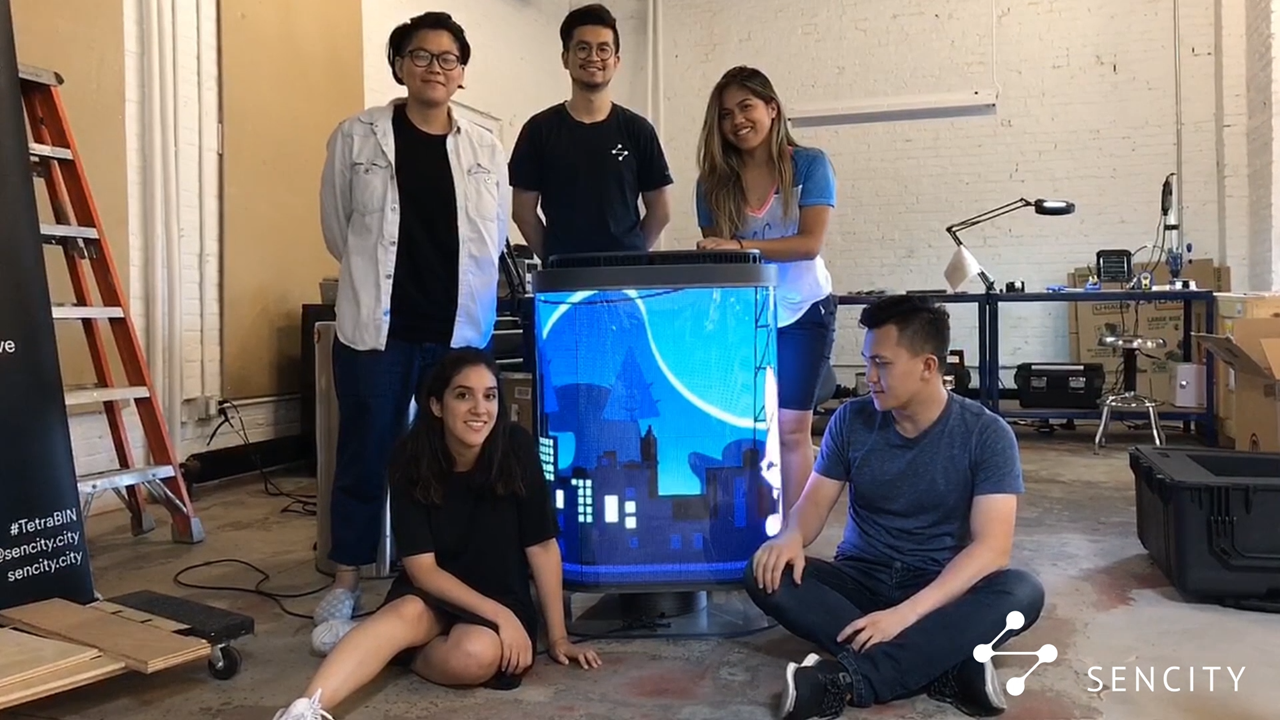
Sencity team members pose with TetraBIN, one of the company's popular products.
The playable bin drew lines of children on Sydney’s George Street and earned Bai international recognition, including a Sydney Design Award and an Edison Awards Gold Winner. It also helped establish a principle that continues to guide Sencity: use playful interaction to give everyday actions new meaning — and make positive behavior enjoyable in its own right.
“Our core idea is simple: to bring AI beyond the screen and into the real world,” Bai said.
Cities as canvases
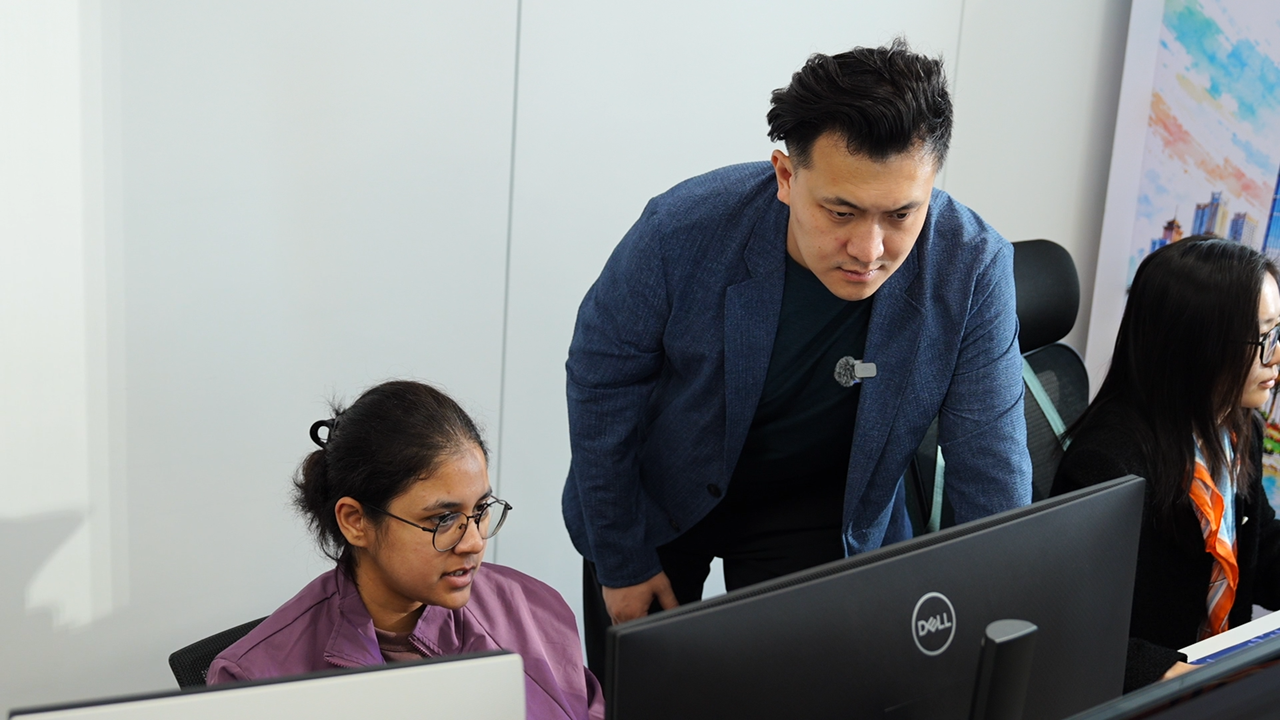
Steven Bai (C) speaks with a colleague at Sencity's Senseable Urban Lab in Qianhai. Li Bing'er
Sencity’s interdisciplinary team includes architects, creative technologists, 3D game designers, interaction designers, data scientists and engineers. The team sees screens as just another building material, like brick. The real goal is to use those materials to create urban spaces that feel alive.
The company’s SencityOS system and SenBox control unit underpin that vision. SencityOS is designed to run interactive experiences in public spaces, while SenBox connects sensors and displays to the company’s content cloud. Together, they form what Sencity calls an “urban experience layer”: a way to treat the city as a canvas, with public spaces that respond to changing seasons and the ebb and flow of people.

Residents talk in front of MirrorWood, Sencity’s interactive installation at Ping An Finance Center.
MirrorWood at Ping An Finance Center puts that idea into practice. Using AI and multiple sensors, the installation reads its surroundings and responds to people nearby. As someone approaches, digital blossoms slowly unfold, creating a quiet exchange between people and places, and between technology and nature. The aim, Bai said, is to foster a sense of well-being and help people notice the character of the spaces they pass through every day.
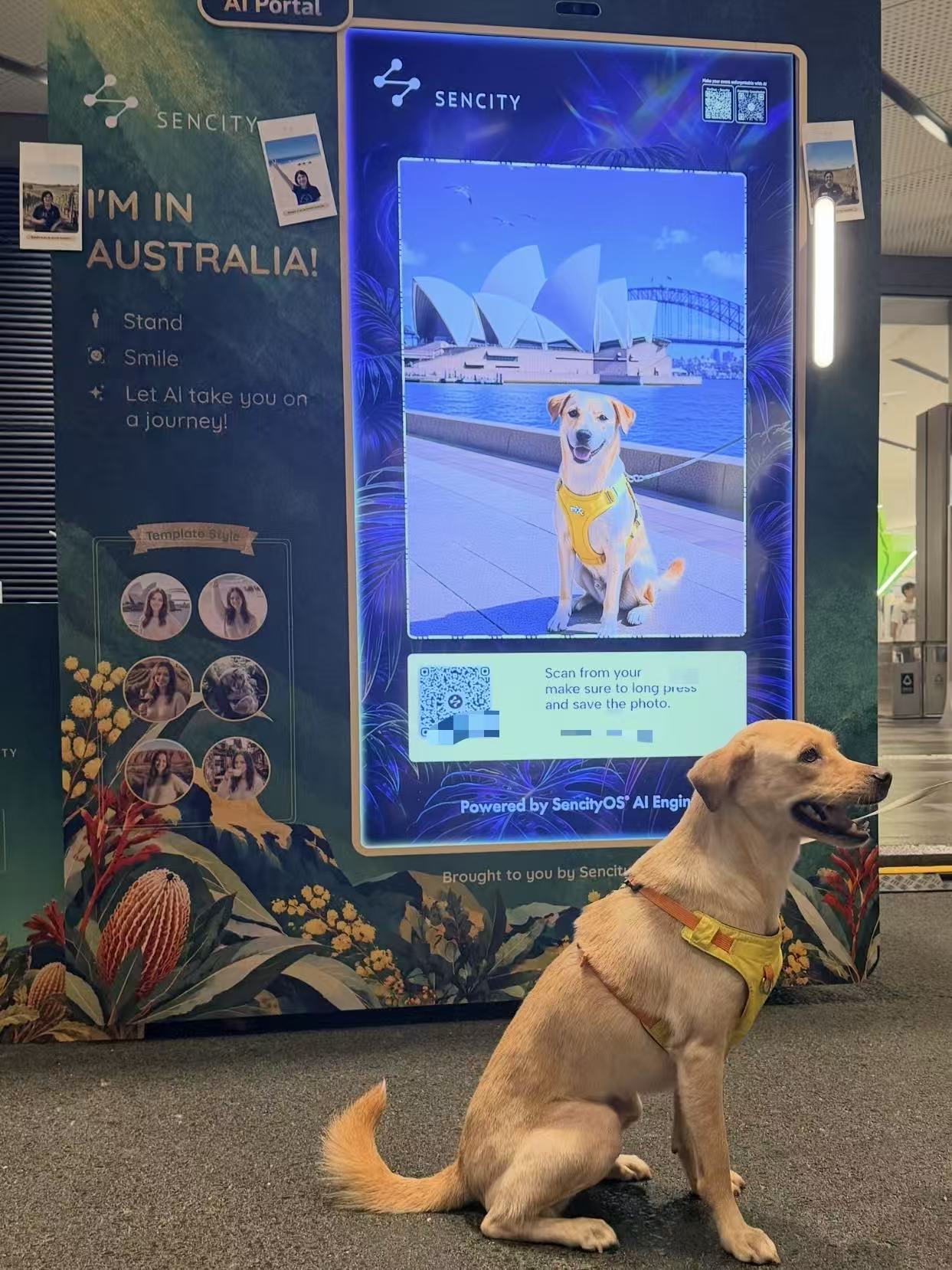
A pet dog sits in front of Sencity’s AI Portal, a photo booth that lets users take pictures with Australian landmarks.
Sencity’s original AI-powered interactive art installations are now in more than 50 cities worldwide. The projects are designed to combine artistic appeal with the durability required for cities’ infrastructure and the ability to respond to people in real time.
“We’re not creating an exhibit for people to look at,” Bai said. “We’re creating an environment that can sense people and interact with them over time. Technology’s real appeal isn’t the technology itself. It’s the possibilities that emerge when the world around you begins to understand and respond to you.”
Exploring new possibilities in Qianhai
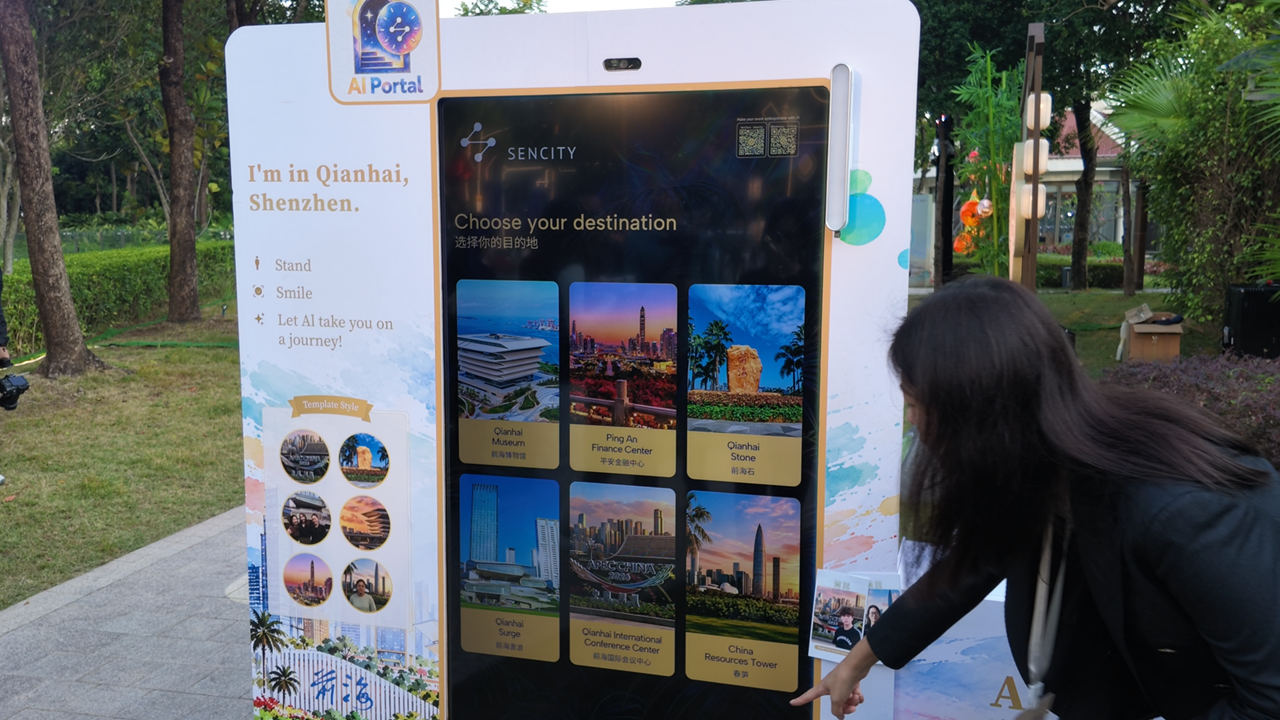
A staff member demonstrates how to use Sencity's AI Portal to take AI-generated photos featuring landmarks in Shenzhen and Qianhai. Li Bing'er
In 2022, Sencity established its Senseable Urban Lab in Qianhai as one of its global creative hubs. Drawing on the Guangdong-Hong Kong-Macao Greater Bay Area's mature engineering and manufacturing ecosystem, the lab works closely with Sencity's teams in Sydney and New York. This international collaboration helps turn creative concepts into physical products that can be produced at scale for global markets.
In August 2024, Australian Ambassador to China Scott Dewar and the Australian consul general in Guangzhou visited the lab. They praised Sencity’s work at the intersection of green, smart cities, AI and urban living, saying it could enrich city life and open up new possibilities for future living environments.
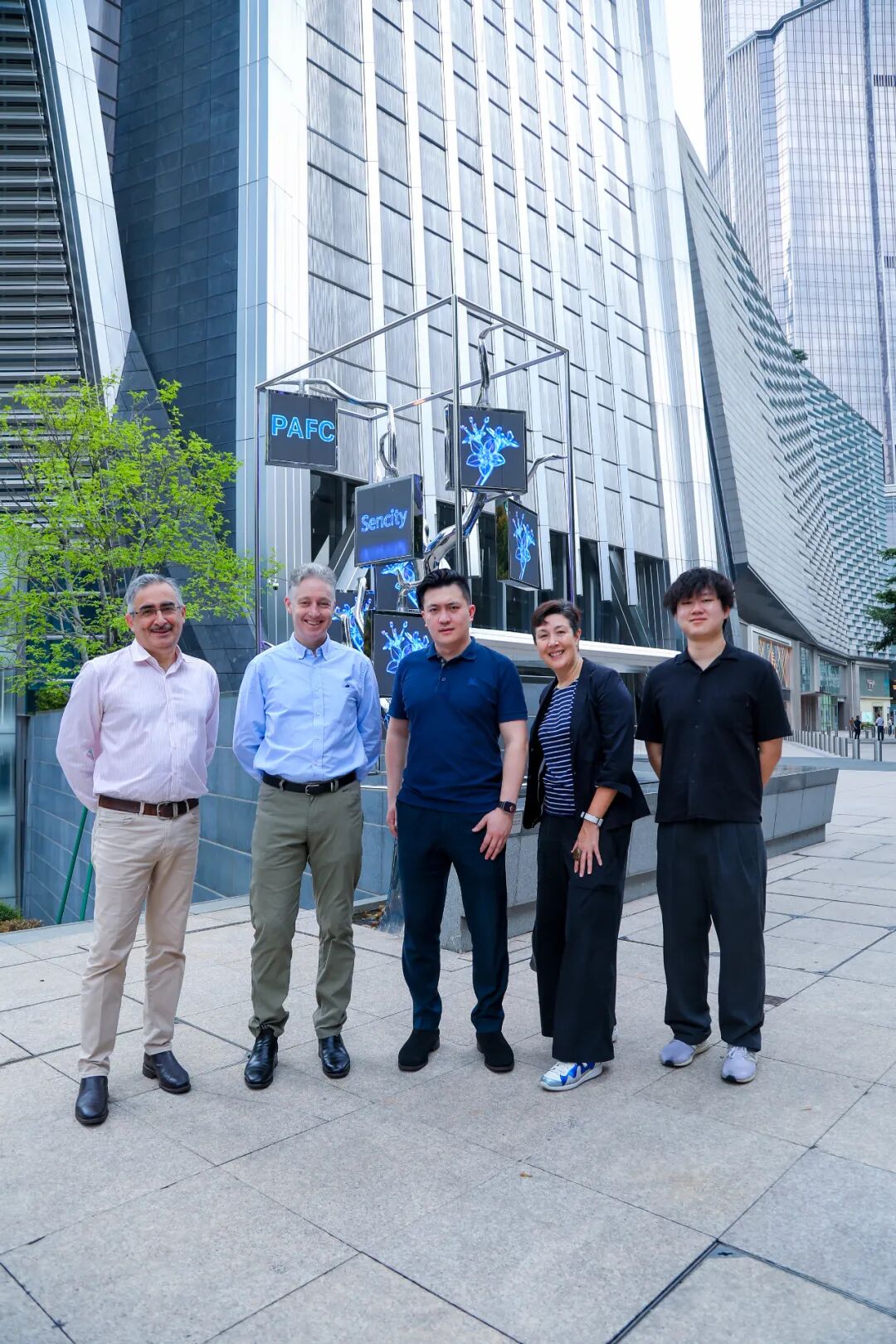
(From L) Dominic Trindade, commercial minister of the Australian Embassy in Beijing, Scott Dewar, Australian ambassador to China, Steven Bai, co-founder and CEO of Sencity, Maree Ringland, Australia's consul-general in Guangzhou, and David Wu, an Australian Consulate in Guangzhou staffer, pose for a photo in front of MirrorWood, Sencity’s installation at Ping An Finance Center in this file photo.
The APEC CEO Summit 2026 is taking place at the Qianhai International Convention Center in Shenzhen today and tomorrow. More than 2,000 government and business representatives attended the event, including representatives of 115 Fortune Global 500 companies and all 21 APEC economies. Bai and his team are also taking part, with hopes of engaging with technology companies, design firms, manufacturers, infrastructure operators, policymakers and investors from across the Asia-Pacific.
“It’s exciting to meet people who are also thinking about how AI can move from digital systems into the physical world,” Bai said. He sees the summit’s greatest value in helping businesses bring technology to international markets and integrate AI into everyday life.
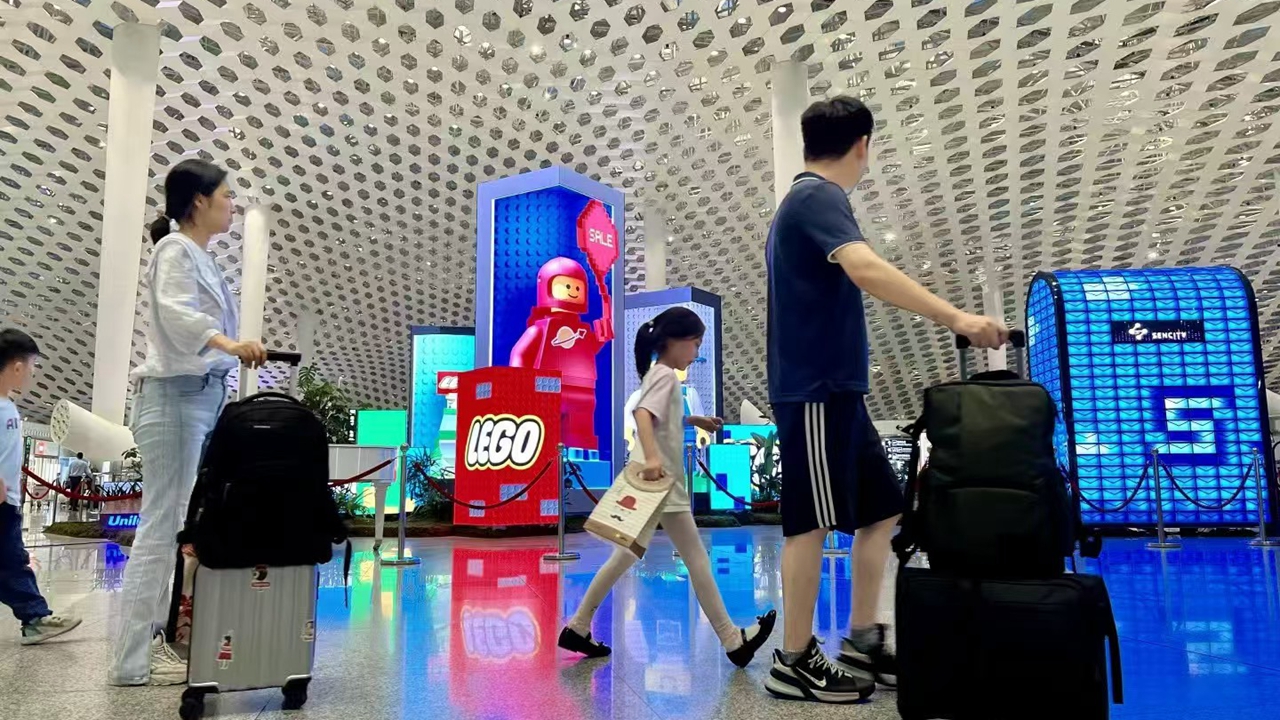
Sencity's interactive urban landscape attracts travelers' attention at Shenzhen Bao'an International Airport.
“The next stage of AI isn’t just about making machines smarter,” he said. “It’s about making the world around us more responsive and useful — and, ultimately, warmer and more enjoyable, in ways that genuinely improve people’s well-being.”
Bai also plans to follow policy discussions at the summit and work with international partners to apply advanced computing responsibly in existing urban environments.