
 Share


 Print
LICC hosts 'Engaging with APEC' exchange and book donation ceremony
Writer: Lian Jiaqi | Editor: Lin Jiayi | From: Original | Updated: 2026-11-14
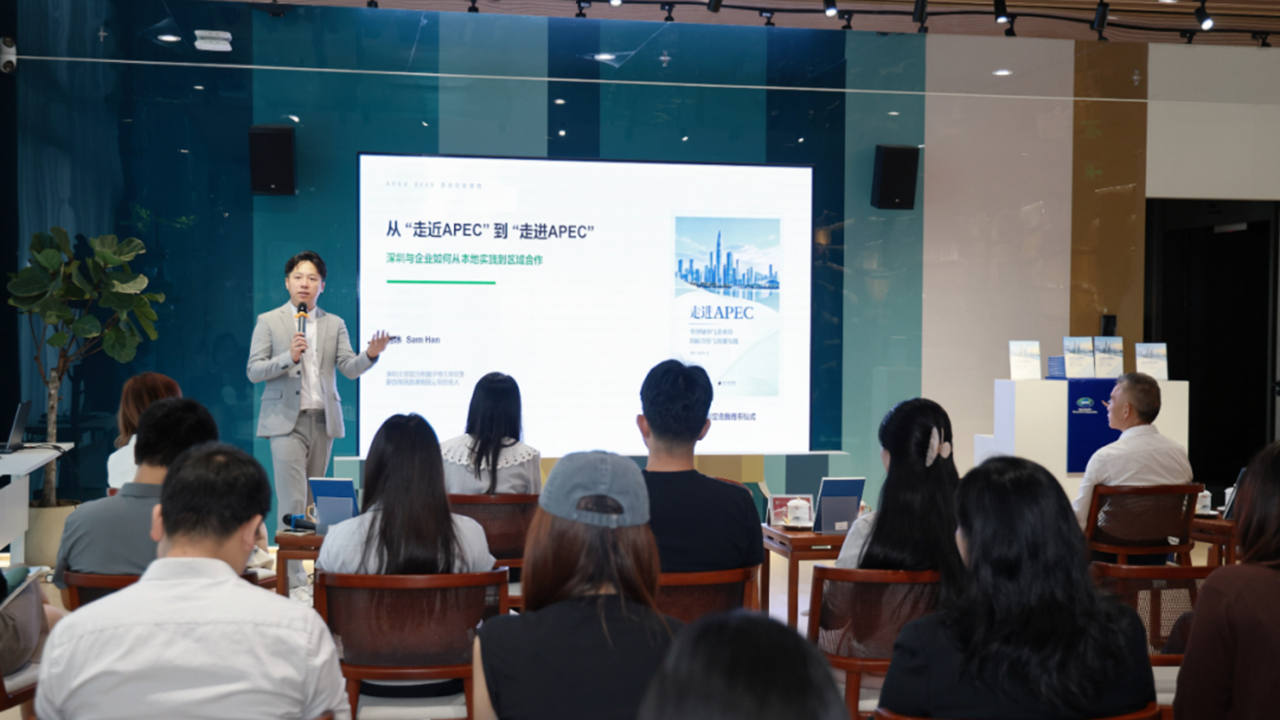
Sam Han, co-author of "Engaging with APEC: How Chinese Cities and Enterprises Participate in International Cooperation and Communication," speaks at a discussion and book donation ceremony hosted by the Shenzhen Longhua International Cooperation Center (LICC) on Nov. 6. Photos courtesy of LICC
Longhua's low-carbon practices will be featured as case studies in an upcoming official APEC report on technology-enabled low-carbon action, Sam Han, co-author of a new book on APEC participation, said Nov. 6, positioning the manufacturing hub as a potentially valuable reference for Asia-Pacific economies pursuing green transition.
Han, co-author of "Engaging with APEC: How Chinese Cities and Enterprises Participate in International Cooperation and Communication," a PhD candidate in political communication at Shenzhen University and a partner at Union Communications Hong Kong Limited, made the remarks at a discussion and book donation event hosted by the Shenzhen Longhua International Cooperation Center (LICC).
The book was co-authored by Han and Du Huizhen, an associate professor at the School of Journalism and Communication at Guangdong University of Foreign Studies. The event examined how Chinese cities and businesses can move from merely understanding APEC to actively engaging with the regional cooperation mechanism.
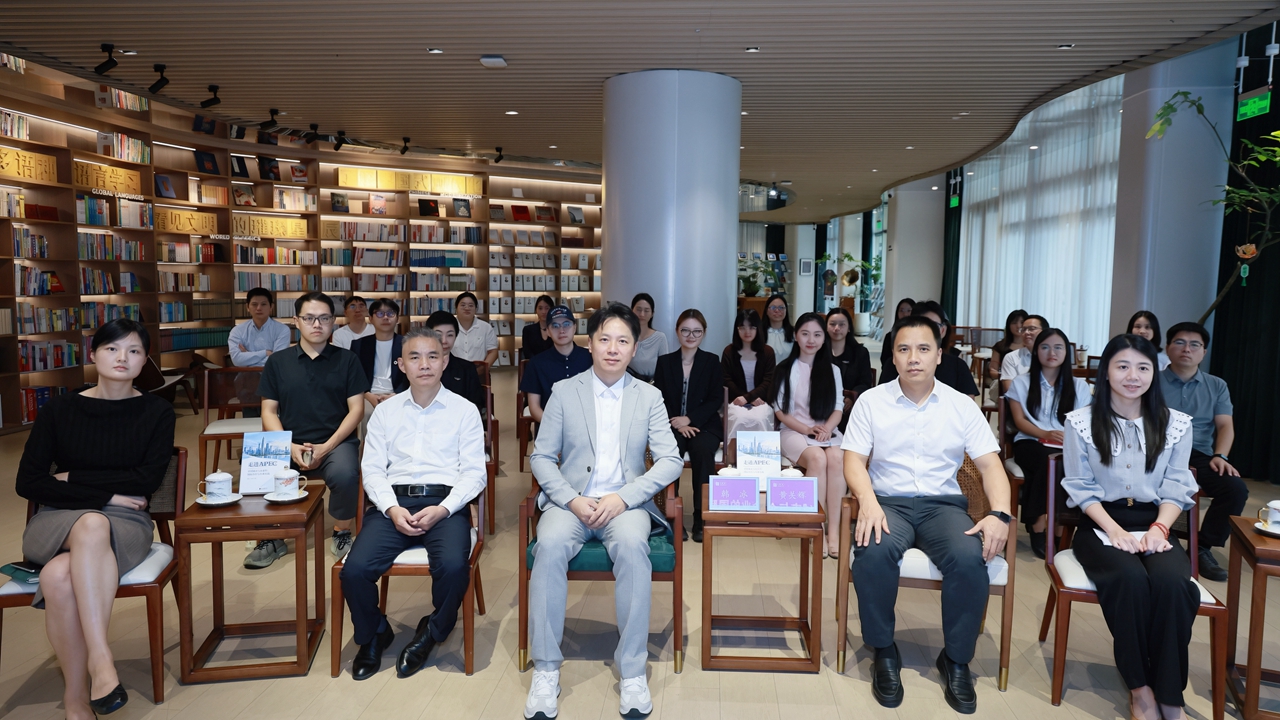
Participants pose for a group photo during a discussion and book donation event of “Engaging with APEC: How Chinese Cities and Enterprises Participate in International Cooperation and Communication" hosted by the Shenzhen Longhua International Cooperation Center (LICC) on Nov. 6.
Han delivered a keynote address on APEC mechanisms and priorities, drawing on examples from Shenzhen and local enterprises to explain how cities and companies can move from "understanding APEC" — learning what the mechanism is, how it operates and which regional issues it prioritizes, to "engaging with APEC" by identifying connections between their own industries, technologies and governance practices and Asia-Pacific cooperation agendas.
Han said green transition and low-carbon development are among APEC’s key areas of cooperation, and that Longhua enterprises have developed low-carbon technology solutions that could be replicated elsewhere in the region.
He also highlighted Longhua's public-private partnerships, in which the government plays a key role in providing policy support, building platforms and facilitating pilot projects, offering a cooperation model that other APEC economies could draw on. The upcoming official APEC report on technology-enabled low-carbon action, he said, will provide a basis for connecting businesses in the region with APEC cooperation mechanisms.