
 Share


 Print
Shenzhen expats learn Chinese with high hopes for APEC
Writer: Li Jing | Editor: Lin Jiayi | From: Original | Updated: 2026-11-12
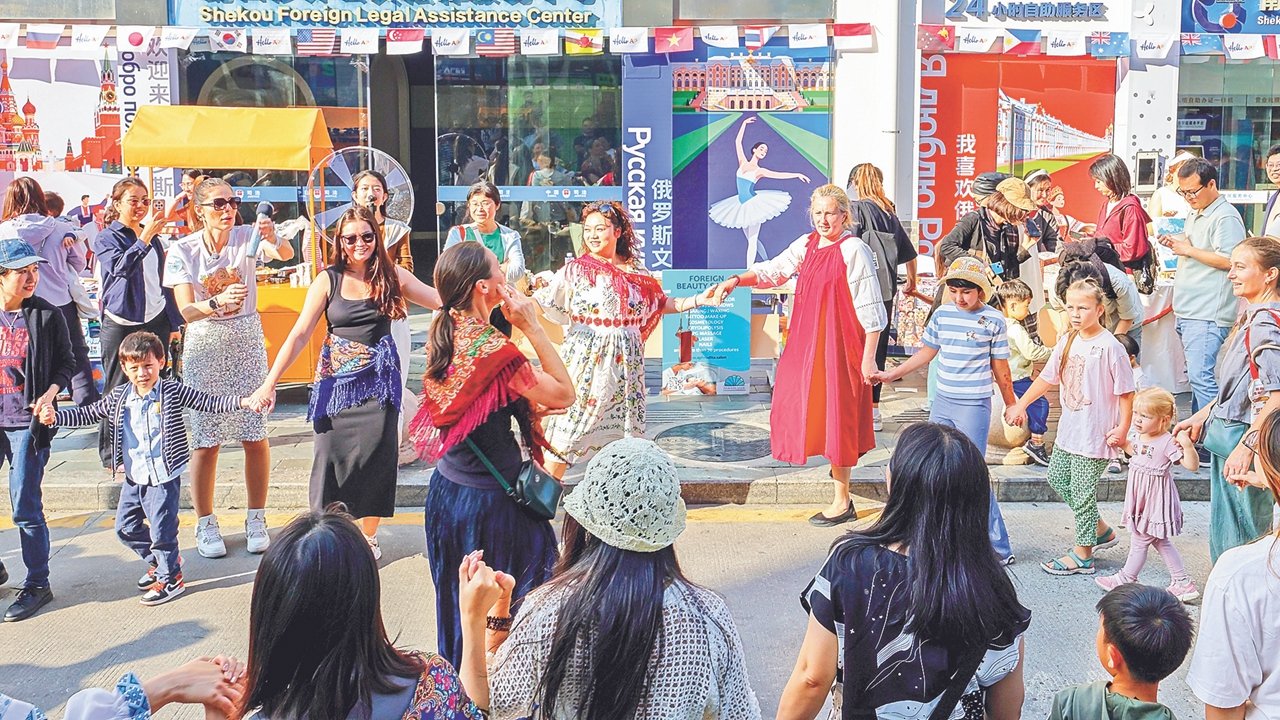
Visitors attend the “Hello APEC · Shekou Cultural Market — Exploring Russia.” Zhou Hongsheng
As night falls, classrooms at the Shekou Management and Service Center for Expats (Shekou MSCE) remain lit. In a Chinese-language class called “Hello APEC: Learn a Language Together,” residents from Russia, New Zealand, the Philippines and other APEC economies practice pronunciation and conversation.
Shekou is home to one of Shenzhen’s largest communities of foreign residents. The class helps participants improve their Chinese and connect with neighbors from across the Asia-Pacific. Steve, from New Zealand, and Jerry, from the Philippines, are regulars.
Steve has lived in Shekou since 2016 and works in test preparation for students planning to study abroad. He has watched Shenzhen grow into a global innovation hub. He sees the APEC summit as an opportunity for the city to showcase its development to the region and the world.
Visits by foreign leaders and business representatives would give them a firsthand look at Shenzhen’s technological strengths and urban development, Steve said, helping raise the city’s international profile.
Foreign residents are also benefiting from service upgrades ahead of the APEC meetings. Shenzhen Metro offers multilingual assistance and accepts foreign bank cards. Steve hopes to invite family and friends from New Zealand to visit the city.
Jerry, a Philippine businessman who has lived in Shenzhen for eight years, works in cross-border trade. He was excited to learn that the city would host the summit. “Trade cooperation ultimately comes down to trust between people,” he said. APEC can strengthen regional business ties and help small and medium-sized enterprises reach markets across the Asia-Pacific, he said.
Learning a language can offer a direct path to understanding a city. For students in the class, it is not only a way to communicate but also a way to take part in community life.
Steve said one of his biggest challenges is adjusting to the differences between Chinese and English. He tries to set aside English-language patterns and learn through everyday situations. The class also gives him a chance to meet other foreign residents.
Jerry finds Chinese tones difficult because a change in tone can alter a word’s meaning and lead to misunderstandings. He studies the language for daily tasks, such as ordering food, as well as for business.
“Business dealings cannot rely solely on translation software,” he said. “Only by mastering Chinese can I understand what suppliers really think and communicate more deeply.”
Yang, who has 15 years of experience teaching Chinese to foreign students, leads the class. Lessons are held every Wednesday and focus on practical situations, including ordering food, asking for directions and shopping.
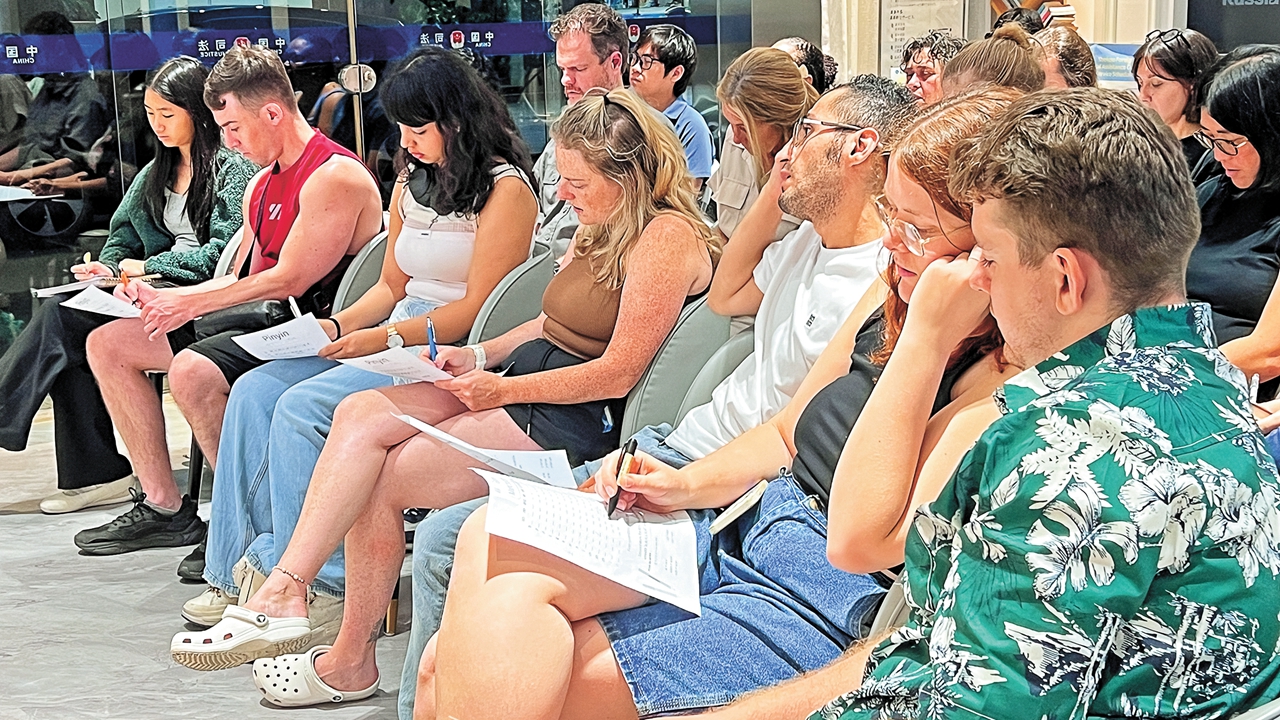
Foreign residents attend a Chinese class in Shekou. Courtesy of Shekou MSCE
“Learning Chinese well gives foreign residents far more than a tool for communication — it also brings a sense of belonging and pride,” Yang said.
Some students who have improved their Chinese have gone on to volunteer in the community, share their cultures and take part in public events.
Margo, from Russia, said she is glad to attend the class and proud to have joined Shekou’s international volunteer team. She hopes to help more people through future activities.
Steve and Jerry said language and cultural exchange can help build public support for APEC cooperation. Trade agreements can be translated, they said, but trust and mutual understanding depend on communication between people.
Shekou, where modern urban life meets a close-knit neighborhood community, reflects Shenzhen’s cultural diversity. Steve hopes the APEC summit will strengthen ties among member economies, deepen regional trade and attract more visitors to Shenzhen.
Jerry hopes the event will lead not only to official cooperation but also to opportunities for residents and foreign nationals in Shenzhen to take part in public events. He looks forward to more business-matching events and cultural exhibitions and hopes the benefits of cooperation will reach businesses and ordinary people across the region.
The Chinese class brings together people from across the Asia-Pacific to learn, exchange views and build connections — a local expression of the people-to-people ties at the heart of APEC cooperation.