
 Share


 Print
Beauty Magic Cube explores 'technology for kindness' solutions
Writer: Chang Zhipeng | Editor: Lin Jiayi | From: Original | Updated: 2026-11-11
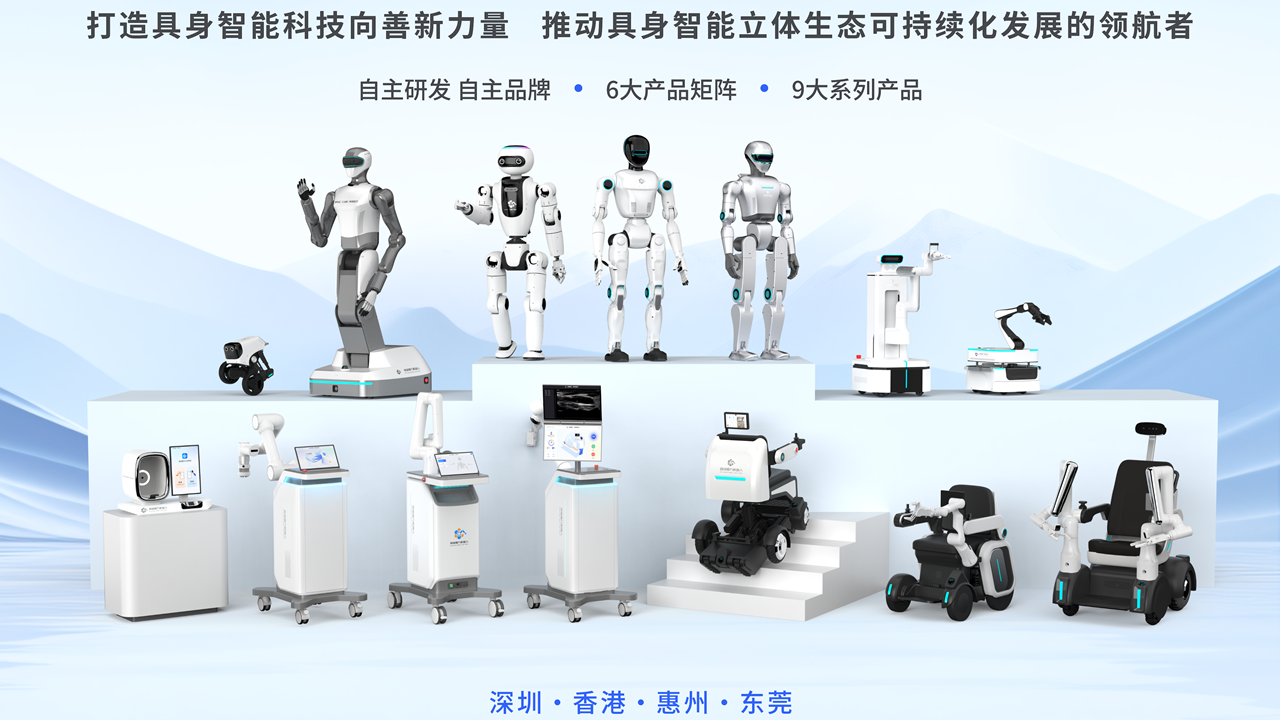
A showcase of Beauty Magic Cube Robot’s product lineup. Photos courtesy of Shenzhen Beauty Magic Cube Health Investment Group
A wheelchair user asks someone to press the button for the second floor. In response, a robotic arm rises, uses a camera to locate the elevator panel, identifies the correct button and presses it.
This daily task is exactly what Shenzhen Beauty Magic Cube Health Investment Group expects its robots to accomplish. Rather than serving as a flashy demonstration, such functions are designed as practical support for people with limited mobility.
The company’s wheelchair robot integrates voice interaction, autonomous navigation, a robotic arm and a self-developed multimodal algorithm. It targets surgical patients, disabled seniors and other people with mobility impairments. It can switch movement modes according to terrain to cross obstacles, slopes and stairs.
For the enterprise, these functions reflect a larger challenge: enabling robots to understand human requests, interpret dynamic surroundings and operate safely in physical environments.
“Technology should not stop at demonstrations or showing off capabilities,” said Chen Qiong, the group’s chairwoman and founder of its robotics company. “It must address real needs and help solve practical problems in people’s lives.”
Established in 2014, the group has expanded into an industrial enterprise with 12 subsidiaries and several second-tier subsidiaries. Its business covers biomedicine, health devices, medical aesthetics, genetic and cellular engineering, robotics, brain-computer interfaces, e-commerce, smart healthcare, cultural production and tourism.
AI and robotics now sit at the core of its smart-health strategy. The group has built a data platform to connect its businesses and devices, manage information and enable remote software upgrades. It plans to apply robots and smart products to healthcare, rehabilitation and daily services.
Its robotics arm focuses on integrating AI, robotics and real-world applications. It has built six product matrices and nine product series, including humanoid and wheeled robots, assistive and care robots, rehabilitation devices, medical ultrasound robots and brain-computer intervention technologies.
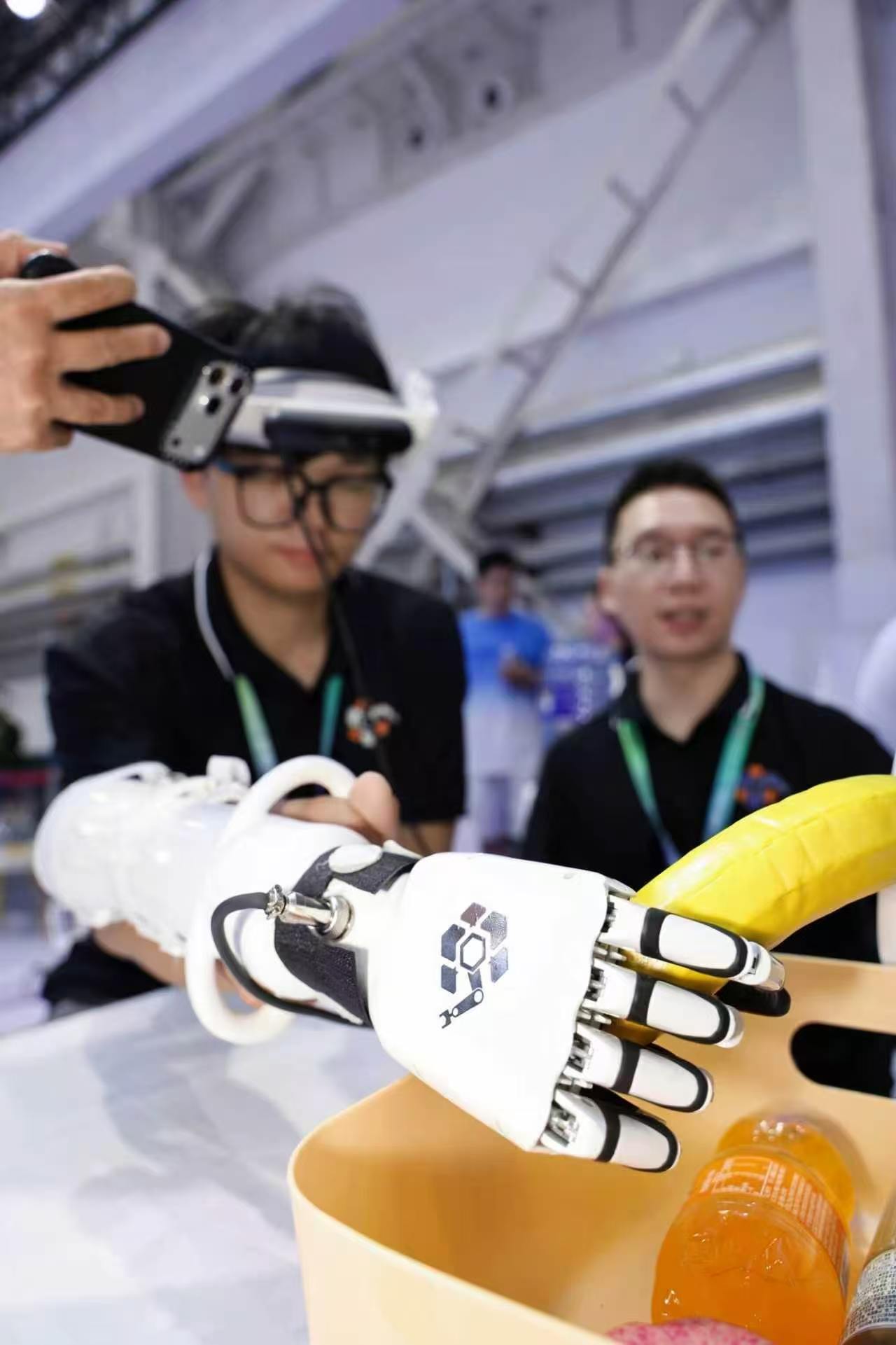
Magic BH1 bionic hand picks up an object.
At the 2026 World Robot Conference, it exhibited 16 embodied-intelligence products, including the wheelchair robot and moxibustion and rehabilitation robots. According to the company, these products adopt visual recognition, force sensing, flexible joints, positioning and temperature control. Practitioners can adjust treatment points and motion paths via software, while the data platform enables remote management and upgrades.
Care and home environments demand more than pre-set procedures. For instance, fetching medicine requires speech comprehension, object identification, route planning, proper force control, and adaptation to changing rooms or user needs.
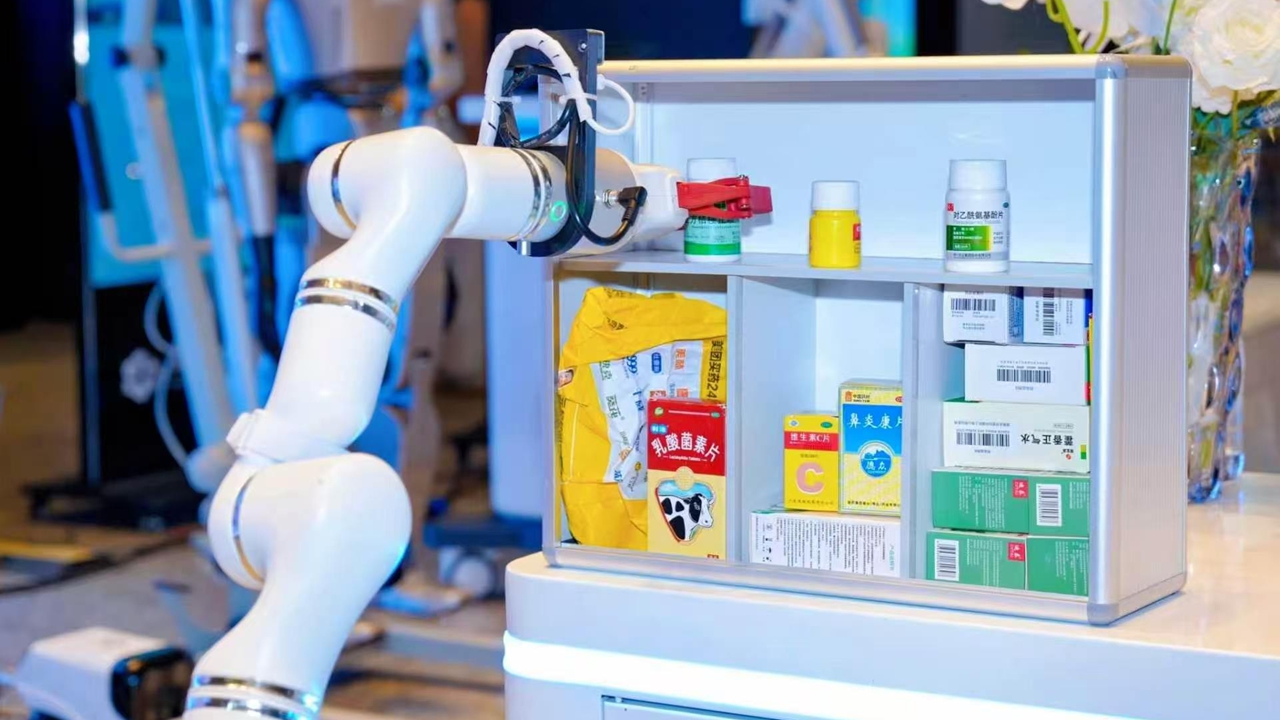
A robotic arm developed by Shenzhen Beauty Magic Cube Robot locates and fetches medicine by interpreting voice commands from people with limited mobility.
“Robots need to understand different ways people express their needs, interpret constantly changing environments and decide what to do next,” Chen noted. “That takes repeated testing in specific scenarios and continuous technical improvement.”
The group’s charitable work has shaped its focus on practical demands. Public records show that by the end of 2025, the group and Chen had donated more than 280 million yuan (US$4.19 billion) in cash and goods via bodies including the China Foundation for Disabled Persons, China Charity Federation and Shenzhen Charity Federation. The aid has benefited over one million recipients, including people with disabilities, vulnerable seniors, women, children and veterans.
Field visits to families and communities made the team realize challenges go beyond equipment shortages. Long-term care, rehabilitation, family monitoring, emotional support and social participation are equally important, Chen said.
“Charity does not end with a one-off donation. Once you visit families, you see that many problems need sustained attention.”
These insights guide product development, aiming to reduce caregivers’ repetitive work while protecting users’ dignity and independence. In 2026, its robotics company co-established a research center for assistive robots and donated smart rehabilitation equipment for disability support.
The firm reports applying for over 300 intellectual-property rights, leading four out of 15 group standards and contributing to one national standard. It was listed among 24 promising robotics unicorns in the White Book on the Development of Artificial Intelligence in Shenzhen in 2025 and selected as a typical Guangdong application case. It also set up a smart-health robotics collaborative innovation center with the MIIT Talent Exchange Center and Harbin Institute of Technology.
The group aims to bring technology to people in need. Whether its robots can reliably fetch items, assist rehabilitation or reduce caregivers’ burdens depends on real-world performance.
For Chen, this defines “technology for kindness”: not what machines perform onstage, but whether they can deliver useful, safe and lasting daily assistance.