Share


 Print
Where art, technology and the future meet
Writer: Cao Zhen | Editor: Cao Zhen | From: Original | Updated: 2026-11-07
Art and technology enthusiasts are invited to explore a new exhibition of algorithms, sound and visuals to imagine possible futures. Afterwards, you can take home a petri dish of slime mold and turn your home into a small bio lab!
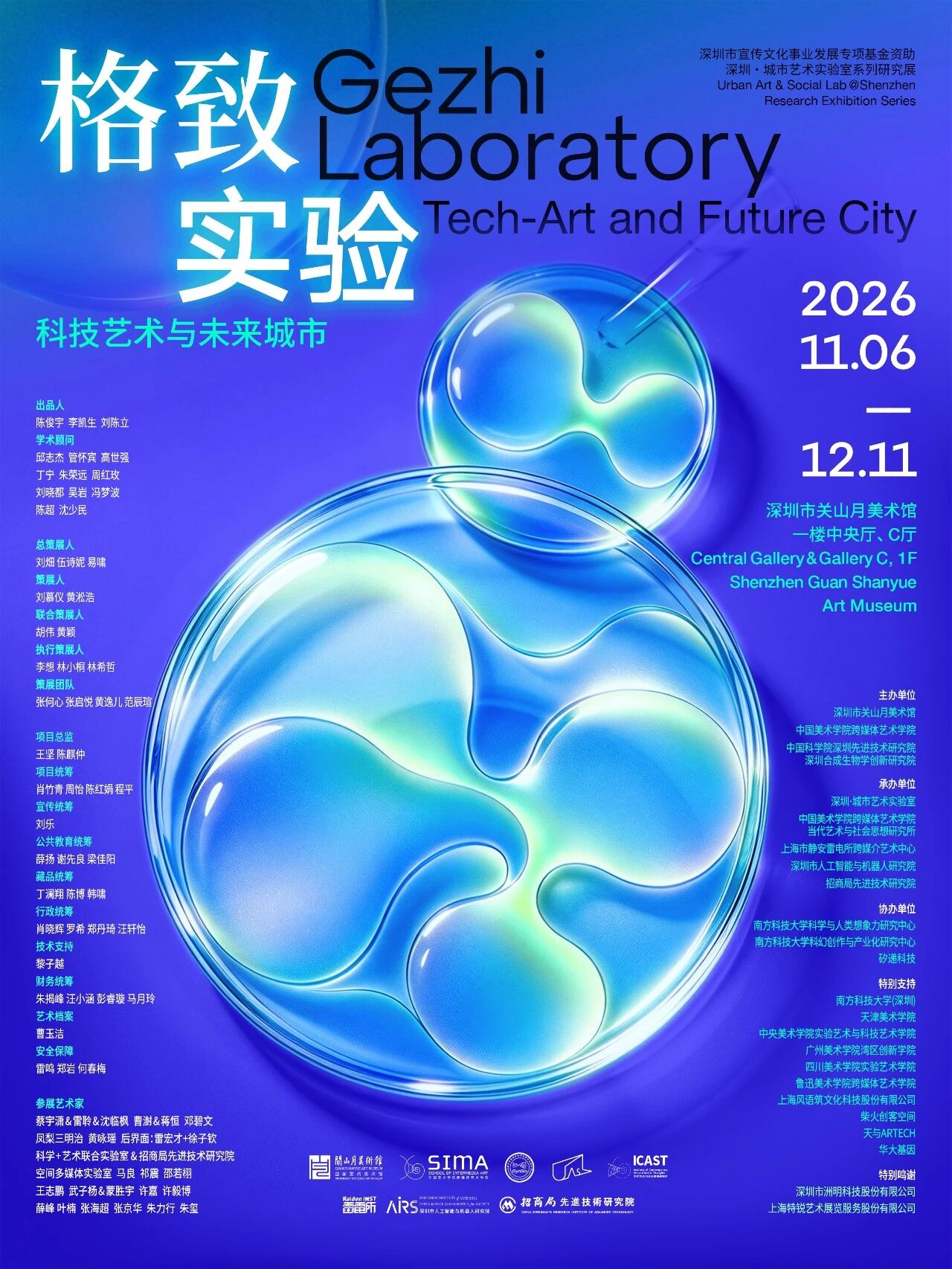
“Gezhi Laboratory: Tech-Art and Future City,” on view at the Guan Shanyue Art Museum, features 21 works, 13 of them co-created by artists and scientists. “Gezhi” derives from the Confucian concept of the investigation of things to acquire knowledge. The curators suggest that pairing “gezhi” with “laboratory” offers an accessible way to think about the rapid development of technology and its place in everyday life.
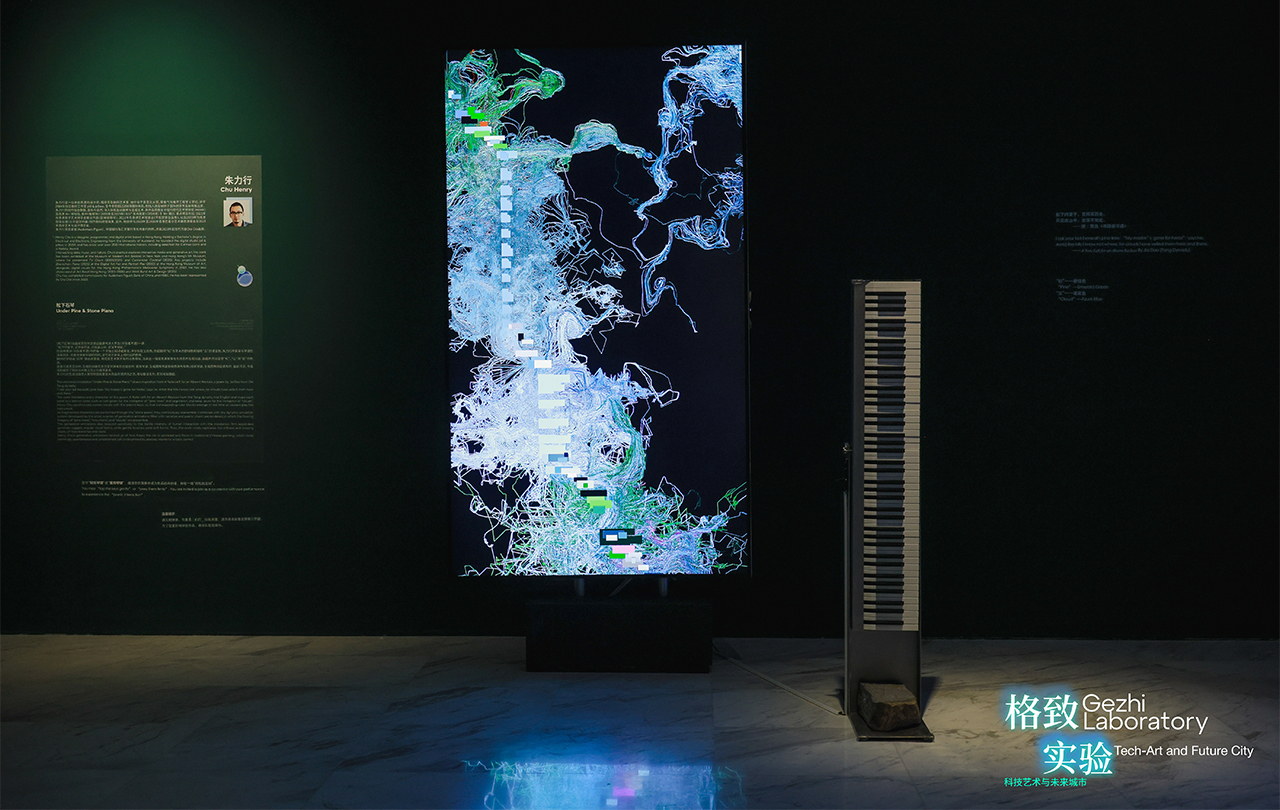
“Under Pine & Stone Piano,” created by Henry Chu. Visitors can play the keyboard to change the generative animations on the screen. Photos from organizers unless otherwise stated
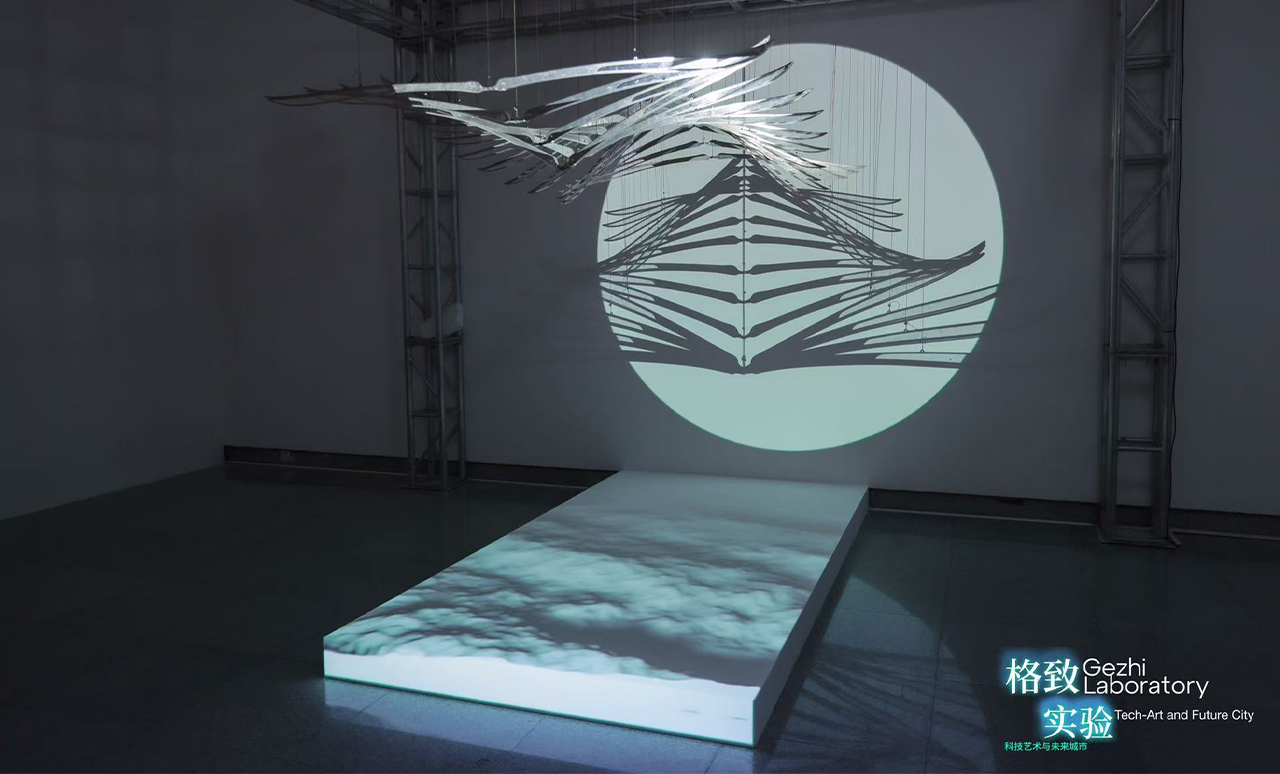
“Yi,” created by Xu Yibo.
The exhibition is organized into four sections. In “Shanshui Experiment,” artists ask whether algorithms can capture the poetic qualities of traditional Chinese landscape painting. Some use AI to reinterpret tradition, prompting viewers to reconsider today’s mediated relationship between people and nature.
“Urban Experiment” turns to Shenzhen as a prominent example of China’s urbanization. What might a city look like in art? The works from participating artists offer distinct answers.
“Future Experiment” asks whether, amid the rapid changes in technology and information, the future feels closer or farther away. The works invite visitors to imagine what may lie ahead.
“Generative Experiment” brings together two transformative technologies of the 21st century: AI and biotechnology. It presents AI-generated works alongside artists’ collaborations with synthetic biology research teams. The section explores different forms of generation in art, AI and biological experiments — and what “creation” means in the face of engineering precision.
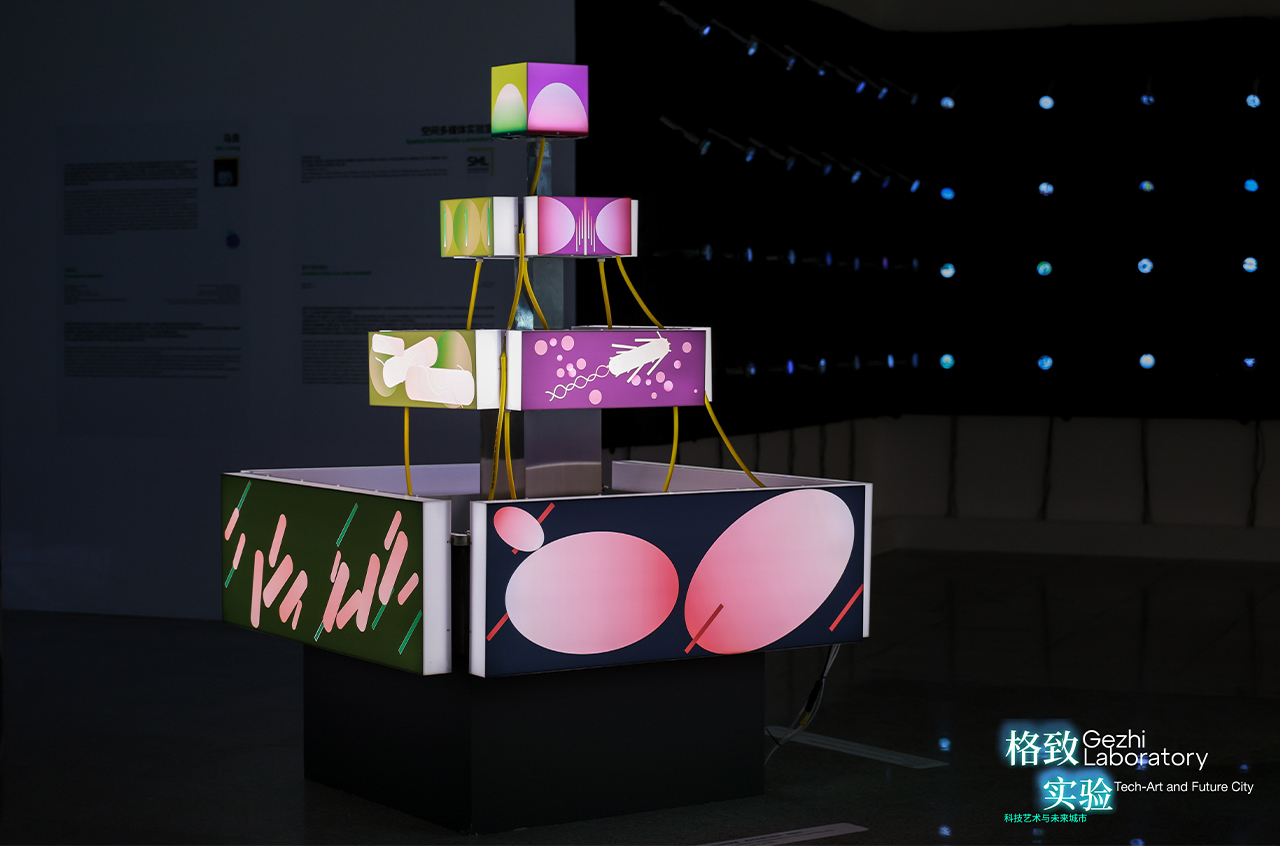
“Emergence Fountain,” created by Ma Liang.
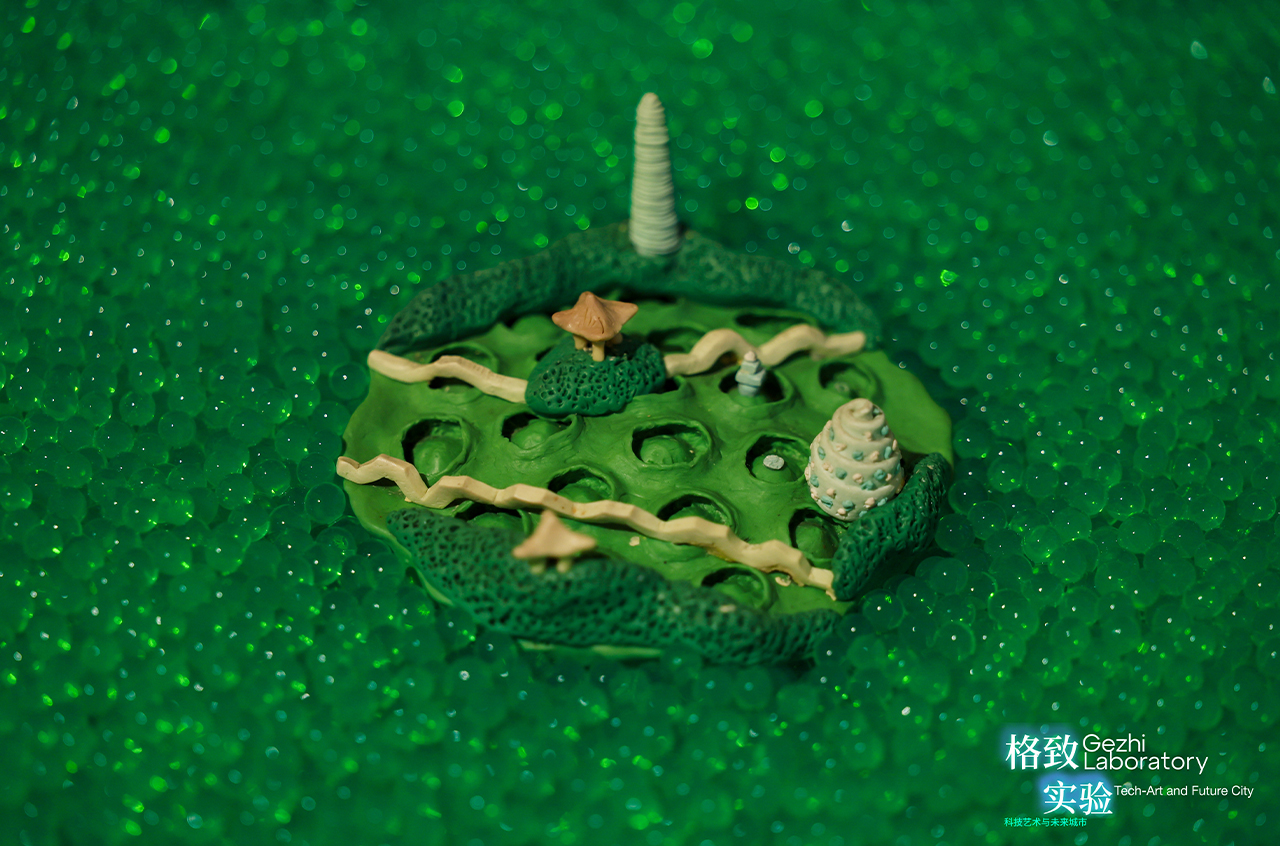
“Reading the City: Hangzhou,” created by Xu Jia.
The exhibition is the first research exhibition since the “Urban Art & Social Lab @Shenzhen” was jointly launched by the Guan Shanyue Art Museum and the School of Intermedia Art at China Academy of Art in late March.
Guided by the principle “art leads tech, tech activates art,” the lab connects innovation resources across China to explore an integrated model of art creation combining industry, academia and research. It aims to link the Guan Shanyue Art Museum, China Academy of Art and local research institutions through a process of research, seminars, creation and exhibitions.
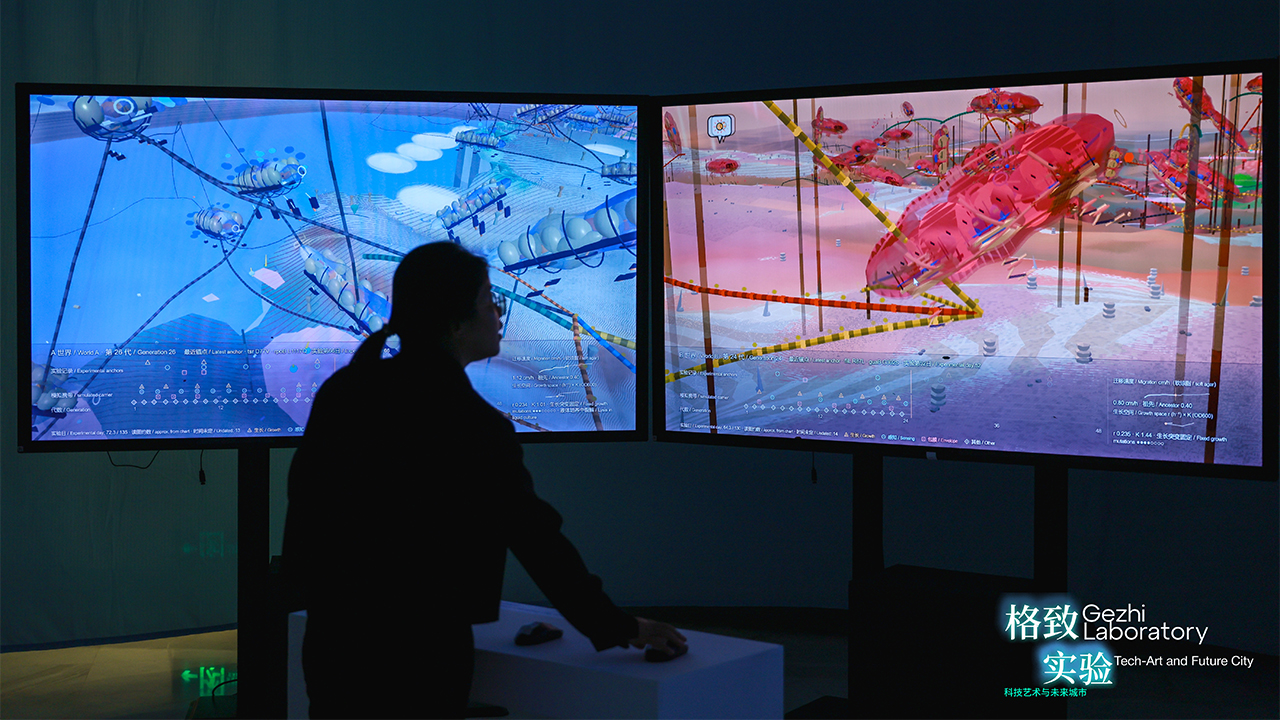
“The 48th Generation,” created by Wu Ziyang and Meng Shengyu.
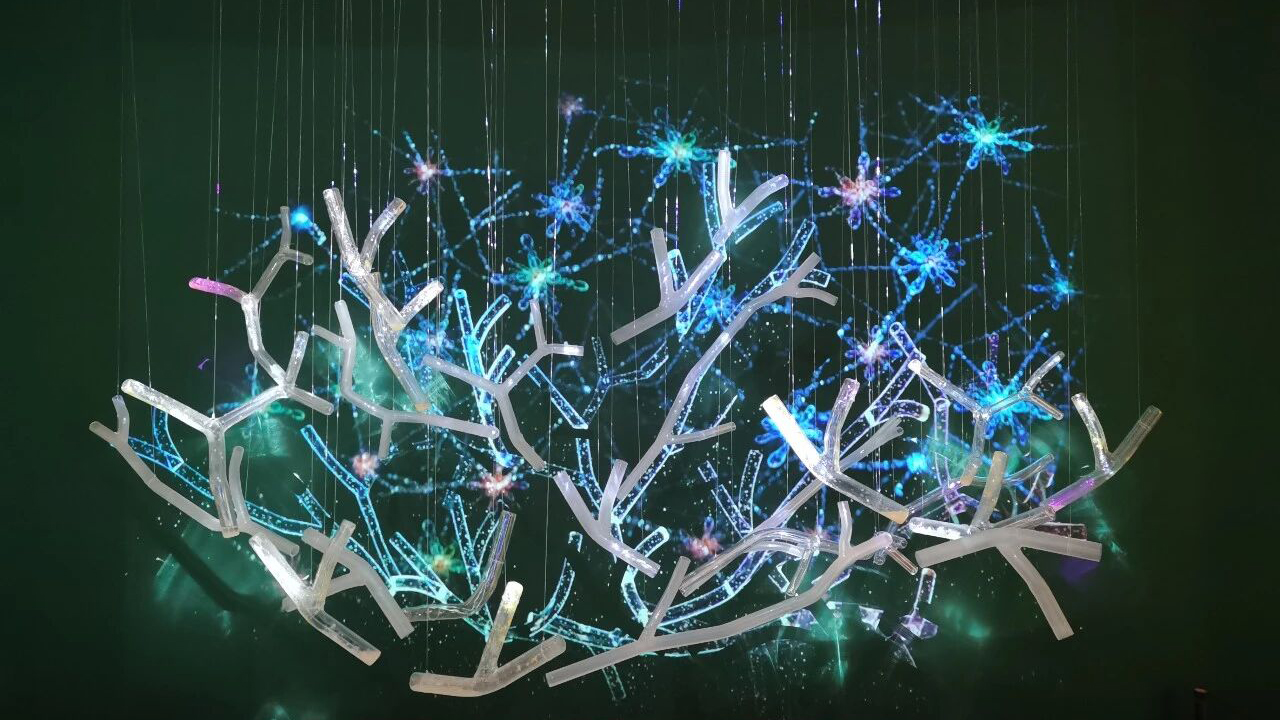
“Undefined Form,” created by Qi Zhen. Made of glass tubes, microorganisms, nutrients, and video, the work draws inspiration from the plum blossoms in master Guan Shanyue’s paintings. Photo by Cao Zhen
Chen Junyu, director of the Guan Shanyue Art Museum, said the museum has included the digital industry, digital art and AI in its academic work since 2023.
The current exhibition was developed in collaboration with leading Shenzhen institutions and technology companies, including the Shenzhen Institute of Synthetic Biology at the Shenzhen Institutes of Advanced Technology, Chinese Academy of Sciences; Southern University of Science and Technology; and BGI Genomics, to name a few.
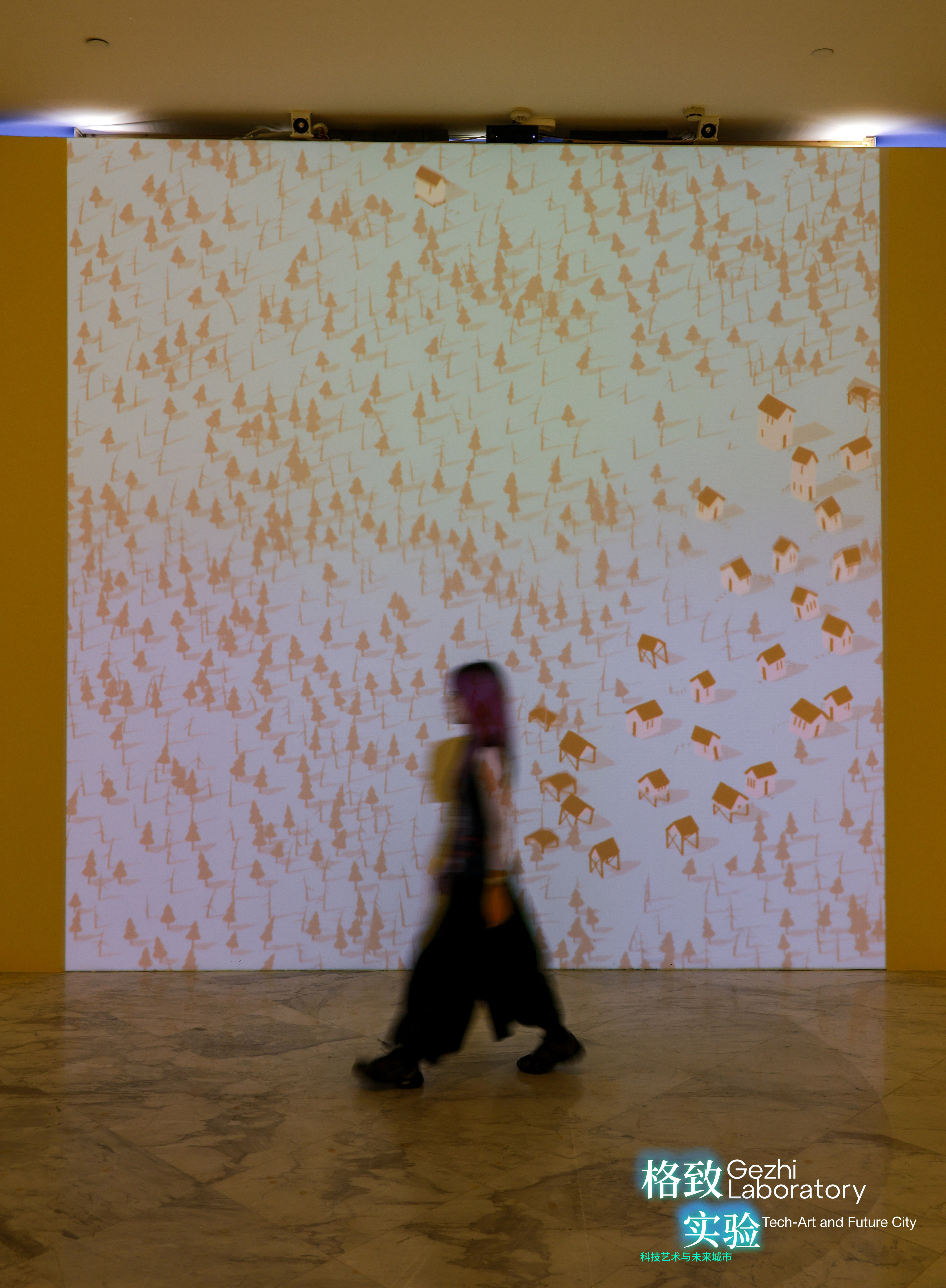
“Little House: A Sense of Belonging,” created by Funnysandwich. As viewers walk past or pause in front of the work, houses appear among the forest in the video. When they leave, the houses disappear, highlighting the interplay between human presence and urban expansion.
Public programs during the exhibition include a Chinese-character workshop for children, a generative audio-visual interaction workshop and an art-and-technology workshop.
Visitors who share posts about the exhibition on social media can claim a petri dish of slime mold at the museum’s service counter. You can raise this special “pet” at home with basic supplies such as oat flakes!
Dates: Through Dec. 11
Hours: 9 a.m.-5 p.m. (Tue.-Thu., Sun.), 9 a.m.-9 p.m. (Fri.-Sat.), closed Mondays
Venue: Guan Shanyue Art Museum, Futian District (深圳关山月美术馆)
Metro: Line 3 or 4 to Children’s Palace Station (少年宫站), Exit F