
 Share


 Print
Ocean envoy impressed by Shenzhen's UIS and urban-nature harmony
Writer: Windy Shao | Editor: Lin Jiayi | From: Original | Updated: 2026-11-06
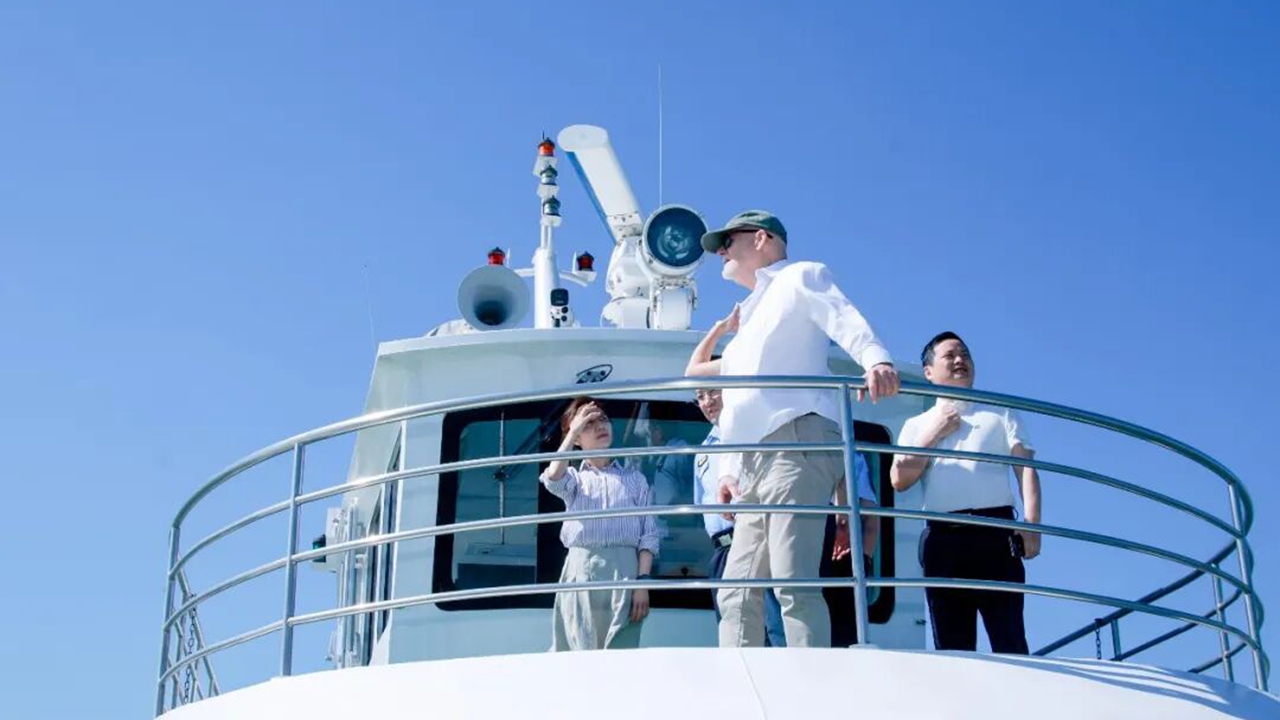
Peter Thomson (C), United Nations Secretary-General’s Special Envoy for the Ocean, takes part in a marine cruise in Shenzhen on Oct. 23. Photos courtesy of event organzier
Peter Thomson, the United Nations Secretary-General’s Special Envoy for the Ocean, visited Shenzhen during the China Marine Economy Expo from Oct. 22 to 24, exploring the city’s marine innovation and its efforts to balance urban development with nature.
Thomson attended the expo’s opening ceremony and took part in discussions and field visits focused on ocean governance and the sustainable development of the marine economy.
For Thomson, the expo offered a glimpse into the future of the marine industry.
“The expo showcases the frontiers of the marine industry. It is the biggest display of new marine technology I’ve ever seen in my life,” he said, describing the innovations on display as impressive and eye-opening.
One example that particularly caught his attention was a floating aquaculture facility — essentially a factory at sea. Seawater flows through the facility while fish are raised inside, offering an alternative to conventional fishing.
“You don’t have to catch the fish. You’re growing the fish inside,” he said, calling it an interesting concept and an example of the innovation he encountered while walking around the exhibition.
Thomson linked such innovations to the broader global challenge of ocean conservation. As he often emphasizes, “There is no healthy planet without a healthy ocean.” Protecting the ocean, he believes, requires both technological progress and stronger international cooperation.
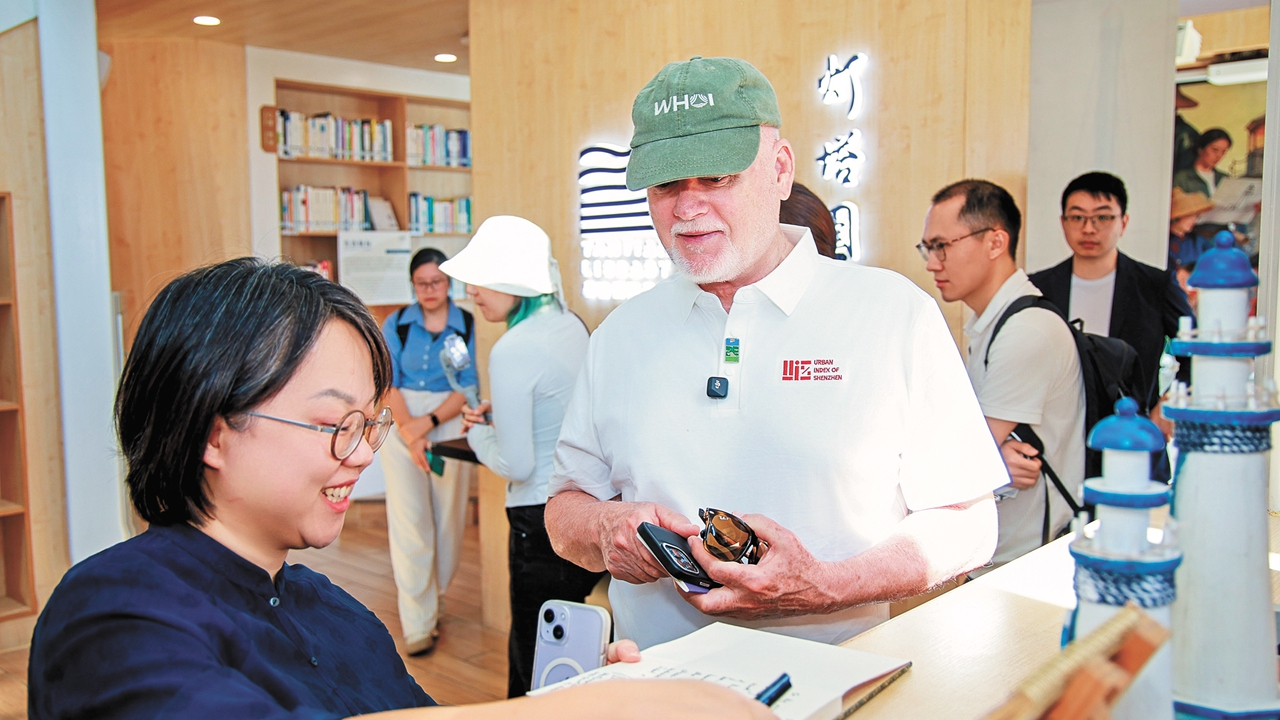
Peter Thomson (L) takes in a view of Shenzhen’s skyline across the water during his visit to the city for the China Marine Economy Expo in October.
Beyond the exhibition halls, Thomson also explored how Shenzhen is integrating nature into its urban development.
He was impressed by the city’s Urban Index of Shenzhen (UIS), a framework built around six dimensions of urban development: innovation, livability, aesthetics, resilience, humanism, and intelligence. For Thomson, these dimensions offer a compelling vision for cities of the future.
Comparing Shenzhen with his hometown of Melbourne, he said: “When I look at Shenzhen’s six dimensions of the UIS, I compare them with my hometown of Melbourne. And I think Shenzhen has got it right. Those six dimensions are what really matter for the cities of the future.”
Thomson also encouraged visitors to look beyond conference rooms and experience the city firsthand. He was particularly struck by how nature has been integrated into Shenzhen’s modern urban landscape.
After visiting the Lighthouse Library in Yantian District, he praised its community services and contribution to the quality of life in the city.
“The library is very much in harmony with Shenzhen’s impressive ethos of livability for its citizens,” he said. “Shenzhen, with its active symbiosis with Mother Nature, is indeed the city of the future.”
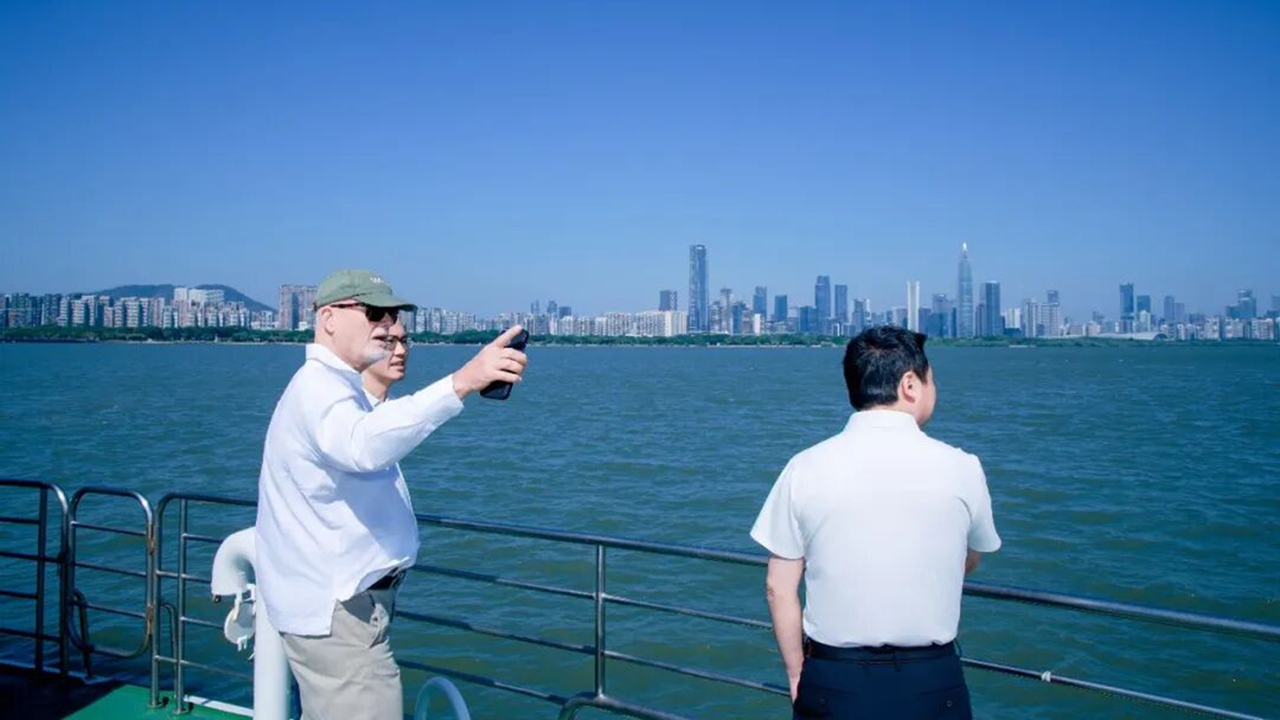
Peter Thomson visits the Lighthouse Library in Yantian District on Oct. 24.
Thomson’s visit also carried a wider regional significance as Shenzhen prepares to host the APEC meetings.
He sees APEC as an important platform for advancing Sustainable Development Goal 14 — Life Below Water — across the Asia-Pacific region, a major hub for the sustainable blue economy.
“I think APEC can do much to promote the implementation of SDG 14 in the Asia-Pacific. The APEC meeting in Shenzhen is a really important moment for the sustainable blue economy,” he said.
He also warned of the urgent need for action on climate change. With global temperatures having temporarily exceeded 1.5 degrees Celsius above preindustrial levels, he cautioned that warming beyond 2 degrees would leave future generations facing increasingly difficult conditions.
Innovation, however, offers a way forward.
“I think through innovation we can turn that around, because people are now aware that the health of the ocean is in decline,” he said.
His message was ultimately one of shared responsibility: “We only have one planet. We are all in this together, and we have to work together to get the results we want.”