
 Share


 Print
Young intl. sinologists examine Shenzhen's urban experience at seminar
Writer: Zhang Yu | Editor: Zhang Chanwen | From: Original | Updated: 2026-11-05
Twenty young sinologists representing 20 countries gathered at the Shenzhen Museum of Contemporary Art and Urban Planning recently for the“Shenzhen as Method” Academic Seminar, a key session of the Visiting Program for Young Sinologists 2026.
Hosted by the China Center of International Cultural Exchange and Tourism Promotion and the Shanghai Academy of Social Sciences, and co organized by the Shenzhen Academy of Social Sciences and the venue museum, the event brought together international scholars and local experts on urban planning, economics and cultural studies to unpack Shenzhen’s decades long transformation into an innovative global metropolis.
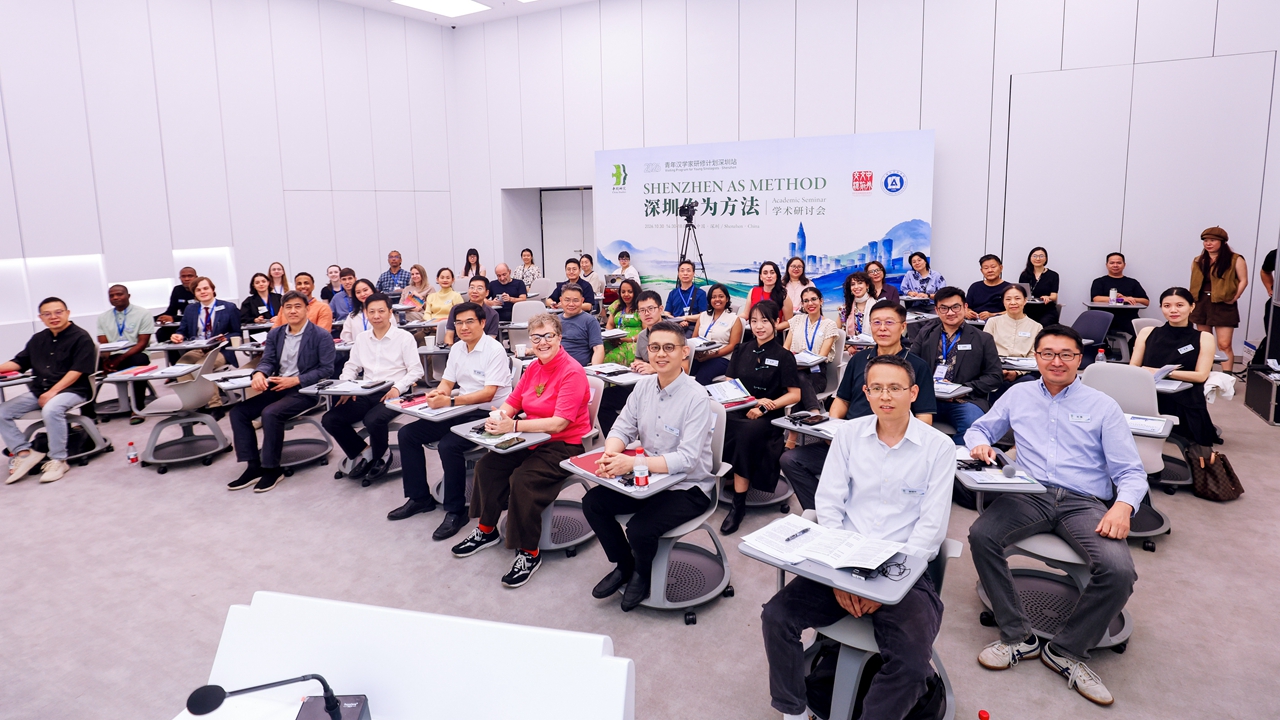
International young sinologists join Chinese researchers at the Shenzhen Museum of Contemporary Art and Urban Planning on Oct. 30 for the“Shenzhen as Method” Academic Seminar, a key session of the Visiting Program for Young Sinologists 2026. Photos courtesy of the Shenzhen Museum of Contemporary Art and Urban Planning
Launched in 2014, the Visiting Program for Young Sinologists aims to help overseas early career researchers foster more evidence-based understanding of China’s history, culture and modernization via lectures, site visits and cultural experiences.
For this Shenzhen based workshop, organizers framed the city’s dramatic urban evolution as a living case study. Beyond telling the story of Chinese modernization, Shenzhen’s experiences in spatial governance, industrial upgrading and cultural reconstruction offer comparative perspectives for shared challenges in global urbanization.
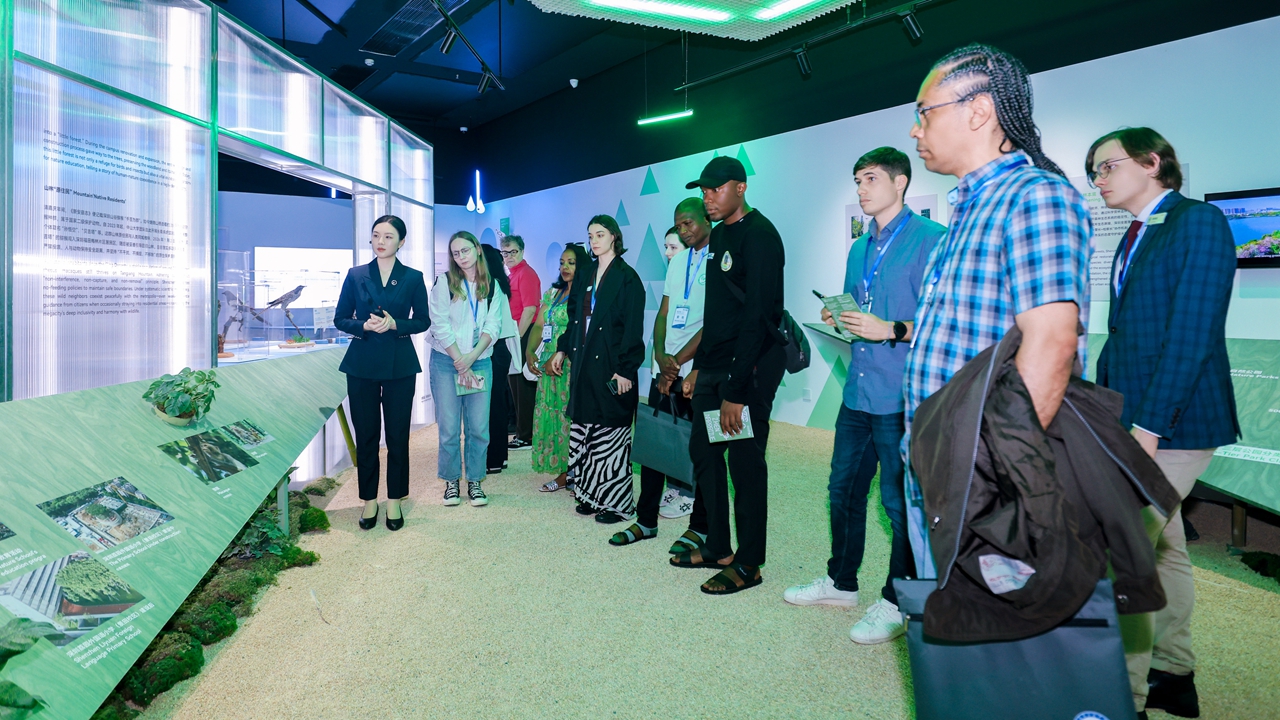
Visiting sinologists tour the special exhibition “A City of Symbiosis: The Shenzhen Practice of Harmonious Coexistence between Humaniy and Nature”at the museum.
Prior to panel discussions, visiting sinologists toured the special exhibition “A City of Symbiosis: The Shenzhen Practice of Harmonious Coexistence between Humaniy and Nature,” which showcases local urban ecological practices.
A series of keynote presentations opened the seminar. Yu Yangyang, deputy chief planner at the UIS Research Center of Shenzhen Planning and Land Resource Research Center, introduced the Urban Index of Shenzhen (UIS), a new evaluation framework designed for urbanization. The index measures city performance across six dimensions, shifting focus from pure growth to human centered urban quality.
Liao Mingzhong, director of the Institute of Economics at the Shenzhen Academy of Social Sciences, traced Shenzhen’s industrial trajectory from early processing trade manufacturing to indigenous R&D and global brand building. He highlighted how openness and technological collaboration connect the city’s industries to worldwide markets.
Mary Ann O’Donnell, an anthropologist, examined Shenzhen’s rise through a cultural geography lens in her talk “Logistics City”. Her analysis unpacked how port logistics systems, including the Hong Kong Shenzhen dual hub, reshaped regional trade and cultural geographies amid global containerization. Professor Yang Yongquan addressed how to retrieve, narrate and represent the fast changing city’s layered history using overseas archival visual materials.
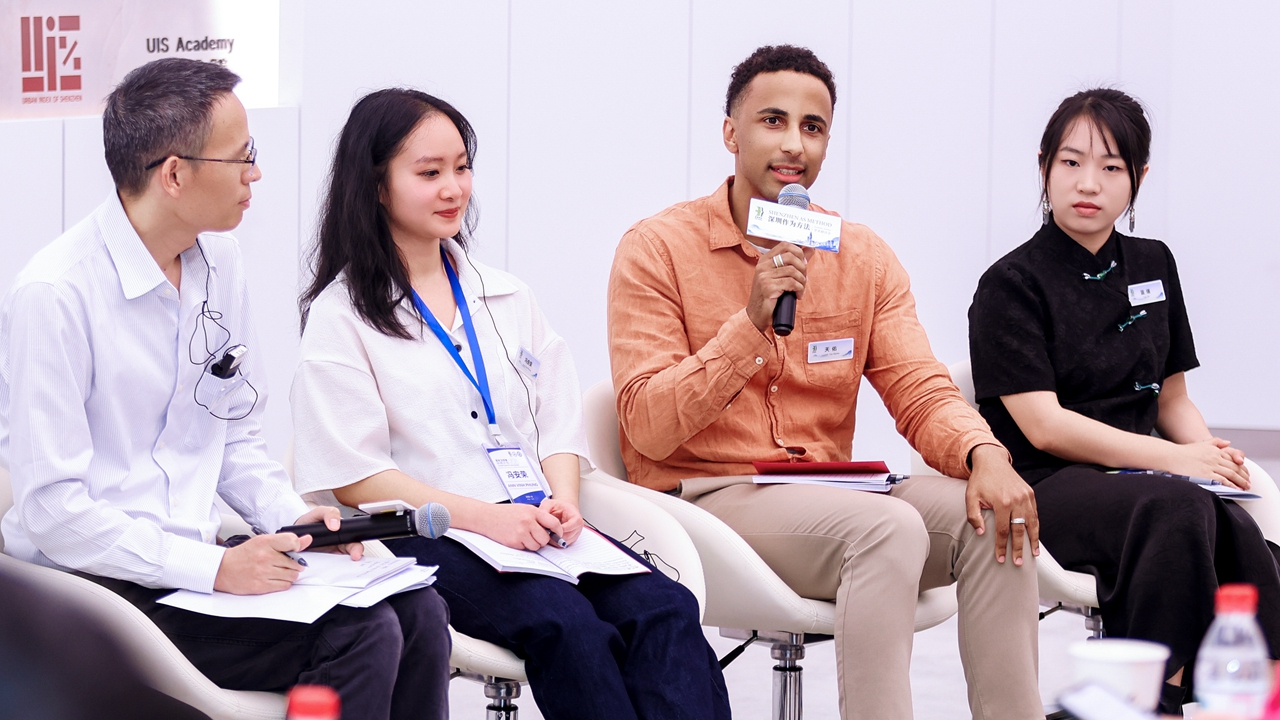
A young sinologist speaks at the academic seminar.
Open dialogue sessions followed, where international young sinologists joined Chinese researchers debating two thematic blocks: Shenzhen’s spatial governance and industrial pathways, and its cultural geography and historical memory. Panel participants probed, tested and expanded arguments raised in the keynote speeches.
Towards the close of the event, Huang Weiwen, director of the Shenzhen Museum of Contemporary Art and Urban Planning, unveiled an initiative to establish the Shenzhen Studies Society (SSS). The proposed cross disciplinary, cross border academic community aims to sustain global scholarly interest in Shenzhen by facilitating networking, knowledge sharing and research support for international young researchers.