
 Share


 Print
Shenzhen airport sets up dedicated lanes for APEC delegates
Writer: | Editor: Lin Jiayi | From: Shenzhen Daily | Updated: 2026-10-27
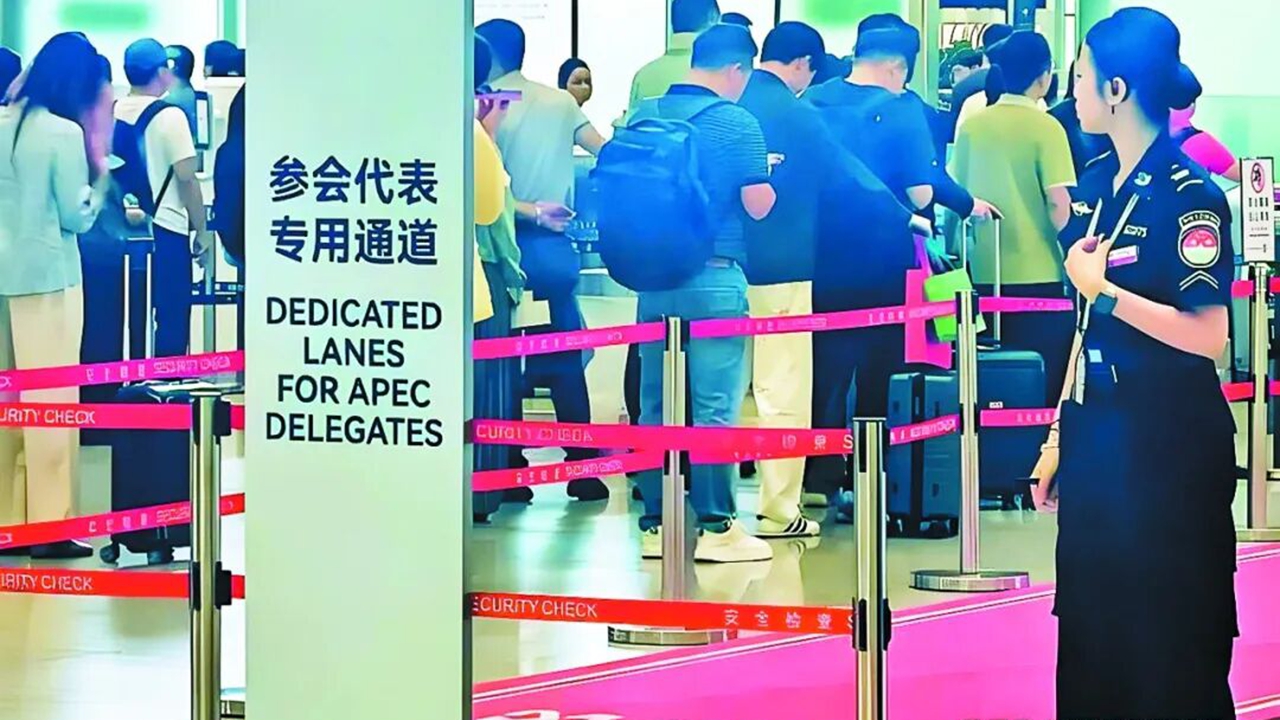
A customs officer stands beside a dedicated clearance lane for APEC delegates at Shenzhen Bao’an International Airport ahead of the November meetings. Cao Yuan
Dedicated customs clearance lanes for delegates attending the APEC meetings in November have been set up at Shenzhen Bao’an International Airport.
At the airport, APEC lanes are marked with dedicated signs and separated from regular passenger lanes. Shenzhen Customs officers make preparations for each arriving flight and delegation, taking into account different arrival arrangements and whether passengers are carrying conference materials, according to a customs official. The official said teams coordinate across different posts to resolve any issues promptly.
The airport has also introduced advance screening for checked baggage arriving on international flights. X-ray and CT scanners have been integrated into the baggage-sorting system, allowing customs officers to screen bags before passengers collect them. Passengers whose baggage is cleared through advance screening
For departing passengers, customs and airport security have integrated their inspection equipment into a single screening process. Passengers need to pass their baggage through an X-ray machine only once, avoiding repeated handling and the need to reopen their bags.
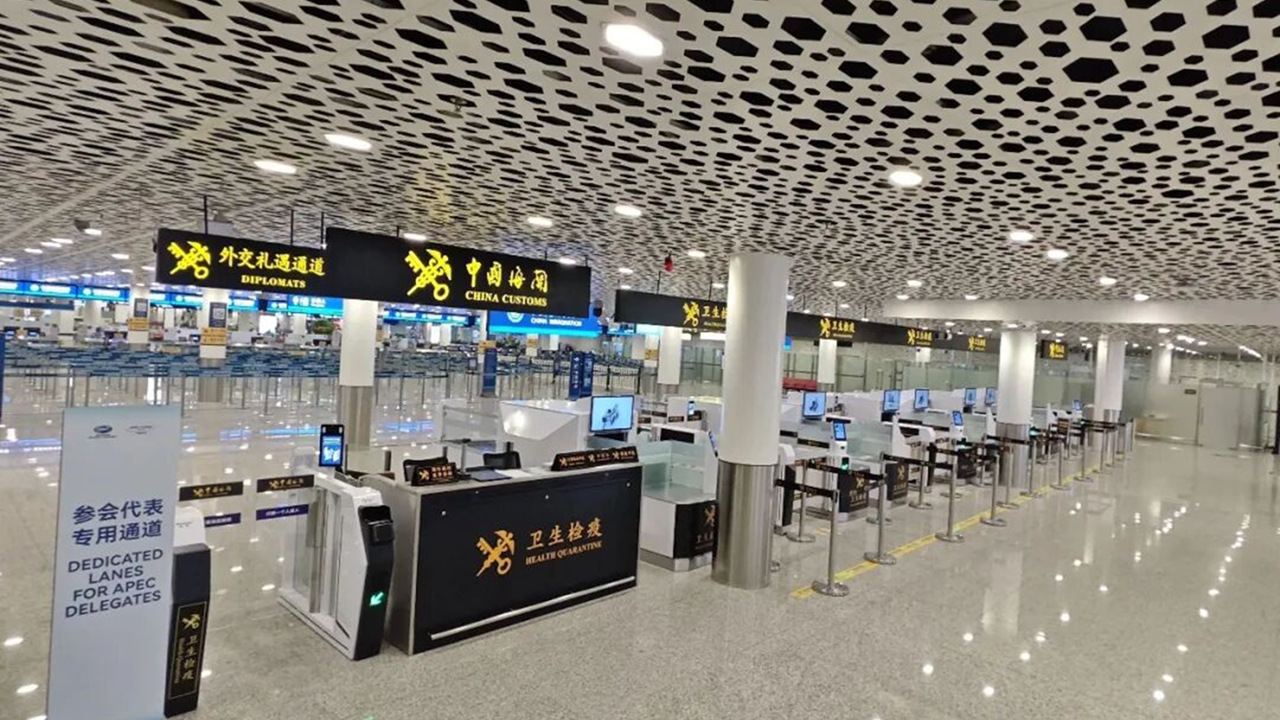
A dedicated clearance lane for APEC delegates is marked with special signage at Shenzhen Bao’an International Airport as the city prepares to host the APEC meetings in November. Shenzhen Special Zone Daily
A South Korean passenger said he had arrived a month ahead of the APEC meetings to explore Shenzhen, calling it a “city of technology.” He said he had expected long lines but collected his baggage and passed through the arrivals area without delays.
Shenzhen Customs has also established dedicated APEC lanes at Shenzhen Bay, Huanggang, Liantang and West Kowloon Station ports.
The customs has organized training on clearance procedures, port security and emergency response for the APEC meetings. It has identified officers with foreign-language skills, including English, Russian and Korean, and reviewed work procedures, foreign-language signs and other service details, the agency said.