Share


 Print
CUHK-Shenzhen Culture & Arts Festival opens artistic dialogues
Writer: Cao Zhen | Editor: Cao Zhen | From: Original | Updated: 2026-10-23
At first glance, a sculpture looks like a toad-shaped incense burner. Look closer, and it resembles a router. Nearby, two installations depicting the Chinese mythical creature Xuanwu sit side by side. From a distance, they could be mistaken for cars charging in a parking lot.
These works are part of “Electricity Spellbound,” an exhibition by artist Lu Pingyuan at The Chinese University of Hong Kong, Shenzhen (CUHK-Shenzhen).
Lu says the router-like work draws a parallel between seeking help from AI and taking part in a traditional ritual. In the AI era, connecting to Wi-Fi is often the first step to asking AI for help — much like lighting incense and presenting offerings before praying for good fortune.
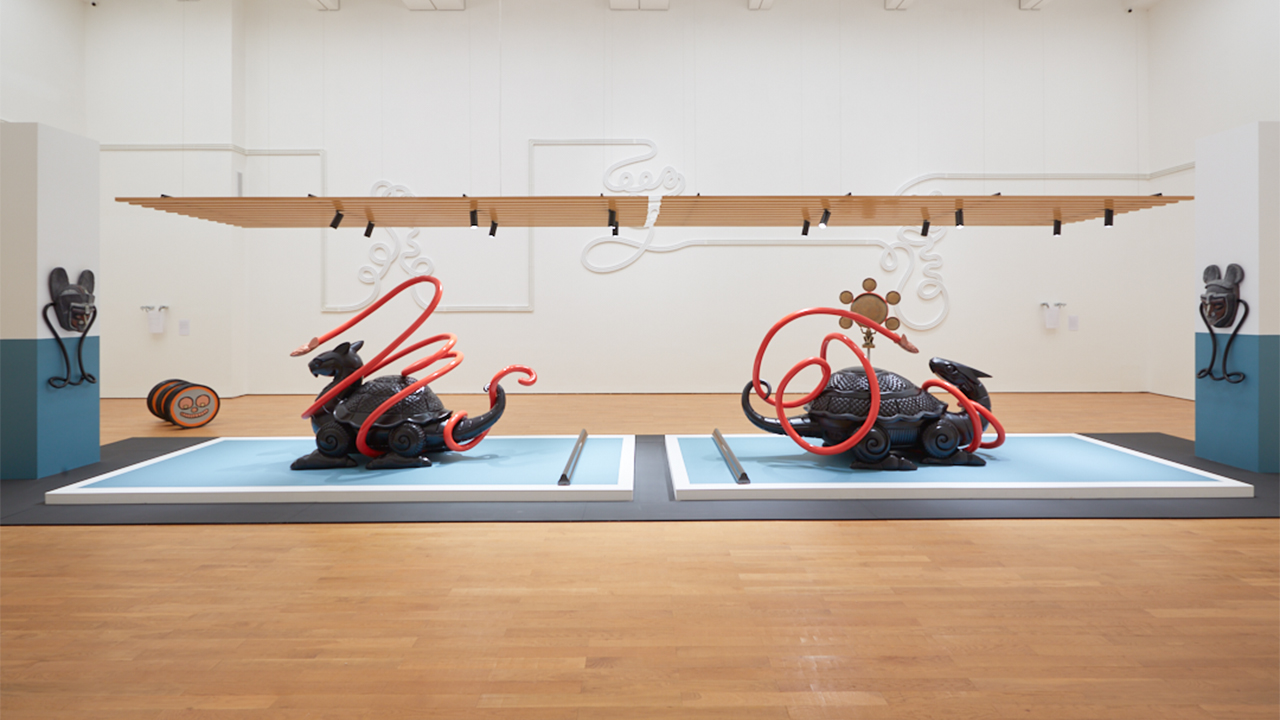
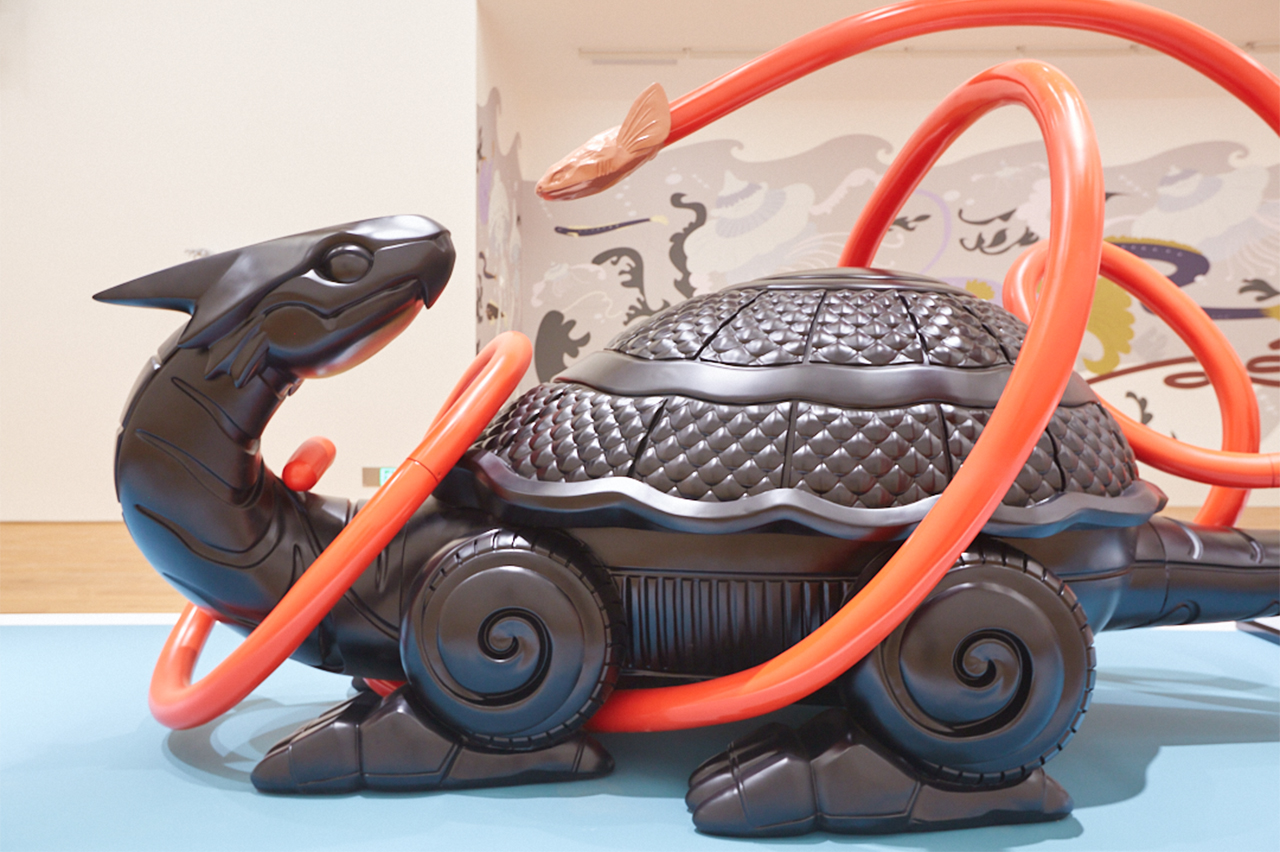
Lu Pingyuan’s “Electricity Spellbound — Underground Magic” on display. Photos courtesy of the organizers
In Chinese mythology, Xuanwu is depicted as a snake coiled around a tortoise and symbolizes longevity, permanence and the cycles of life. Lu sees the creature as reflecting humanity’s enduring and recurring demand for energy.
Red wires coil around the installations like snakes, electrical cables or invisible spells binding the mythical figures. The contrast between the tortoise’s slowness and the speed of cars adds another layer to the works.
The exhibition brings electricity and mythology together. Lu views electricity as an invisible force that permeates modern life — an entrancing natural phenomenon and a vital source of power for technological progress and contemporary culture.
Drawing on everyday experience and traditional Chinese mythology, Lu transforms the university’s Gravity Field Art Gallery into a mysterious realm of stories and imaginings centered on electricity.
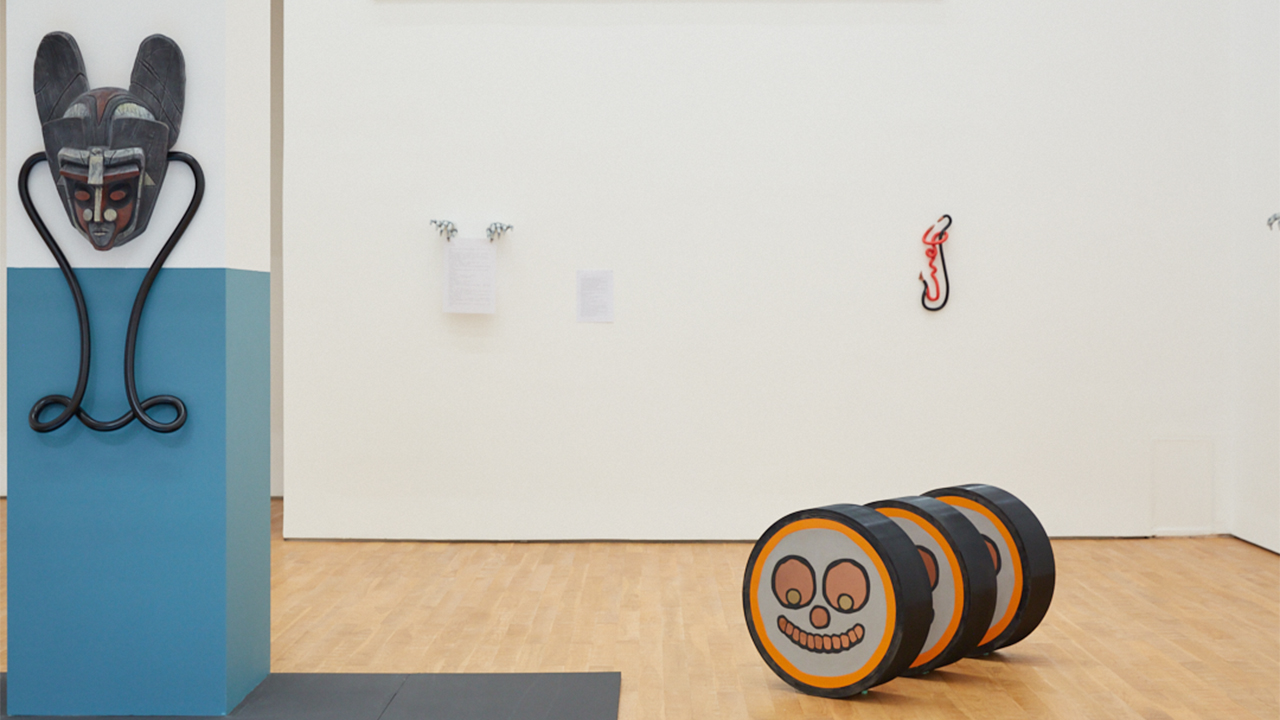
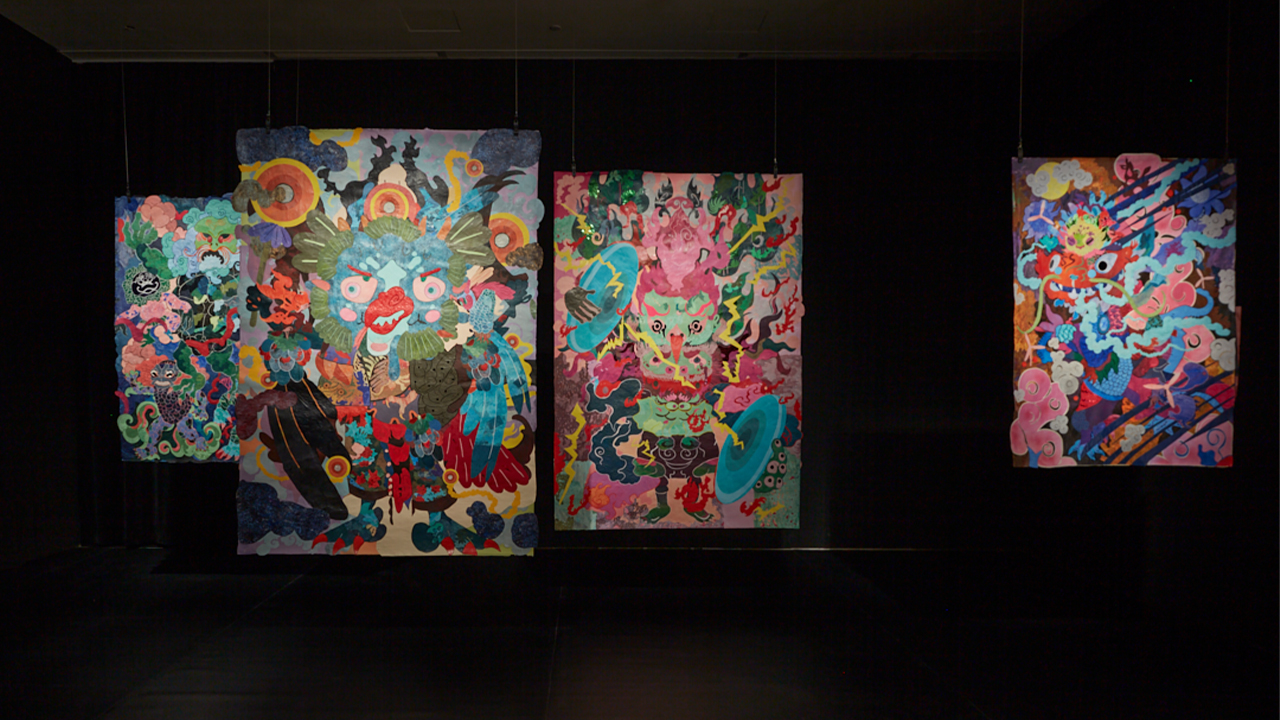
Lu Pingyuan’s works on display at Gravity Field Art Gallery.
Another exhibition at CUHK-Shenzhen explores the relationship between tradition and modernity. In “Temporal Resonances: From Brushwork to Pixels,” new media artist Cao Yuxi reinterprets traditional Chinese aesthetics through immersive digital art.
Visitors can view several large-scale installations featuring vivid imagery. Cao draws on a range of subjects, from mountains and rivers depicted in historical scrolls to the changing landscapes of the 24 solar terms, as well as mountain-and-sea scenery from the Greater Bay Area, and vibrant flowers.
Using computer graphics, dynamic algorithms and generative techniques, he creates expansive digital panoramas and sees algorithms not merely as tools for reproducing images from the past, but as a means of reawakening the classical spirit.
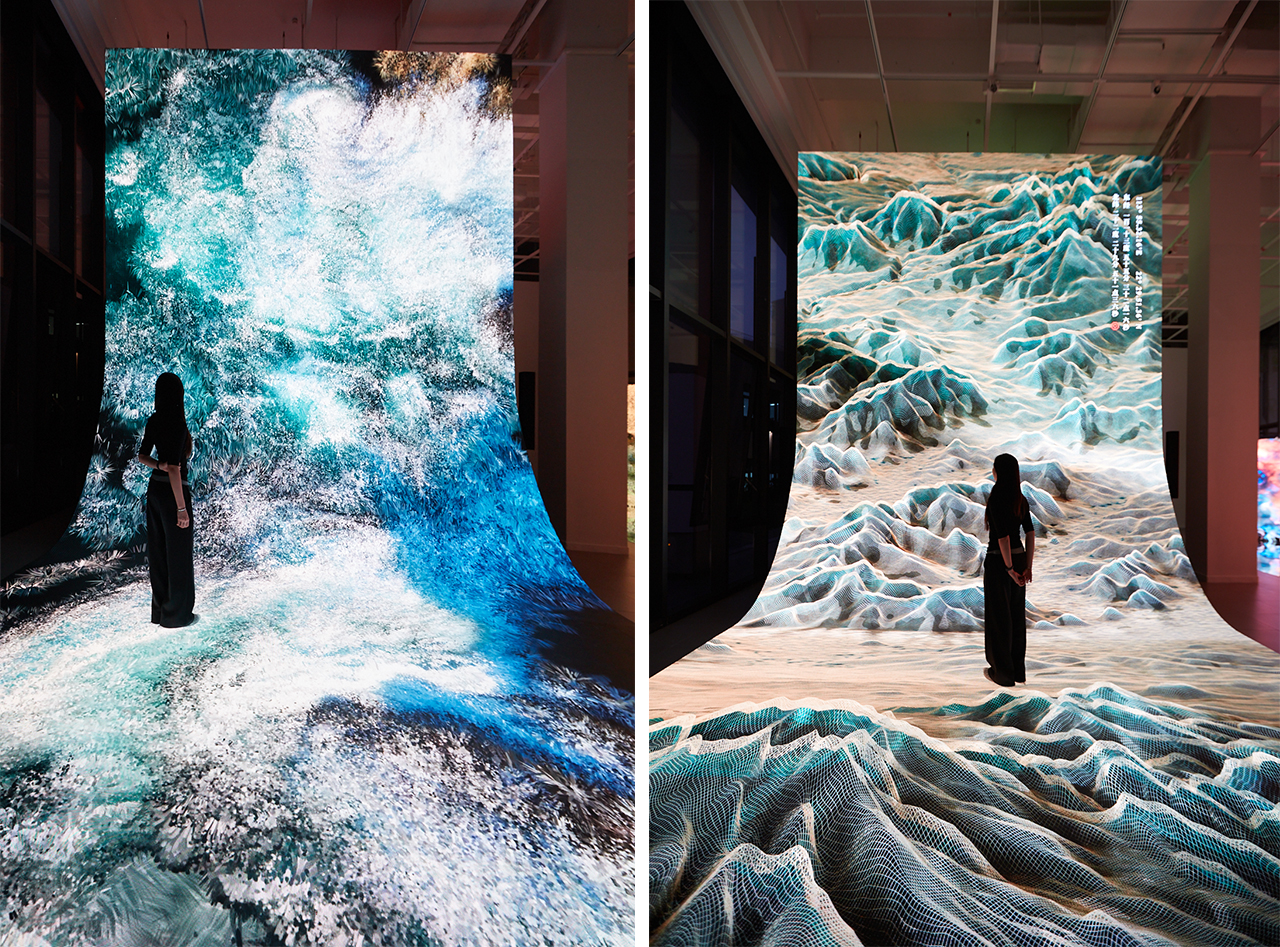
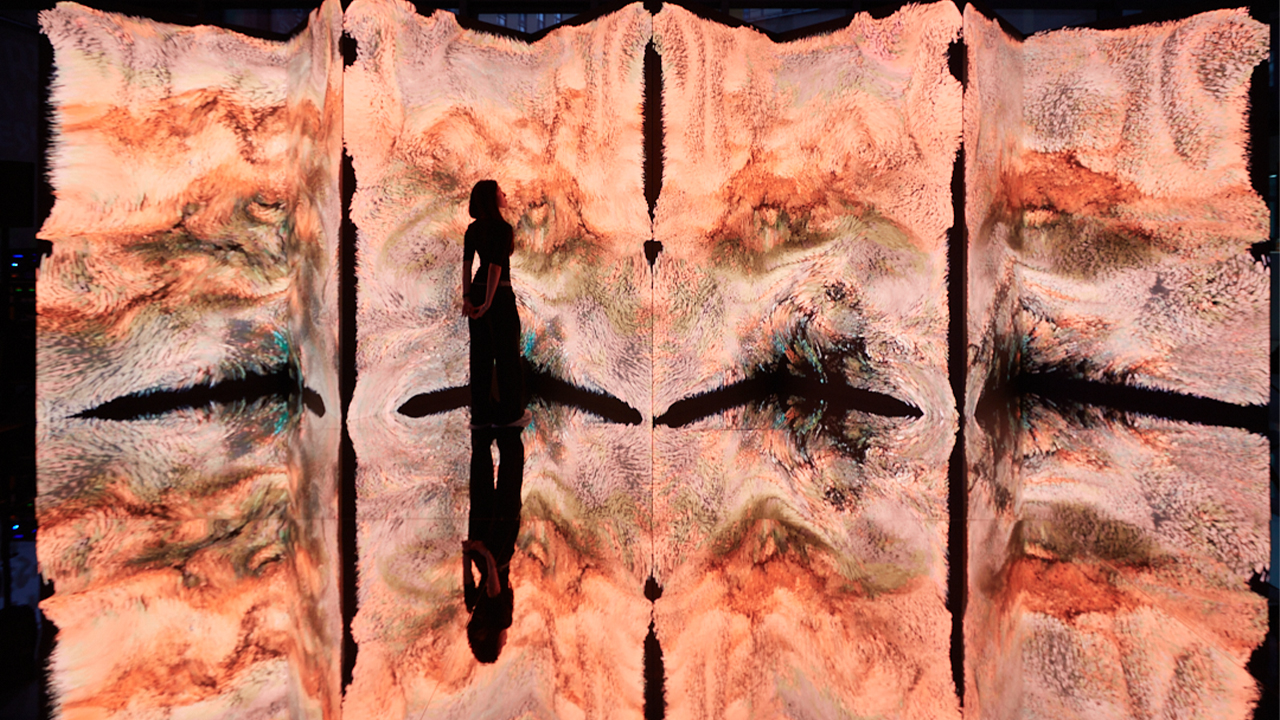
Cao Yuxi’s works on display at TC101 SPACE.
Both exhibitions are part of CUHK-Shenzhen’s 5th Culture & Arts Festival. Themed “Dialogues Across Time,” the festival features exhibitions, performances, courses, lectures and workshops. Using aesthetic education as a bridge, it aims to broaden students’ horizons and inspire young people’s interest in culture, art and life.
Some events, such as a cello, sanxian, guzheng and guqin concert on Nov. 11, are open to the public. For registration information, follow the University Arts Centre’s WeChat account: cuhkszuac.
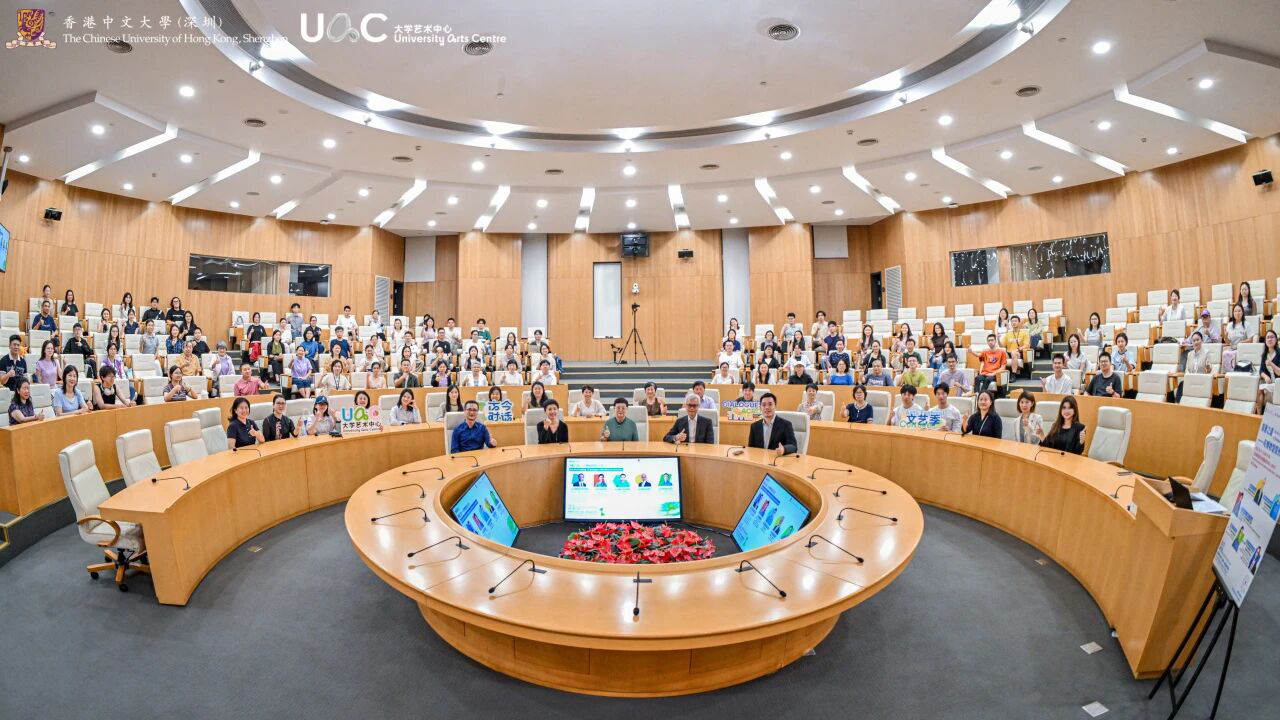
Fung Ming-chu, former director of the Palace Museum in Taipei, and Dr. Louis Ng Chi-wa, director of the Hong Kong Palace Museum, join CUHK-Shenzhen scholars in a talk on museum history and collections, public education, youth participation and AI on Oct. 15.
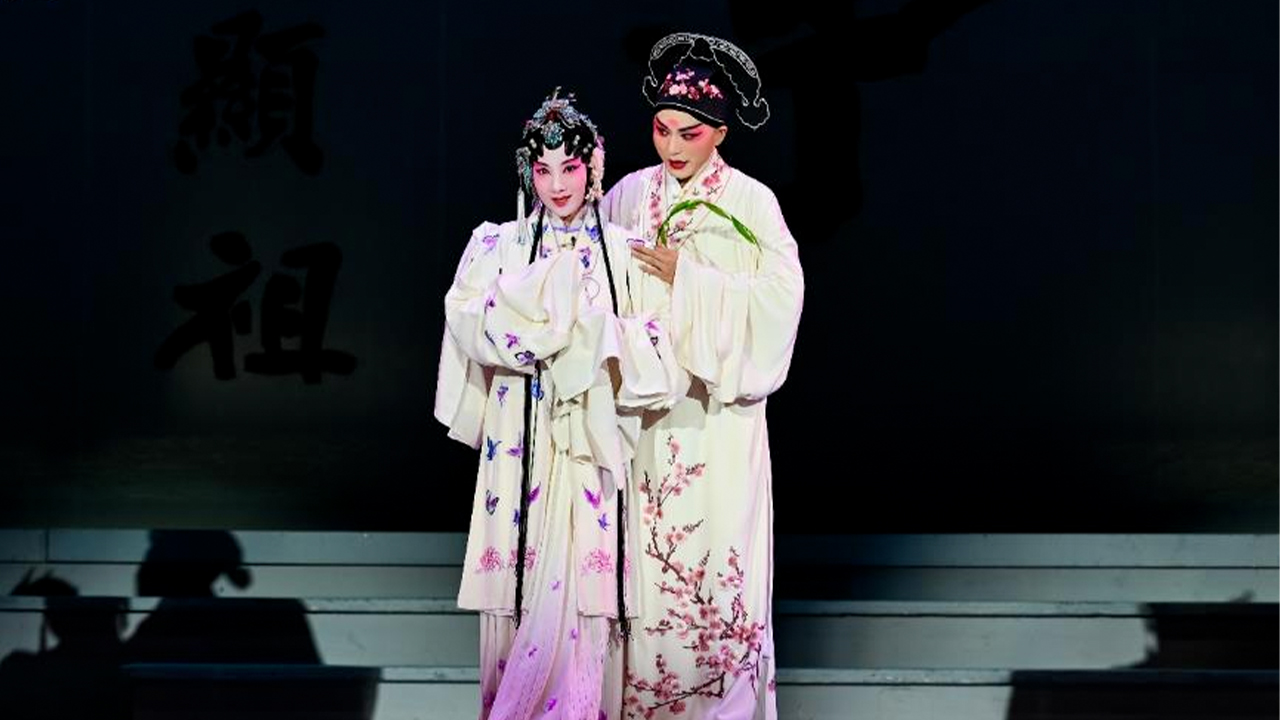
“Peony Pavilion (Essence of the Youth Version),” staged at CUHK-Shenzhen on Sept. 20.
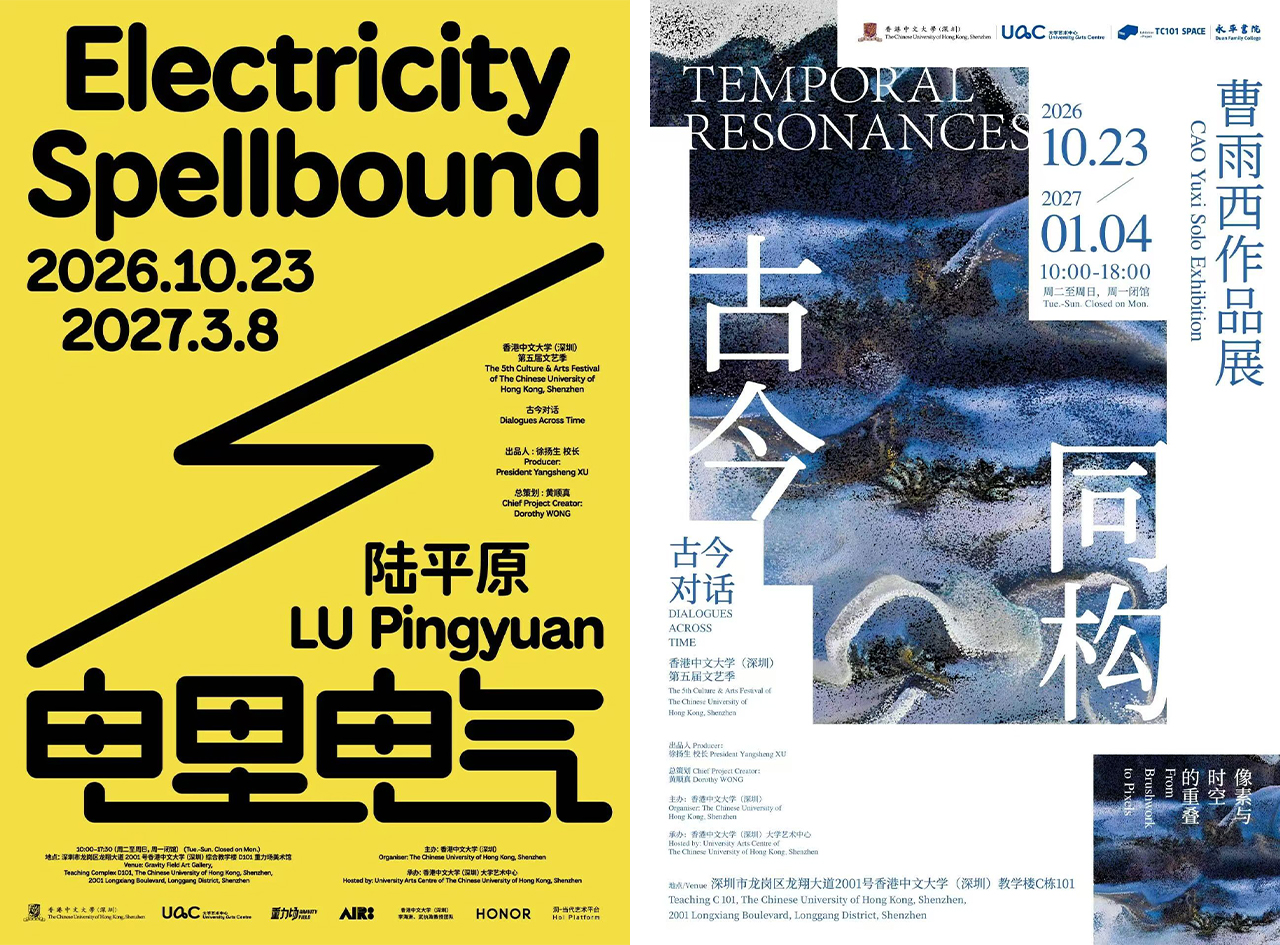
Lu Pingyuan exhibition venue: Gravity Field Art Gallery, CUHK-Shenzhen (香港中文大学(深圳)重力场美术馆)
Hours: 10 a.m.-5:30 p.m., closed Mondays
Cao Yuxi exhibition venue: TC101 SPACE, CUHK-Shenzhen (香港中文大学(深圳)教学楼C栋101)
Hours: 10 a.m.-6 p.m., closed Mondays
Booking: Visitors who do not work or study at CUHK-Shenzhen can enter the campus by booking through WeChat miniprogram “参观港中深”
Metro: Line 16 to Universiade Center Station (大运中心站), Exit D