
 Share


 Print
Guests gather in Bao'an to discuss Asia-Pacific cooperation
Writer: Chen Siqi | Editor: Zhang Chanwen | From: Original | Updated: 2026-10-20
Officials, scholars and business representatives from APEC member economies gathered for the 2026 Asia-Pacific Cooperation High-Level Dialogue in Bao’an District on Oct. 12–13.
The two-day high-level dialogue, themed “Reshaping the Global Landscape and New Drivers for Asia-Pacific Development,” brought guests from Chile, Hong Kong, Japan, South Korea, Malaysia, Mexico, Papua New Guinea, Russia, Singapore, Thailand, the U.S. and Vietnam, among others, to discuss topics including regional integration, digital governance and AI.

The 2026 Asia-Pacific Cooperation High-Level Dialogue kicks off in Bao’an District on Oct. 12. Photos courtesy of the organizer
The first plenary took up APEC’s long-standing goal of a Free Trade Area of the Asia-Pacific, now 20 years old, alongside the defense of the multilateral trading system and supply-chain resilience.
A Chilean doctoral candidate at Renmin University of China, Nicolás Torvalina, offered a concrete illustration: Chilean fruit reaching Chinese tables after travelling more than 19,000 kilometers depends less on shipping than on shared scientific standards, policy coordination and institutional trust.
Jesús Pérez Tagle, a researcher at Mexico’s Metropolitan Autonomous University, warned that the Asia-Pacific contains both the world’s most advanced technology ecosystems and communities still waiting for reliable connectivity. The test of AI, he argued, is not how intelligent machines become but whether farmers can raise yields, small firms can reach new markets and students can access better resources.
Lahui Ako, an APEC adviser to Papua New Guinea’s government, added that connectivity — energy, digital links and market access—is the mechanism that turns integration into jobs and higher incomes, and that APEC should pay more attention to remote communities that risk being left behind.
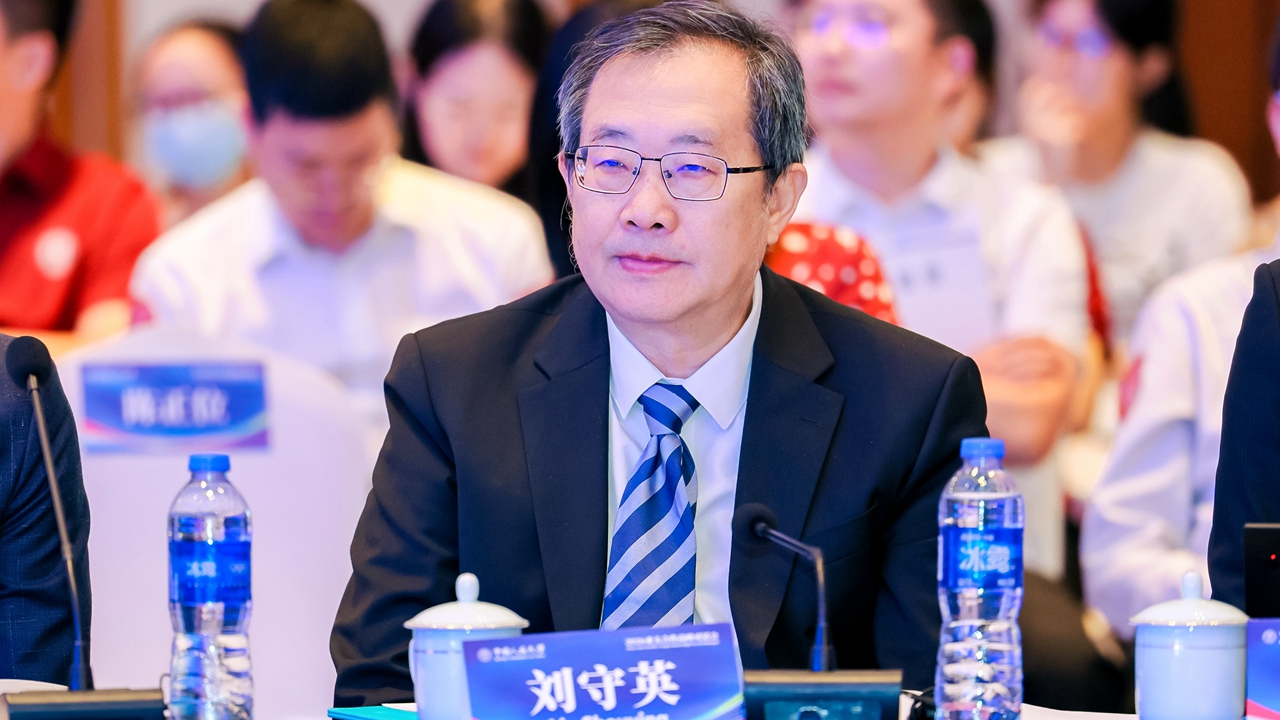
Liu Shouying, a professor at the School of Economics, Renmin University of China, attends the event.
During the event, Liu Shouying, a professor at School of Economics, Renmin University of China, and Sergey Bodrunov, a corresponding member of the Russian Academy of Sciences, were interviewed by Shenzhen Daily.
Liu said Shenzhen’s shift from a fishing village to an export-processing base and then an innovation hub offers a useful model for latecomer and small APEC economies. He argued that small countries need an industrialization strategy and a self-reliant but open industrial system, supported by openness, talent and efficient institutions. China’s industrial chains and capital, he added, can help them industrialize more inclusively, while Shenzhen should share its experience and extend AI and digital projects across the region.
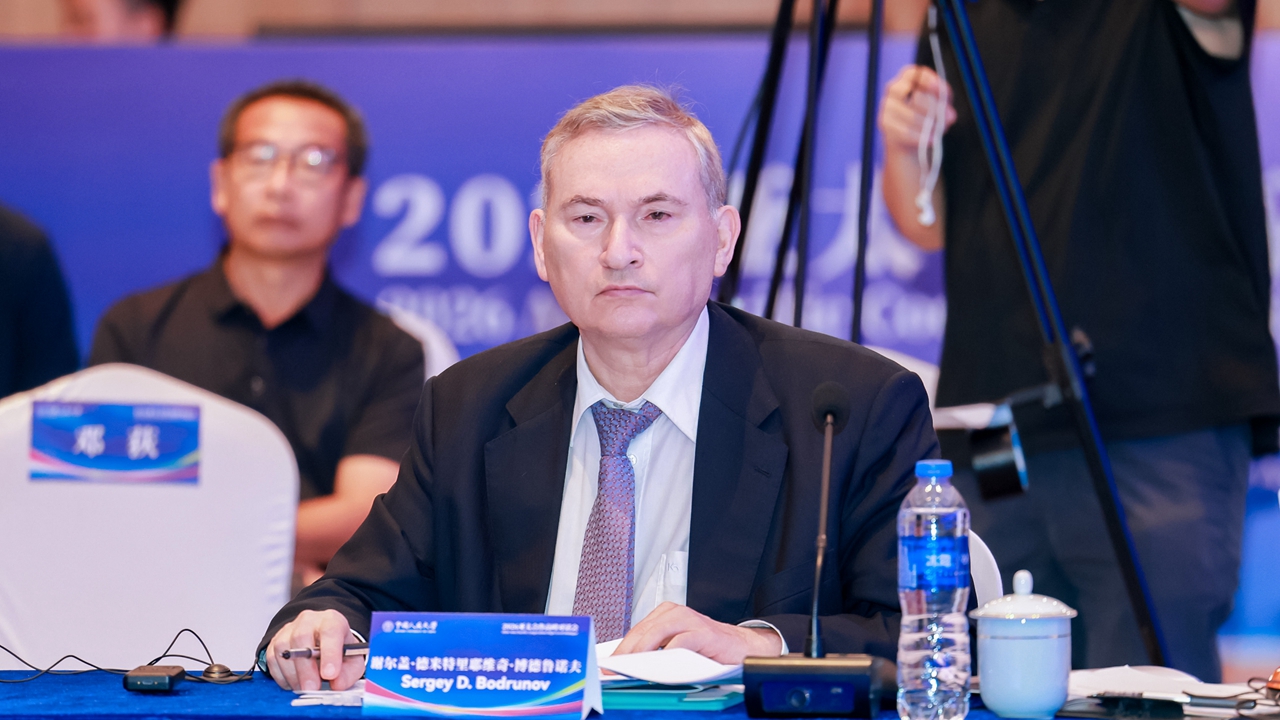
Sergey Bodrunov, a corresponding member of the Russian Academy of Sciences, listens carefully during the meeting.
Bodrunov noted that Shenzhen is the most vivid example of his concept of a “new industrial society.” It has grown from a settlement of just over 10,000 people to a city of 20 million, combining innovation-driven production with young talent and placing growing emphasis on quality of life. China, he said, champions win-win cooperation and a people-centered approach within APEC, and Shenzhen is a front-runner in that direction. The APEC summit is about building consensus and setting an example for regional cooperation, but those efforts must be sustained.
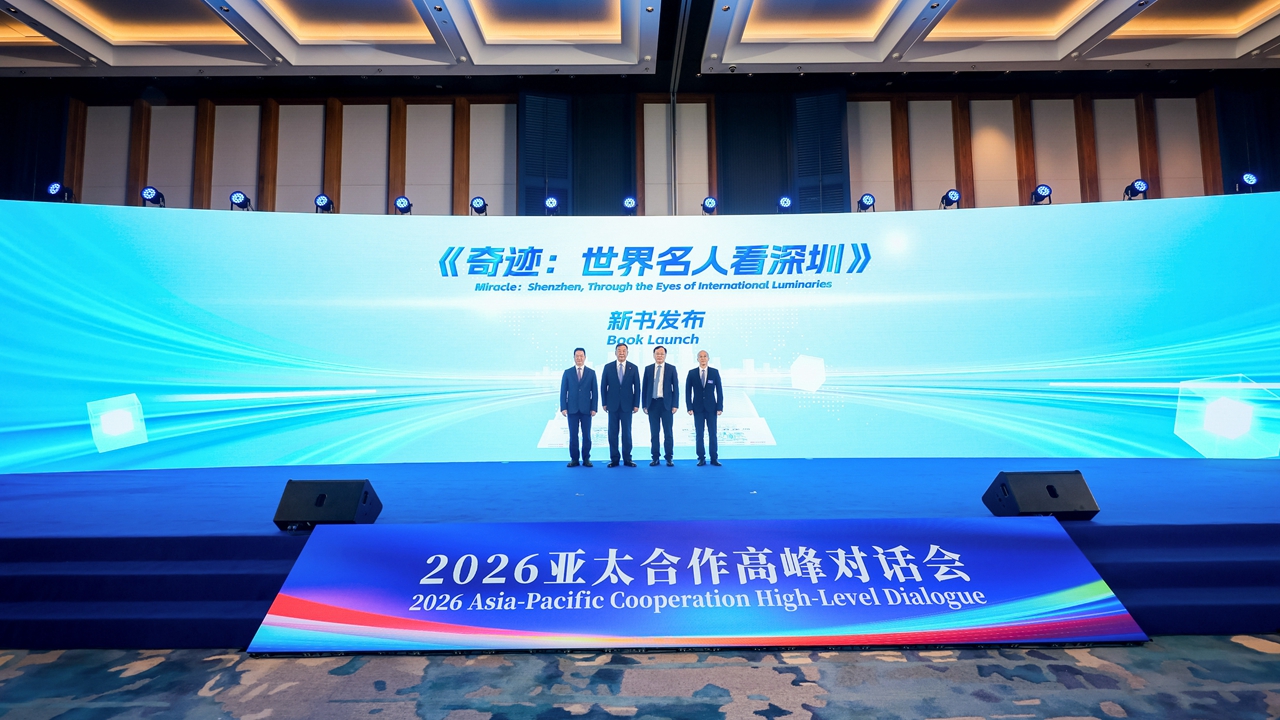
Miracle: Shenzhen, Through the Eyes of International Luminaries is launched at the meeting.
The forum also saw the launch of Miracle: Shenzhen, Through the Eyes of International Luminaries, a bilingual volume of interviews with nearly 20 political leaders, economists and scholars co-published by Renmin University of China and the Shenzhen Publishing Group.