
 Share


 Print
Drivers, beware: honking on roads may incur a 300-yuan fine starting next month
Writer: | Editor: Zhang Chanwen | From: Shenzhen Daily | Updated: 2026-10-19
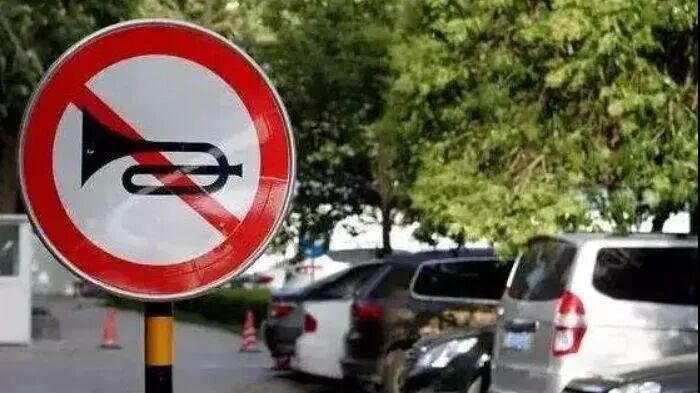
First-time violators of the honking ban face a fine of 300 yuan. File photos
It’s not uncommon to hear drivers blare their horns during rush hour, whether to warn vehicles trying to cut in or to alert indecisive drivers crawling ahead of them.
The frustration is understandable, but drivers on Shenzhen roads should think twice before giving in to the urge to honk.
According to a recent notice jointly issued by the city’s environmental authorities and traffic police, a five-year ban on horn use on city roads will take effect in November.
Drivers will be prohibited from using horns 24 hours a day in an effort to make the city quieter.

Shenzhen's environmental authorities and traffic police ban horn use on city roads starting November.
First-time violators caught honking outside of emergency or other strictly necessary situations will face a fine of 300 yuan (US$44.6); those caught honking a third time or more within one year will be fined 500 yuan.
Exceptions are made when vehicles approach sharp curves, hilltops, and other road sections where drivers on the same road may not see them coming from a safe distance. Drivers are also allowed to sound the horn briefly when overtaking another vehicle or encountering an emergency as a warning signal.
By “briefly,” the regulations specify that drivers cannot sound the horn continuously for more than one second or more than twice. Drivers are banned from using high-pitched horns above 115 decibels or the “air horns” found on some large vehicles.
Police cars, fire trucks, ambulances, engineering rescue vehicles, vehicles carrying out emergency rescue and disaster relief tasks, and military vehicles may use compliant horns and sirens when carrying out emergency tasks.
Drivers are also warned not to sound the horn during traffic jams or while waiting in lines, at pedestrian crossings, in residential communities, hospitals, schools, or other places to alert pedestrians.
The authorities recommend that drivers use lights instead of horns to alert other vehicles or pedestrians when truly necessary.