
 Share


 Print
Shenzhen roots: 15 years of academic pursuit by Polish professor at PKU Shenzhen
Writer: Yang Mei | Editor: Lin Jiayi | From: Original | Updated: 2026-10-19
Video and photos by Wang Haolan
In the vibrant, innovation-driven city of Shenzhen, Maurycy Daroch, a tenured associate professor at the School of Environment and Energy, Peking University Shenzhen Graduate School (PKU Shenzhen), has spent the past 15 years cultivating his career, building a family and putting down roots in the city. He even has a carefully selected Chinese name: Mao Ruici (毛睿慈).
At the end of September, the Polish scholar marked his 15th anniversary at PKU Shenzhen, the same year the university celebrates its 25th anniversary.
Fifteen years may be a major milestone in a person's life, but the 44-year-old professor considers it a point on the calendar and a motivation to continue his work. “I will take it [the 15th anniversary] as an important milestone in the calendar and continue with my work,” Daroch told Shenzhen Daily.
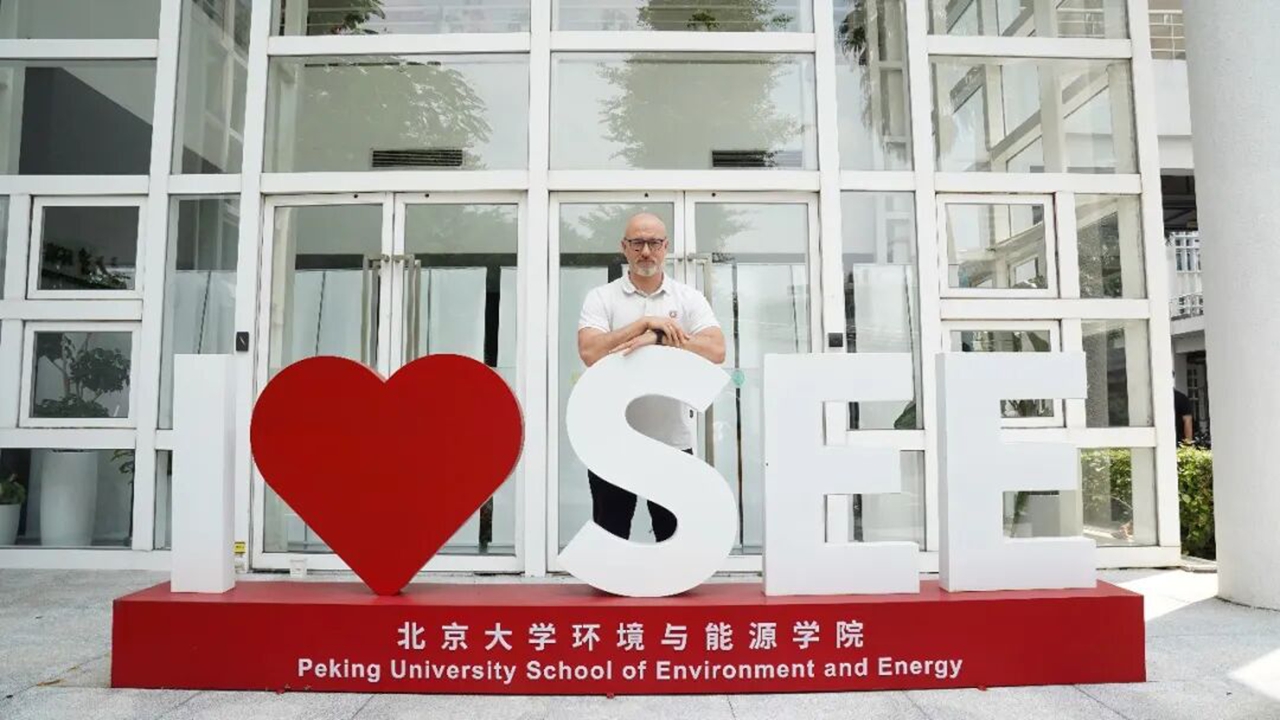
Maurycy Daroch poses outside the School of Environment and Energy at Peking University Shenzhen Graduate School.
From the UK to Shenzhen: A decision made for family
In late September 2011, shortly after earning his Ph.D. in biological sciences from the University of Liverpool in the U.K., Daroch faced a life-changing decision. His partner, whom he had met in the U.K., had returned to live in Guangzhou in southern China. Daroch started looking for postdoctoral research positions in South China so they could stay together. The search led him to PKU Shenzhen.
“Sure, there are many reasons to come to Shenzhen as it's a great city, but for me personally it was a family decision,” Daroch said.
Daroch visited the campus, toured the laboratories and research facilities, met with the principal investigators, and he liked what he saw. His then-girlfriend quit her job in Guangzhou, and moved to Shenzhen to join him. Looking back, Daroch says it was a good decision for both his career and family. “The city has grown tremendously in the last 15 years,” he said. "Shenzhen today is not the same city it was in 2011, and it’s only going to get better."
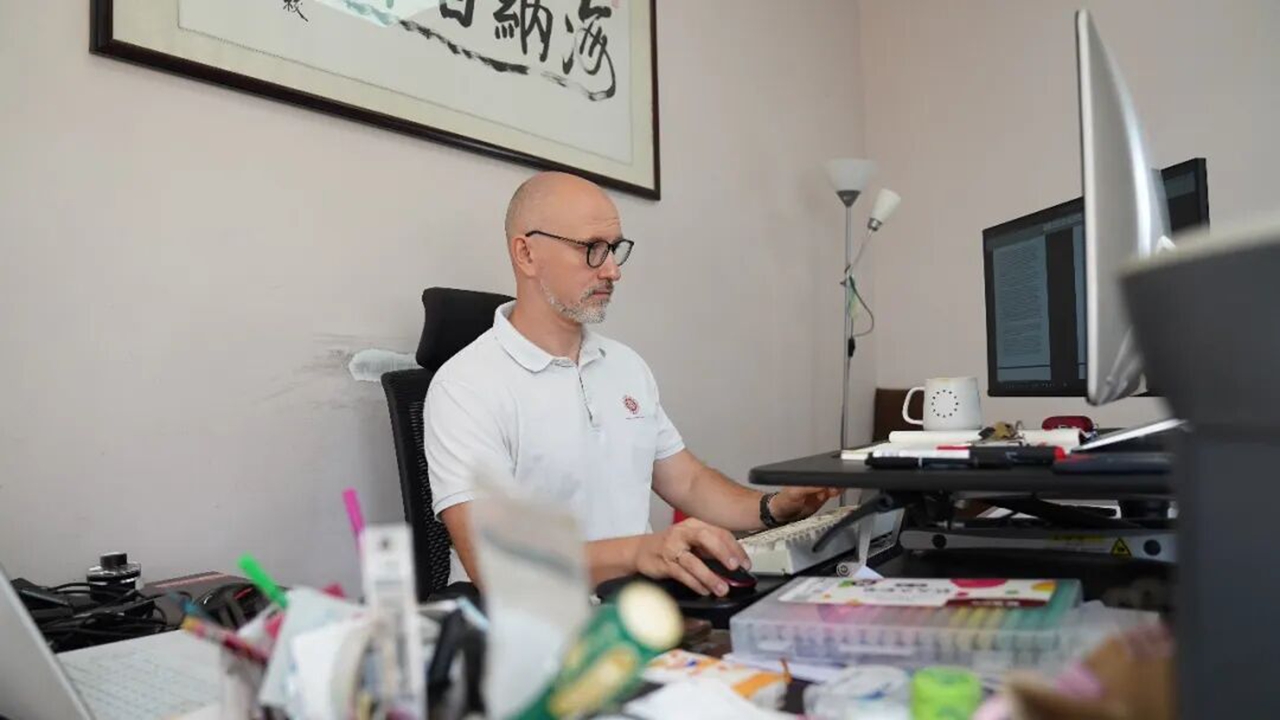
Maurycy Daroch works at his computer in his campus office.
Witnessing rapid changes in the urban and academic world
Daroch, who has witnessed Shenzhen’s growth over a decade and a half, cites the city’s early, substantial investment in science and technology as a driving force behind its success. The city has attracted growing numbers of international researchers and expanded its infrastructure, making it fertile ground for scientific research.
“Now two new universities are being created. Other top schools in China have also relocated and developed their branch universities in the last decade and a half, meaning a lot of infrastructure has been built and a lot of global talent has been attracted,” noted the professor.
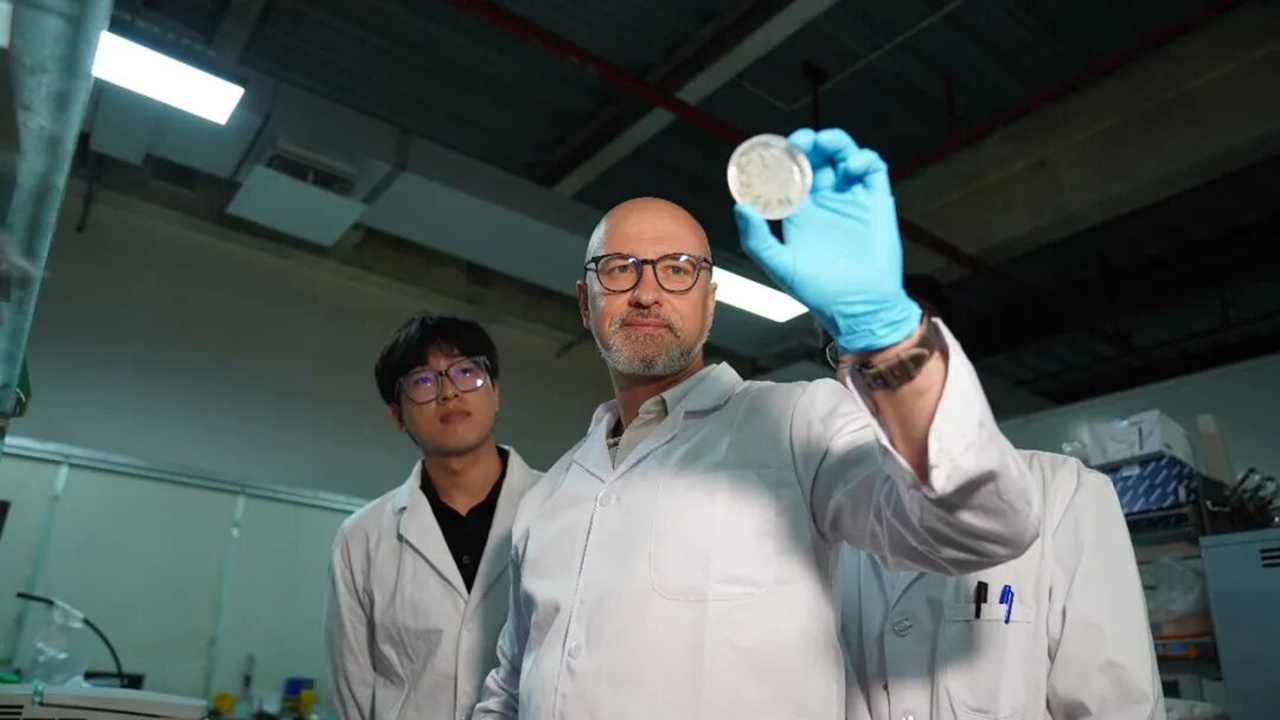
Daroch holds up a petri dish for examination in his laboratory at Peking University Shenzhen Graduate School as two students look on.
Daroch reflected on his research environment and how much he personally gained from the local ecosystem between 2013 and 2023. Beyond the city's overall development, he highlighted the strength of its scientific infrastructure, especially for structural biology studies. Some universities in Shenzhen now have more cryo-electron microscopes than entire countries, including his native Poland, he said.
He also noted that both government and industry research funding are strong, with funding levels in Shenzhen significantly higher than in most other cities in China. There have been good efforts to attract new talent with the strong infrastructure and support. There are many opportunities for researchers to take advantage of the positive policies of the region.
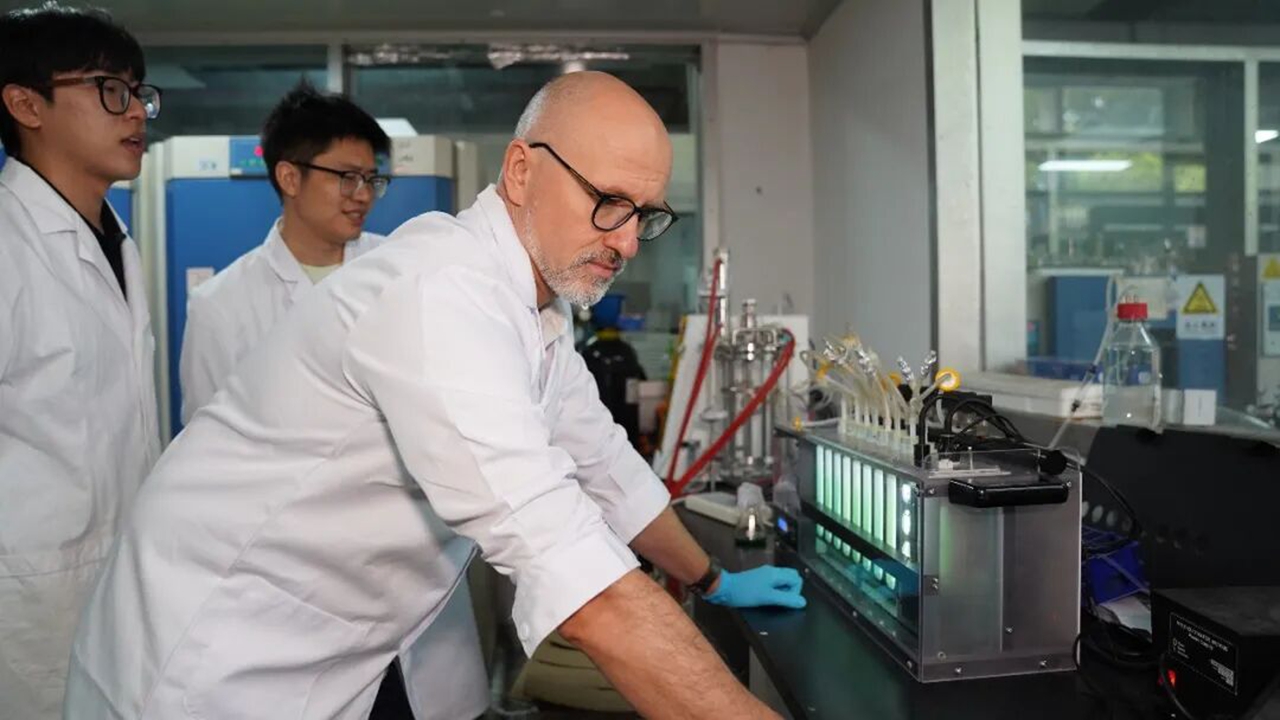
Daroch examines laboratory equipment alongside two students at Peking University Shenzhen Graduate School.
A multicultural home and a special Chinese name
More than 15 years ago, his wife, who studied Chinese literature, created Daroch’s Chinese name, character by character. Daroch says the Chinese surname “毛” is a phonetic rendering of his first name “Maurycy,” while the given name “睿慈” combines characters meaning knowledge and kindness. His Chinese colleagues often call him affectionately as “Lao Mao” or “Teacher Mao.”
Daroch is a polyglot, speaking Polish, English, Mandarin and Spanish — his passion for languages goes far beyond practical communication. Even in this age of AI and automated translation, Daroch advocates learning real-life language skills. He believes that learning languages opens unique ways of thinking and provides irreplaceable cultural insights. While translation technology can handle routine business, he says, the real business and long-term success are built on genuine human relationships.
“Even in the high-tech age, businesses will not be done machine-to-machine, they are going to be done people-to-people,” Daroch explained. “Deep cultural understanding gives individuals a distinct advantage.”
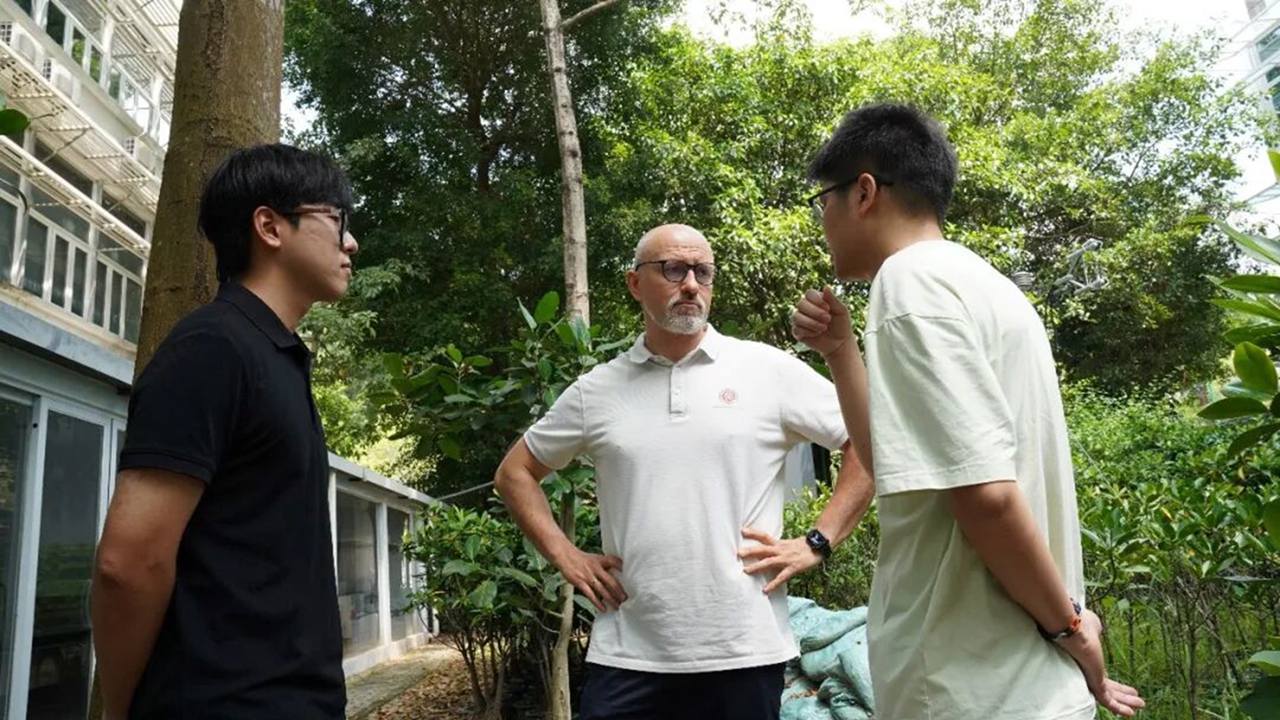
Daroch (C) talks with two students on campus at Peking University Shenzhen Graduate School.
This philosophy also shapes his home life, where multiculturalism shapes the family dynamic. Daroch told Shenzhen Daily that he and his Chinese wife share parenting duties to ensure their two children — ages 8 and 11 — experience the best of both Polish and Chinese cultures. Though the children have distinct blonde hair, they were born in Shenzhen and speak fluent Chinese, frequently attracting compliments from locals they meet on the street.
“I make sure that my children have the most valuable parts of the Polish culture. My wife makes sure that they have the most important aspects of the Chinese culture,” Daroch explained. “We made an agreement that we want our children to be multilingual and adaptable across cultures.”
Looking Ahead: Exploring alternative photosynthesis
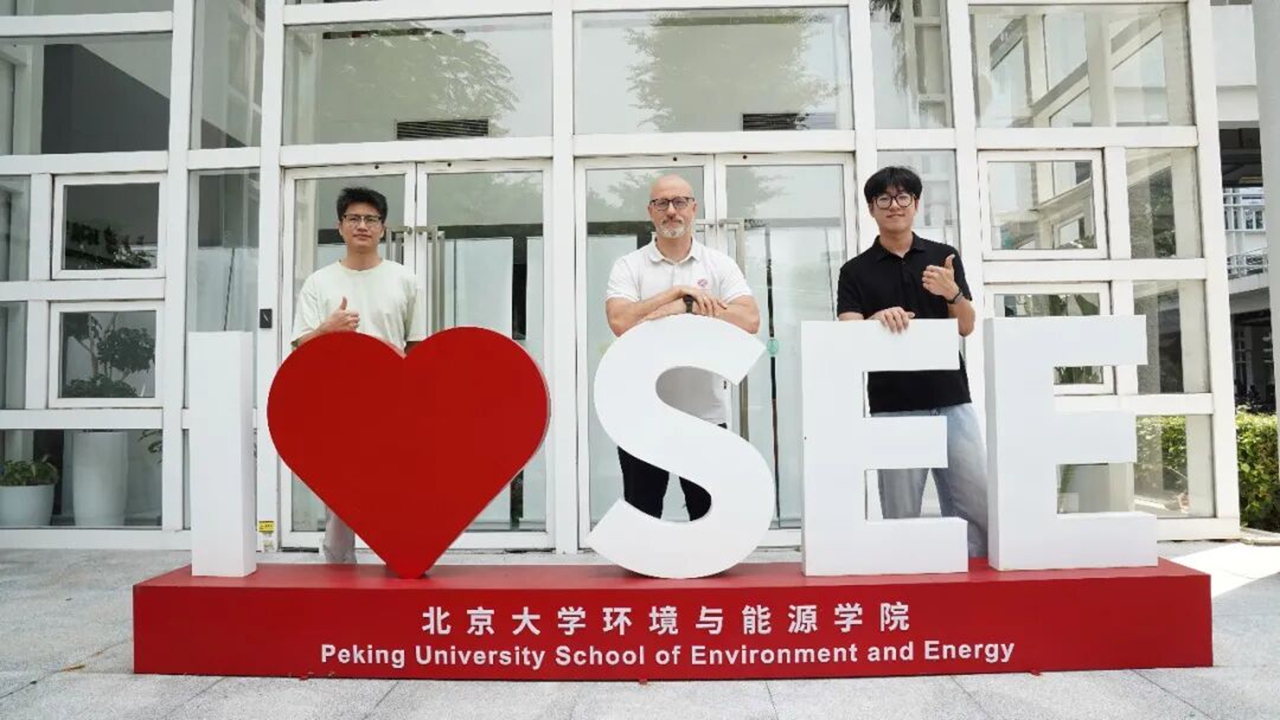
Daroch (C) poses with two students outside the School of Environment and Energy at Peking University Shenzhen Graduate School.
Now a tenured associate professor at PKU Shenzhen’s School of Environment and Energy, Daroch leads a research group of about 14 students. He prefers to look to the future rather than to past grants and publications.
His lab studies alternative photosynthesis, which employs different chemical pathways and sets of enzymes to fix carbon dioxide in living things. If it works, the basic research could eventually boost plant productivity by 20% to 40% and help shift manufacturing from fossil fuels to renewable biomass, the professor says.
“We’re just trying to find new ways carbon flows through a living organism,” Daroch said. “If our hypothesis is correct... that could have huge implications for plant productivity, how much carbon we can fix, and whether we could move from a fossil-based manufacturing to a renewable-based manufacturing.”
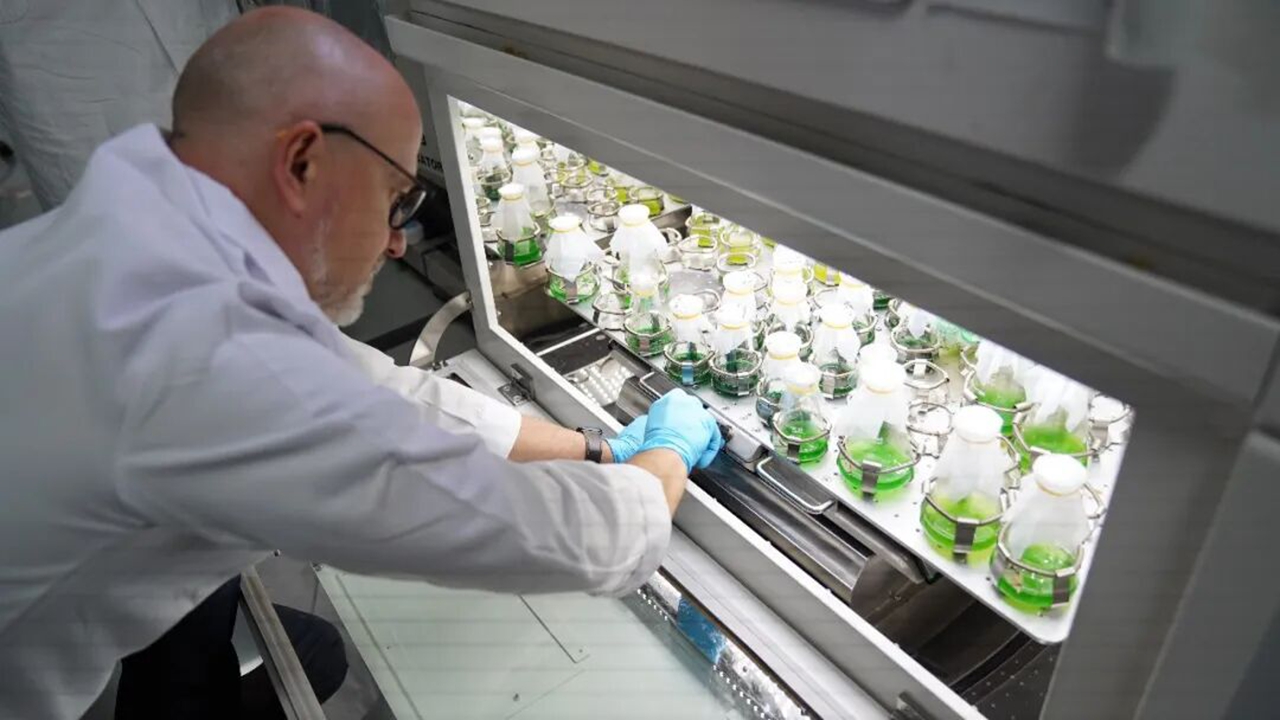
Daroch examines flasks containing green cultures in a laboratory incubator at Peking University Shenzhen Graduate School.
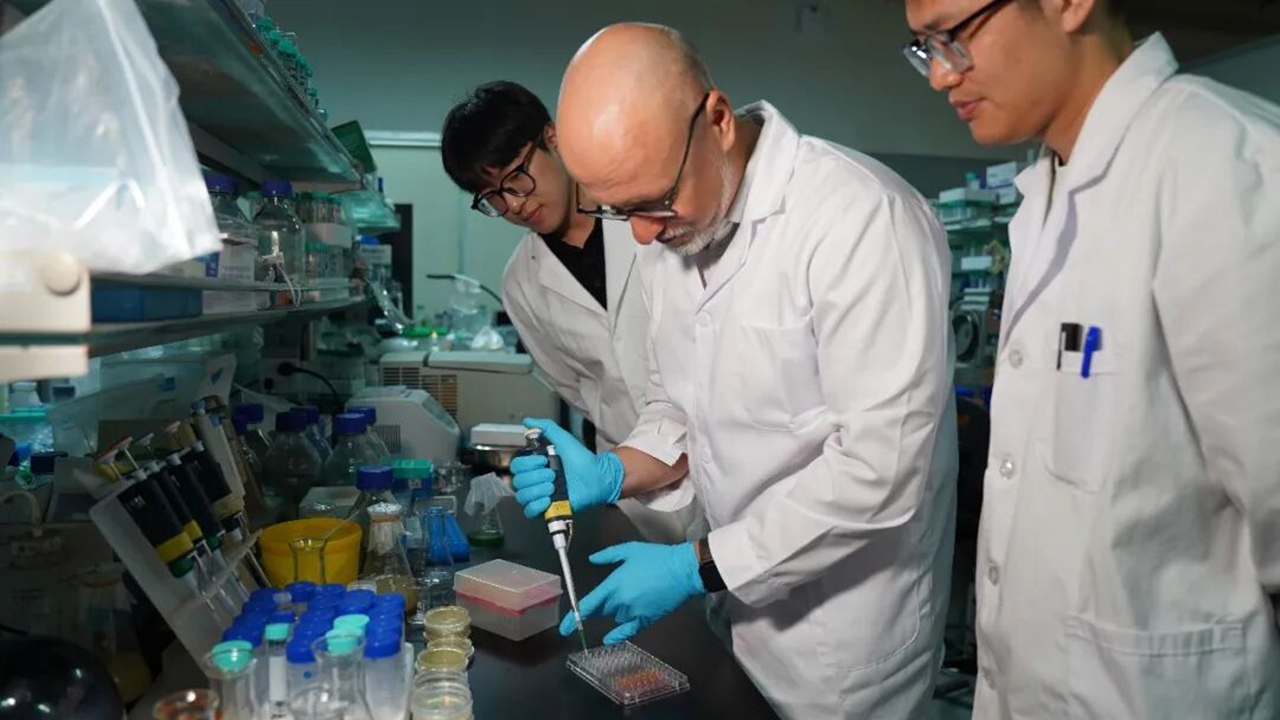
Polish professor Maurycy Daroch conducts a laboratory experiment as two students look on at Peking University Shenzhen Graduate School.
For Daroch, life in Shenzhen has meant professional growth and personal comfort.
“Shenzhen is my personal preference in China,” Daroch said. “It's clean, reasonably safe, very efficient, and green... It's just a very good place to live.”