
 Share


 Print
Qianhai Museum to open Oct. 30 with 8 exhibitions
Writer: Cao Zhen | Editor: Cao Zhen | From: Original | Updated: 2026-10-18
The Qianhai Museum, jointly developed by the Shenzhen Municipal Government and the National Museum of China, will open to the public at 2 p.m. Oct. 30. Visitors can explore Chinese civilization through more than 3,000 artifacts featured in eight exhibitions.
As a major cultural facility in Shenzhen, the museum aims to become a national-level comprehensive museum that is open, smart and international.
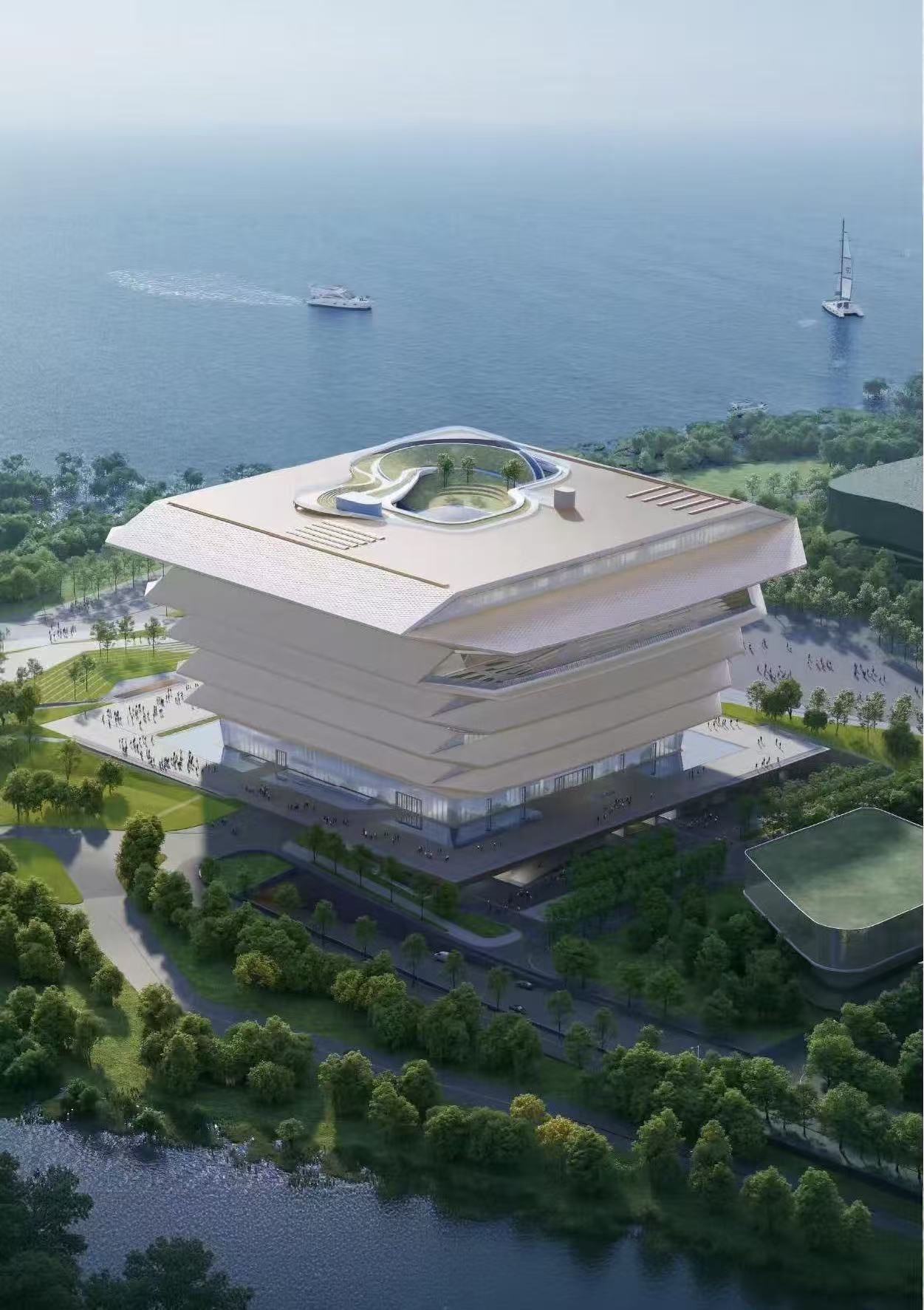
The Qianhai Museum. Photos courtesy of the organizers unless otherwise stated
Building on Qianhai’s openness, it will develop five platforms focused on Chinese cultural heritage, shared heritage in the Greater Bay Area, modern civilization, international exchange, and cultural and technological innovation. It will also serve four main functions: exhibitions and research, public education, international exchange, and digital museum services.
Set against Dananshan and Xiaonanshan mountains and overlooking Qianhai Bay, the museum has a total floor area of 126,000 square meters, including 40,000 square meters of exhibition space.
Designed by a team led by He Jingtang, an academician of the Chinese Academy of Engineering, the building takes inspiration from the traditional Chinese architectural motif of “overlapping eaves.” Its contemporary design reinterprets the motif through layered forms that provide natural shade and create a distinctive silhouette.
The museum also offers 270-degree panoramic views of the mountains, sea and city, as well as a rooftop garden. Together, these features bring natural ecology, urban scenery and cultural space into one setting, making the museum both a cultural venue and a visitor destination.
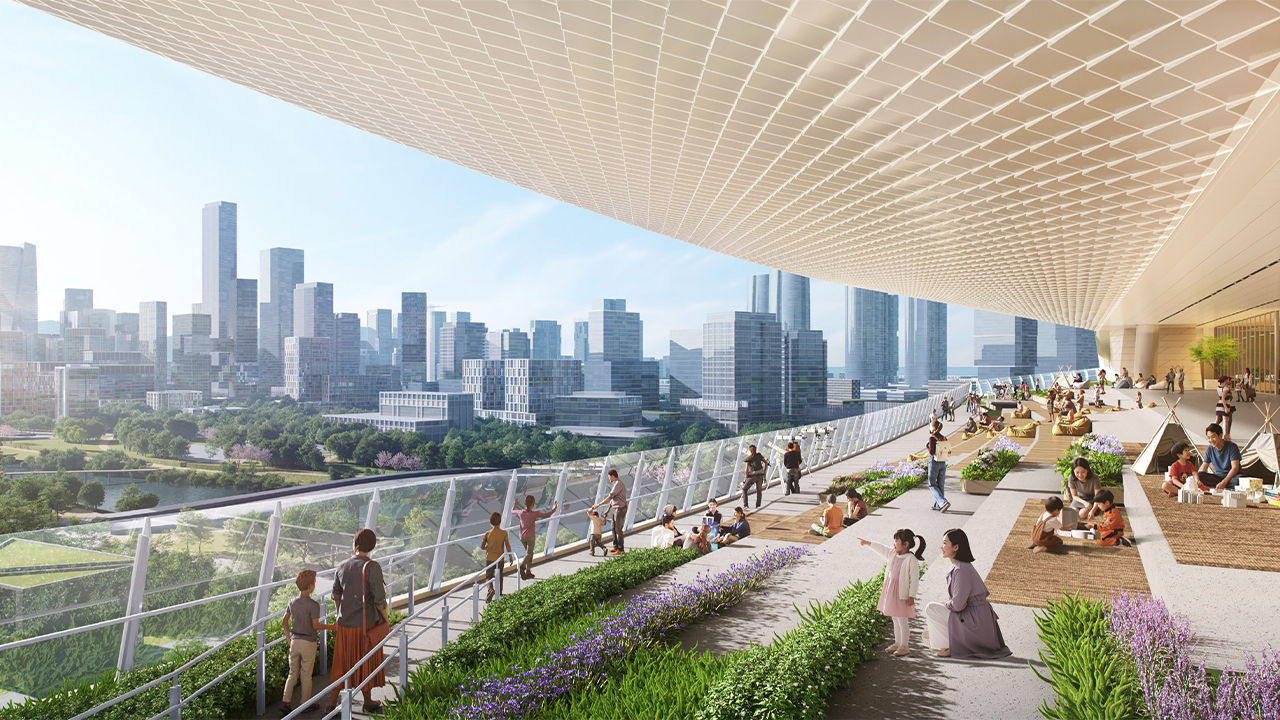
Relaxing areas offer a great view.
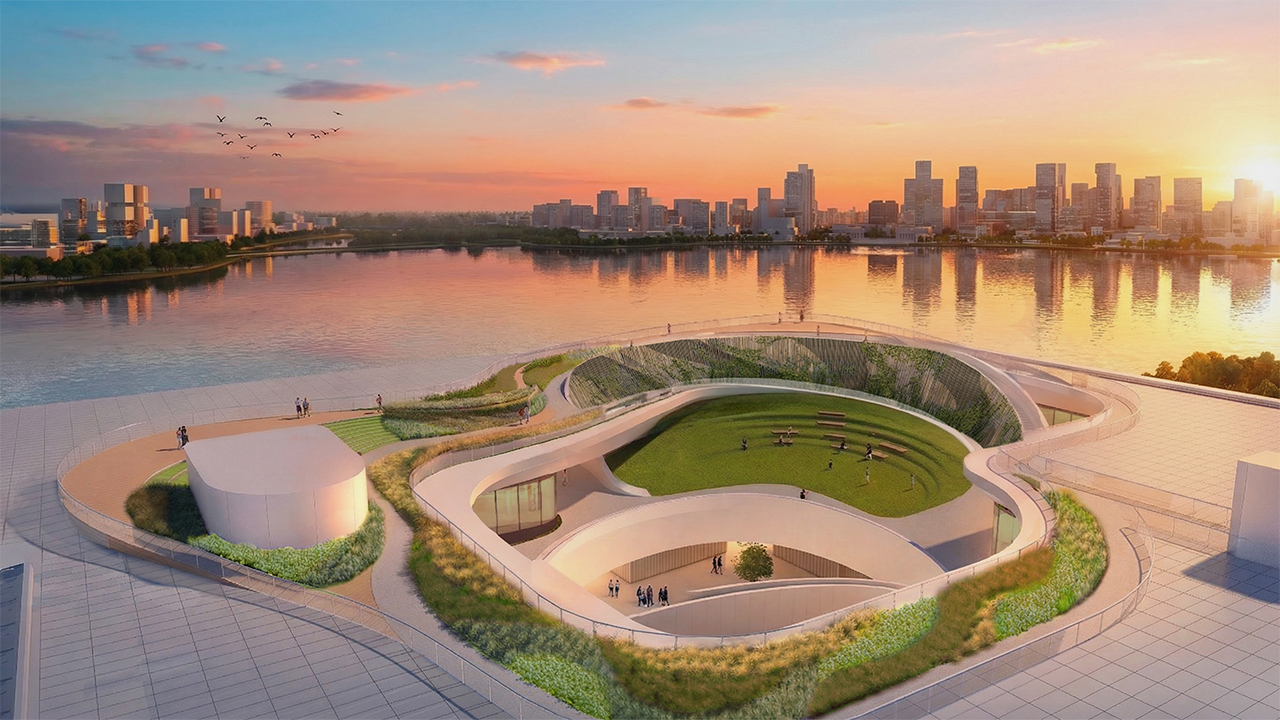
The rooftop garden.
The eight exhibitions explore five dimensions of civilization: its origins, texture, evolution, foundation and future. Together, they trace a narrative from the roots of civilization to its modern-day echoes. The more than 3,000 artifacts include ritual bronzes, fine jade, porcelain, Silk Road relics and Buddhist sculptures.
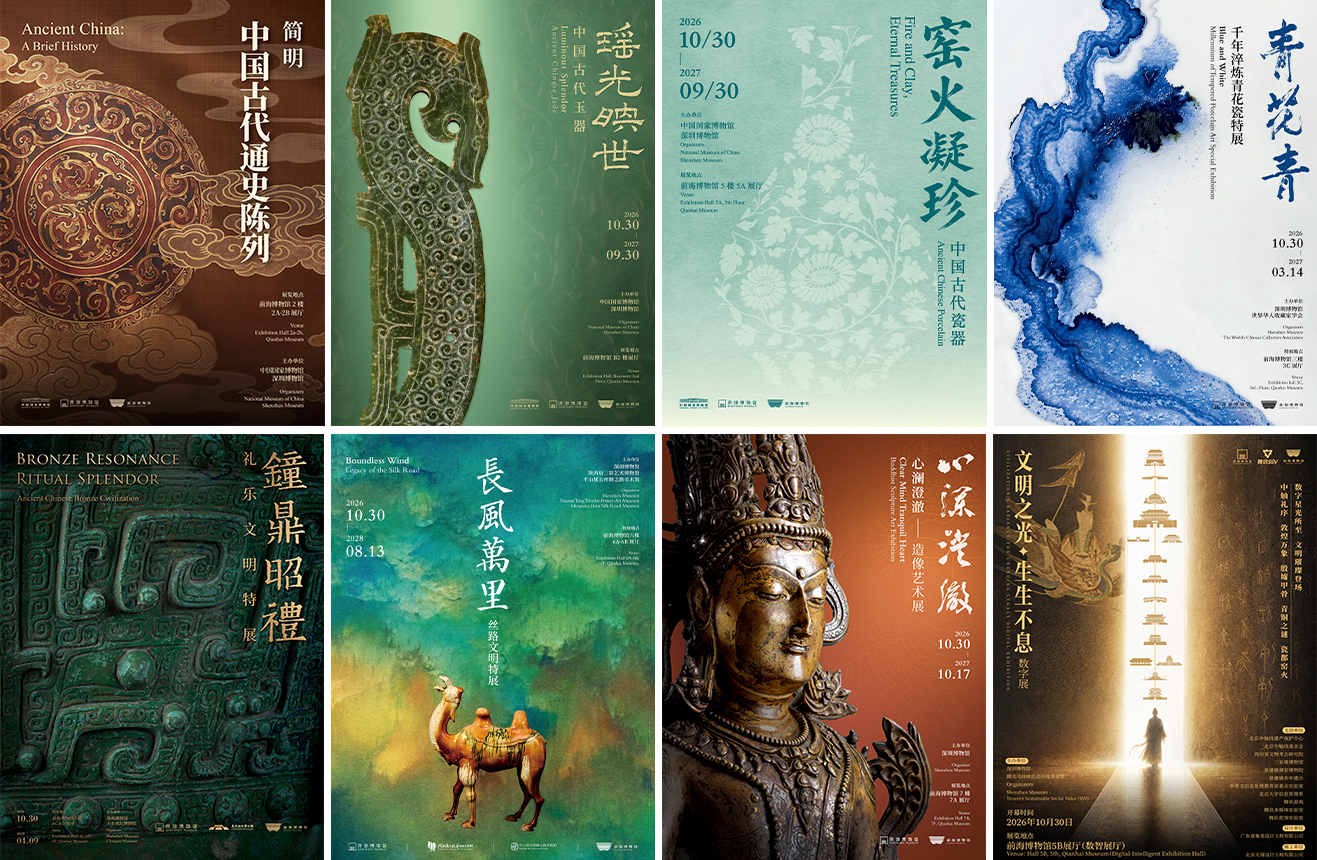
Posters of the eight exhibitions.
“Ancient China: A Brief History” traces a million years of human history, 10,000 years of cultural history and more than 5,000 years of civilization. It tells how people of all ethnic groups helped build and consolidate a unified, multiethnic country, illustrating the story of diversity within unity. Ten highlight artifacts from the National Museum of China will be on display through Jan. 3, 2027.
“Luminous Splendor: Ancient Chinese Jade” follows the development of jade from prehistoric times to the late Qing Dynasty (1644-1911), exploring its ritual and aesthetic significance.
“Fire and Clay, Eternal Treasures” examines porcelain through its production, everyday use and trade, revealing its place in daily life.
“Blue and White: Millennium of Tempered Porcelain Art Special Exhibition” traces changes in clay, glaze, firing techniques and patterns, showcasing a thousand years of craftsmanship and exchange.
“Bronze Resonance, Ritual Splendor: Ancient Chinese Bronze Civilization” uses Shang and Zhou Dynasty ritual bronzes to explain the role of ritual and music in ancient China.
“Boundless Wind: Legacy of the Silk Road” highlights the exchange of goods and ideas along the ancient Silk Road.
“Clear Mind, Tranquil Heart: Buddhist Sculpture Art Exhibition” presents Buddhist sculptures, reflecting regional beliefs and aesthetics across the ages.
“Civilization’s Radiance: The Unending Legacy Digital Exhibition” uses AI, digital twins, multimodal interaction and cloud rendering to present a digital experience inspired by Beijing’s Central Axis, Dunhuang murals, Yinxu oracle bones, Jingdezhen porcelain and Sanxingdui.
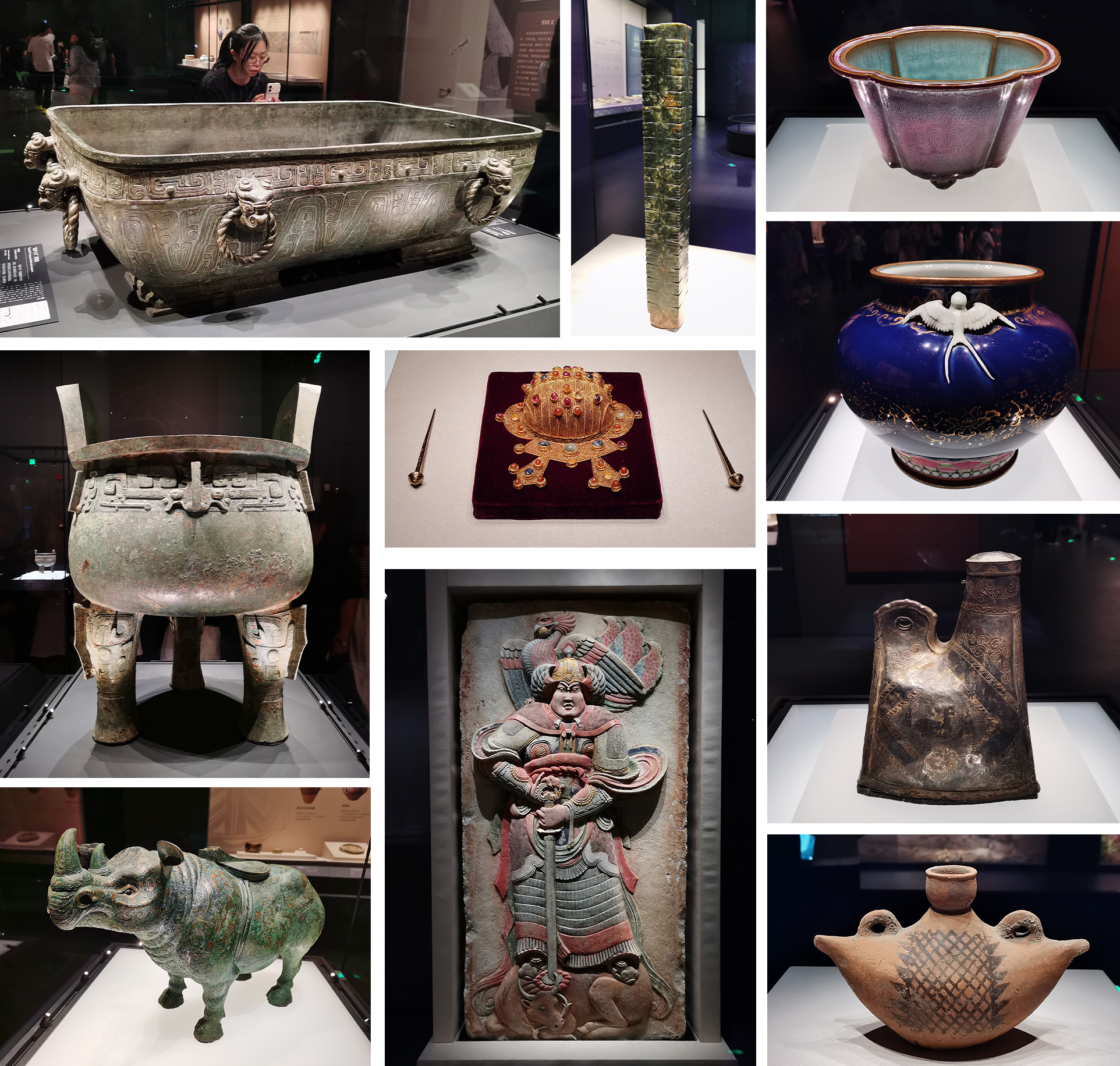
National treasures on display at the “Ancient China: A Brief History” exhibition. Photos by Cao Zhen
Reservations via WeChat miniprogram “前海博物馆” are required for entering the museum, including exhibitions with free admission. Reservations open seven days in advance, with tickets released daily at 5 p.m. Purchasing a ticket to a paid exhibition through the miniprogram automatically reserves your visit, so you do not need to make a separate reservation for free exhibitions.
Tickets for paid exhibitions are 80 yuan each, with a concession price of 48 yuan or free admission for eligible visitors. A two-exhibition pass costs 88 yuan, and a pass for all three costs 128 yuan. During trial operations on Oct. 23 and 25, tickets to paid exhibitions will be half price.
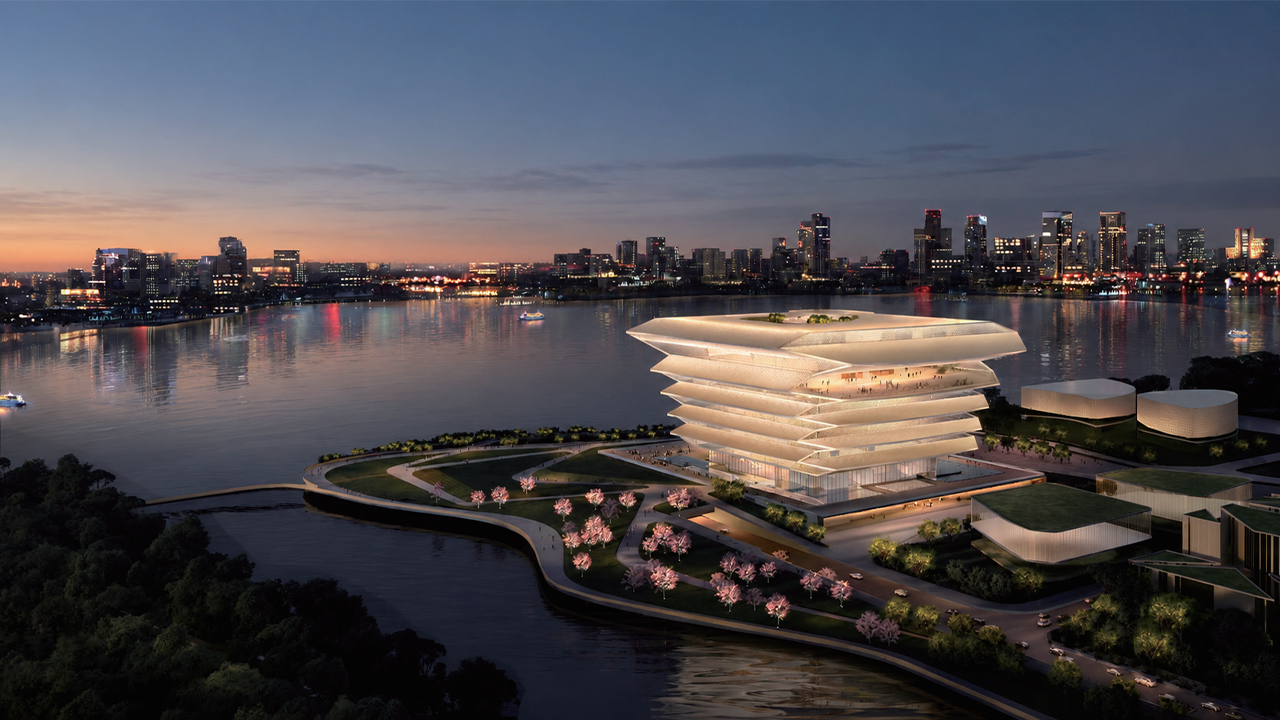
The illuminated Qianhai Museum.
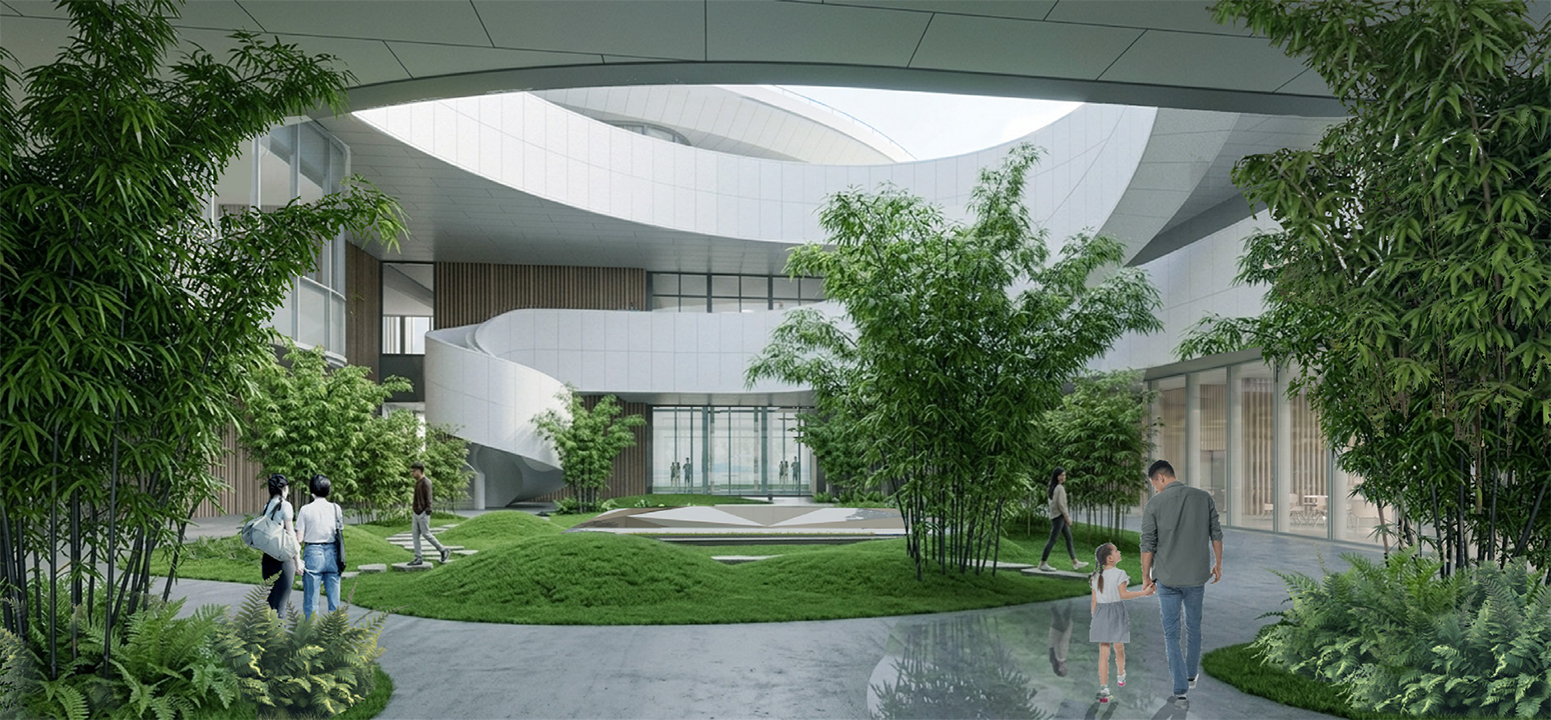
A green space within the museum.
Venue: Qianhai Museum (前海博物馆)
Metro: Line 5 to Qianwan Park Station (前湾公园站), Exit A and then walk about 1.1 kilometers