
 Share
Share


 Print
PrintShenzhen Mangrove Wetlands Museum takes shape
Writer: Yu Yuanfan | Editor: Lin Jiayi | From: Shenzhen Daily | Updated: 2026-10-14
The Shenzhen Mangrove Wetlands Museum, a large-scale specialty museum dedicated to mangrove wetlands, is being to take shape as construction of the venue's main structure and long-span steel roof progresses steadily.
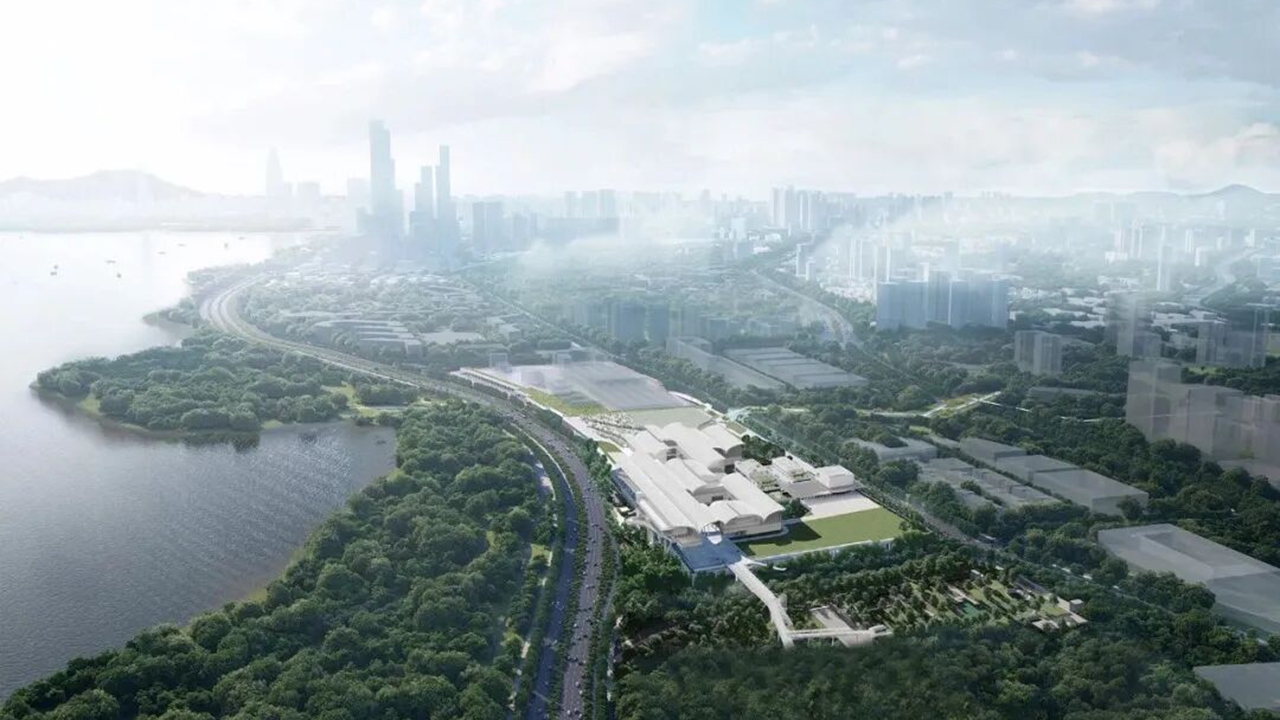
A computer-generated image of the Shenzhen Mangrove Wetlands Museum in Futian District. Photos from WeChat official account "深圳发布"
Set along the shores of Shenzhen Bay, the museum has a total gross floor area of approximately 42,400 square meters. It sits next to the Futian Mangrove Nature Reserve and Shenzhen Bay to the south, a densely developed urban area to the north, and the Futian Water Purification Plant to the east. Beneath the site lies the Qiaocheng East Depot, which serves the city's rail transit system.
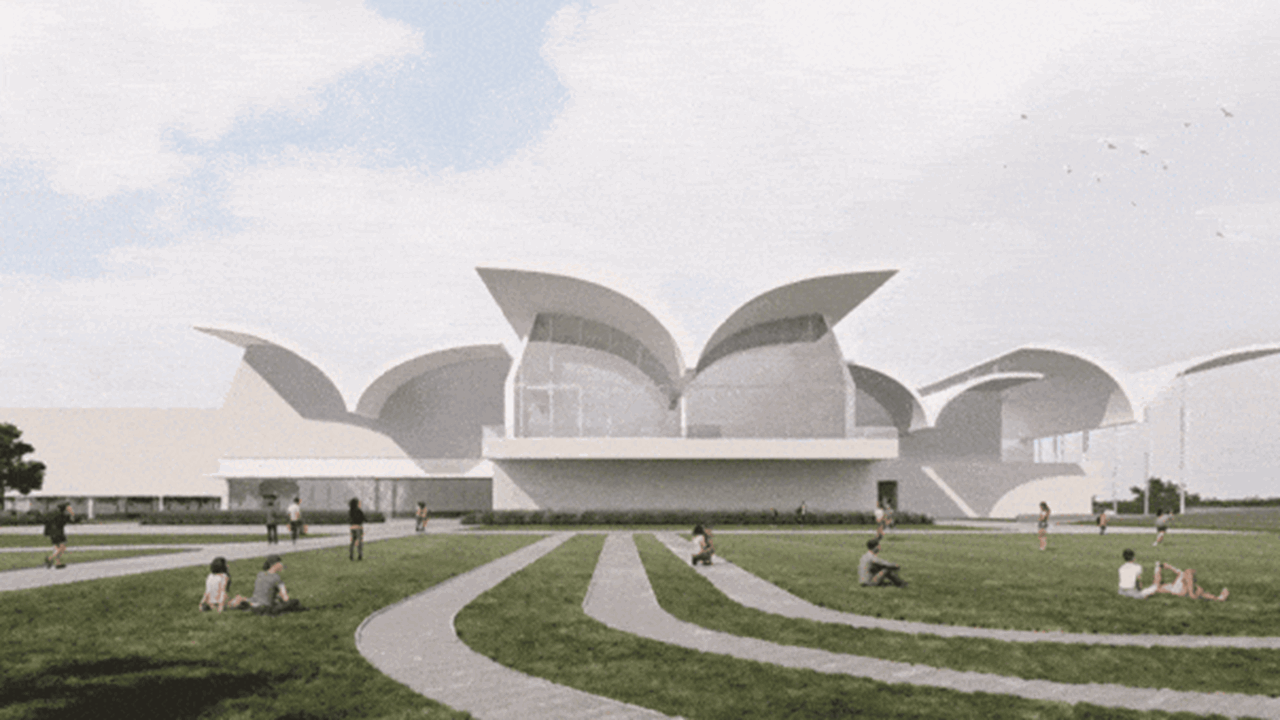
The museum's design draws inspiration from flying birds and mangrove trees.
The venue's design draws inspiration from flying birds and mangrove trees. Its lightweight, curved roof forms a series of overlapping layers that extend horizontally across the site. Seen from a distance, the structure resembles a flock of white birds skimming past before blending into the surrounding landscape of mountains and sea.
What makes the museum's location particularly special is its proximity to a group of unusual "residents" — migratory birds.
Every autumn and winter, tens of thousands of migratory birds arrive at Shenzhen Bay along the East Asian-Australasian Flyway. Across the water lies Hong Kong's Mai Po Nature Reserve, another internationally important wetland which forms part of the same mangrove wetland ecosystem around Shenzhen Bay.

Birds spotted in Shenzhen Bay.
The area serves as an important wintering ground and stopover site where migratory birds can rest and replenish their energy. A total of 272 bird species have been recorded here, including 60 species under national protection.
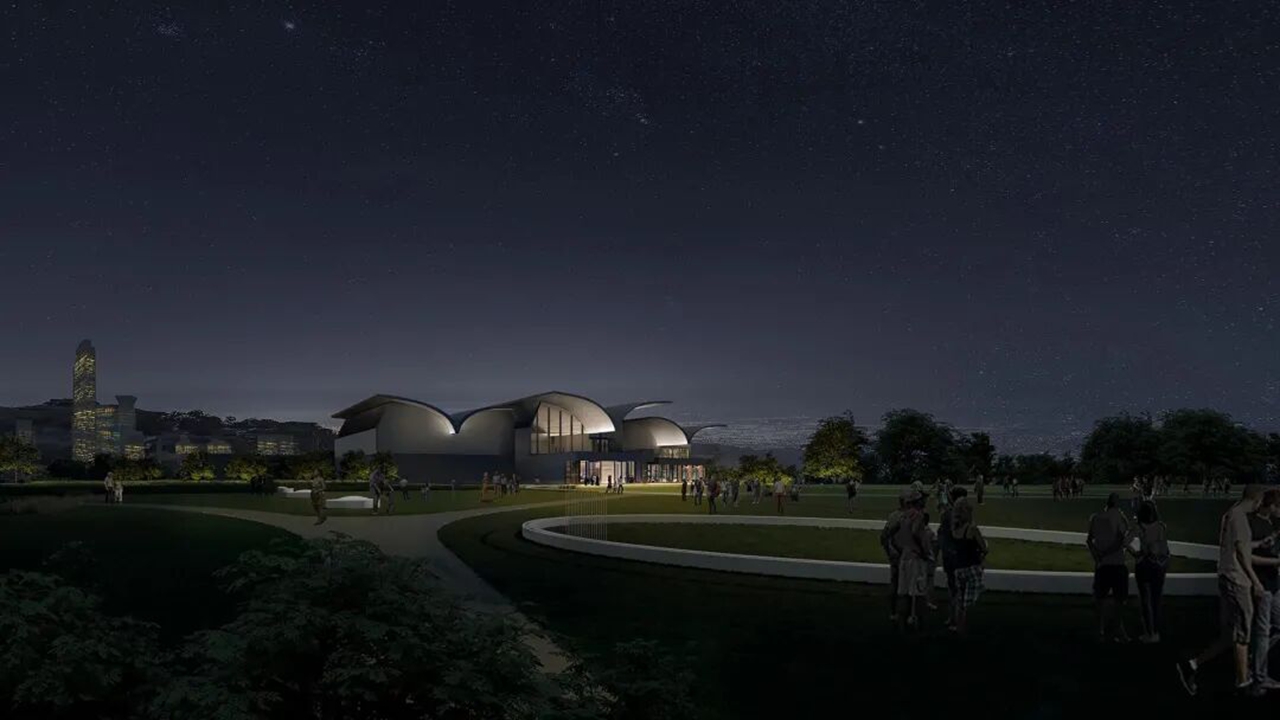
A computer-generated image of the museum at night.
To ensure these long-distance travelers can stay without disturbance, the Shenzhen public works bureau has used building information modeling (BIM) throughout the design process to simulate and optimize the project. The aim is to create a high-quality ecological space that reduces the impact of strong winds on both people and birds, minimizes noise from the building that could disturb the surrounding natural environment, and prevent light pollution from disrupting migratory birds' nighttime flights and roosting. The roof's projecting eaves provides natural shade to reduce energy consumption.
Designed as a public gathering space for exhibitions and collections, science education, cultural exchange and leisure, the museum will feature exhibition halls, educational classrooms, cultural and creative retail spaces, dining areas, courtyards and viewing platforms.
Alongside its specialist functions in wetland research, public education and cultural exchange, the museum will offer residents a place to stroll, relax and socialize — bringing the natural environment and everyday urban life closer together.