
 Share
Share


 Print
PrintFotografiska Shenzhen: Infinite ways of seeing
Writer: Cao Zhen | Editor: Cao Zhen | From: Original | Updated: 2026-10-01
In an age of rapidly scrolling images on mobile phones, a new art space in Shenzhen invites viewers to slow down and see the world differently. Here, photography is not merely a record of reality — it is a way of reconstructing it and imagining beyond it.
Fotografiska Shenzhen, located at Shenzhen Bay MIXC, is presenting five exhibitions — “ToiletFotoPaperGrafiska,” “Morphing Equilibrium,” “Transcendent Realities,” “Festa,” and “Storm.”
Video by Wang Haolan
Video by Ma Junbang
Visitors can immerse themselves in TOILETPAPER’s surreal imagery, Michael Najjar’s striking videos of melting glaciers and erupting volcanoes, Prix Pictet photographers’ reflections on global crises, Shi Guowei’s festive yet solitary photographs, and more large-scale works by artists from around the world. Together, the five exhibitions offer distinct ways of seeing and experiencing the world.
Founded in Stockholm in 2010, Fotografiska is a contemporary museum of photography, art and culture. Developed in partnership with Shenzhen Bay MIXC, Fotografiska Shenzhen is the institution’s fifth location worldwide, following Stockholm, Tallinn, Berlin and Shanghai.
Among the five inaugural exhibitions, “ToiletFotoPaperGrafiska” is perhaps the most playful — much like its humorous name. Founded by Maurizio Cattelan and Pierpaolo Ferrari, TOILETPAPER presents a surreal world of highly saturated colors and imaginative installations. Visitors can wander through absurd scenes and discover hidden details, exploring how humor, allure and unease can coexist.
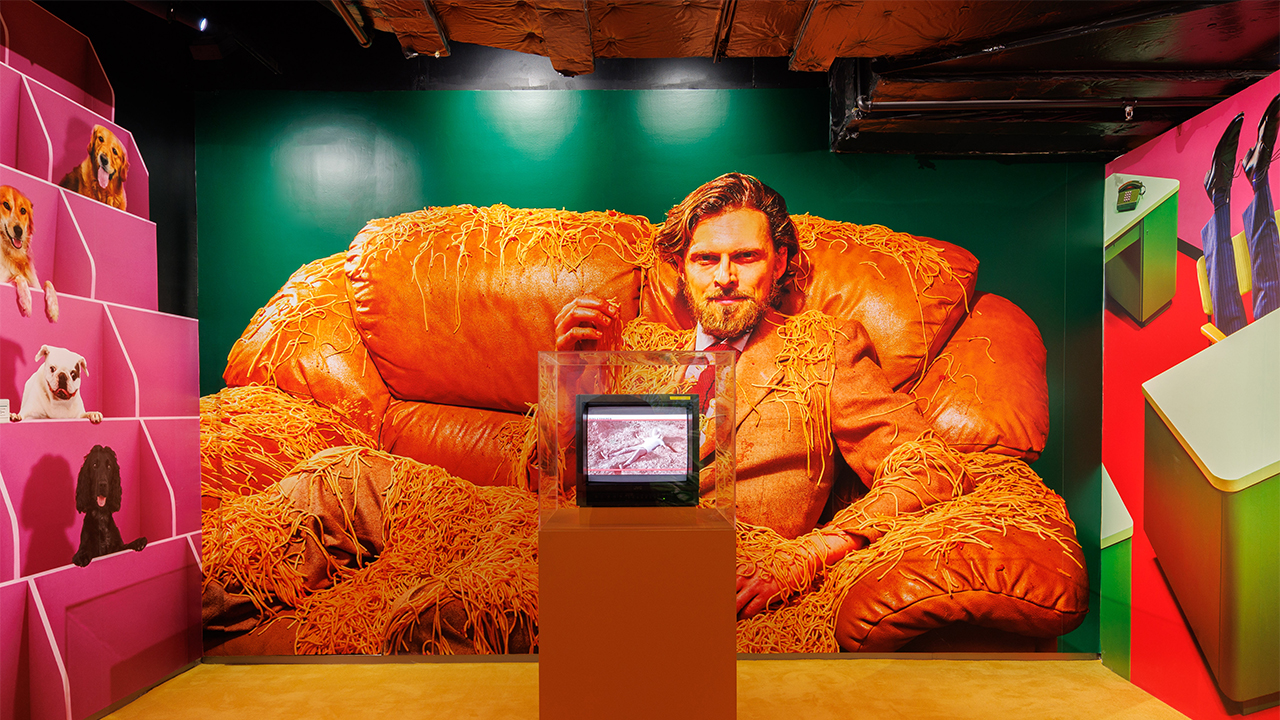
TOILETPAPER - ToiletFotoPaperGrafiska, Fotografiska Shenzhen, 2026 © Fotografiska
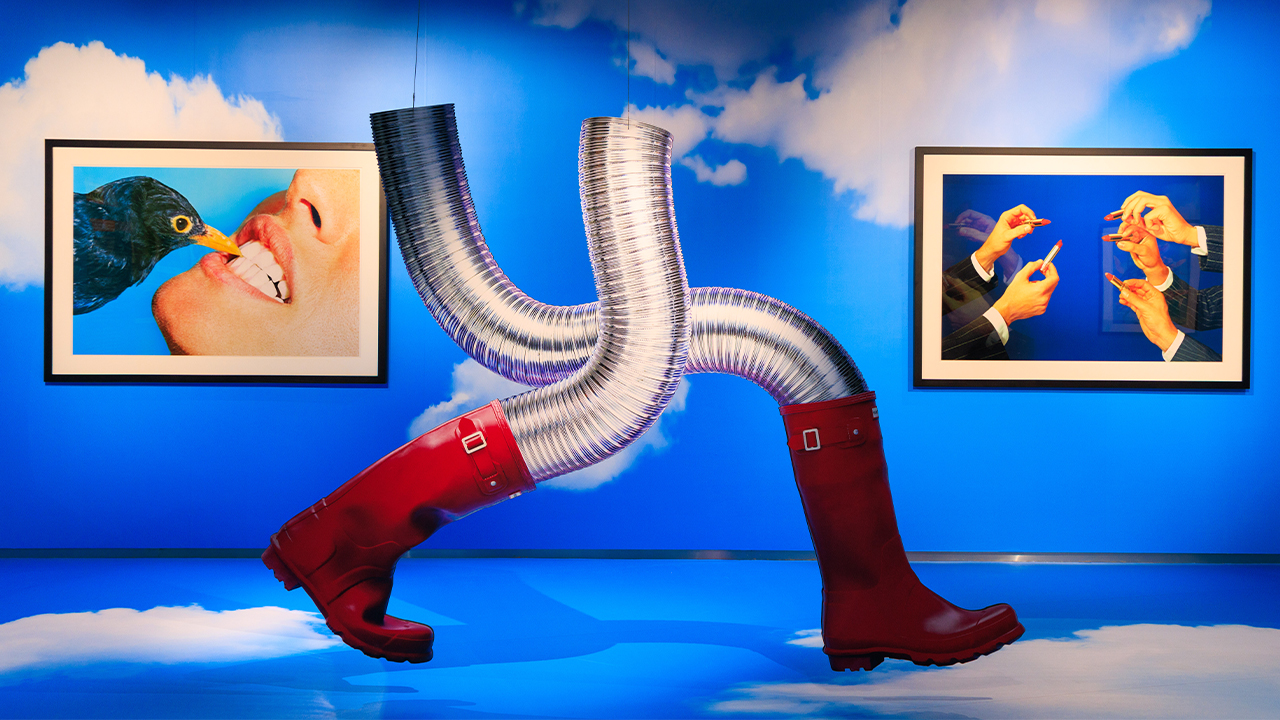
TOILETPAPER - ToiletFotoPaperGrafiska, Fotografiska Shenzhen, 2026 © Fotografiska
The duo’s distinctive visual language draws on the polished aesthetics of advertising photography while disrupting familiar narratives of consumption and desire through unexpected combinations of everyday objects.
“I like to show another layer of reality,” Ferrari said during an exclusive interview with Shenzhen Daily. He explained that the objects in their images are easy to find, but people don’t really look at them. “If you look at a cat, it’s a cat,” he said. But through the duo’s photographic treatment, an ordinary subject can suddenly become something more distinctive.
Ferrari said the exhibition was designed to make viewers feel disoriented — not in the traditional sense of an immersive exhibition, but by opening a dialogue and encouraging viewers to notice things and think differently. Step into a dreamlike space and shake your expectations.
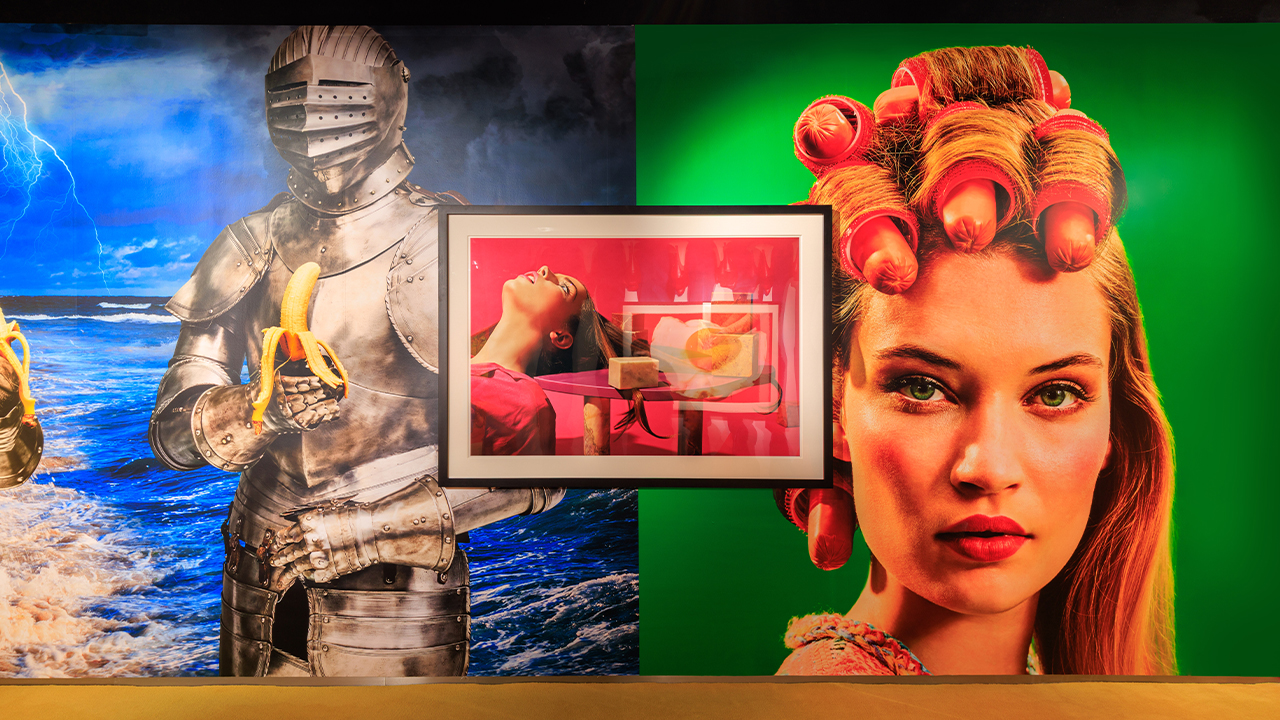
TOILETPAPER - ToiletFotoPaperGrafiska, Fotografiska Shenzhen, 2026 © Fotografiska
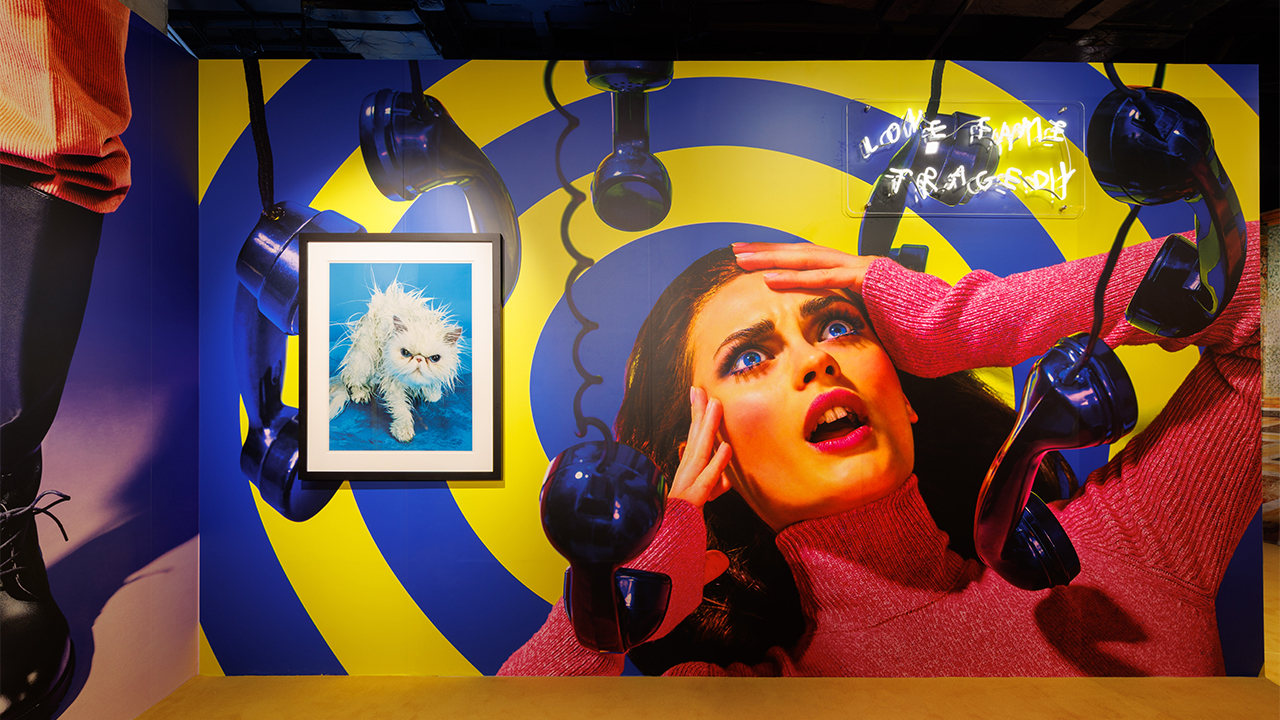
TOILETPAPER - ToiletFotoPaperGrafiska, Fotografiska Shenzhen, 2026 © Fotografiska
One remarkable feature of TOILETPAPER is that in a world racing toward artificial intelligence (AI) and digital manipulation, their creations are still made by hand. The objects in the photographs are not digitally generated.
“If we created pictures with AI, we would lose the fun of being on set,” Ferrari said. “Being a photographer isn’t just about working on a computer. It’s about being there with your camera and your hands.”
Another visually compelling exhibition is Michael Najjar’s “Morphing Equilibrium,” which features videos of melting glaciers and erupting volcanoes. Shown on large screens surrounding viewers, the videos create a 360-degree immersive experience.
Venturing into extreme environments, Najjar uses photography and digital techniques to reconstruct the landscapes he encounters, placing the Earth’s vitality and vulnerability within the same frame. The flow of lava and the rupture of ice transcend natural spectacle, becoming powerful visual metaphors for the current state of “dynamic imbalance” in the world.
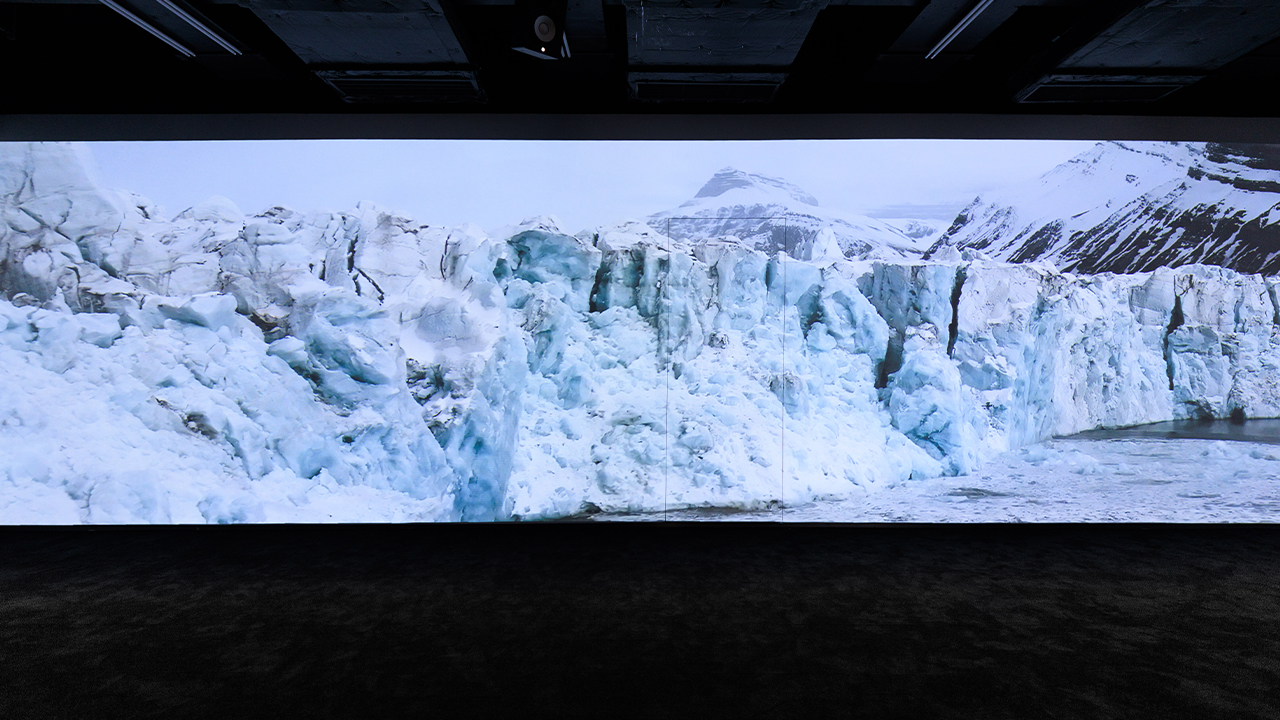
Michael Najjar - Morphing Equilibrium, Fotografiska Shenzhen, 2026 © Fotografiska
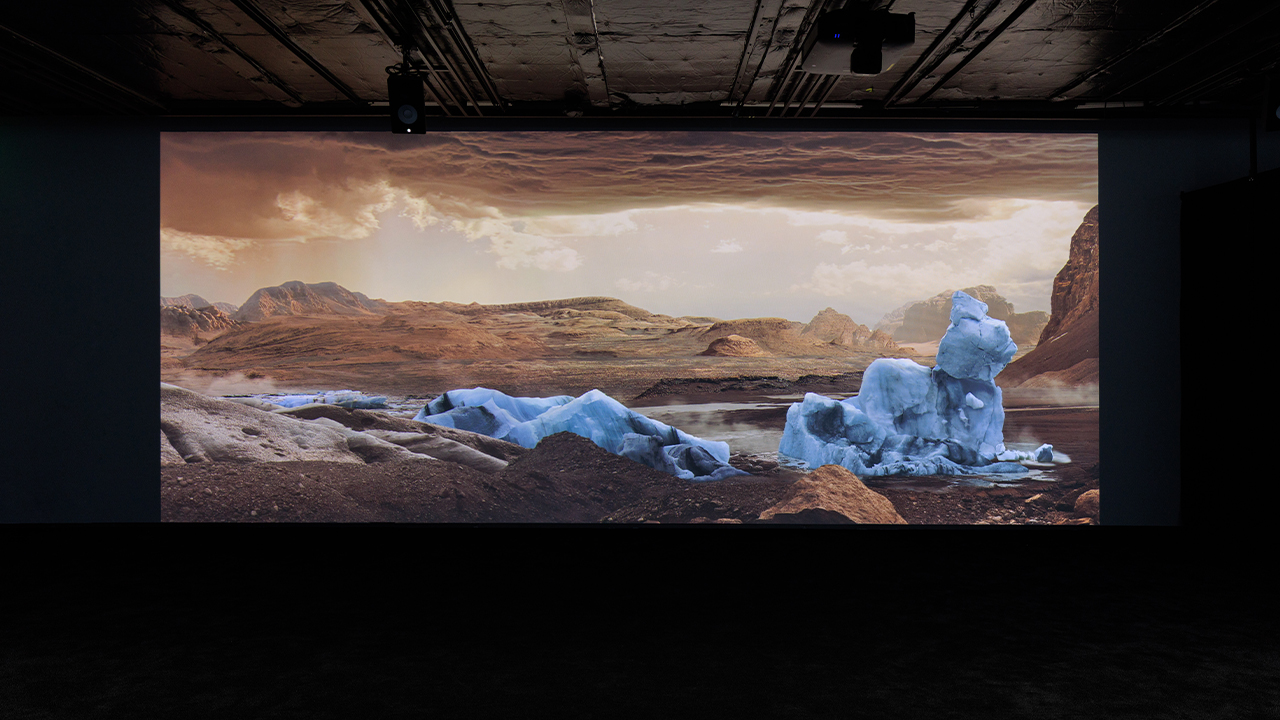
Michael Najjar - Morphing Equilibrium, Fotografiska Shenzhen, 2026 © Fotografiska
Najjar is also presenting “Netropolis | Shenzhen | 2024” in the “Transcendent Realities” exhibition. In 2024, he photographed Shenzhen in the four cardinal directions from an elevation of 440 meters atop the KK100 building, then merged the images into a single pictorial space. Urban villages, high-rises and mountains are compressed together, creating a fabric-like structure.
Najjar told Shenzhen Daily that the work is part of his long-running series portraying metropolises around the world. “The image is a compression of time and space, a density of urban space and a density of information that defines our lives today,” he said. “Everybody is subject to a massive level of interconnectivity. The flow of data marks and shapes our daily lives, and this image is a metaphor for the data-driven world in which we live.”
In Najjar’s eyes, Shenzhen is “so futuristic, energetic and well-developed.” He said everything about the way the urban space is constructed is absolutely amazing here. “I think it is a real role model and blueprint for how megacities should be today and in the future.”
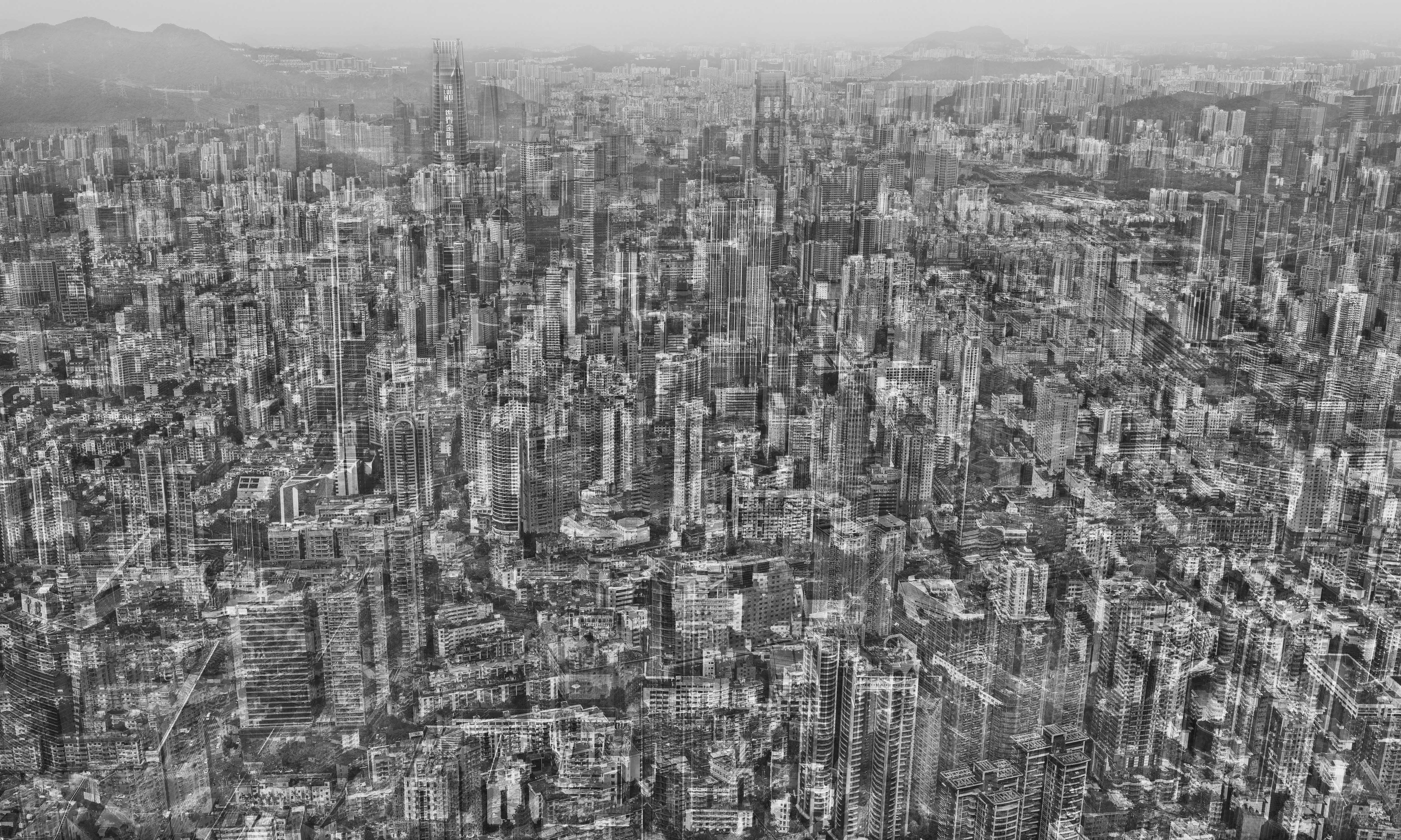
“Netropolis | Shenzhen | 2024” © Michael Najjar
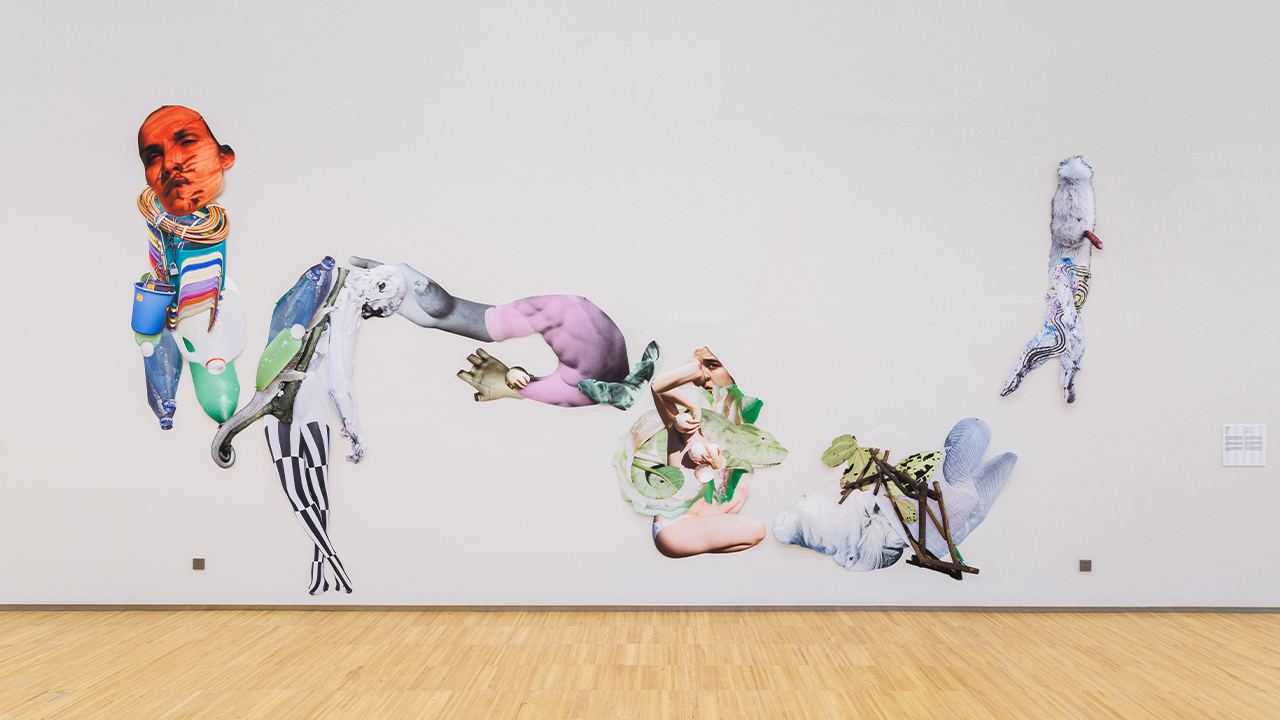
Transcendent Realities, Fotografiska Shenzhen, 2026 © Fotografiska
“Transcendent Realities” also brings together works by Fan Xi, Tan Yingjie, Marco Brambilla, Cooper & Gorfer, and Viviane Sassen, on display in a hall with ceilings rising to 8.5 meters.
“Storm,” the latest exhibition from Prix Pictet, a leading global award for photography and sustainability, features works by the 12 photographers shortlisted for the award’s 11th cycle. The exhibition connects storms in the natural world with social upheaval, environmental crises and individual lives.
Through images from different regions, Prix Pictet explores destruction, resilience and the possibility of renewal in times of crisis. The exhibition offers a wide-ranging panorama of work by some of the most promising contemporary photographers from around the world.
“For almost two decades, the Prix Pictet has championed photography’s unique ability to engage audiences with the defining sustainability challenges of our time,” said Michael Benson, Director of the Prix Pictet. “We are proud to bring these conversations to Shenzhen, a city that carries a forward-looking spirit and stands for dialogue and meaningful action.”
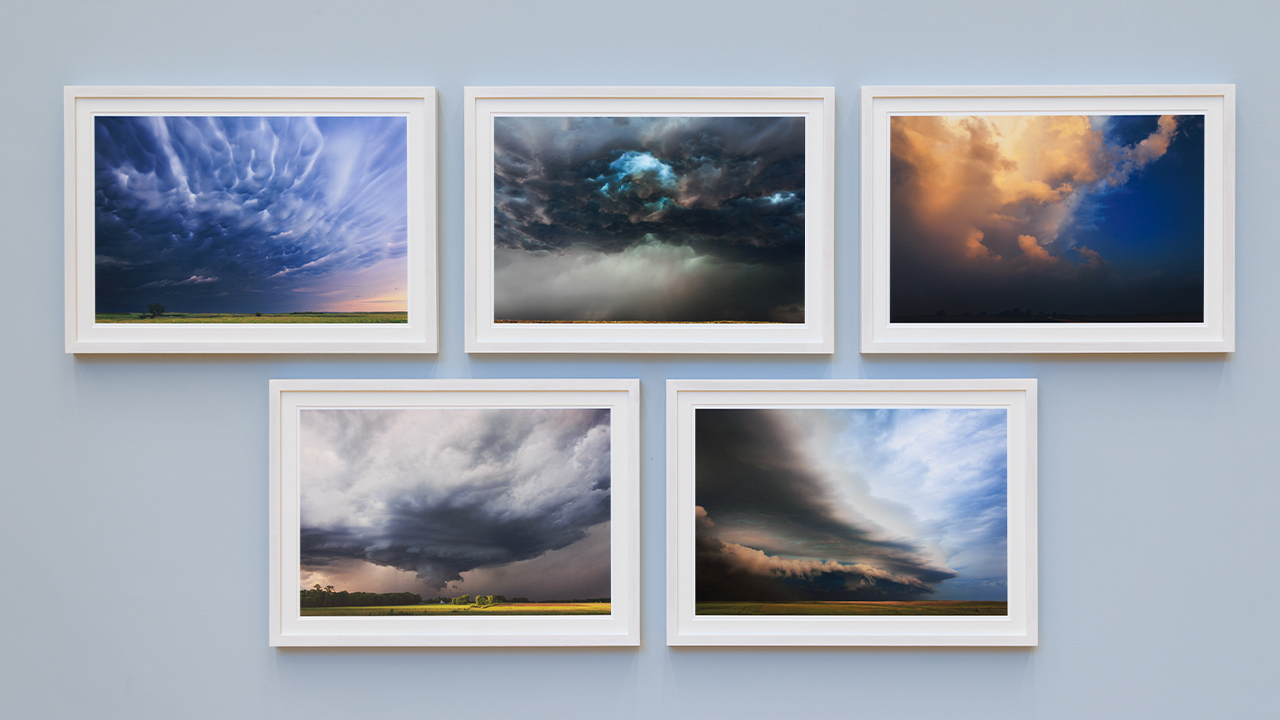
Storm, Fotografiska Shenzhen, 2026 © Fotografiska
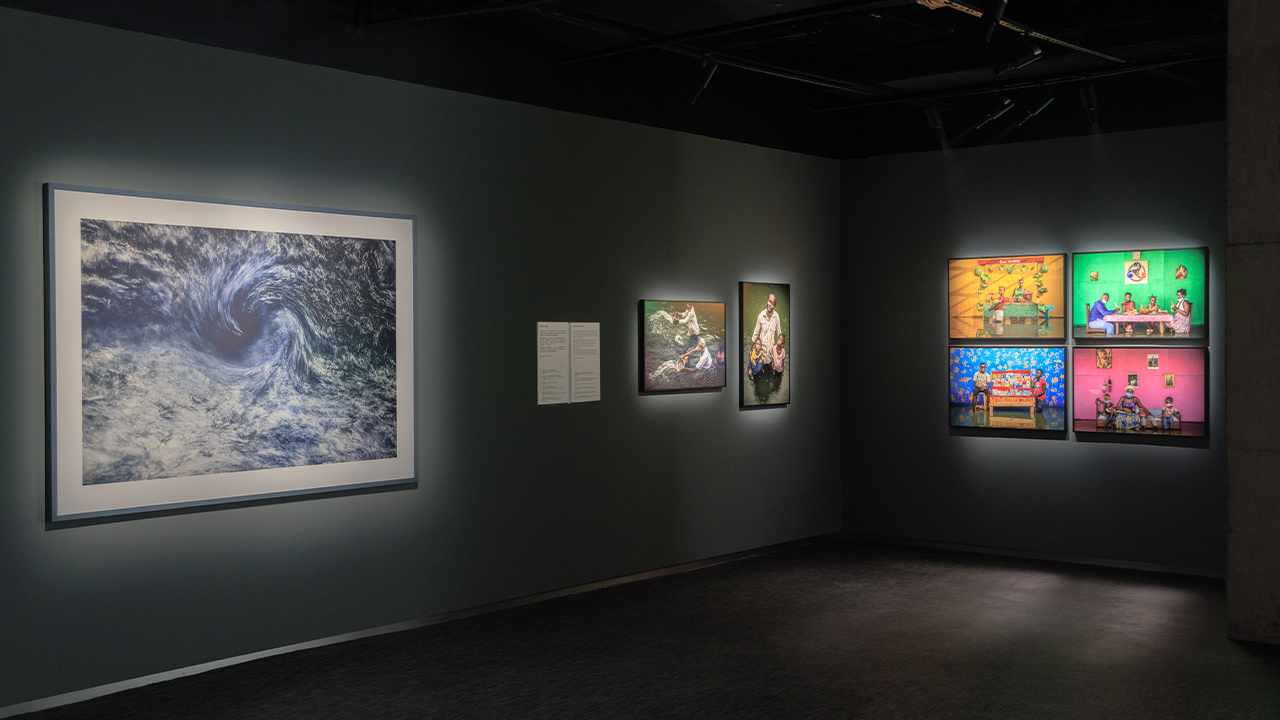
Storm, Fotografiska Shenzhen, 2026 © Fotografiska
Chinese artist Shi Guowei’s solo exhibition, “Festa,” draws on festive traditions in urban and rural China, as well as the quiet emotions of everyday life. His photographs are rendered in vibrant colors, yet a sense of loneliness can be felt beneath the surface. The exhibition explores how collective celebration and individual solitude intertwine.
Shi applies color to photographic images, allowing records of reality and subjective perception to coexist. The practice was inspired by his childhood memories of photo studios in the 1980s, where photographs were often hand-colored to enhance their visual appeal.
In addition to exhibitions across its five galleries, Fotografiska Shenzhen includes the MONA restaurant, an event space and a design concept store. Spanning 5,300 square meters, the venue will offer a dynamic program of talks, workshops, music and live art performances, as well as the “Night at the Museum” party series.
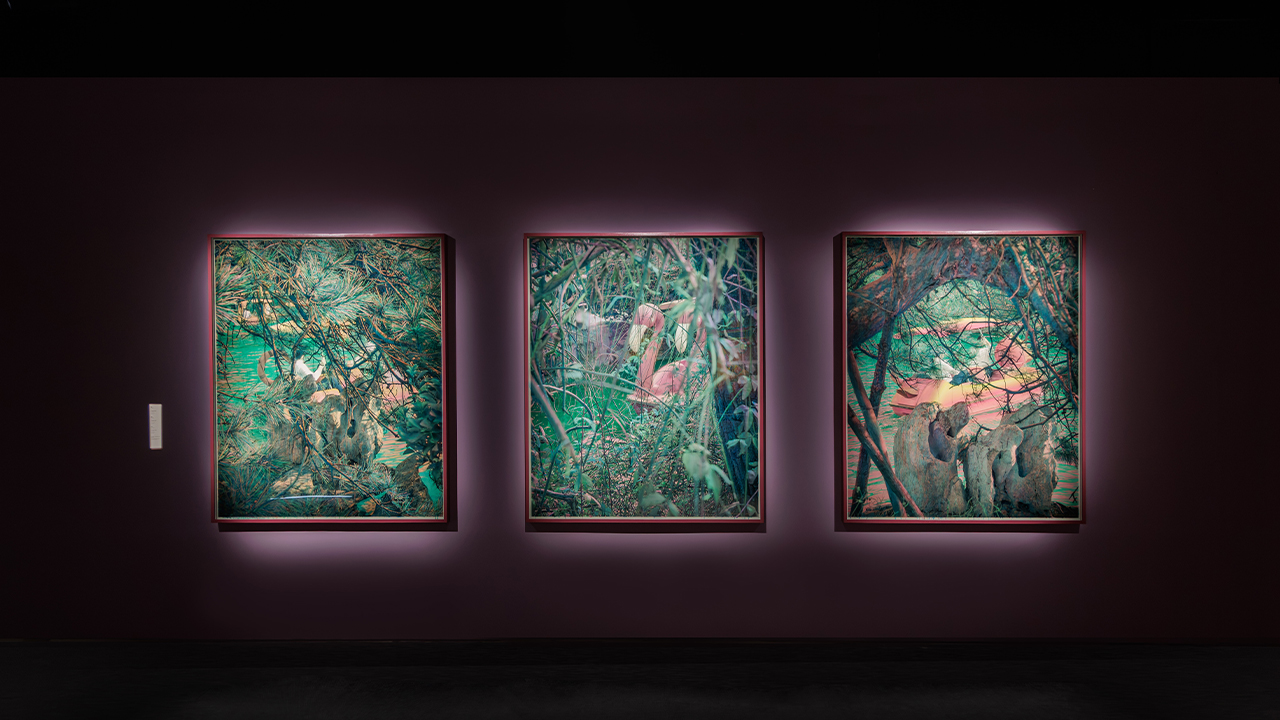
Shi Guowei - Festa, Fotografiska Shenzhen, 2026 © Fotografiska
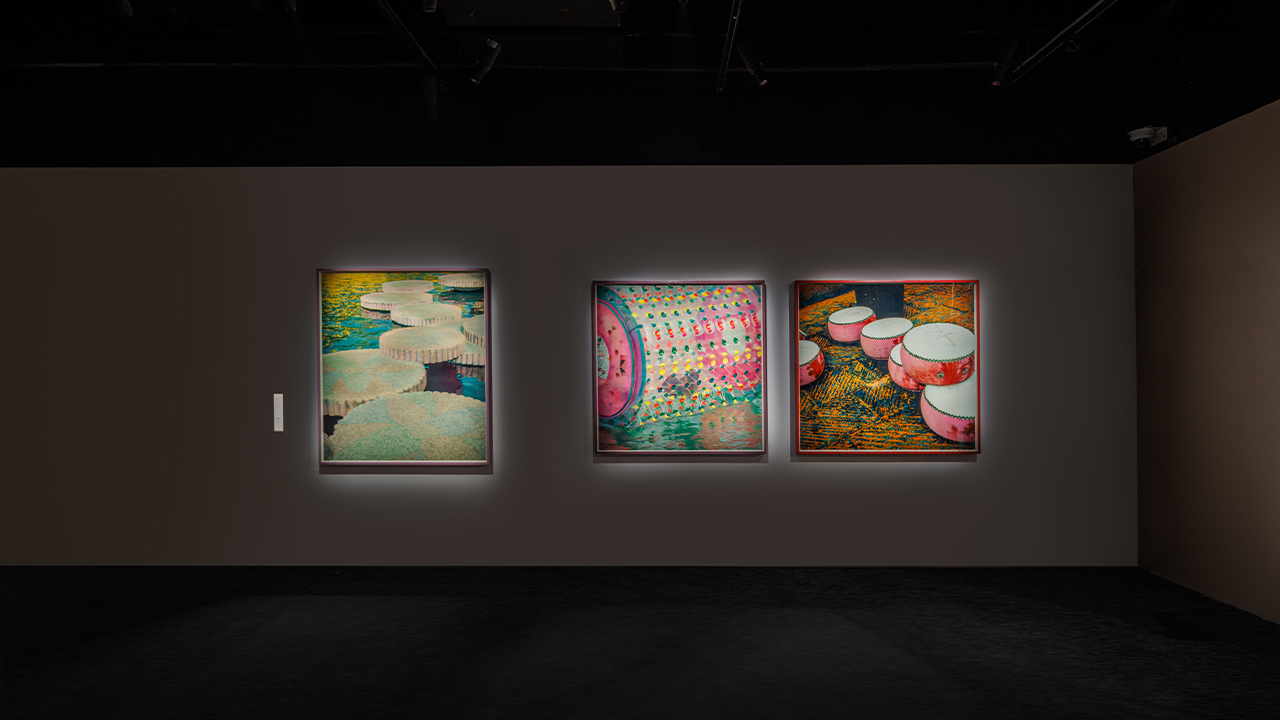
Shi Guowei - Festa, Fotografiska Shenzhen, 2026 © Fotografiska
“ToiletFotoPaperGrafiska”: Oct. 1, 2026-March 14, 2027
“Transcendent Realities”: Oct. 1, 2026-Oct. 1, 2027
Michael Najjar “Morphing Equilibrium”: Oct. 1, 2026-Jan. 17, 2027
Prix Pictet “Storm”: Oct. 1-Nov. 29, 2026
Shi Guowei “Festa”: Oct. 1, 2026 -March 14, 2027
Tickets: 60 yuan (regular), 48 yuan (concession)
Hours: 10 a.m.-10 p.m. (Sun.-Thu.), 10 a.m.-10:30 p.m. (Fri.-Sat.)
Venue: Fotografiska Shenzhen, L3, C Zone West, Shenzhen Bay MIXC, 1218 Haide 1st Road, Nanshan District (南山区海德一道1218号深圳湾万象城C区西苑三楼Fotografiska深圳湾美术馆)
Metro: Line 2, 11 or 13 to Houhai Station (后海站), Exit K1