
 Share
Share


 Print
PrintFrom credible data to effective carbon management: How carbon data helps enterprises go green
Writer: Chen Siqi | Editor: Zhang Zeling | From: Original | Updated: 2026-09-28
As companies face growing pressure to go green, one question is becoming increasingly urgent: how can they turn carbon data into real climate action? For Liu Siyu, a lead scientist in the field of sustainable development at the Shenzhen Academy of Metrology & Quality Inspection, the answer starts with trust.“Only with credible data can companies understand their emissions, identify major sources and reduction potential, and set scientific carbon targets and effective pathways,” said Liu, who holds a Ph.D. from Nanyang Technological University in Singapore.
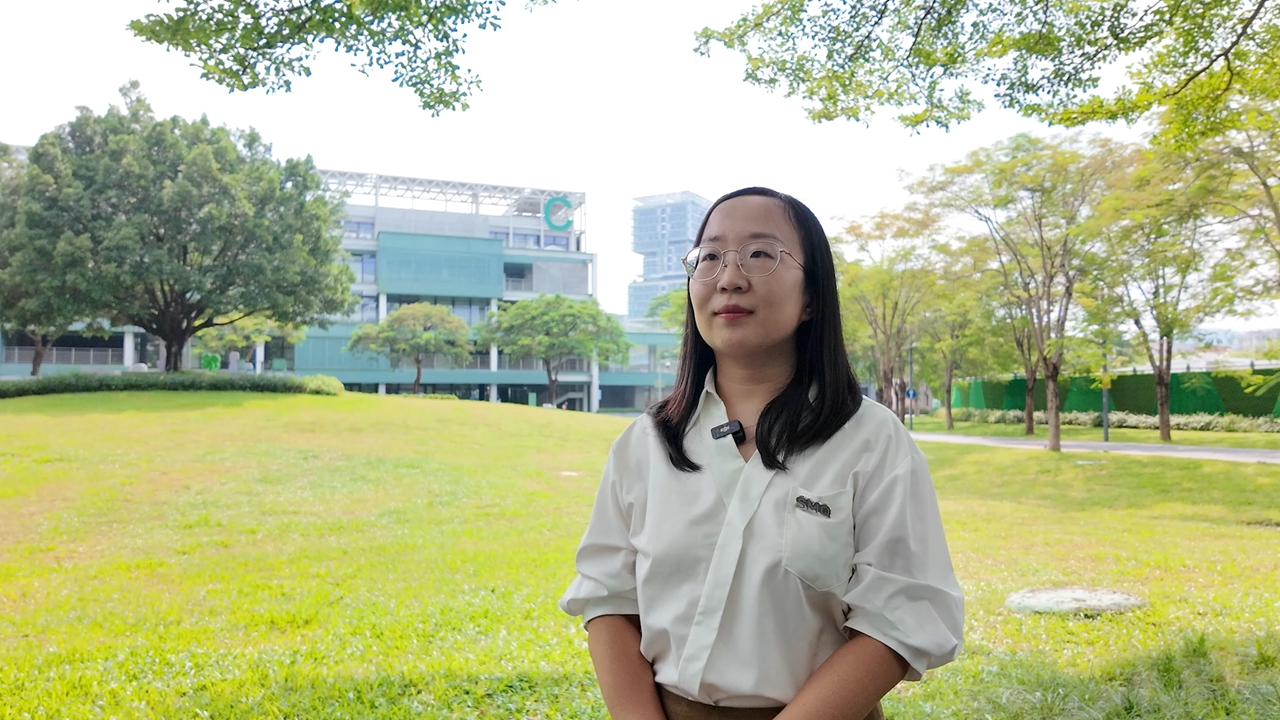
Liu Siyu
She took an interview from Shenzhen Daily before delivering a speech titled “Quality Infrastructure Supporting Carbon Management: From Credible Data to Effective Carbon Management” at a subforum of the 2026 Shenzhen National Low-Carbon City Forum. Reliable carbon data matters because it sits at the center of decision-making, compliance, trading and communication, Liu said. In the carbon market, data directly affects allowance compliance, carbon asset pricing, compliance costs and reputation. Distorted data, meanwhile, can bring financial, compliance and trade risks. As green and low-carbon development becomes a broad consensus, companies are under pressure from carbon price costs, green supply chains and green finance, she added. That makes accurate and reliable data a shared foundation for corporate carbon management.
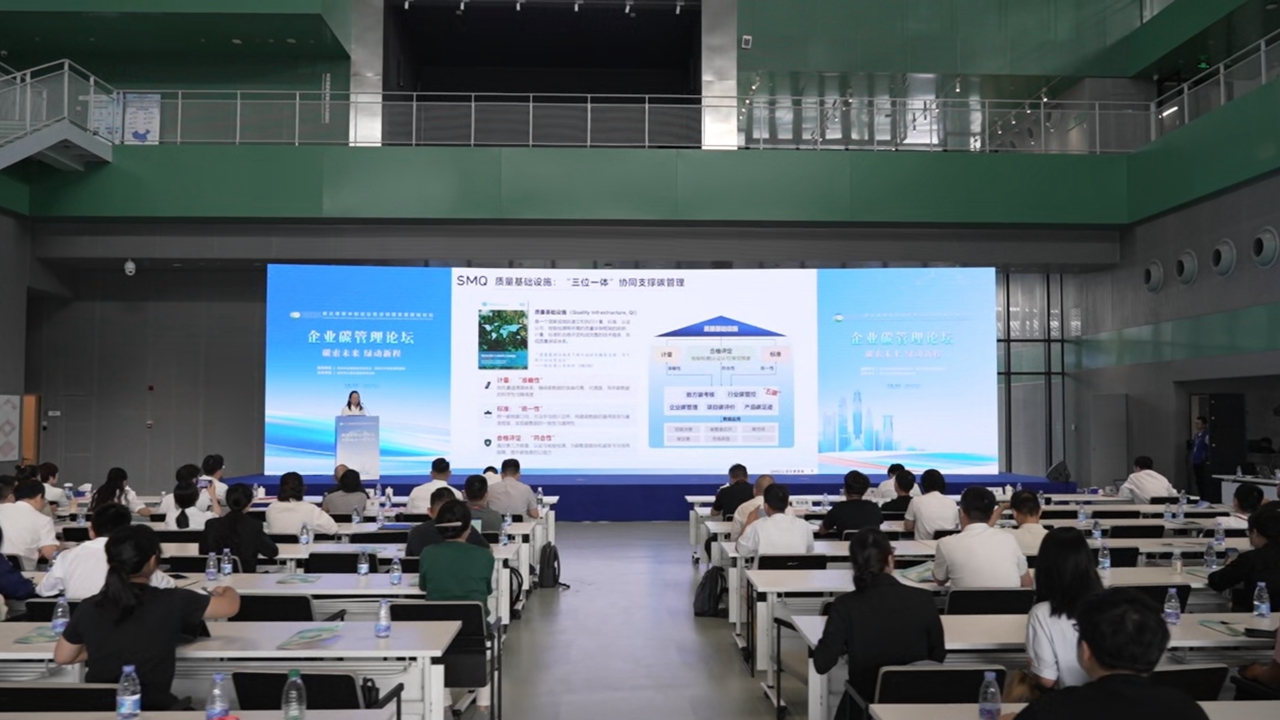
Liu Siyu delivers Keynote at 2026 Shenzhen National Low Carbon City Forum.
Backed by the newly approved National Carbon Metrology Center (Shenzhen), Liu’s team is building an enabling system that combines metrology — the science of measurement — with carbon applications. The idea, she explained, is to use metrology as the foundation and extend it to carbon accounting, certification, reduction and other data application scenarios, helping companies turn credible data into effective carbon management.
But the road is not without obstacles. From the team’s work on carbon footprint accounting, Liu has seen three common challenges.
The first is difficulty in coordinating data across departments, with data silos and inconsistent standards. The second is that many companies still collect energy data at a coarse level, with process-level data missing. As a result, even under unified standards, the accounting process still inevitably involves assumptions, allocations, and trade-offs, which makes it difficult to achieve consistent results. The third is the difficulty of obtaining supply chain data, as suppliers may be reluctant to share information for commercial confidentiality reasons.
To address these problems, Liu’s team uses integrated quality infrastructure as a starting point and offers a one-stop solution combining metrology, standards and conformity assessment.
At the front end, automatic collection through on-site instruments helps ensure that original activity data is accurate and traceable. Unified rules for data collection, accounting and quality evaluation help create a common data language — a role standards play. Based on measured data and third-party verification, raw data can remain within the company while only verification results and reports are shared. This helps achieve both data sovereignty and verification trust, Liu said, solving problems such as missing data and blocked data flows. “We hope to work with more companies to explore these paths and build replicable and trusted models for carbon data governance,” she said.
Looking ahead, Liu believes artificial intelligence and digital technologies will bring three major changes to corporate carbon management. First, data collection will become more precise. AI and digital tools will automatically collect data on electricity, gas, heat, materials and logistics, reducing errors from manual reporting. Second, emissions management will become smarter. Machine learning can help companies predict carbon emissions, simulate reduction pathways and automatically optimize production scheduling, energy structures and supply chain choices. Third, data will become more transparent and traceable. AI will help connect upstream and downstream data, improving traceability and the credibility of disclosures to meet the requirements of regulators, customers and the carbon market.
Liu’s team is also examining how carbon interacts with cost, product performance, eco-design and other dimensions. The aim is to embed carbon data into research and development, production and supply chain decisions. With support from the AI big data laboratory and industry database of the National Carbon Metrology Center (Shenzhen), the team hopes to help companies shift toward dynamic, intelligent carbon management and achieve both emission reductions and stronger competitiveness.