
 Share
Share


 Print
PrintDigital solution helps recycling sector go green
Writer: Chen Siqi | Editor: Zhang Chanwen | From: Original | Updated: 2026-09-28
Recycling is becoming an increasingly important pillar of urban green and low-carbon transition. But for many companies, making this traditional industry more compliant, transparent and traceable remains a real challenge.
At the green and low-carbon technology roadshow and project matchmaking session of the 2026 Shenzhen National Low Carbon City Forum, Wu Yongding, chairman of Fujian Zhonghuanbao Technology Co. Ltd., presented a digital solution for reverse invoicing in the recycled resources sector. After the roadshow, he spoke with Shenzhen Daily about recycling and corporate green transition.
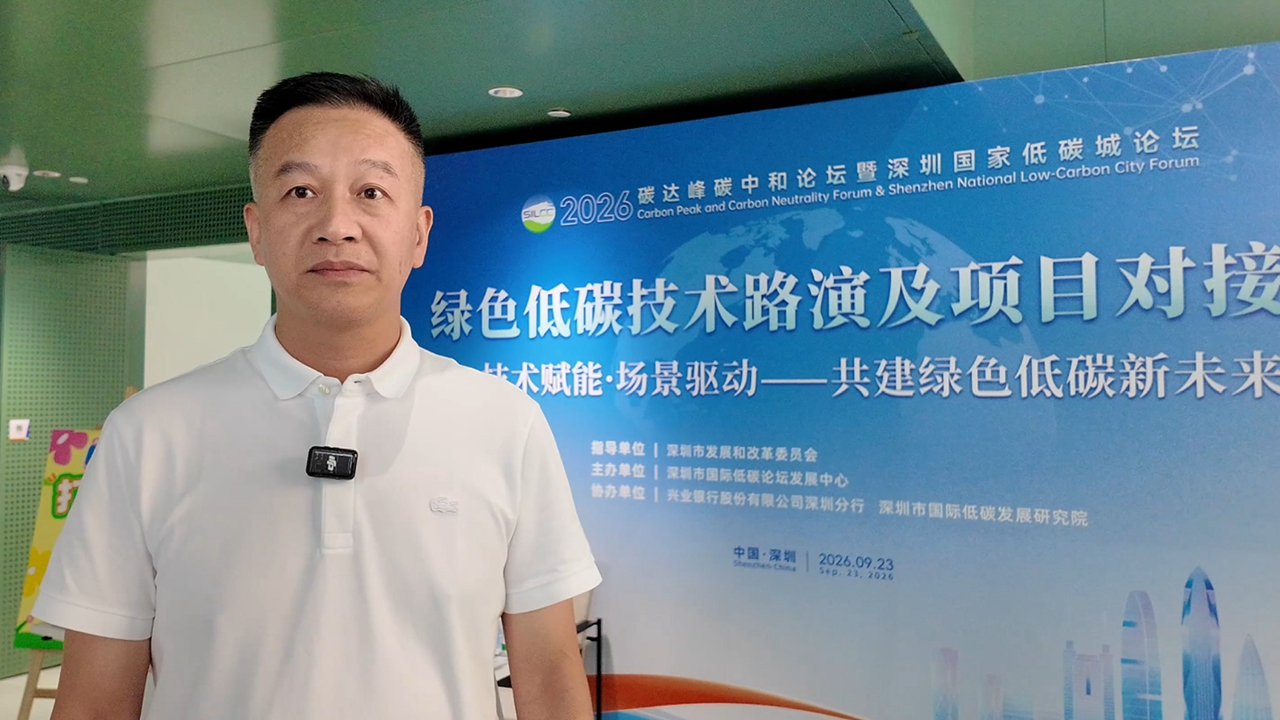
Wu Yongding
Wu said the recycling industry is inherently green, but has long suffered from inadequate compliance and digitalization. His company provides digital and information-based services for recycling companies, as well as product carbon footprint and green supply chain solutions. Its core business focuses on digital compliance and reverse invoicing for recycled resources.
“At present, the industry has many challenges. Some companies do not issue reverse invoices, instead using IOUs, and in theory they have not done green compliance or green certification,” he said.
Yet recycled resources account for 30 to 40% of the entire life cycle of ESG-related products, he noted. That makes it essential to pursue compliance, green development and a green supply chain. Done well, he added, this work can also generate revenue, create more profit points and even become a source of competitiveness.
Asked about the biggest challenge facing companies as they push green and low-carbon transition from the perspective of recycling, Wu pointed to mindset. Many people in the industry still do not understand what the “dual carbon” goals or green development mean, so they never consider making money from this part of their business.
“In fact, they have a lot of sleeping data and assets that are being lost,” he said. His company’s role is to help companies awaken that data and make their resources compliant. Only after compliance can they better move toward green development, he added. Compliance also includes links to green product carbon footprints and green certification.
After the forum, Wu said he hopes to cooperate with more sectors. He is looking to work with peers such as waste recycling companies, scrap steel and waste paper manufacturers, and plastics plants on product carbon footprints and front-end compliance. With more data and customers, the company plans to expand nationwide, helping more players in the industry lower costs, improve efficiency and do better in back-end product carbon footprints and green supply chains.
He also wants to connect with local governments, investment promotion agencies, industrial funds, capital providers, industry peers and clients in different regions and cities. Through such cooperation, he said, the company can help cities implement green emission reduction projects in the recycling sector more quickly, promote the industry and green carbon reduction, and help more industries improve efficiency, lower costs and create greater environmental value for society.