
 Share


 Print
AI powers green transition, unlocking new investment opportunities
Writer: Windy Shao | Editor: Zhang Chanwen | From: Original | Updated: 2026-09-28
At the opening of the Shenzhen National Low-Carbon City Forum, Zhai Yongping, Senior Carbon Neutrality Strategy Advisor at Tencent’s Strategic Development Department and former Chief Energy Specialist at the Asian Development Bank, delivered a keynote speech on Tencent’s carbon-neutrality practices. In an interview, he said the green transition requires not only technological innovation, but also stronger coordination among capital, industry and policymakers to help early-stage technologies cross the hard time between the laboratory and the market.
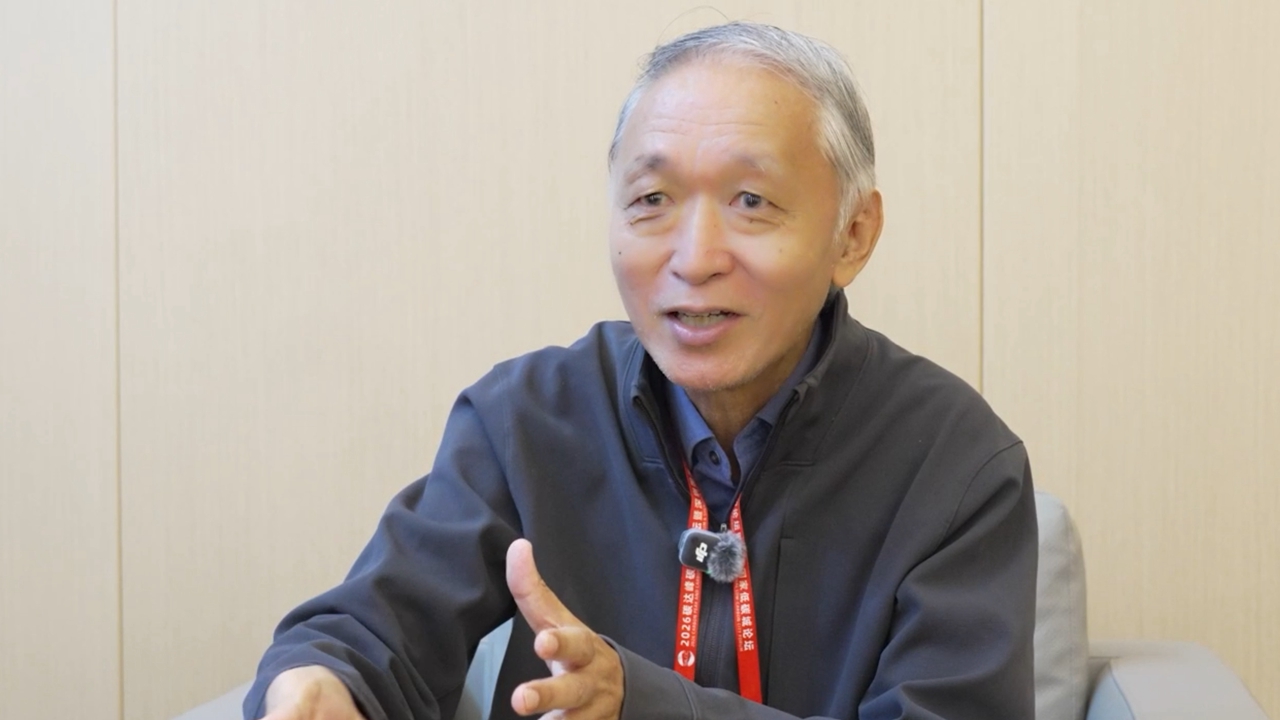
Zhai Yongping
Zhai divides low-carbon technologies into three stages. Some are mature and commercially viable and can be driven by the market. Others are still developing and can attract venture capital, private investment and policy support. But many technologies remain in laboratories and struggle to secure funding when moving from experiments to pilot projects and real-world applications. “This is actually a gap that needs to be addressed,” he said.
For Zhai, this is an area where governments, businesses and social capital can do more. Tencent has used philanthropic funding to support some low-carbon technologies in taking their first steps from laboratories into real-world applications. He hopes more companies will join such efforts.
At the same time, as international carbon rules continue to evolve, Chinese companies should take a more active role in shaping them. Zhai said companies should not only adapt to international standards, but also work with institutions and experts to contribute to their development and share relevant Chinese experience.
One trend he highlighted is the move from annual carbon accounting toward more precise, hourly matching. In the past, companies generally measured emissions over a year and used green electricity or carbon credits to offset part of them. As renewable energy use expands, carbon management may increasingly need to match electricity consumption with renewable supply at specific times, making more detailed energy data increasingly important.
Looking ahead to the 15th Five-Year Plan period, Zhai sees AI as a potential new force in the green transition. Buildings are among the harder sectors to decarbonize, but AI can use large volumes of operational data to optimize lighting, air conditioning and ventilation. More importantly, it can quantify energy savings, turning previously difficult-to-measure building efficiency improvements into investment opportunities.
This has led Zhai to call for a broader focus on the demand side of the energy system. Traditional investments in wind and solar projects are relatively visible and measurable, while energy-saving improvements in commercial buildings, communities and residential buildings have often been harder to quantify and finance.
AI could change this. With sufficient data, it can analyze energy-use patterns, measure energy and emissions savings, and translate those savings into potential investment returns. Zhai said Shenzhen, with its large number of buildings and accumulated energy-use data, has favorable conditions for exploring demand-side energy-efficiency investment.
However, AI itself is creating a new energy challenge. As demand for computing power grows rapidly, the energy consumption of data centers has attracted increasing attention. Zhai noted that rising electricity use driven by AI does not necessarily mean a corresponding rise in carbon emissions. Tencent has been improving data-center efficiency, expanding renewable energy use and participating in green-power trading.
Zhai believes AI is currently in a transition period. In the short term, growing computing demand may create additional pressure on energy consumption. But as AI becomes more deeply integrated into industries, its potential to improve efficiency and reduce energy use could become much greater.