
 Share
Share


 Print
PrintAI robots reshape urban sanitation in Shenzhen
Writer: Windy Shao | Editor: Zhang Chanwen | From: Original | Updated: 2026-09-28
During the 2026 Shenzhen National Low-Carbon City Forum, Wang Yu, executive president of the South China region of COOWA Technology, attended the Longgang Green and Low-Carbon New Urban Development Forum. Wang has been focusing on AI and robotics for urban services. He said robots are emerging as an important supplement to the urban workforce as the sanitation sector faces growing labor shortages, rather than simply replacing human workers.
According to Wang, AI sanitation robots can first help address the shortage of frontline workers. They can also carry out assigned tasks consistently, while improving operational safety and efficiency. With digital platforms used for scheduling and management, urban sanitation can gradually shift from a labor-intensive model toward a more standardized and precise service system.
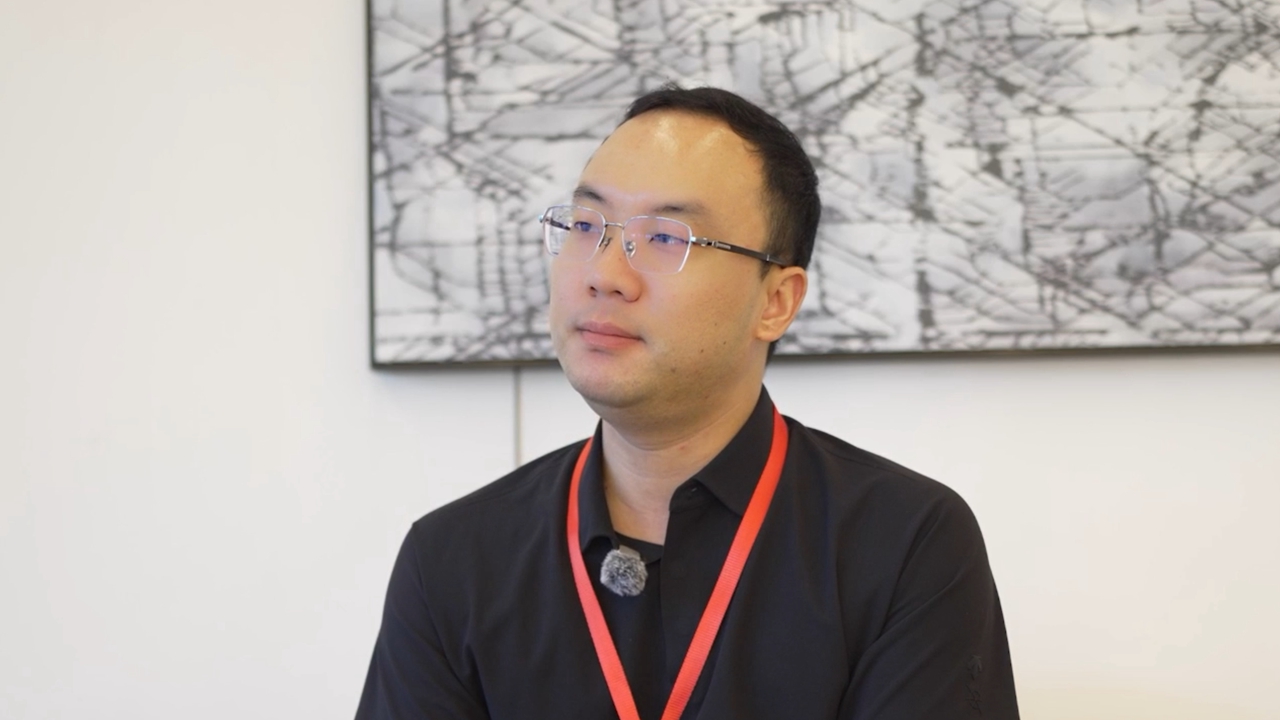
Wang Yu
In Shenzhen, COOWA’s robots are being used not only on municipal roads but also in semi-open areas such as parks, squares and industrial parks. Wang also highlighted nighttime and early-morning operations, as well as work in extreme heat, cold weather or after typhoons. Such conditions can be challenging for human workers, making robots useful for repetitive, physically demanding or potentially risky tasks.
However, deploying robots in complex urban environments remains challenging. Shenzhen’s dense population and busy streets create many non-standard situations, including narrow lanes, temporary construction zones and peak-hour traffic. Wang said the industry still needs to improve robots’ ability to adapt quickly to new areas while reducing deployment and operating costs.
Network stability and safe operation in extreme weather are also key concerns. To address them, COOWA is developing world-model and edge-intelligence technologies so that robots can make certain decisions locally rather than relying entirely on cloud systems or network connections.
For Wang, AI robotics and green, low-carbon municipal services are closely connected. Electric sanitation robots can reduce energy use and noise compared with conventional fuel-powered equipment, while digital management can make urban services more efficient.
Wang believes Shenzhen is already beginning to show the potential of a “Robot City.” Autonomous taxis, logistics vehicles and sanitation robots are becoming part of urban life, while more robots could eventually take on delivery, transport, cleaning and inspection tasks. Humans, in turn, could focus more on management, supervision and tasks requiring judgment.
In the longer term, Wang envisions robots becoming as integrated into urban infrastructure as cameras are today. Operating quietly across different roles, they could work alongside people to make city services safer, more efficient and more sustainable.