
 Share
Share


 Print
PrintFrom low carbon to zero carbon: How AI is seeking a greener path for computing
Writer: Windy Shao | Editor: Zhang Chanwen | From: Original | Updated: 2026-09-28
Artificial intelligence is advancing at unprecedented speed, but the computing power behind this growth also comes with rising energy demand. How can AI become more powerful while keeping computing greener?
At the AI Empowering Green Development subforum held during the 2026 Shenzhen National Low-Carbon City Forum, Peng Shaoliang, deputy director of the National Supercomputing Changsha Center, delivered a keynote speech and shared his views on the relationship between AI and green development in an interview with Shenzhen Daily.
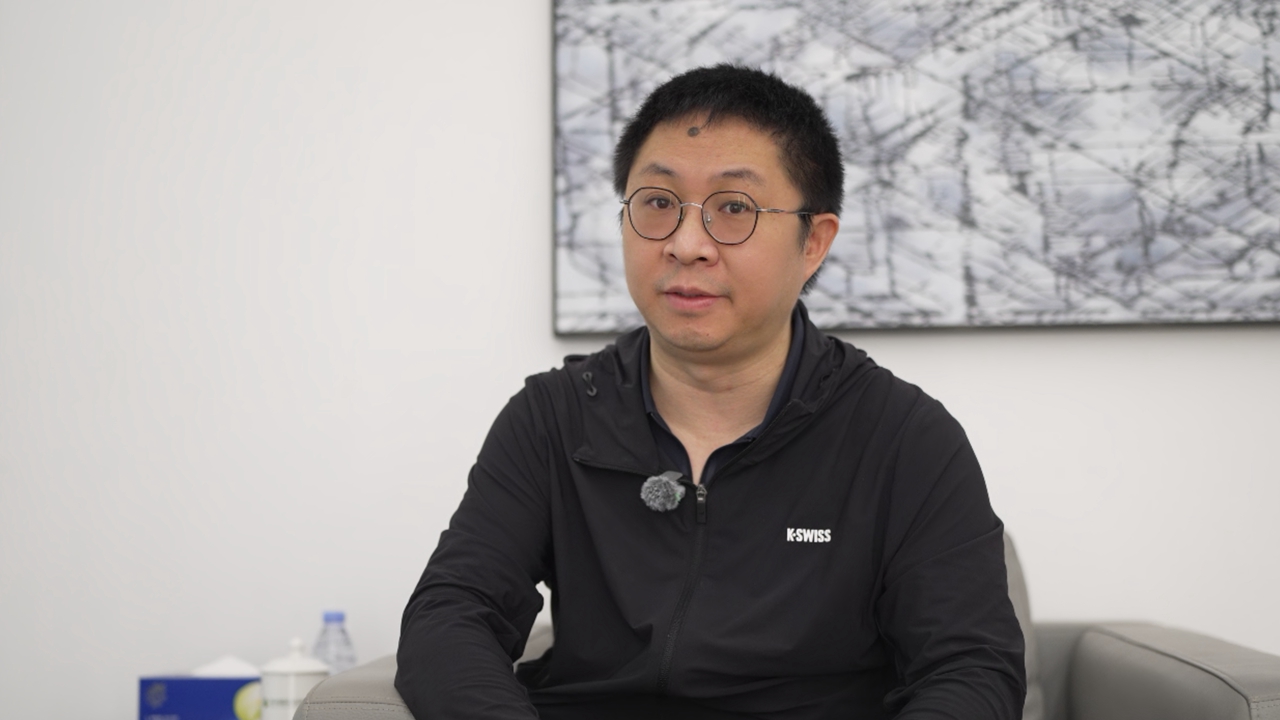
Peng Shaoliang during an interview with Shenzhen Daily. Photos by Zhao Xiaochen
Peng said computing power is one of the key foundations of artificial intelligence, and it inevitably requires substantial amounts of electricity and energy. Therefore, AI development and the transition toward a greener economy cannot be treated as separate issues. “The more computing power we consume, the more energy we consume,” he said.
In his view, green computing needs to advance on two fronts: improving energy efficiency through better cooling technologies, software optimization and hardware upgrades, while also increasing the use of renewable electricity such as wind, solar and hydropower to provide cleaner energy for data centers, supercomputing centers and intelligent computing centers.
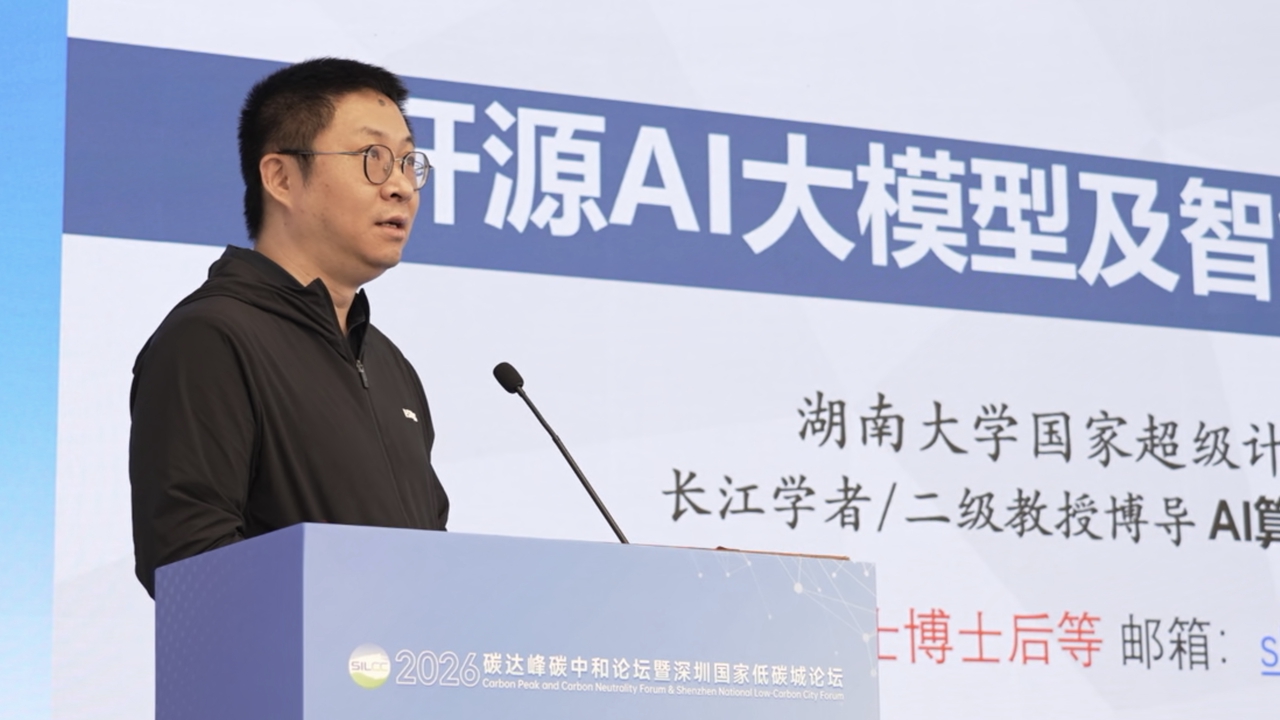
Peng Shaoliang gives a speech at the AI Empowering Green Development subforum.
The integration of AI and green development is also extending beyond data centers into other industries. Peng cited new-energy vehicles as an example. The traditional automobile industry has long relied on fossil fuels, while new-energy vehicles are reshaping the energy structure of transportation. Autonomous vehicles, drones and unmanned vessels are taking this integration of intelligence and clean energy further.
Peng said the combination of AI, computing and green energy could extend into even more futuristic fields. For example, researchers and industry players are exploring the possibility of deploying next-generation supercomputing and intelligent computing facilities in space, taking advantage of the extremely cold environment and abundant solar energy.
For Shenzhen, which is pursuing greener, smarter and more resilient urban development, Peng sees opportunities for AI to contribute to energy management, transportation and urban governance. As a megacity, Shenzhen has substantial energy demand as well as a wide range of AI applications. He said the city’s supercomputing and intelligent computing facilities need to pursue lower energy consumption, higher efficiency and greater cost-effectiveness at the same time.
When discussing the difference between “low carbon” and “zero carbon,” Peng said the two concepts should not simply be understood as “fewer emissions” and “no emissions.” Low-carbon development traditionally focuses on reducing energy consumption, particularly dependence on non-renewable energy. Moving toward zero carbon, however, requires a deeper transformation of the energy mix and greater use of renewable sources such as wind, solar and hydropower.
“Zero carbon does not mean that there are absolutely no emissions. It means choosing green energy to a greater extent,” Peng said. For large cities with substantial populations, energy demand from everyday life cannot simply be eliminated. Deeper decarbonization therefore requires changes in the energy structure and greater adoption of renewable energy.
For Peng, the “zero-carbon future” is not a distant goal. He pointed to Shenzhen’s transition toward greener mobility as an example, noting that the city has continued to promote new-energy vehicles and make green mobility an increasingly important part of urban life. Through its exploration of green energy, green mobility and green computing, Shenzhen is providing a practical example of the transition from low carbon to zero carbon.