
 Share
Share


 Print
PrintSZ charts pronged paths to a low-carbon future
Writer: Chen Siqi, Windy Shao | Editor: Zhang Chanwen | From: Original | Updated: 2026-09-24
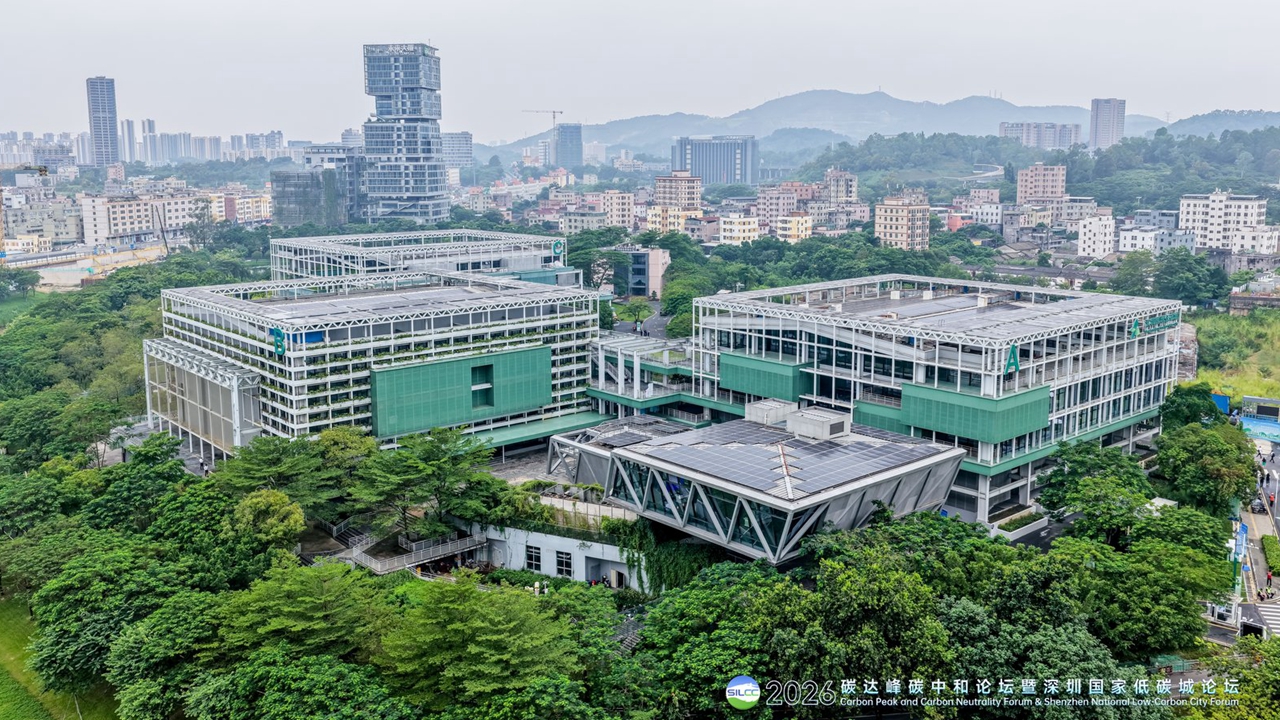
A view of the Shenzhen International Low-Carbon City in Longgang District, where the 2026 Carbon Peaking and Carbon Neutrality Forum and Shenzhen National Low-Carbon City Forum were held on Sept. 22-23. Photos courtesy of the organizer
Shenzhen is stepping up efforts to build a low-carbon city as China shifts from controlling energy consumption to managing carbon emissions. The two-day 2026 Carbon Peaking and Carbon Neutrality Forum and Shenzhen National Low-Carbon City Forum concluded at the Shenzhen International Low-Carbon City on Sept. 23.
From controlling energy use to managing carbon emissions
For 2026, China is entering the first year of the transition from its previous system of controlling total energy consumption and energy intensity to a dual-control system focused on carbon emissions.
Dai Yande, chief expert at the China Energy Research Society, said China had established a policy framework covering supply-side reforms, changes in consumption, market-based mechanisms and assessment systems. The effectiveness of the system would ultimately depend on how consistently it was implemented at the local level, he said.
Unlike the previous energy-consumption controls, the new approach focuses more directly on decoupling economic growth from carbon emissions, potentially creating more room for the development of renewable energy such as solar and wind power.
The rapid development of artificial intelligence has also added a new challenge: rising demand for computing power means rising demand for electricity.
Peng Shaoliang, deputy director of the National Supercomputing Changsha Center, said computing power was a fundamental driver of AI development, but it also required large amounts of energy.
“More computing power means more energy consumption,” he said, stressing that AI development and the green transition needed to advance together.
The industry is exploring ways to improve computing efficiency and reduce energy use through software, hardware and large AI models, he said.
Reliable carbon data is another key part of the transition. Liu Siyu, a researcher at the Carbon Management and Green Development Center of the Shenzhen Academy of Metrology and Quality Inspection, said accurate emissions data allowed companies to understand their emissions, identify major sources and potential for reductions, and set realistic carbon targets.
From individual breakthroughs to system-wide collaboration
The forum also sought to connect green technologies with the businesses and investors needed to bring them to market. Eight technologies at the pilot or early commercialization stage were showcased at the event, covering electric vessels, industrial applications, data centers, resource recycling, consumer electronics and smart microgrids.
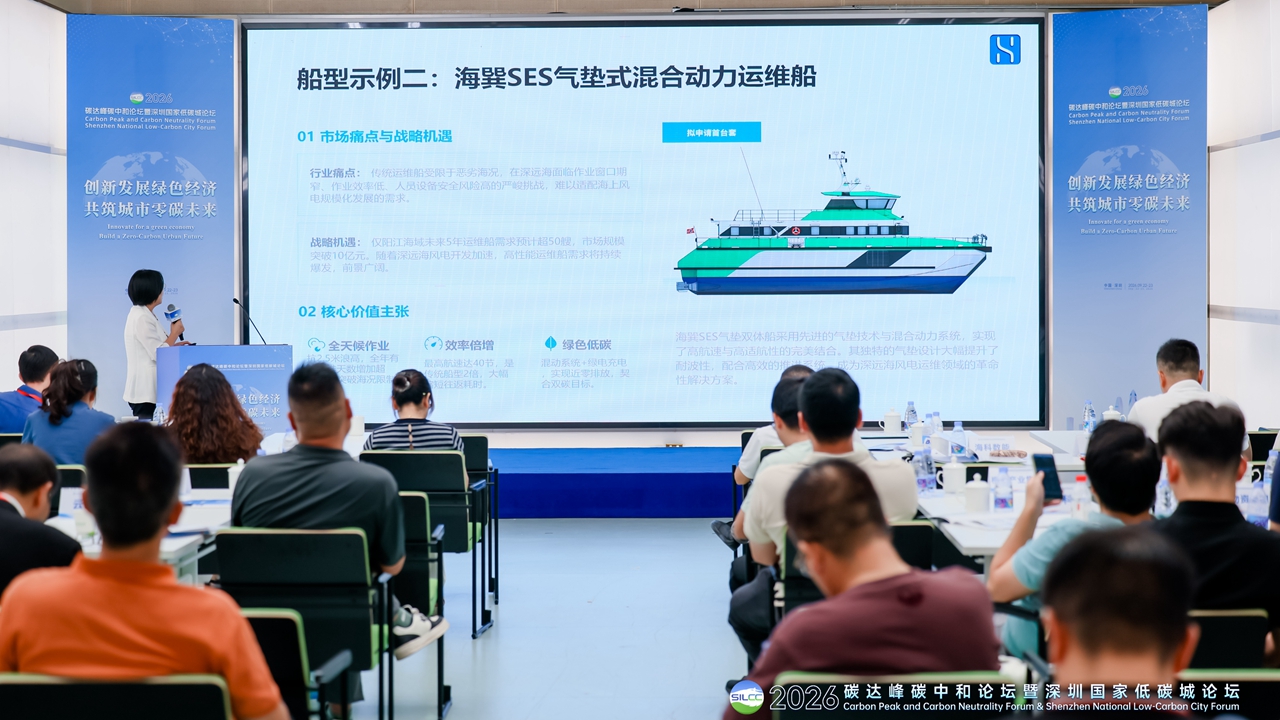
A company representative presents the company’s low-carbon program during a roadshow on Sept. 23.
The forum has also helped connect low-carbon technology projects with resources in areas including renewable energy, energy efficiency, carbon capture, recycling and green buildings.
The aim is to move green technologies beyond isolated breakthroughs and build stronger links between innovation, industry and investment.
From shared ideas to shared action
This year’s forum also brought the low-carbon theme into the event itself.
A large sign made from paper was designed with reuse and recycling in mind. Interactive installations allowed participants to create personalized low-carbon souvenirs.
One AI-powered fridge magnet machine, for example, used AIGC technology to turn photographs taken at the event into cartoon-style portraits. In addition, participants could also generate a short video documenting their experience at the forum by taking five instant images.
Such details turned “low carbon” from a topic discussed at the conference into something participants could see, experience and take home.
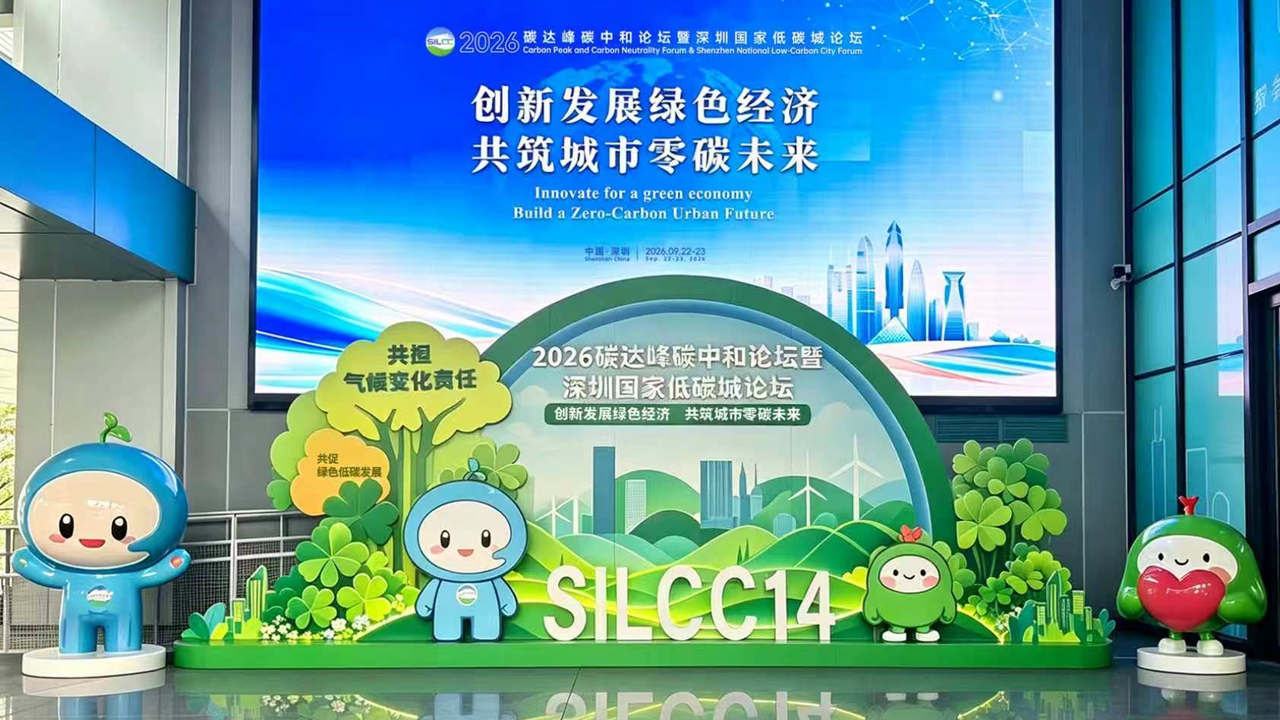
A paper installation displayed during the forum.
Shenzhen has increasingly incorporated low-carbon development into everyday economic and social life. Its carbon-inclusive program cover activities ranging from green transport and energy conservation to recycling and waste sorting.
With the “dual carbon” goals as its guide and emerging productive forces as a driver, the city is exploring how economic growth and environmental sustainability can move forward together — and offering what it describes as a “Shenzhen solution” to the global sustainability challenge.