
 Share
Share


 Print
PrintThe rise of AI computing power drives greener data centers
Writer: Windy Shao | Editor: Zhang Chanwen | From: Original | Updated: 2026-09-24
As artificial intelligence continues to advance, rapidly growing demand for AI computing power is putting greater pressure on data centers to improve energy efficiency and cooling performance.
Attending a subforum of Shenzhen National Low-Carbon City Forum, Xiao Chengwei, marketing director of Shenzhen Esin Technology, said the rapid growth of AI computing is bringing fundamental changes to data center infrastructure. Building green intelligent computing centers, he said, requires systematic optimization ranging from cooling and power supply to airflow management and computing equipment deployment.
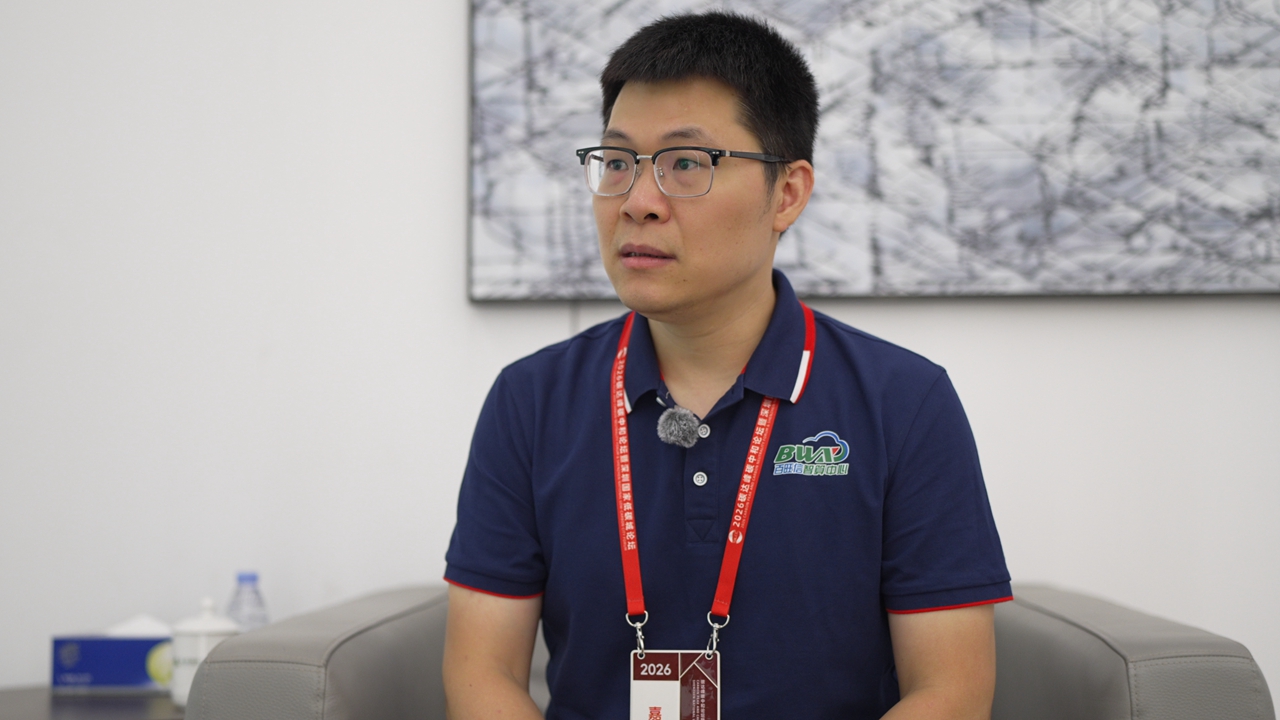
Xiao Chengwei
Xiao said data centers currently face challenges on two fronts. On the one hand, the rapid growth of AI computing is driving up server power consumption, putting traditional air cooling under increasing pressure to dissipate heat while keeping energy use under control. On the other hand, computing centers must balance energy efficiency and low-carbon operations with reliability under complex conditions, fluctuations in renewable energy, cost optimization and the spatial challenges brought by higher computing density.
“Competition among computing centers in the future will be about balancing reliability, security, economic efficiency and green sustainability,” Xiao said.
In his view, making a computing center greener is not simply a matter of replacing cooling equipment. It requires systematic optimization of power supply, cooling, airflow management and computing equipment deployment.
The rapid rise of AI computing is also driving up power density in data centers. According to Xiao, the power consumption of a single rack is rising from several kilowatts to tens of kilowatts, or even more than 100 kilowatts. Traditional air cooling is gradually approaching its limits, while liquid cooling is becoming an increasingly important option for high-density computing.
At the same time, energy-saving technologies and products, green energy and carbon management measures are expected to become important indicators for evaluating green computing, Xiao said.
Xiao noted that Shenzhen is home to a strong AI industry ecosystem, with large AI models, autonomous driving, embodied intelligence and smart finance among the sectors developing rapidly. These applications are generating strong demand for high-performance computing.
Against this backdrop, Xiao sees green and efficient cooling technology as a key breakthrough for intelligent computing centers.
At Esin Technology, the Shenzhen Baiwangxin Intelligent Computing Center serves as a base for testing and applying energy-saving technologies. The company has developed energy-saving solutions and products for computing centers under different climate conditions, which have been applied to new computing center projects as well as energy-efficiency upgrades of existing facilities.
The company is also developing technologies in line with the trend toward liquid cooling. Xiao said Esin Technology is exploring “air-liquid hybrid cooling” for high-density computing scenarios, supporting rack power densities of about 6 to 140 kilowatts.