
 Share
Share


 Print
Print'Shenzhen turns dreams into reality'
Writer: Li Jing | Editor: Lin Jiayi | From: Original | Updated: 2026-09-24
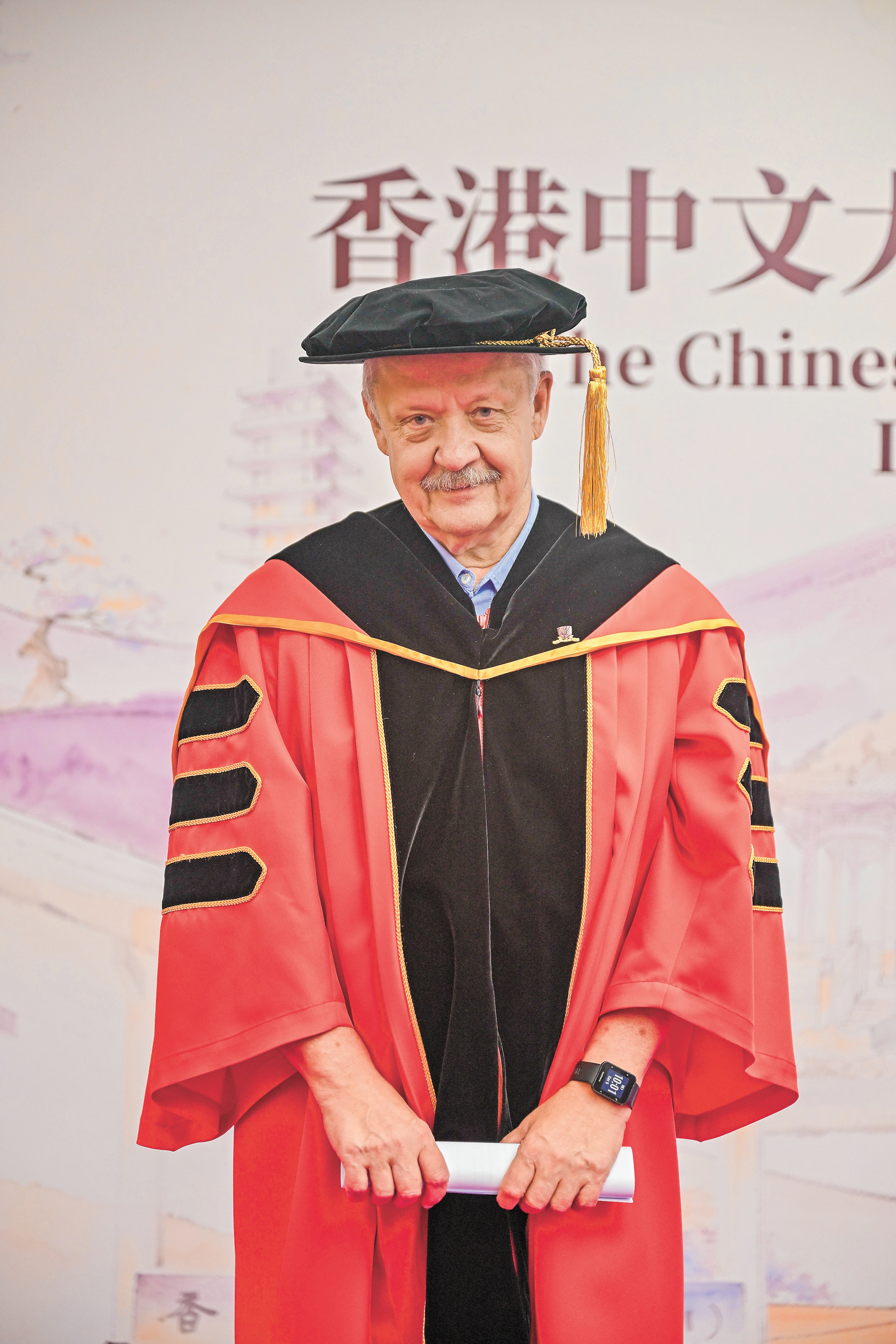
Yurii Nesterov
Mathematics underpins logical reasoning and sharpens our thinking. For freshmen, a message from a world-renowned mathematician at the start of the academic year would be a memorable welcome gift. Students at The Chinese University of Hong Kong, Shenzhen (CUHK-Shenzhen) were lucky enough to receive one on Sept. 5.
At CUHK-Shenzhen’s 2026 Convocation, Prof. Yurii Nesterov of the School of Data Science, who is winner of the 2026 Carl Friedrich Gauss Prize — one of the world’s most prestigious distinctions in applied mathematics — posed a question with quiet sincerity: In an era when AI can provide answers to almost everything, why should people continue to study and conduct in-depth research? Before the ceremony, he spoke with Shenzhen Special Zone Daily.
Reporter: As the sixth Gauss Prize winner, does the honor feel more like a comma in your career or a new beginning?
Nesterov: This has been a very important year for me. The Gauss Prize recognizes the research field I have pursued for decades. My academic career in Europe is coming to an end — I have already retired — and I have been considering starting a new career elsewhere. Coming to Shenzhen was the most natural choice for me.
Reporter: Your accelerated gradient method is widely regarded as a foundation of modern machine learning and optimization algorithms. Why is it important, and what role does it play in AI and data science?
Nesterov: It’s mainly about speed. Different forms of transportation allow people to travel different distances at different speeds. Numerical methods work in much the same way. The time needed to solve a problem — milliseconds, seconds, hours or years — matters greatly in practical applications. If a problem can be solved in one second instead of one hour, the difference is enormous. My method makes problem-solving much faster, in some cases by thousands of times.
Reporter: What role does AI play in data science research?
Nesterov: AI applications are already widespread, but this is only the tip of the iceberg. Its deeper impact will come from its expansion into industry, information services and scientific research.
AI requires precise models, and many disciplines are still at an early stage of developing them. Optimization methods are one of its core technical foundations. AI is more like an advisor: It can offer suggestions, but users must verify whether they are reliable.
AI also has major advantages in information retrieval. It can extract information buried in massive datasets, giving researchers access to knowledge accumulated over centuries. Even papers that were forgotten for decades can now be found in archives. With AI assistance, people can access a far broader range of scientific achievements and knowledge.
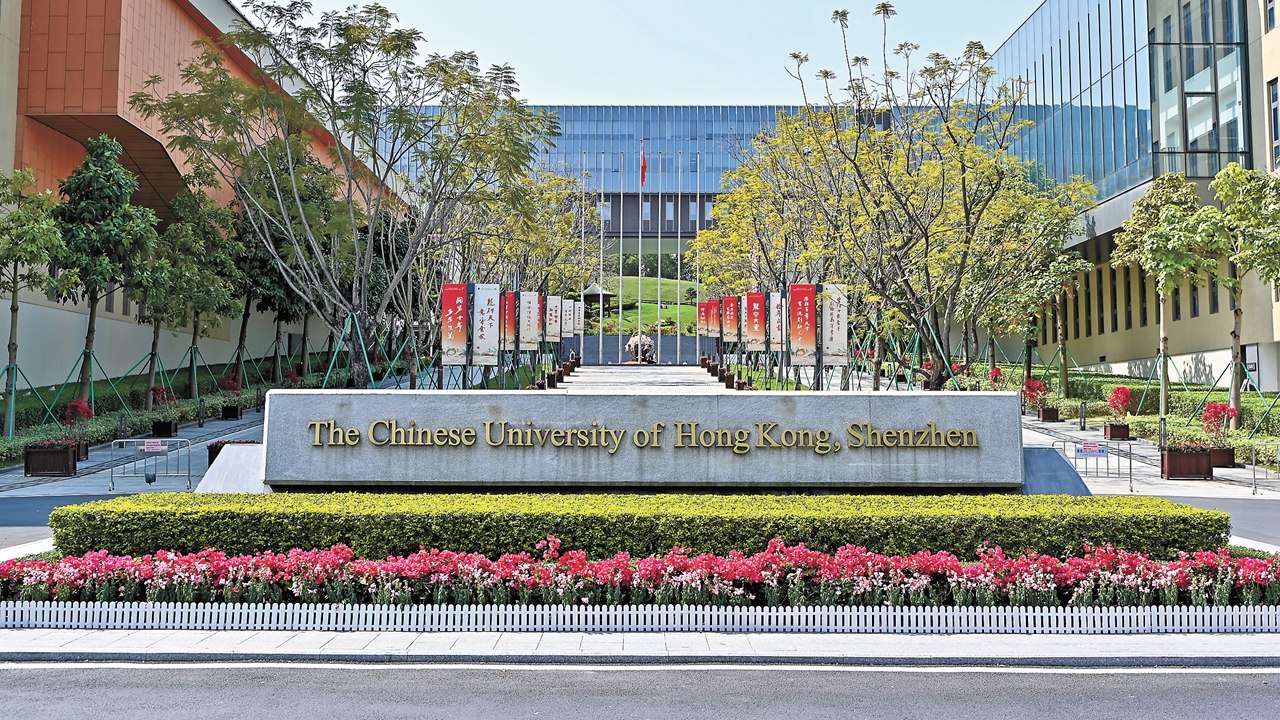
A scene from the CUHK-Shenzhen campus. China News Service
Reporter: What does basic science mean for social development?
Nesterov: Its core value is to help us understand, explain and predict the world. Exact sciences can explain what has happened and make reliable predictions about the future. In physics and chemistry, for example, once a system is established, its behavior can be predicted according to scientific laws.
In the future, more disciplines may become exact sciences, and their predictive power may improve. But much work remains. Mathematical models must first be established in fields that still lack them. Numerical methods must then be developed, allowing AI to use those results to generate conclusions and make predictions. This is a new area awaiting exploration.
Reporter: Do you enjoy living in Shenzhen?
Nesterov: Shenzhen is a diverse city, with different districts serving different functions. The city center has theaters and concert halls, and my wife and I often attend performances. Longgang has universities and beautiful parks, as well as shops and restaurants that make daily life convenient.
I enjoy living in such a young city. Shenzhen changes every year, and I discover new improvements whenever I return after an absence. Its people are positive and forward-looking, working together to build a “city of the future.”
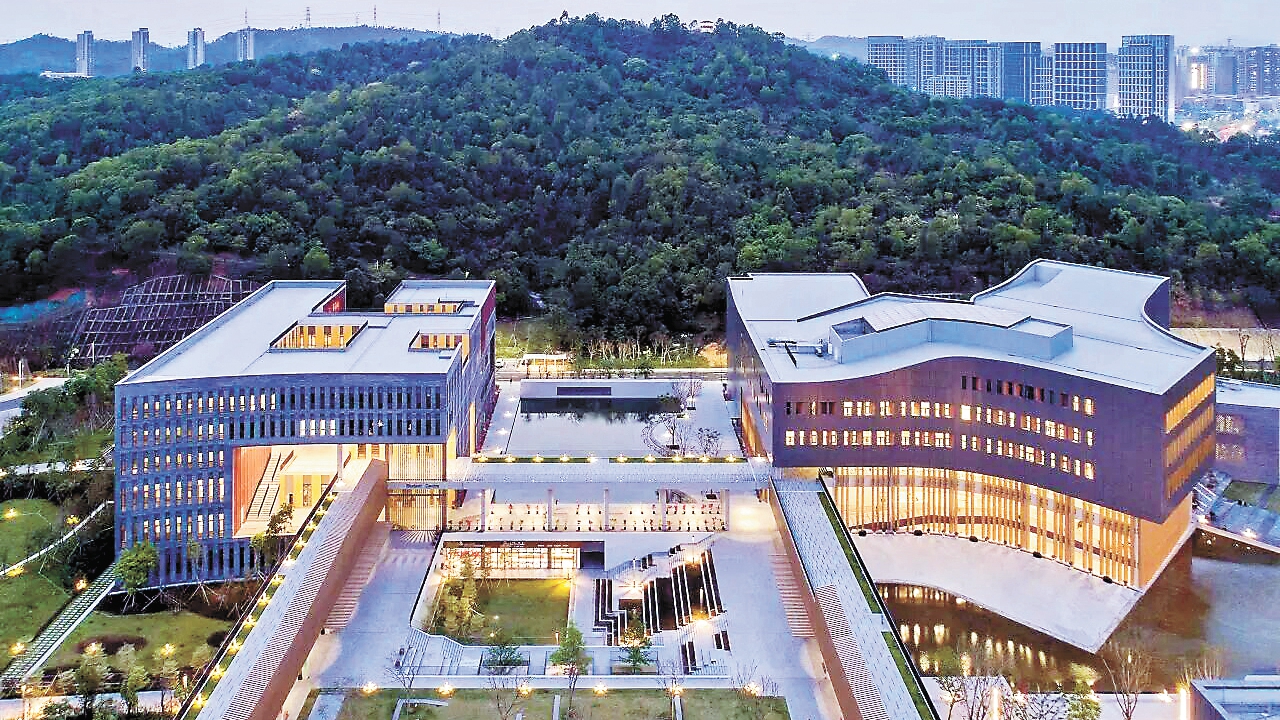
An aerial view of The Chinese University of Hong Kong, Shenzhen (CUHK-Shenzhen). File photo
Reporter: Why does Shenzhen continue to attract young talent?
Nesterov: Its appeal comes from a combination of factors, including quality of life, opportunities for exchange, the natural environment and its excellent geographical location. Shenzhen brings together universities, research centers and industries, creating favorable conditions for scientific development.
Information technology urgently needs scientific support and breakthroughs in new algorithms. The cooperation among universities, research institutions and industry is highly efficient. For me, Shenzhen is one of the best places to work at present.
The city is also at the heart of the Guangdong-Hong Kong-Macao Greater Bay Area. The APEC meeting will give Shenzhen an opportunity to showcase what it has achieved: In just over 40 years, people have turned dreams into reality.
Reporter: Why did you join the School of Data Science at CUHK-Shenzhen?
Nesterov: At CUHK-Shenzhen, I mainly work with students, teaching them how to distinguish right from wrong and helping them develop into scientists. At the Shenzhen Loop Area Institute, I work with young researchers who already hold doctoral degrees and are conducting scientific research.
Working with both groups is important to me. I can identify outstanding students, involve them in research and encourage them to continue their studies. In this way, I can train scientists while helping students move toward the scientific frontier.
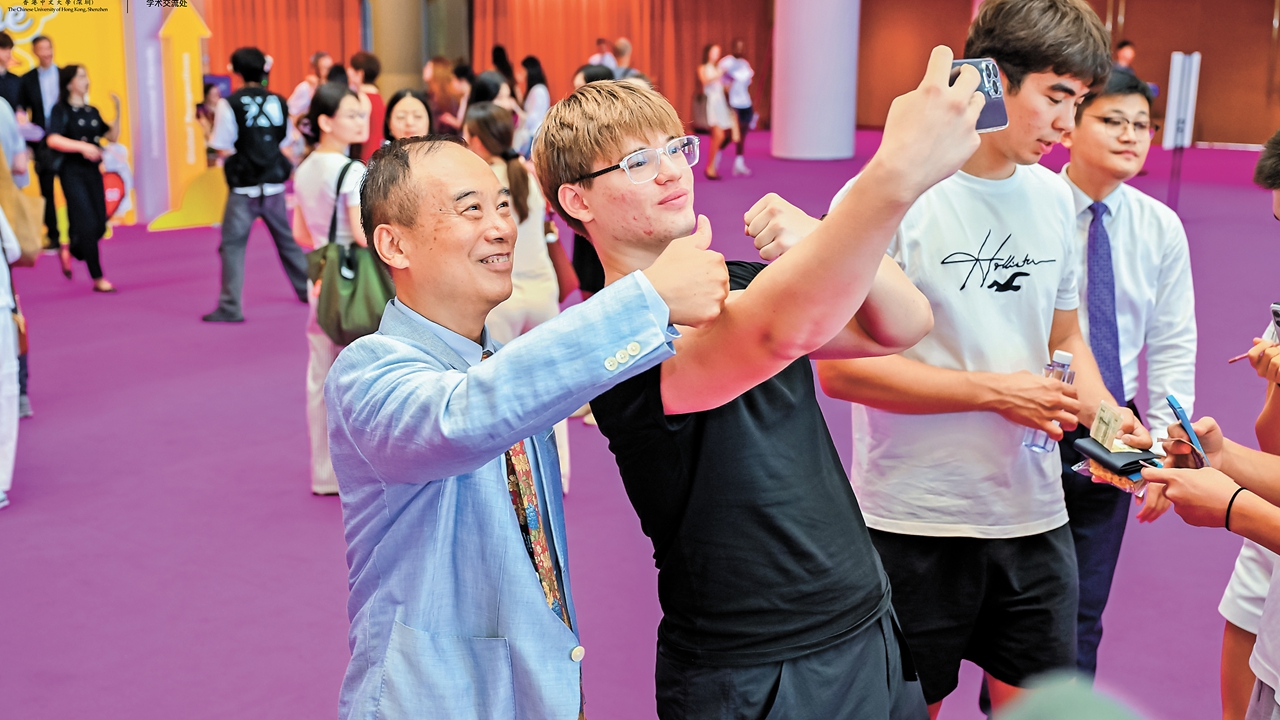
Xu Yangsheng (L), president of CUHK-Shenzhen, poses for a selfie with an international student ahead of the new semester in late August. Photo provided to Shenzhen Daily
Reporter: What advice do you have for young scholars seeking to strengthen basic research and original innovation?
Nesterov: The rapid development of AI is prompting many fields to reconsider how they organize and manage research. A consensus is emerging that AI will generate new scientific paradigms based largely on mathematical modeling and numerical computation.
For people outside mathematics, developing “mathematical speed” and a “mathematical spirit” is increasingly important. This does not mean mastering advanced mathematics. The mathematical spirit is simple: When you do something, you should be able to explain why. When others offer logically sound suggestions, you should be willing to accept them.
The key is not to provide just any reason, but to support your ideas with logic and evidence. People often act on intuition and can’t explain their decisions, which can lead to mistakes. In the AI era, this must change.
Reporter: What are your plans for research in Shenzhen after winning the Gauss Prize?
Nesterov: AI needs to create new science supported by mathematical modeling. Such models don’t yet exist in many fields. Developing them will require major efforts from mathematicians, cooperation among researchers and the participation of experts in computational mathematics. AI doesn’t think; it computes. We must provide the algorithms and tell it how to generate solutions. That will be our task in the coming years.