
 Share
Share


 Print
PrintShenzhen adopts regulation to protect mangrove wetlands
Writer: Claudia Wei | Editor: Lin Jiayi | From: Shenzhen Daily | Updated: 2026-09-17
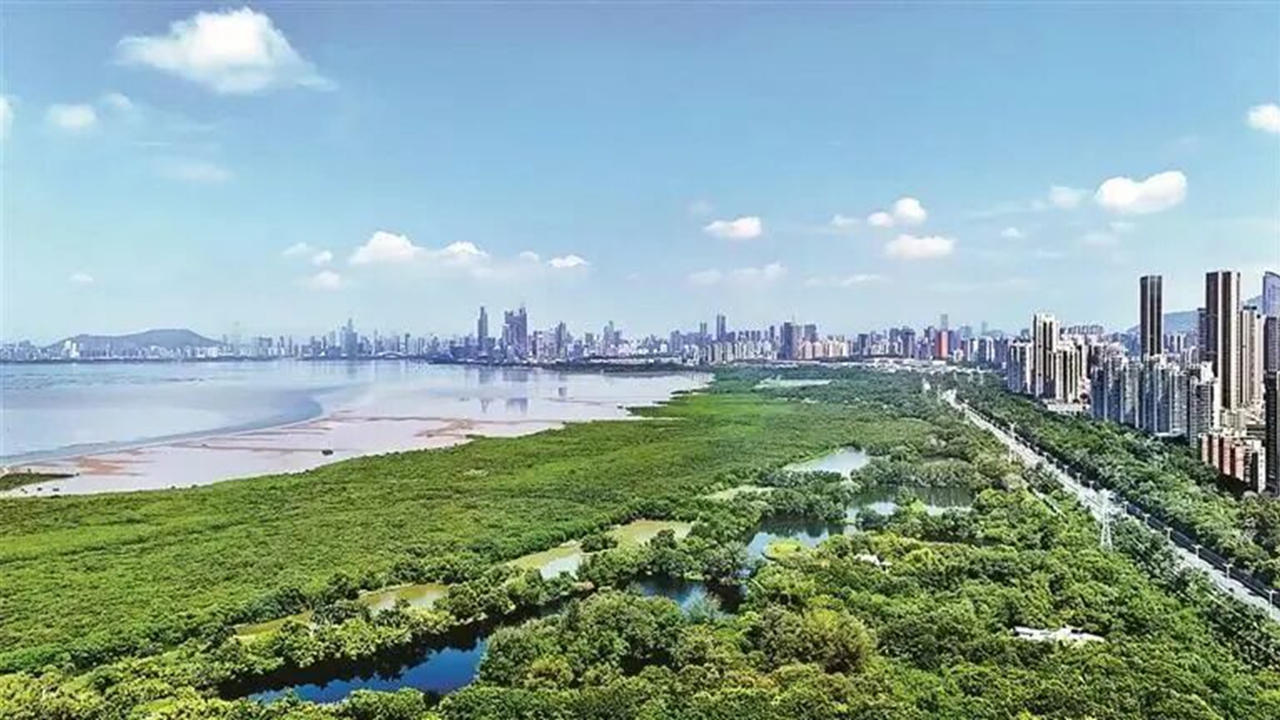
Mangroves fringe Shenzhen Bay against the city skyline. Xinhua
Shenzhen has adopted a regulation aimed at strengthening the protection of its mangrove wetlands, including safeguards for migratory birds and a carbon-sink trading mechanism.
The regulation was approved by the city’s legislature earlier this month and was detailed at a news conference held by the city government yesterday.
Shenzhen is home to about 300 hectares of mangrove forests, all of which are subject to strict protection, officials said.
The regulation prohibits activities that occupy mangrove wetlands and requires administrative approval for logging, digging, transplanting and collecting seeds. It also bans the introduction or planting of species that could harm mangrove ecosystems and calls for stronger pest control and invasive-species management.
To protect migratory birds, the regulation restricts construction, drone use and other activities that could disturb them. It also requires authorities to optimize the layout and management of nighttime lighting in and around mangrove habitats.
The lighting provision codifies Shenzhen’s practice of “turning off the lights for birds” and is intended to support the development of bird-friendly cities. It also fills what officials described as a gap in China’s existing legislation.
The practice was first adopted by Shenzhen Bay Park, which lies along a major global migratory route. Each year, the park dims its lights to provide birds with a safer resting environment in the mangroves. Although some residents have raised concerns, the measure is part of the city’s efforts to reduce disturbances to wildlife.
In 2023, Shenzhen introduced standards for nighttime lighting environments and classified its mangrove wetlands as highly restricted lighting zones. The standards set limits on light intensity, glare and skyglow, while requiring warm, low-disturbance yellow lighting instead of bright blue-white lamps.
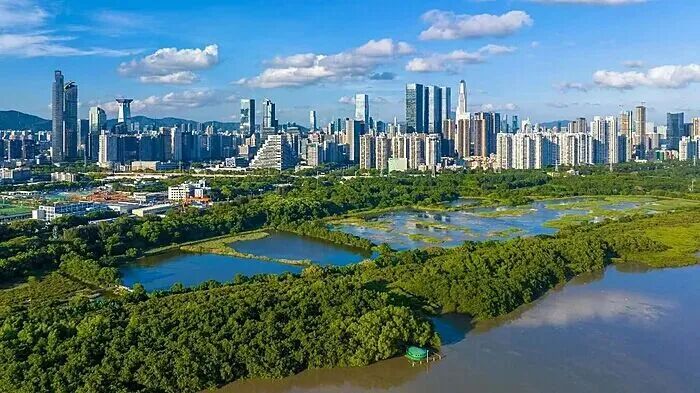
Mangroves and waterways stretch across the Futian Mangrove Nature Reserve in Shenzhen. Photo courtesy of the Shenzhen Municipal Planning and Natural Resources Bureau
The regulation defines mangrove protection more broadly than mangrove vegetation alone. Protected areas include tidal flats, tidal creeks, shallow waters and the wildlife living or foraging inn mangrove wetlands.
It also allows comprehensive remediation, restoration or transplantation in areas where mangroves are scattered or their ecological functions have deteriorated.
The regulation encourages ecological research, education, recreation and nature activities related to wetlands. It also establishes a full-chain carbon-sink trading mechanism covering carbon measurement, floor-price assessment, market trading and financial support.
Officials said the regulation will strengthen Shenzhen’s legal framework for mangrove conservation and provide experience that could be applied in other regions.