
 Share
Share


 Print
PrintUNEP expert: China's dual-carbon strategy drives green energy innovation
Writer: Windy Shao | Editor: Lin Jiayi | From: Shenzhen Daily | Updated: 2026-09-17

International visitors learn about digital energy technologies at an exhibition booth during the 2026 International Digital Energy Expo in Shenzhen. Photos courtesy of event organizer
The 2026 International Digital Energy Expo, being held in Shenzhen from Sept. 15 to 17, has brought together energy companies, experts and institutions from around the world. The expo features nearly 100 digital energy innovations.
For Vladislav Zavadskiy from Kazakhstan, a national energy expert with the UNEP Copenhagen Climate Center, the event offered a close look at how digital technologies are reshaping the energy sector — and how China’s push toward a low-carbon energy system is creating new opportunities for international cooperation.
“My first impression is that it’s well organized, absolutely impressive, very important and timely,” Zavadskiy said.
One idea stood out to him: the growing synergy between artificial intelligence and energy.
“AI technologies and computing are very energy-intensive,” he said. As demand for data centers and computing power grows, he said the energy sector will face new challenges in ensuring adequate and sustainable power supplies.
“We cannot have rapid AI development without sustainable energy supply,” he said, emphasizing the need for greater synergy between the two sectors.
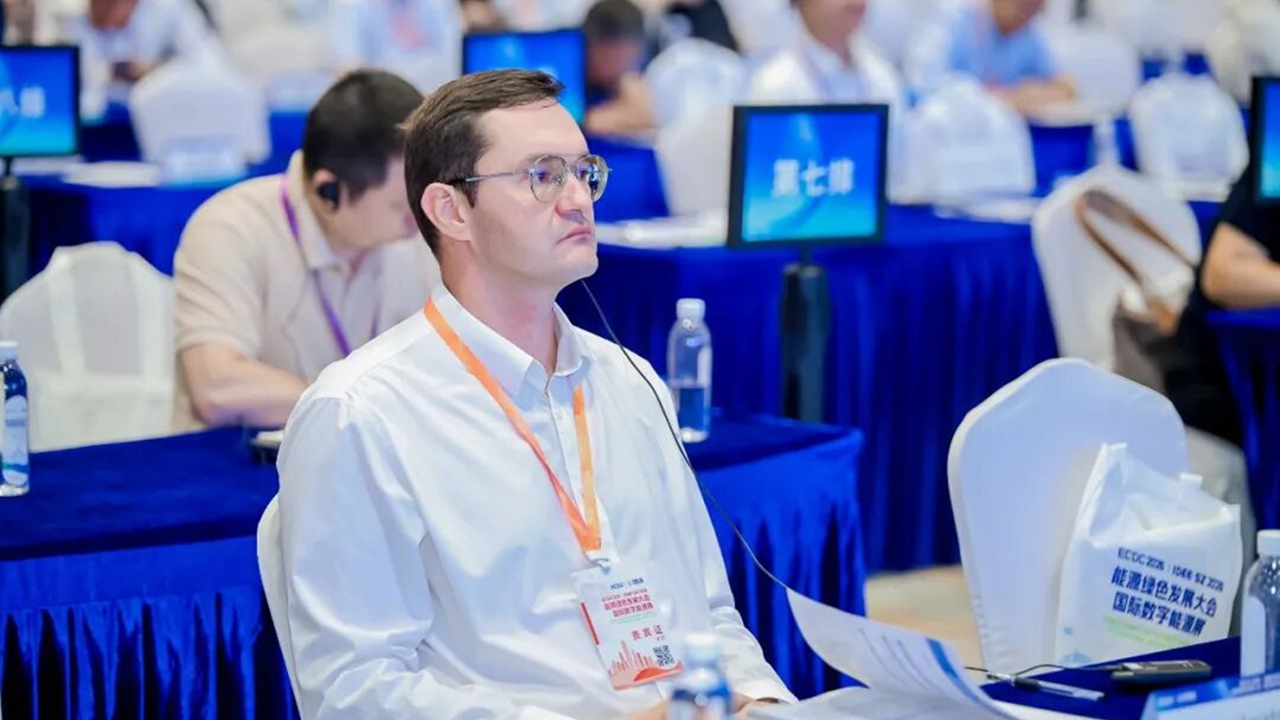
Vladislav Zavadskiy, a national energy expert with the UNEP Copenhagen Climate Center, attends the 2026 International Digital Energy Expo in Shenzhen.
China’s dual-carbon strategy
Zavadskiy also spoke highly of China’s dual-carbon strategy, which aims to peak carbon dioxide emissions before 2030 and achieve carbon neutrality before 2060. China announced these goals at the United Nations General Assembly in September 2020.
“I’m 150% sure that these targets will be achieved,” he said, while noting what he described as China’s significant role in global emissions reductions.
He pointed to the rapid expansion of renewable energy as an important development. “The result is really impressive,” he said.
For Zavadskiy, digitalization is another key part of the transition. Among the technologies showcased in Shenzhen, virtual power plants particularly impressed him.
“I think it’s the future of the energy sector,” he said, describing virtual power plants as a strong example of the synergy between AI and energy.
Shenzhen as a platform for cooperation
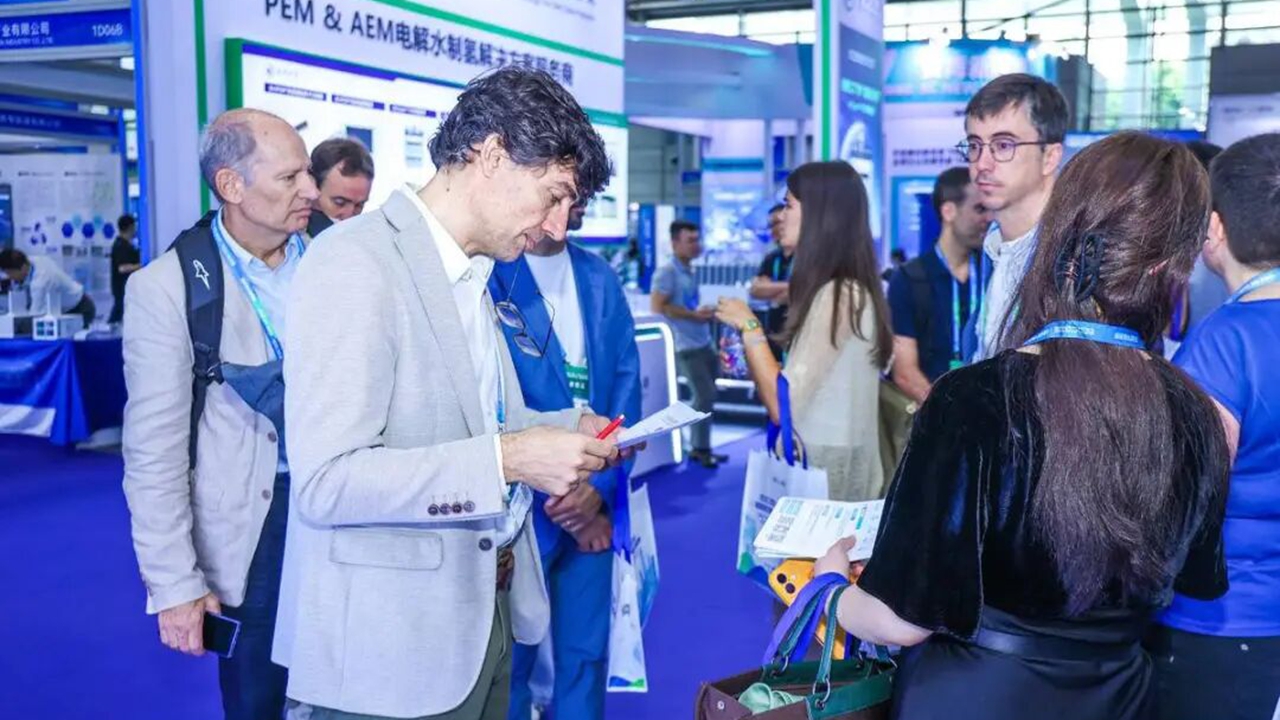
Expo attendees speak with exhibitors and review materials on energy technologies at the 2026 International Digital Energy Expo in Shenzhen.
Zavadskiy said the expo also provides a platform for international cooperation in areas including solar power, wind power, digital energy and energy storage.
Speaking about cooperation between China and Central Asia, including Kazakhstan, he said geographical proximity, logistics and growing business ties provide a strong foundation for collaboration.
He also highlighted China’s potential contribution to global sustainable development through technologies and equipment such as solar photovoltaic systems, electric vehicles, EV charging stations and wind turbines.
As he explored the exhibition, Zavadskiy said he hopes to connect with companies working in digital energy, AI applications, renewable energy and other low-carbon technologies.
“I hope to have a lot of connections for future cooperation and friendship,” he said.
The 2026 International Digital Energy Expo is being held alongside the 2026 Energy Green Development Conference for the first time, creating a platform for technological exchange, industry cooperation and international energy dialogue.