
 Share
Share


 Print
PrintShenzhen's cinemas transform into multi-use cultural spaces
Writer: Claudia Wei | Editor: Lin Jiayi | From: Shenzhen Daily | Updated: 2026-09-16
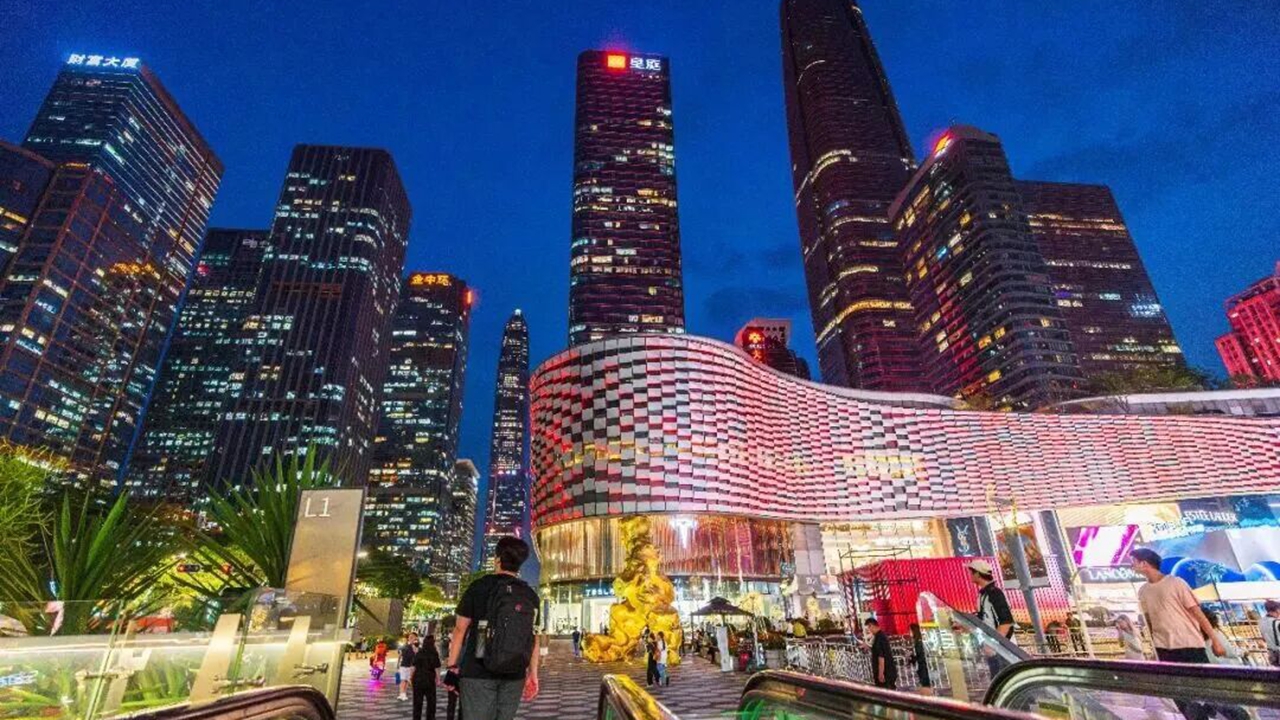
A shopping complex in Shenzhen houses cinemas and other entertainment and retail businesses. Photos from WeChat account "幸福福田"
Going to the cinema in Shenzhen is no longer simply about watching a film.
In recent months, cinemas across the city have been expanding beyond traditional screenings, adding lunchtime services, food and beverage offerings, film-themed installations, live sports broadcasts and even stand-up comedy shows. The changes reflect a broader effort by cinemas to attract customers amid declining weekday attendance and rising operating costs.
Films meet live sports
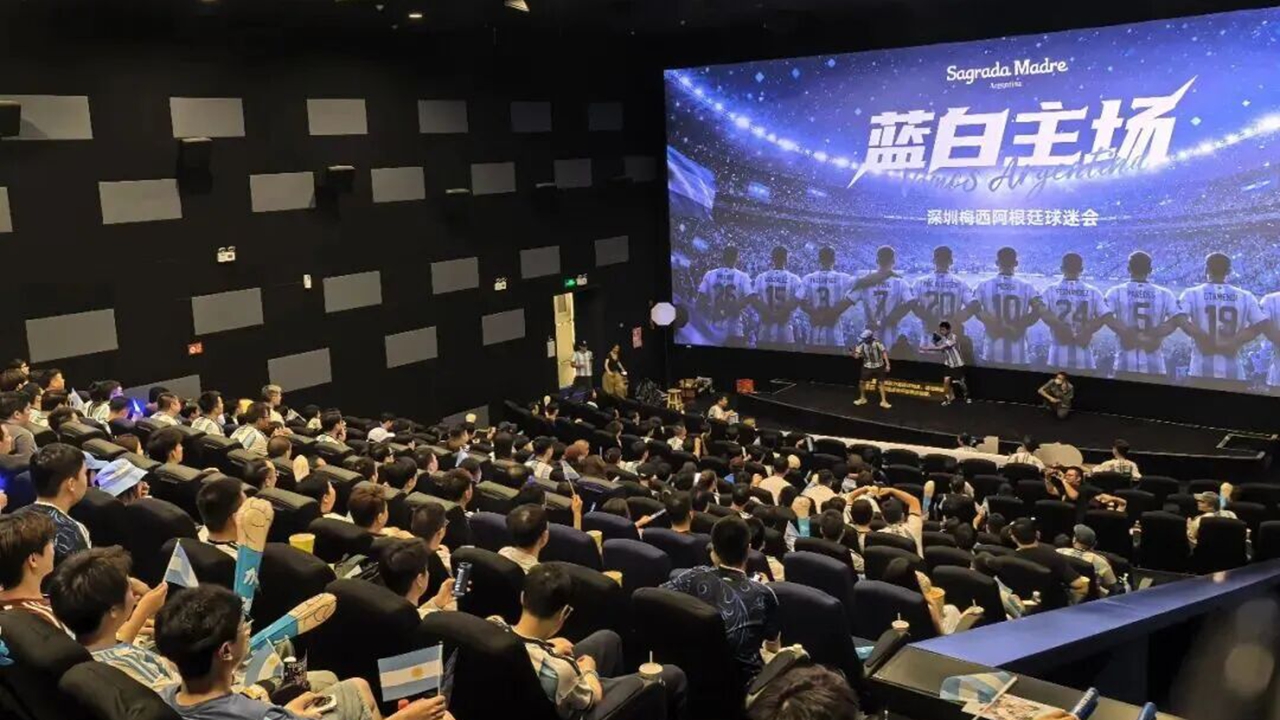
Football fans gather in a China Film International Cinema hall at InCity mall for a live screening featuring Argentina’s national team.
During the FIFA World Cup in June and July, China Film International Cinema at InCity mall became a gathering place for local football fans.
“More than 300 fans came wearing team jerseys and watched the matches together in the cinema,” one spectator said. “The screen was larger, the picture quality was clearer and the atmosphere was much more intense. Whenever a goal was scored, many people stood up and cheered.”

Argentina supporters cheer during a live football screening at the China Film International Cinema at InCity mall.
The immersive viewing experience, the fan added, brought a stronger sense of excitement than watching a match at home.
“Most of the group-viewing sessions during the World Cup were sold out,” a cinema employee at InCity said.
The cinema’s recently upgraded CINITY projection system provides a high-definition viewing experience. During live broadcasts, the cinema disables other network devices to help prevent interruptions. Spectators can also scan a QR code to order food and drinks, which are delivered to their seats.
Films meet photography spots
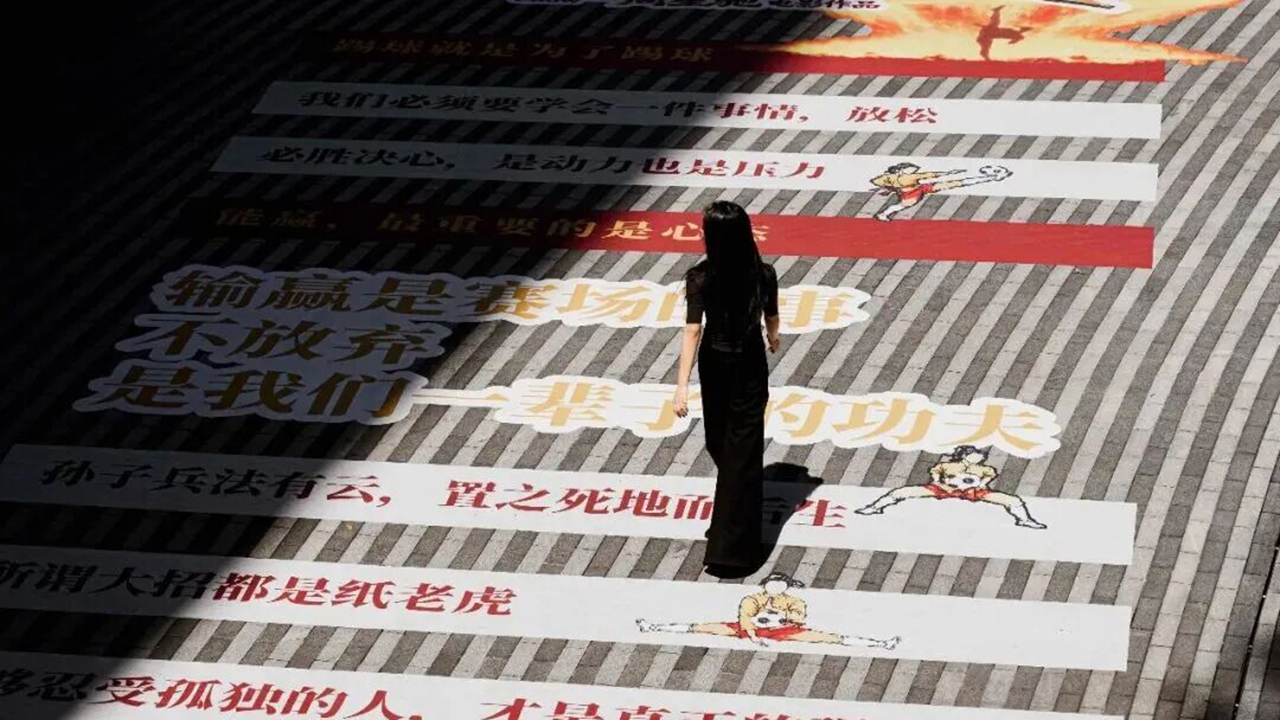
A visitor walks through a film-themed installation featuring lines and illustrations from “Kung Fu Soccer” at One Avenue shopping mall in Futian District.
CGV Cinemas at One Avenue shopping mall has teamed up with the shopping complex operator to create film-themed photo spots in the eastern section of the mall, extending the cinematic experience into public areas outside the theater.
In May, the cinema launched its first film-themed installation, inspired by the hugely popular “Dear You.” Classic letters exchanged between the characters Muxin and Shurou were recreated as a street installation.
In August, the venue introduced another attraction based on “Kung Fu Soccer.” Memorable lines from the film were printed across the floor in an oversized display, catching the attention of passersby.
Films meet fried chicken and beer

A food and beverage counter inside Emperor Cinemas’ CINITY branch at UpperHills offers drinks and other refreshments as theaters expand beyond traditional movie screenings.
In February, Emperor Cinemas’ CINITY branch at UpperHills shopping complex underwent a major renovation, reducing the number of seats from more than 1,800 to about 1,200, and the number of screening halls from nine to six.
The space freed up after the renovation was subsequently leased to food and beverage businesses. The cinema’s former bar has been transformed into a food and lifestyle station. In addition to traditional popcorn and soft drinks, it offers French fries, chili-topped hot dogs, craft beer, fruit and cold-brewed tea drinks.
According to cinema staff, the beers have a relatively low alcohol content of around 3% to 4%, with varieties including lime gose, West Coast IPA and German wheat beer.
“Some filmgoers arrive just before the screening starts and want to buy something to eat or drink but don’t want to miss the opening scene,” a cinema staff member said. “They can enter the theater, and the food can be delivered to their seats.”
The staff member said, “You can think of this entire area as a small lifestyle district. Visitors can watch a good film while also enjoying food and drinks.”
The cinema also offers a lunchtime service aimed at office workers. A monthly package reportedly costs just 39.9 yuan (US$5.94), giving employees an additional option for spending their lunch breaks.
Multi-use cultural spaces
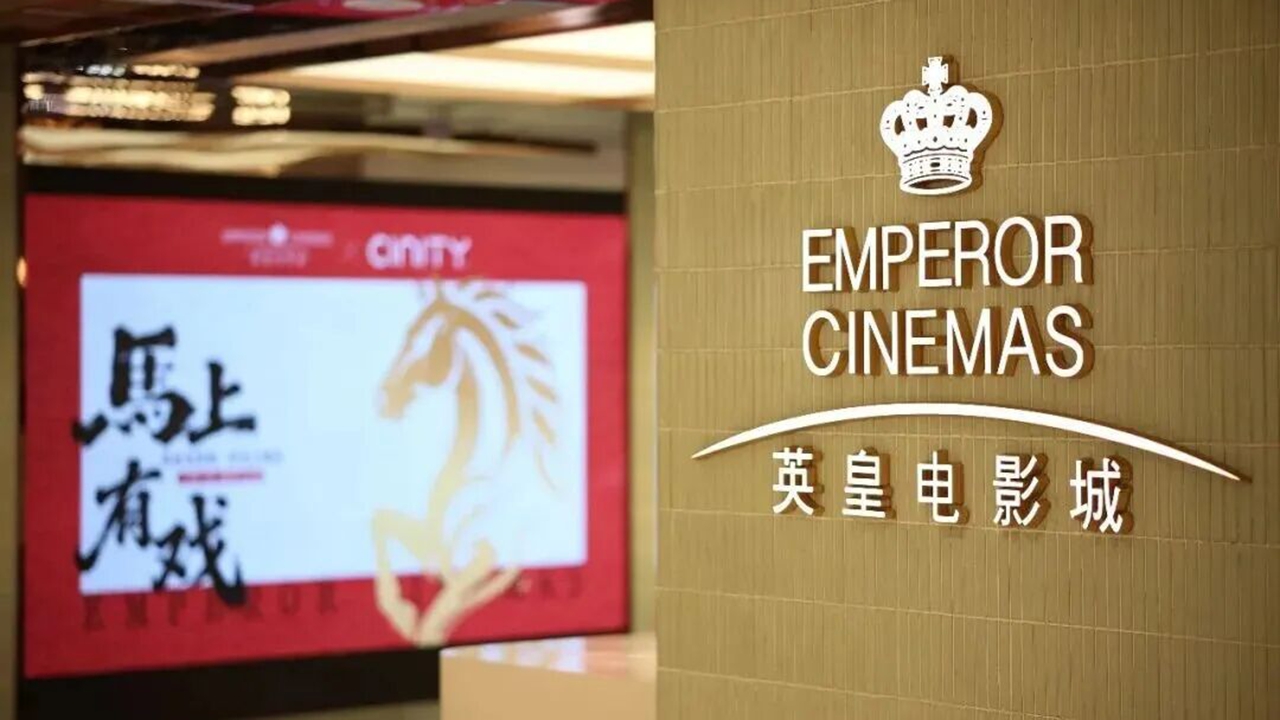
The entrance to the Emperor Cinemas CINITY branch at UpperHills in Shenzhen.
These are not the only changes taking place at cinemas across the city. Some venues have begun hosting stand-up comedy performances and special crosstalk shows, while others are cooperating with nearby shopping malls to offer discounts linked to movie ticket stubs.
The expansion comes as cinemas face a difficult operating environment.
According to publicly available reports, the national cinema attendance rate fell from 17.37% in 2015 to 5.76% in the first four months of 2026. National box office revenue reached 17.356 billion yuan in the first half of 2026, down 40.6% year on year. The average number of viewers per screening was just six, the lowest level in nearly a decade.
Wang Zhuoli, president of the Shenzhen Film Distribution and Exhibition Association, said cinemas across China are experiencing a “tide-like effect” in customer traffic: attendance rises on weekends and holidays, but weekday business from Monday to Thursday remains relatively weak.
The traditional business model, which relies heavily on major release periods, is increasingly unable to cover the high costs of rent, staffing and daily operations, prompting cinema operators to explore additional revenue streams.
In July, national authorities encouraged cinemas to diversify their operations and develop into comprehensive cultural experience spaces integrating film, social interaction, entertainment and consumption.
Shenzhen is the only city in Guangdong selected as a pilot city for the “film+” consumption model.
“Historically, non-ticket revenue accounted for about 10% to 15% of the total revenue of traditional cinemas in Shenzhen,” Wang said. “Following the multi-purpose renovation of cinema spaces, the development of merchandise based on popular intellectual properties and the introduction of cross-industry businesses, the average share of non-ticket revenue in Shenzhen’s cinema sector has risen to 20% to 25%. At some leading cinemas, it has exceeded 35%.”
At the Emperor Cinemas CINITY branch in UpperHills, for example, non-ticket revenue has risen from just over 20% to about 40%, while average per-customer food and beverage spending has increased from 4-5 yuan to 7-8 yuan.
Despite the growing range of services, Wang cautioned that cinemas must not lose sight of their core business.
“Film will always be the root and soul of a cinema,” she said. “At its core, every cross-industry expansion must remain film-centered and serve to enhance the cinema experience.”