
 Share
Share


 Print
PrintAsia-Pacific journalists offer different perspectives to tell China's story
Writer: Chen Siqi | Editor: Lin Jiayi | From: Shenzhen Daily | Updated: 2026-09-15
Video by Wang Haolan
The coffee robot drew a crowd of Asia-Pacific journalists on the afternoon of Sept. 3 at the northern entrance of Shenzhen’s “Eyes of the GBA” bookstore.
The journalists were in Shenzhen for the Asia-Pacific Media Forum, held on Sept. 5. Reporters from Shenzhen Daily joined fellows from the U.S., Canada, Thailand and Pakistan for a three-day journey of reporting and discovery.
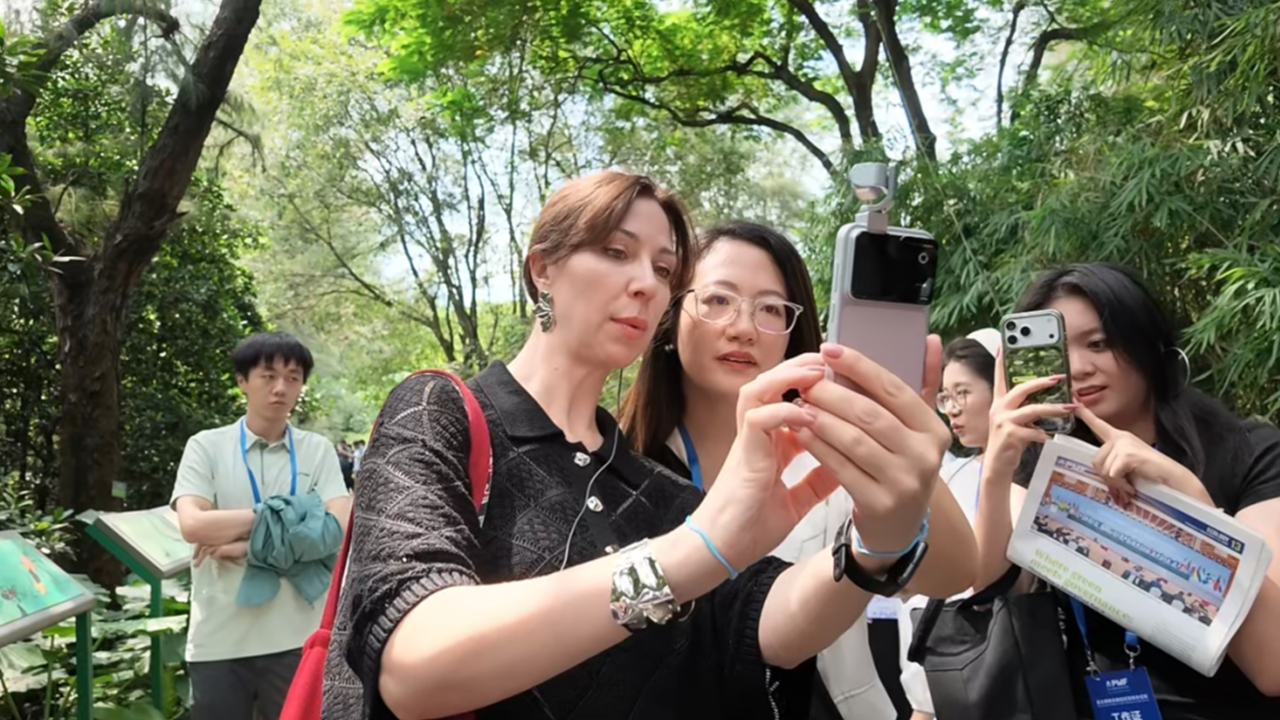
Tatiana Kaukenova, a media professional from Kazakhstan, and Shenzhen Daily reporters use Honor’s robot phone to take pictures at Guangdong Neilingding Futian National Nature Reserve on Sept. 4. Wang Haolan
They visited the “Eyes of the GBA,” billed as the world’s largest single-building bookstore, BYD’s headquarters and the Futian Mangrove National Nature Reserve, while also exploring the city’s parks, malls and neighborhoods.
For foreign journalists, familiar sights offered new stories. For local reporters, their questions provided a fresh look at a city they knew well.
They were not simply observers, but mirrors for one another — bringing different experiences and perspectives to the same city.
Shenzhen may be close to its Asia-Pacific neighbors geographically and economically, but perceptions can still be far apart. By travelling and reporting together, the journalists looked for both the similarities and differences, seeing Shenzhen through each other’s eyes — and, in the process, seeing something of themselves.
From hearsay to firsthand experience
At Gangxia North Transport Hub, Malik Amjad Aziz, editor-in-chief of Pakistan’s Daily Kasoti, raised his phone to capture the rush of commuters.
Four metro lines converge here, with passengers streaming through the station around him.
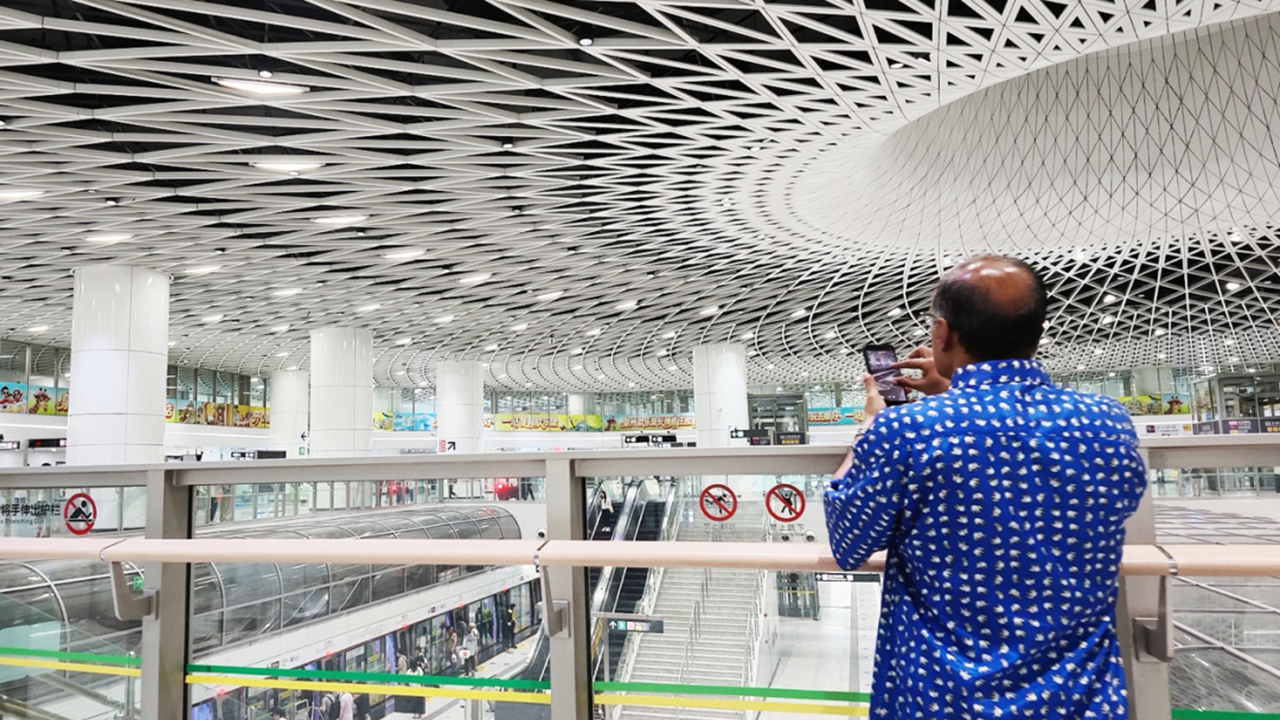
Malik Amjad Aziz, editor-in-chief of Pakistan’s Daily Kasoti, takes a picture of the Gangxia North Transport on Sept. 4. Wang Haolan
For Shenzhen residents, the scene is part of everyday life. For Malik, it offered a glimpse of the order and efficiency of a fast-growing city.
He had visited Hong Kong many times but knew little about Shenzhen.
“People told me Hong Kong is very close to Shenzhen — just 15 minutes by high-speed rail. I wondered why I had not come here before,” he said.
At a Huawei flagship store in Futian District, Malik moved from one display to another, using his phone to convert prices into Pakistani rupees. At “Eyes of the GBA”, he stopped to take in the vast collection of books and the quiet readers around him.
“I know everything is available on the Internet, but the scene is something different when I see everything on my own,” he said.
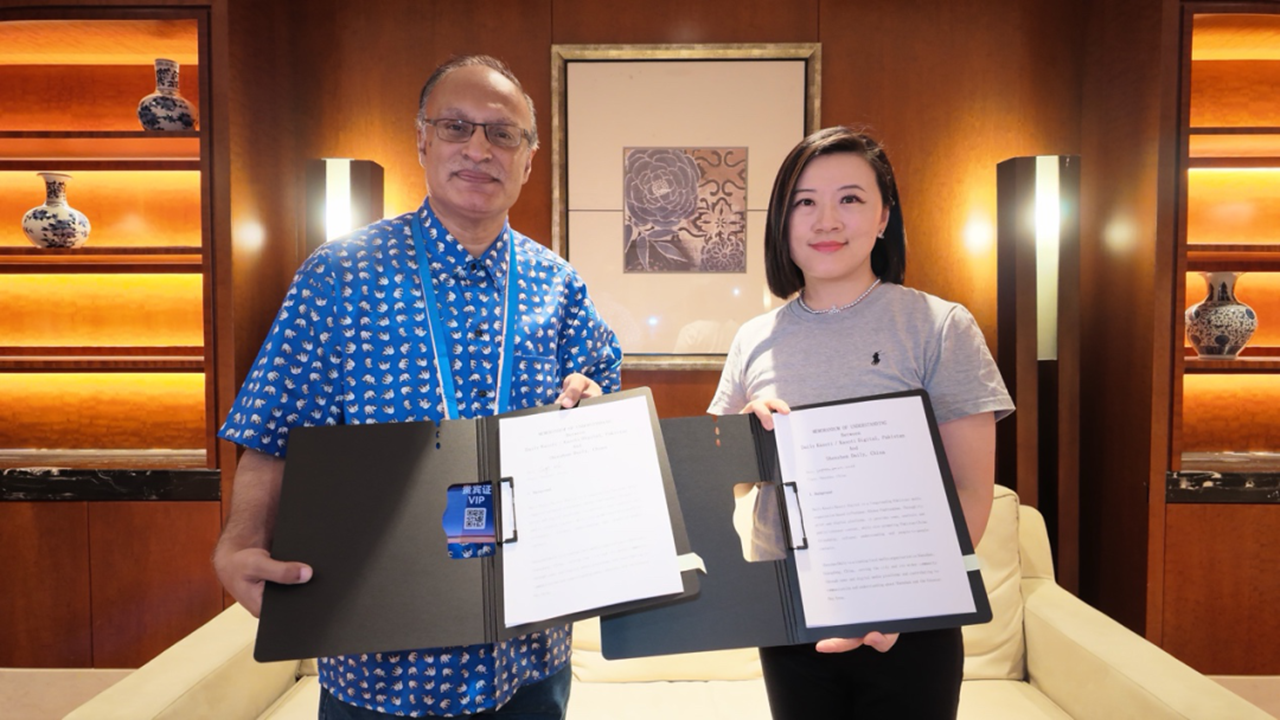
Malik Amjad Aziz (L) signs a memorandum of understanding on content production cooperation with Sun Jin, editor-in-chief of Shenzhen Daily. Wang Haolan
Throughout the trip, he turned his observations into stories — about culture, the economy and manufacturing — and sent them back to his newsroom in Peshawar.
“Most people back home still don’t know much about Shenzhen,” he said. “This is amazing city, now I will tell the people that they should go and they should visit Shenzhen.”
He also invited more people from Shenzhen to visit Pakistan, including his hometown of Peshawar, to promote people-to-people exchanges and deepen mutual understanding.
Shenzhen through different eyes
For Shenzhen Daily reporters, the city’s manufacturing and innovation are everyday subjects. For Sourabh Gupta, a senior fellow at the Institute for China-America Studies, they offered a chance to examine China from the ground up.
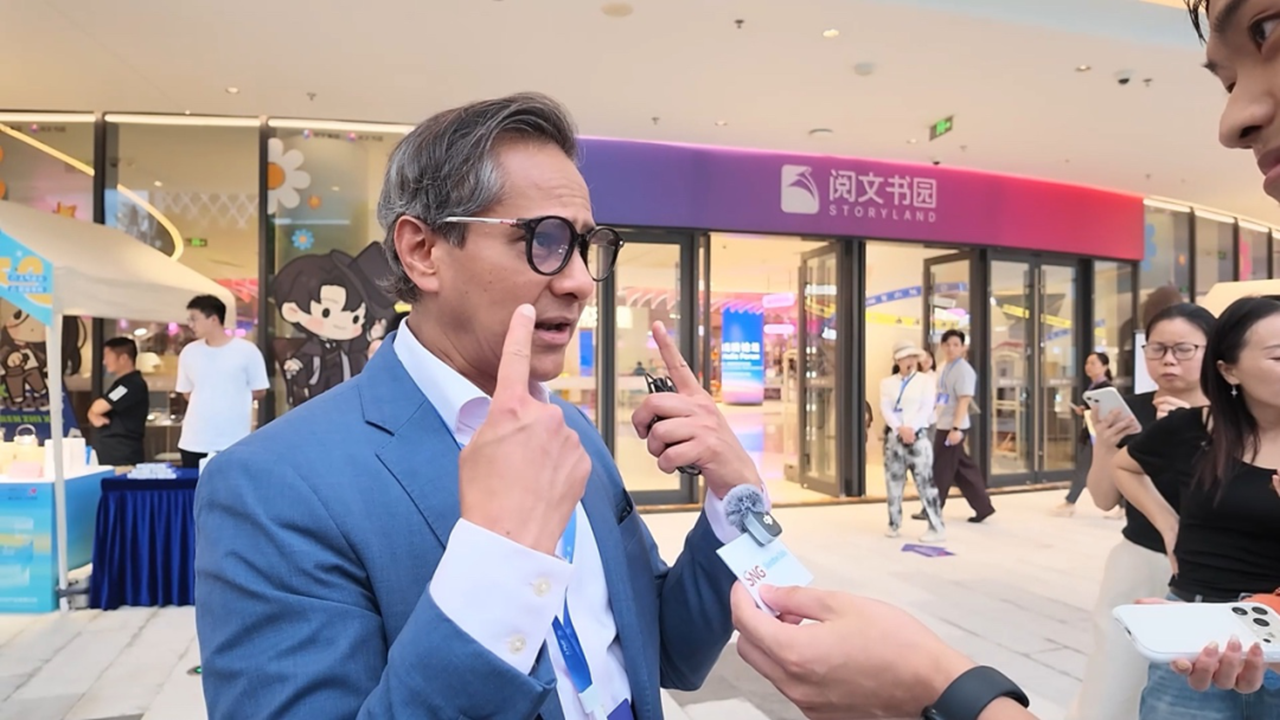
Sourabh Gupta, a senior fellow at the Institute for China-America Studies, tries on a pair of AI glasses at the Eyes of the GBA bookstore on Sept. 3. Zhao Xiaochen
Gupta has spent years studying China from Washington, where he usually looks at policies, data and broader trends. This was his first visit to the Guangdong-Hong Kong-Macao Greater Bay Area.
In a mattress factory in Dongguan, however, he was less interested in the finished product than in what was happening behind it.
“My greatest interest is understanding from the ground up how this manufacturing and innovation ecosystem works,” he said. From robotics and artificial intelligence to electric vehicles, chips, batteries and solar energy, he said, the scale of innovation was enormous.
The same factory floor told different stories. For local reporters, it was another example of industrial upgrading. For Gupta, it was a chance to see how an innovation ecosystem takes shape on the manufacturing floor.
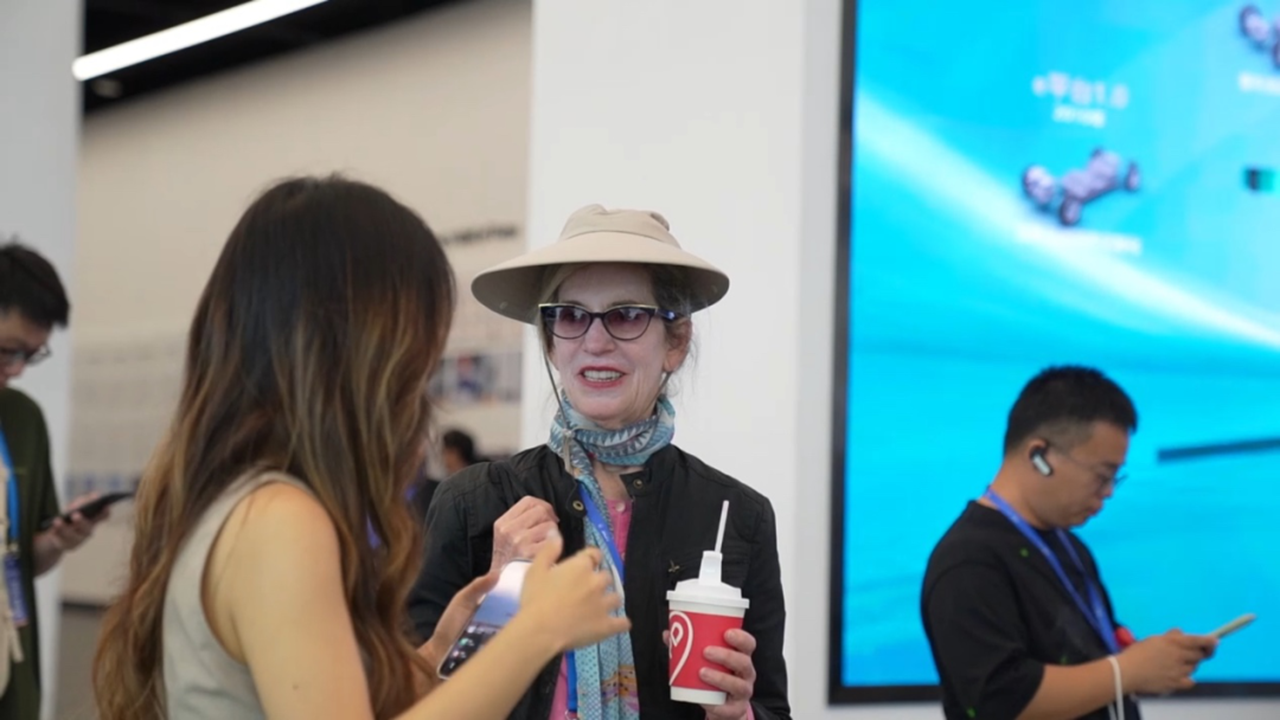
Rebecca Amelia Fannin, founder of Silicon Dragon, talks with a Chinese reporter during the trip to BYD headquarters in Pingshan District on Sept. 4. Wang Haolan
Rebecca Amelia Fannin, founder of Silicon Dragon, viewed Shenzhen through yet another lens — that of an investor.
A frequent visitor to the city, she said each trip showed her something new.
“Shenzhen is the hardware capital,” she said. “It is physical AI in here, and it's the software of AI in Silicon Valley. The paths are very different.”
For Shenzhen journalists, “hardware capital” is a familiar description. From Fannin’s perspective, it pointed to a fundamentally different industrial trajectory from Silicon Valley.
The contrast became even clearer on Sept. 4, when the Chinese and foreign journalists visited BYD’s global headquarters in Pingshan.
As a blade battery underwent a nail-penetration safety test, cameras clicked around the demonstration area.
For local reporters, such tests had appeared in coverage before. For many of their foreign colleagues, it was a first-hand look at the safety standards behind China’s rapidly expanding electric vehicle industry.
The same demonstration offered different takeaways: technological maturity to one observer, market credibility to another.
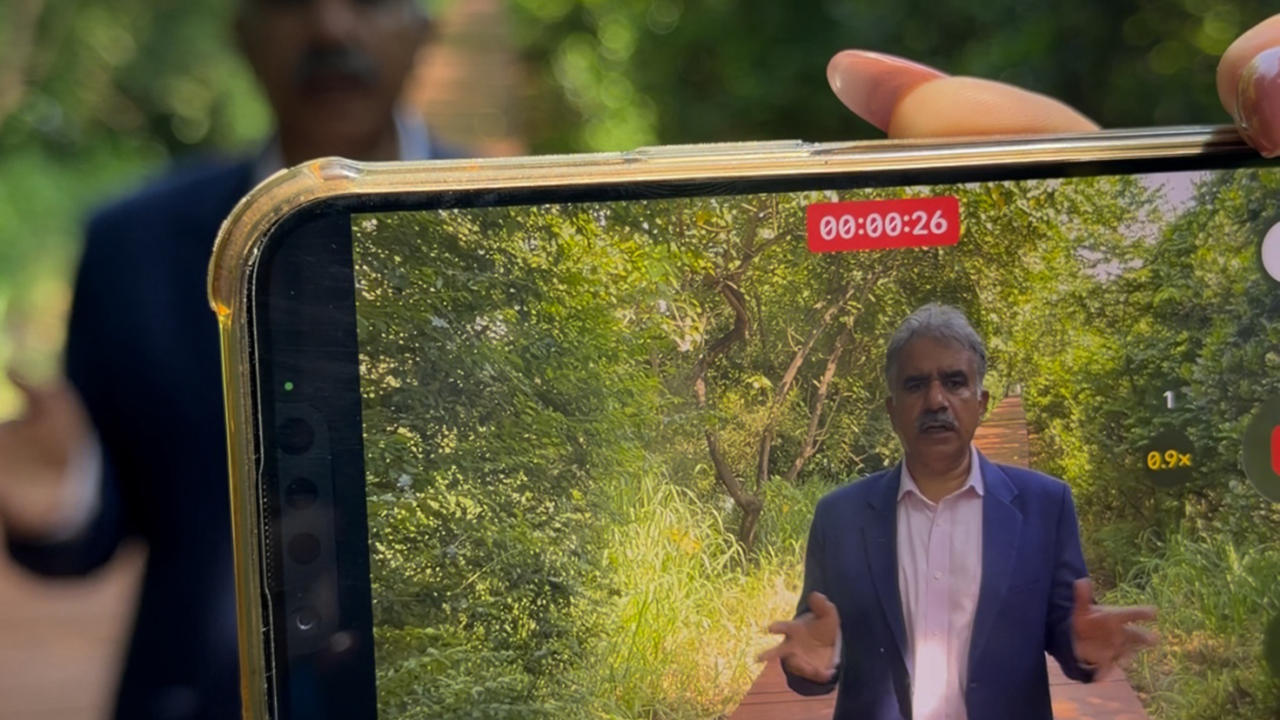
Shenzhen Daily reporter shoots a video for Zahir Shah Sherazi of Pakistan’s Bol News Television for his reporting clips at Guangdong Neilingding Futian National Nature Reserve on Sept. 4. Jian Zhen
Zahir Shah Sherazi of Pakistan’s Bol News Television examined the vehicles on display with particular interest. “BYD has already entered the Pakistani market. Electric buses and Islamabad’s traffic police system are using BYD vehicles,” he said.
But he was struck by the prices of the models on display, which he said were highly competitive with comparable European, Japanese and U.S. brands.
He hoped further technological advances could be applied to commercial vehicles, creating more opportunities for cooperation between the two countries.
Where industry meets nature
The journalists encountered another side of Shenzhen on Sept. 4, when more than 100 Chinese and foreign media representatives visited the Futian Mangrove National Nature Reserve.
Covering 367.64 hectares, the reserve is the only national-level nature reserve located in the heart of a major Chinese city. It is also an important stop along the East Asian-Australasian Flyway, receiving nearly 100,000 migratory birds each year.
Donovan Martin SR., CEO and editor-in-chief of Canada’s The Daily Scrum News, compared what he saw with Canada’s experience in regulating oil sands development.
"Canada has strict environmental oversight of oil sands extraction, sometimes extending over years or decades, "he said. Shenzhen, he suggested, appeared to apply a similar principle to development in a densely populated urban environment.
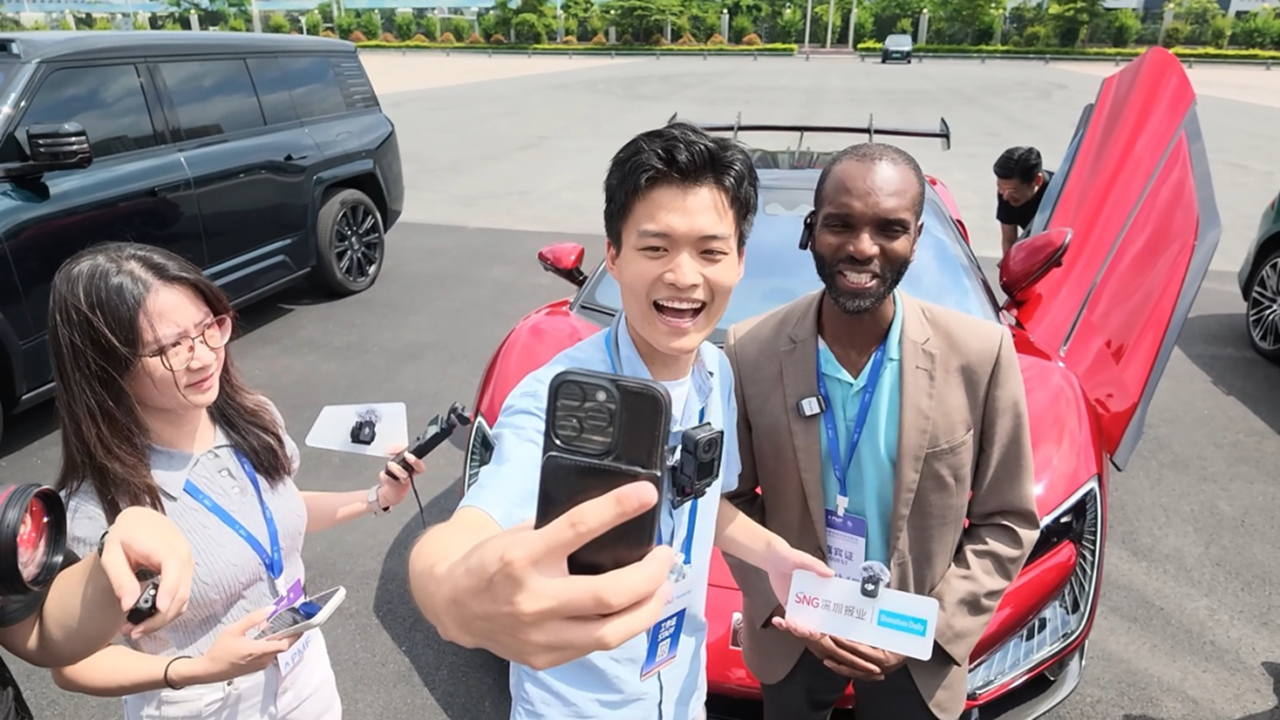
Shenzhen Daily reporter Kyle Ma shoots a video with Donovan Martin Sr., CEO and editor-in-chief of Canada’s The Daily Scrum News, during the visit to BYD headquarters in Pingshan District on Sept. 4. Zhao Xiaochen
He pointed to measures such as expanding green space and imposing fishing moratoriums to allow natural resources to recover. With the right technology and expertise, he said, economic development and environmental protection could be pursued together.
For Gupta, the way industrial development coexists with greenery left him deep impression. Manufacturing is often associated with concrete and factories, according to Gupta. But travelling through Shenzhen and Dongguan offered a different picture.
“They have all been able to manage and keep maintain their greenery,” he said. More importantly, he added, economic development and environmental protection did not appear to be treated as opposing goals.
“This is the harmony between industry, manufacturing and nature,” Gupta said. “I think it all comes together very well.”
The mirror turns back
By the end of the three-day trip, the journalists had accumulated photographs, interviews and stories — but also a collection of different ways of seeing the same city.
Gupta looked beyond Shenzhen’s present to its next 25 years, predicting continued growth in China’s creative and innovation industries, particularly in the Greater Bay Area, the Yangtze River Economic Belt and around Hangzhou.
“Shenzhen has come a long way, but it still has a long way to go,” he said. “It’s going to be even more brilliant going forward.”
Foreign journalists had come to Shenzhen to measure the city through their own experiences. In turn, their questions and reactions gave local reporters a fresh view of places that had become familiar.
In a city where technology, ecology and everyday life constantly intersect, the three-day journey offered a glimpse of another kind of “mirror world” — one built not by artificial intelligence, but by people seeing the same place through different eyes.