
 Share
Share


 Print
PrintAI-powered services expand across Shenzhen parks
Writer: Cao Zhen | Editor: Lin Jiayi | From: Shenzhen Daily | Updated: 2026-09-15
Parks in Shenzhen are no longer just green spaces. By the end of 2025, the city had deployed 21 types of AI applications at more than 400 locations, giving its urban greenery a distinctly tech-savvy edge.
Drones are among the most eye-catching innovations. Since drone food delivery was introduced in April 2024, Shenzhen has opened 21 drone delivery routes across 18 parks, five of which operate at night. Milk tea, coffee, and Cantonese snacks can now be delivered by air with just a tap on a screen.
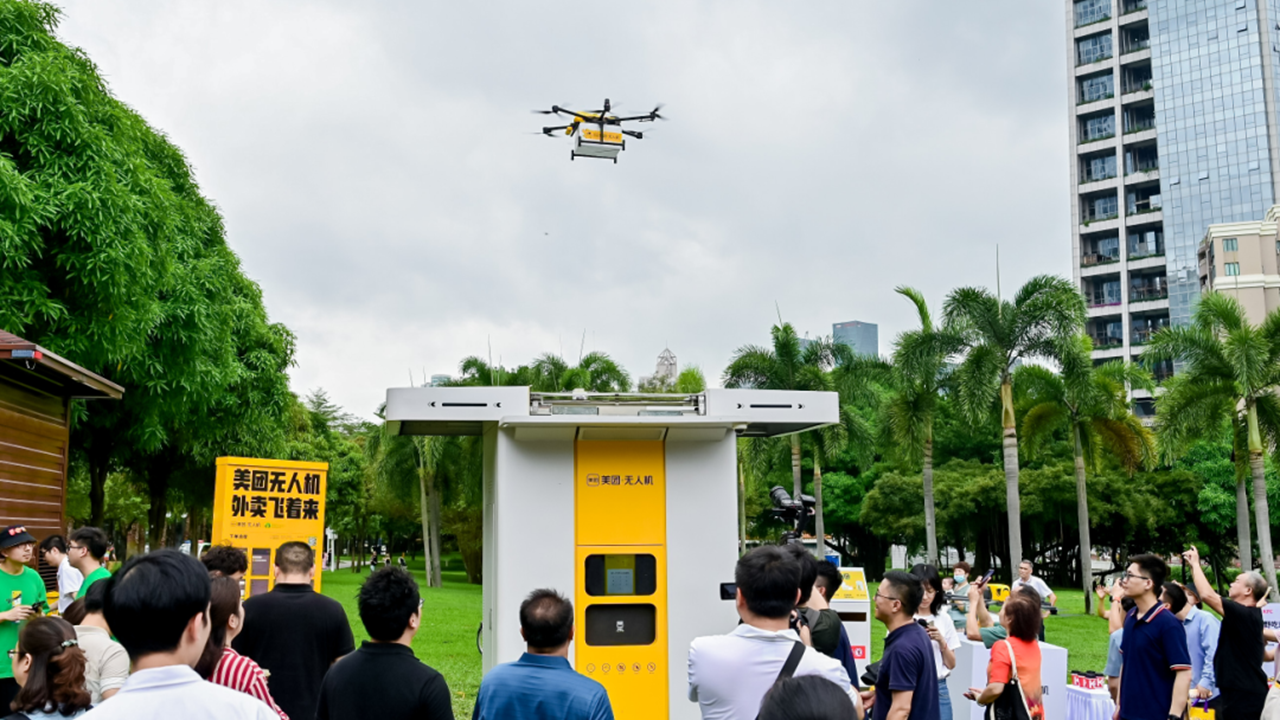
Parkgoers watch a food-delivery drone hovering in a Shenzhen park. Photos from Shenzhen Municipal Urban Management and Law Enforcement Bureau unless otherwise stated
The city also pioneered China’s first drone-delivered AED emergency response program. Launched in March 2025, the program covers Tanglang Mountain Country Park, Fenghuang Mountain Forest Park, Shiyan Wetland Park, Luotian Forest Park, and Fuhai River Park. The drones can reach locations within a 4-kilometer radius in five minutes, covering roughly 50 square kilometers and extending emergency response beyond traditional limits.
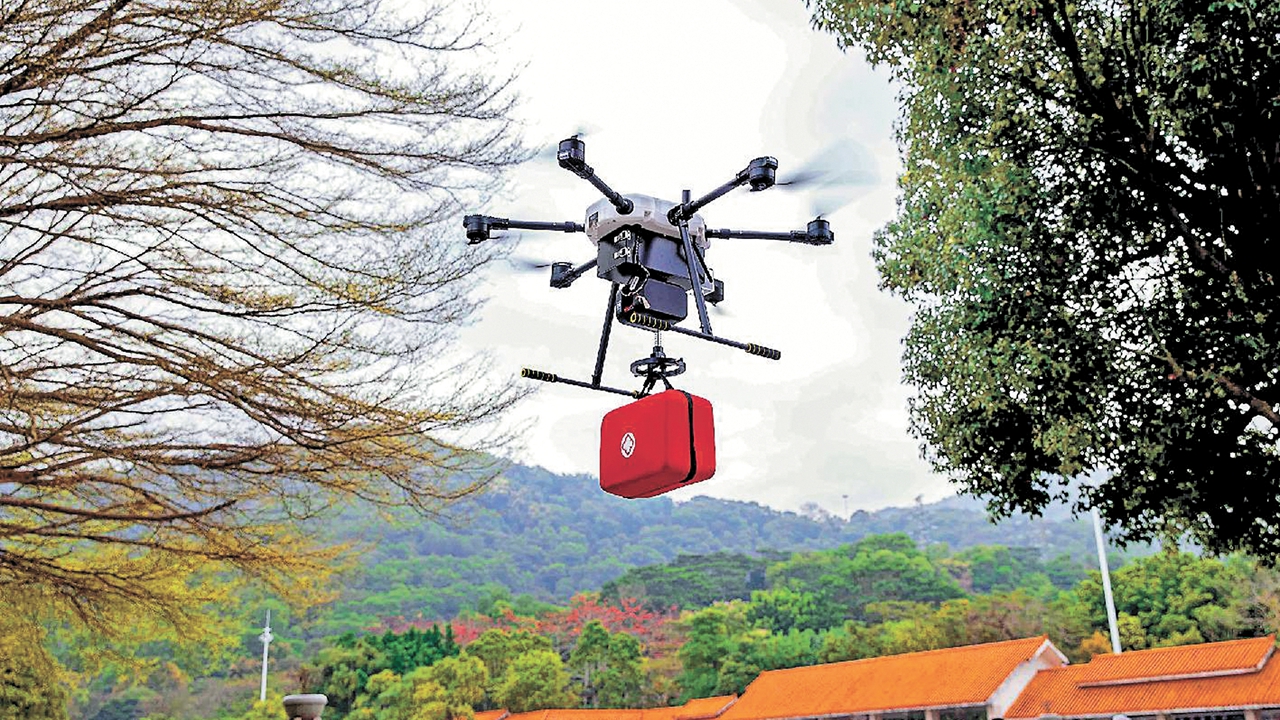
A drone carring an AED hovers in a local park.
Drones also patrol parks around the clock, strengthening forest fire prevention, forest inspections, post-disaster monitoring, and emergency response. A full-chain system combining smart patrols, human verification, and emergency coordination is now in place. Drones are also used for plant protection, enabling precise pest control and invasive-species management.
AI has turned parks into destinations for both strolling and snacking. More than 200 coffee-making robots are now operating across the city. In May, China’s first open-source, HarmonyOS-based embodied robot for freshly prepared food made its debut at the Shenzhen International Garden and Flower Expo Park, serving orders in about 30 seconds. Nearly 30 such robots now operate in more than 20 parks.
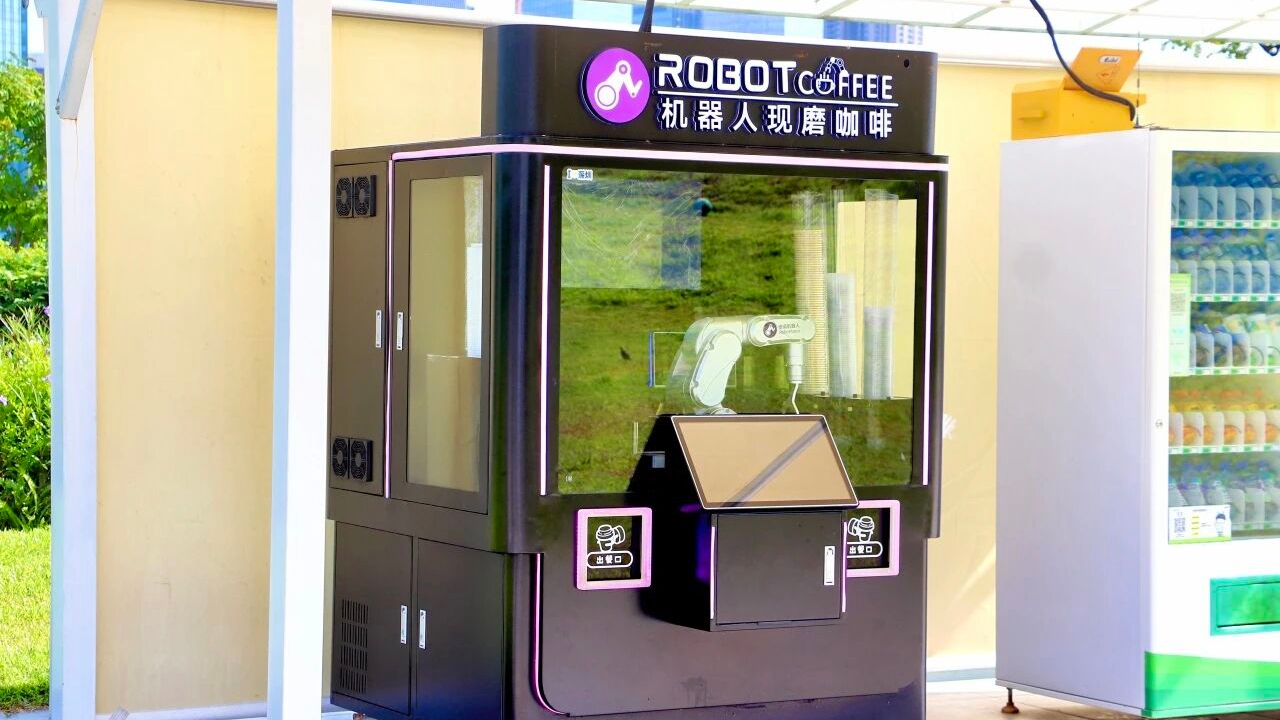
A coffee-making machine at a local park.
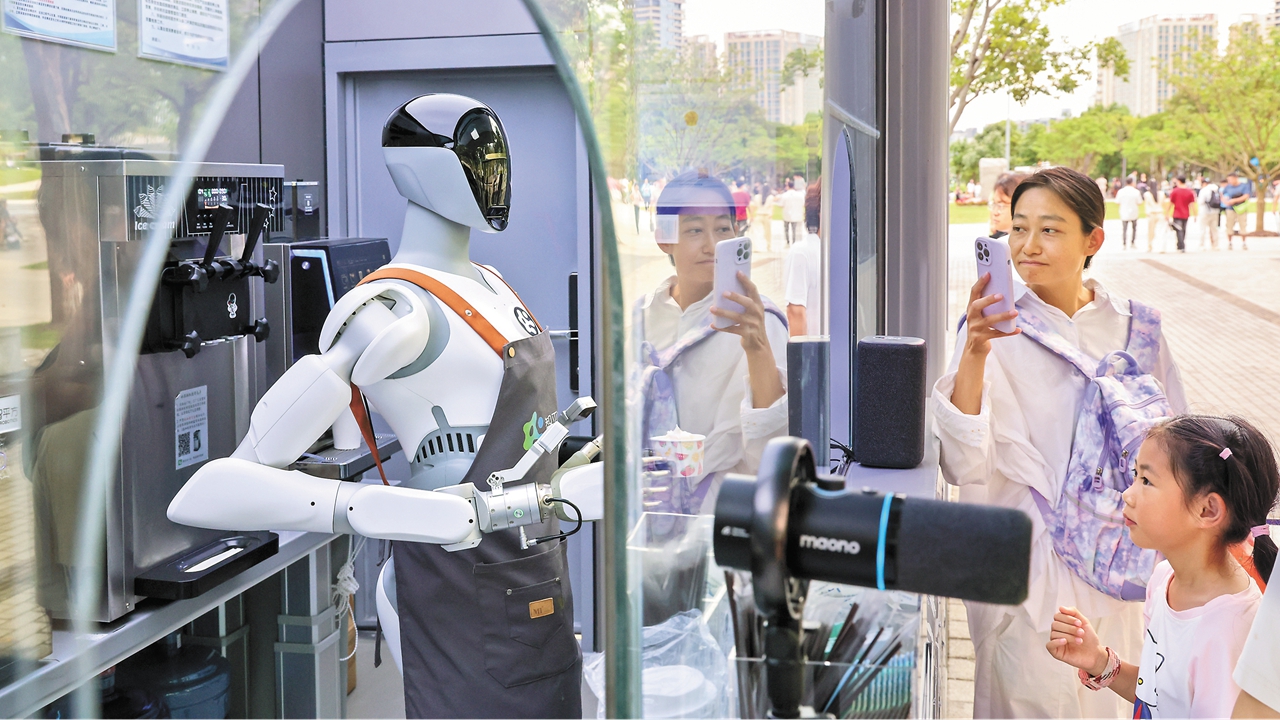
A robot serves ice cream to visitors at Shenzhen Talent Park. Photo from Xinhua
AI-powered unmanned convenience stores, equipped with smart sensors, offer facial-recognition access and cashless payment around the clock.
For fitness enthusiasts, the city has installed 153 outdoor smart gyms in its parks. Users can scan a code to receive free fitness assessments and customized workout plans. Seven parks, including Shenzhen Bay Park, have introduced smart running-track systems, transforming green spaces into all-weather venues that offer a professional marathon-style experience.
Culture and leisure have gone digital as well. Smart piano rooms are now available in more than a dozen parks, including Bijia Hill Park, Shenzhen Central Park, Lychee Park, Xiangmi Park, Guiwan Park, and Longcheng Park. AI chess robots offer another option for visitors seeking a mental challenge amid greenery and blossoms.
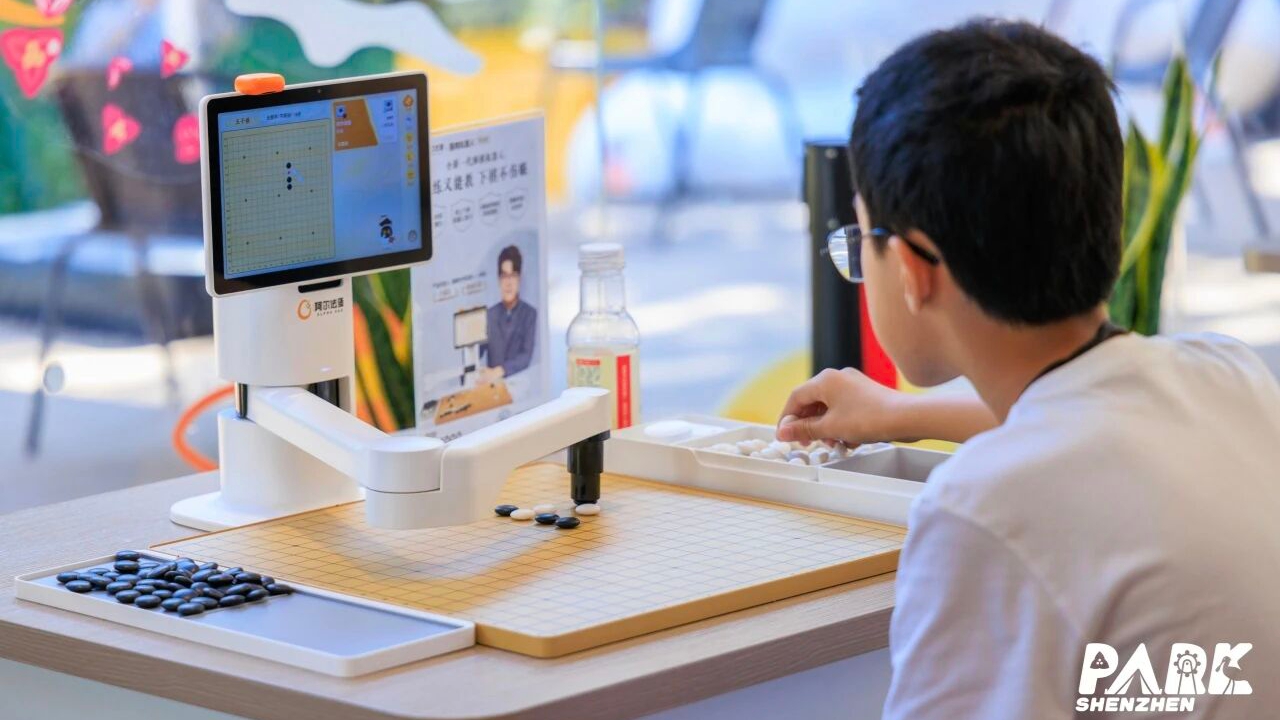
A man plays Go against a robot at a park.
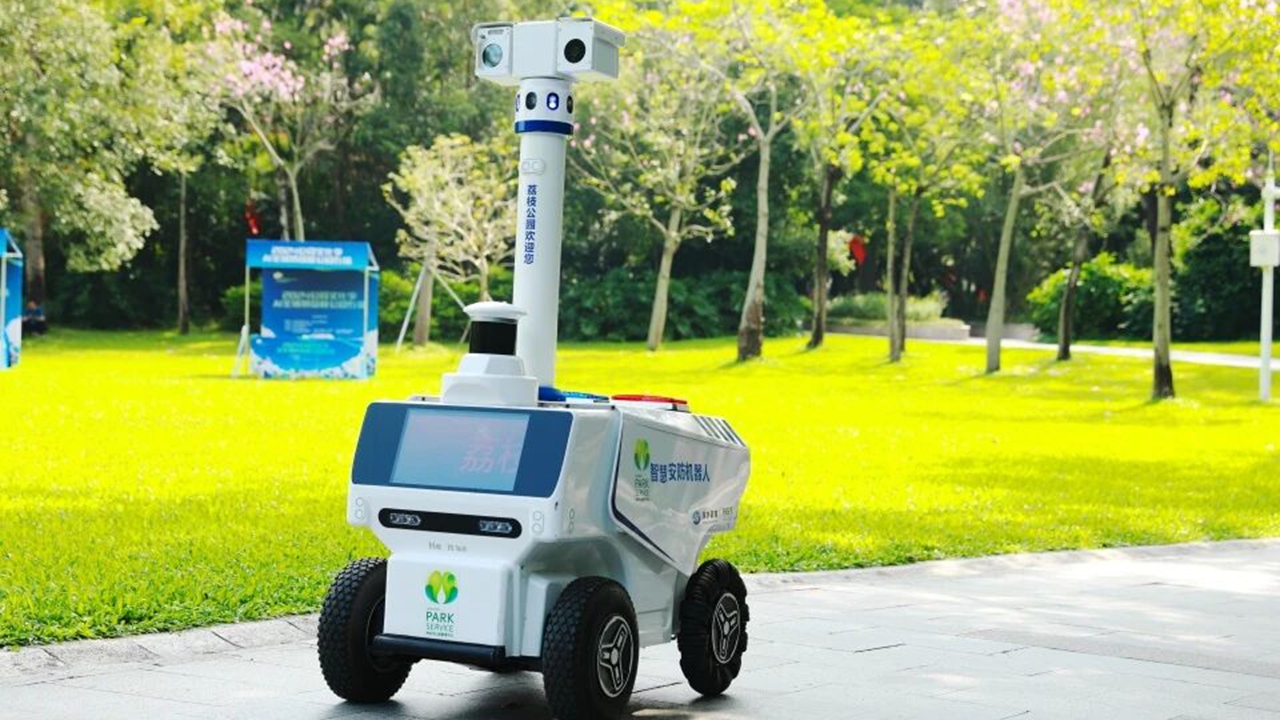
A smart patrol vehicle operates in a park.
AI is also helping maintain the parks. More than 100 smart devices for maintenance, irrigation, and pest control are now in operation. Unmanned sweepers, cleaning boats, patrol robots, lawnmowers, and automatic irrigation systems are shifting park management from labor-intensive operations toward human-machine collaboration.
Equipped with more than 20 sensors, unmanned cleaning boats provide 360-degree awareness of the water’s surface and precisely identify floating debris. Such boats have been deployed at Lianhua Hill Park, Bijia Hill Park, Lychee Park, and other locations.
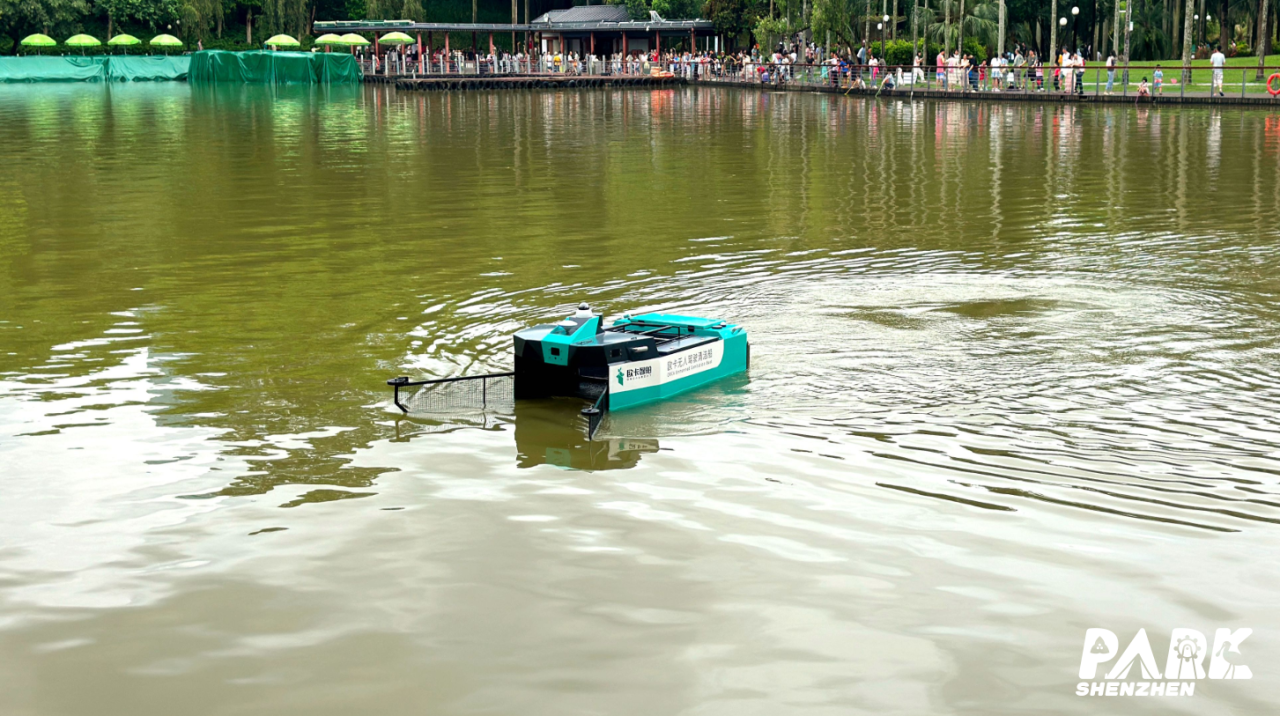
An unmanned cleaning boat operates on a park lake.
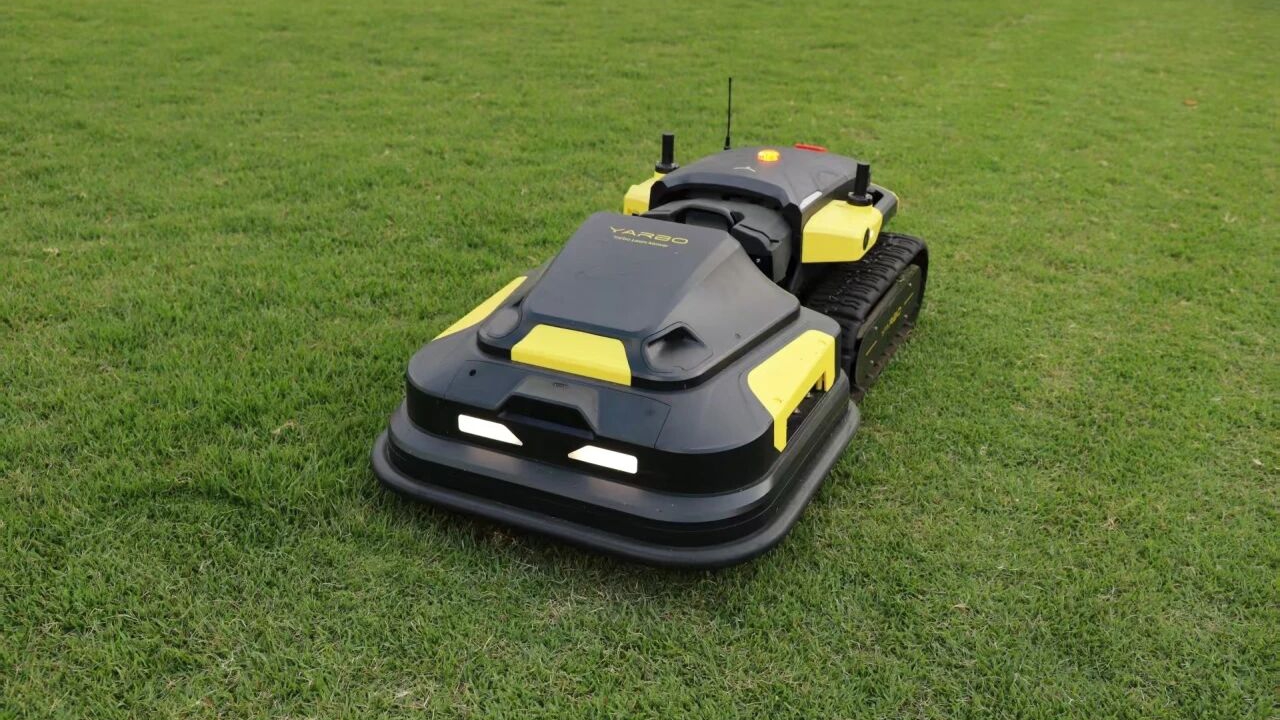
A smart lawnmower operates in a park.
Smart lawnmowers at parks such as Shenzhen North Railway Station Central Park and Mengqing Park are equipped with crawler tracks and can handle slopes of up to 35 degrees, allowing them to adapt to uneven terrain.
By the end of December 2025, smart cleaning robots were operating in 13 parks, providing round-the-clock sweeping. Patrol robots had also been deployed in 15 parks, including Shenzhen Bay Park, providing 24-hour autonomous patrols and enhancing park safety.