
 Share
Share


 Print
PrintSnake-fighting mongoose spotted in Luohu District for first time
Writer: | Editor: Lin Jiayi | From: Shenzhen Daily | Updated: 2026-09-11
A crab-eating mongoose — a nationally protected wild animal classified as vulnerable and dubbed a “nemesis of venomous snakes” — was recorded by infrared cameras in Luohu District recently, local ecology and environment authorities said.
It was the first time the small animal had been clearly photographed by Shenzhen authorities outside the Shenzhen-Hong Kong border control area.
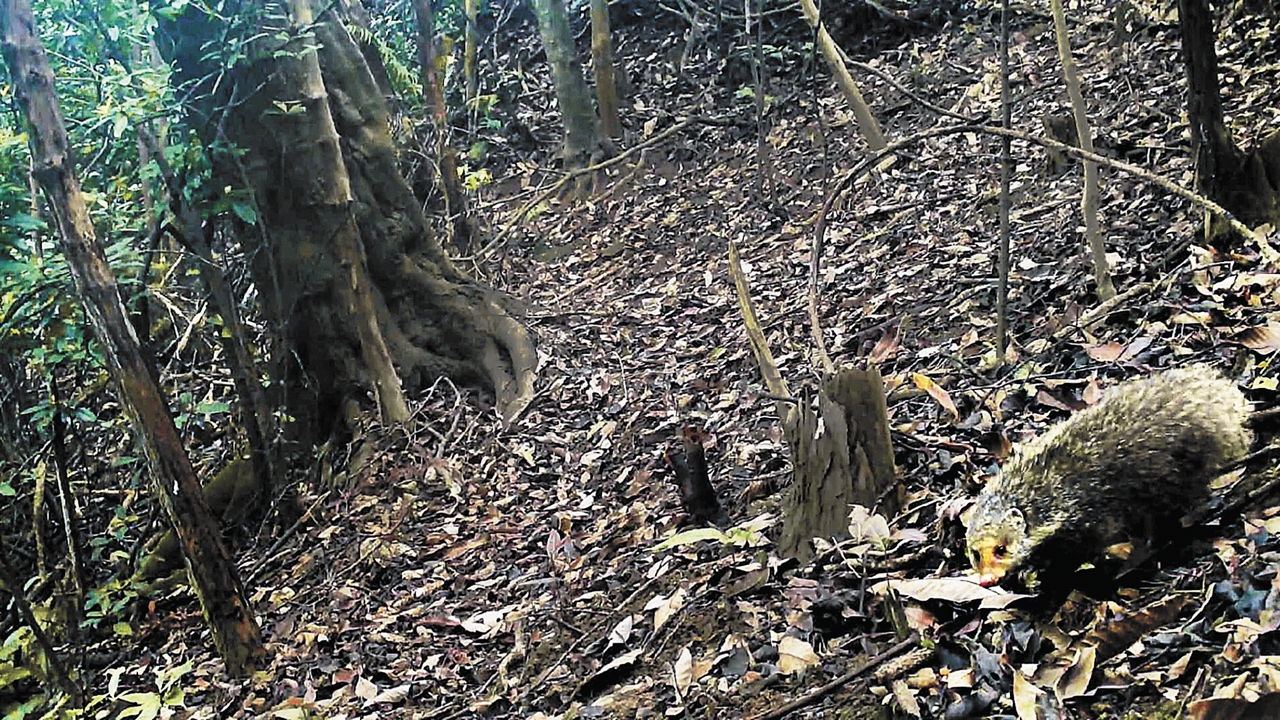
The crab-eating mongoose captured by infrared cameras in Luohu District. Photo provided to Shenzhen Daily
The semi-aquatic mongoose is native to South and Southeast Asia and typically found near streams, wetlands and other bodies of water. A member of the Herpestidae family, it has a grizzled gray coat, pale stripes along both sides of its neck and a body shape somewhat similar to that of a weasel.
Despite its name, the crab-eating mongoose eats more than crabs. Its diet includes fish, frogs, snails, rodents, birds, reptiles and insects.
The species is also known locally by names including mountain badger, stone badger, water badger, white-faced badger, bamboo-shoot civet and bamboo-tube civet. It measures 36 to 52 centimeters in body length and weighs 1 to 2.3 kilograms.
The crab-eating mongoose is the largest mongoose species recorded in China and one of only two mongoose species found in the country. It is known for its ability to confront venomous snakes, aided by rapid reflexes and a natural resistance to snake venom.
The species is also considered an indicator of ecological health because it has strict habitat requirements. Its presence suggests that an area offers relatively favorable conditions for wildlife.
The animal’s appearance in Luohu was not an isolated event. By the end of 2025, the district had recorded more than 1,380 species of wild plants and 470 species of wild animals, including six species of nationally protected first-class wild animals and 43 species of nationally protected second-class wild plants and animals.
The district’s ecosystems stretch from Wutong Mountain to the Shenzhen Reservoir and include forests, streams and wetlands. Together, they provide habitats for a growing range of wild species.
Infrared cameras are helping reveal more of the district’s wildlife. Luohu is also using the results of years of ecological surveys to develop public-friendly biodiversity education and observation programs.