
 Share
Share


 Print
PrintAsia-Pacific media leaders seek shared prosperity
Writer: Sun Jin, Shao Jingfeng | Editor: Lin Jiayi | From: Original | Updated: 2026-09-05
More than 400 representatives from media organizations, think tanks, government departments, universities, United Nations agencies and international organizations from 42 countries and regions gathered in Shenzhen on Sept. 5 for the Asia-Pacific Media Forum, sharing ideas on how the media can contribute to building a more open, innovative and cooperative Asia-Pacific community.
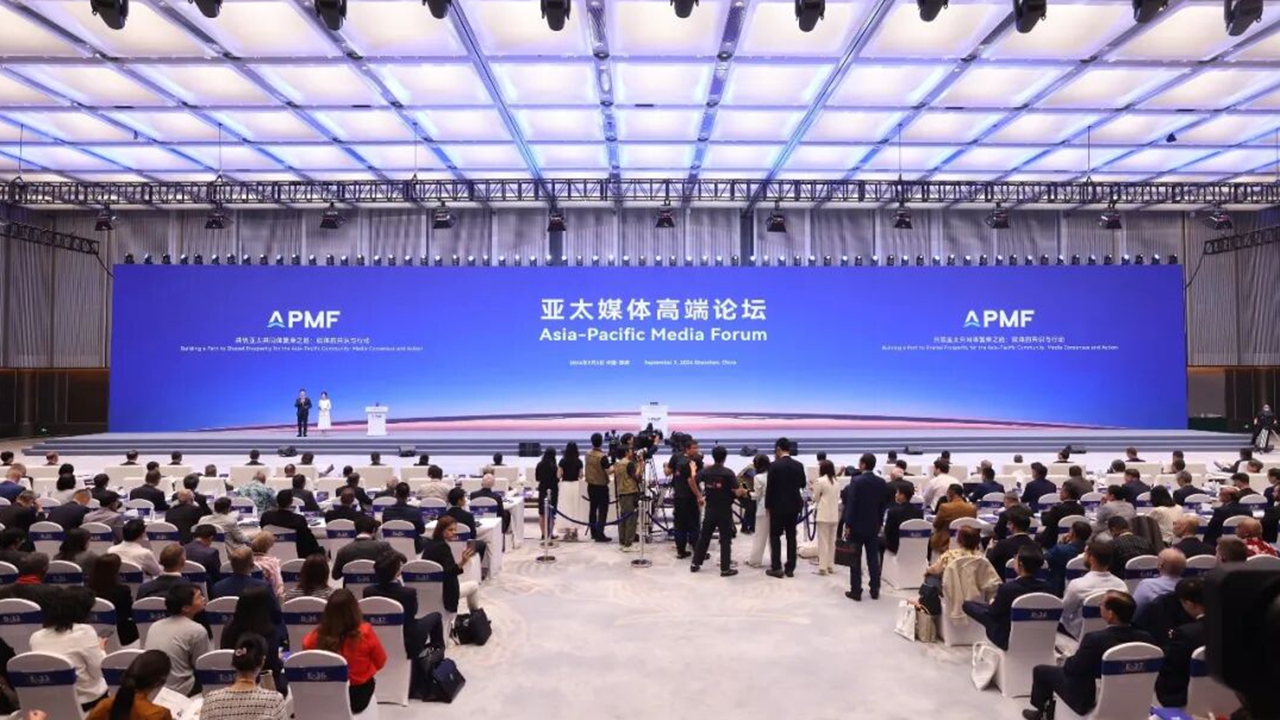
The Asia-Pacific Media Forum was held in Shenzhen on Sept. 5. Photo by Zhu Hongbo
Held under the theme “Building a Path to Shared Prosperity for the Asia-Pacific Community: Media Consensus and Action,” the forum explored the role of media in promoting regional openness, technological innovation, green development and people-to-people exchanges. The Shenzhen Consensus of the Asia-Pacific Media Forum was released as one of the key outcomes of the event, setting out a shared vision and concrete proposals for media cooperation across the region.
The consensus states that “openness, innovation and cooperation are of great importance to promoting prosperity in the Asia-Pacific region.” It calls on media organizations to “deepen dialogue and exchanges and pursue practical cooperation,” while promoting policy coordination, experience sharing and broader reporting on the region’s development achievements.
It also urges the media to build consensus on openness and uphold the multilateral trading system, while reporting on efforts to enhance regional connectivity and maintain stable industrial and supply chains. In the area of emerging technologies, the consensus identifies digital, intelligent and green transformation as important opportunities for regional development.
The consensus calls for AI to be used in media “guided by a people-centered approach and a commitment to using AI for good,” and encourages coverage of clean energy, low-carbon buildings and other examples of green development.
Beyond technology and economic cooperation, the consensus places strong emphasis on the media’s role in connecting people. It reaffirms a commitment to “truthful, objective and impartial reporting” and calls for joint reporting, mutual visits and other forms of cooperation to promote cultural, tourism and youth exchanges and enhance “mutual understanding, trust and friendship” among Asia-Pacific peoples.
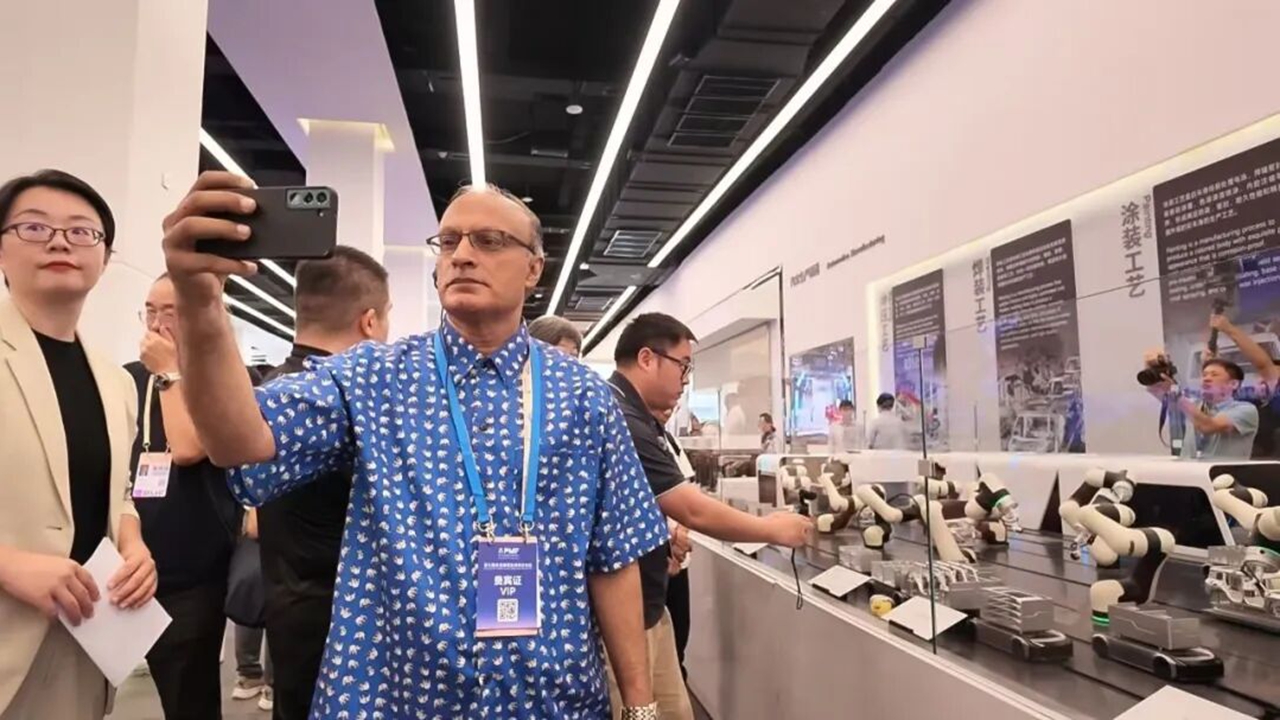
Daily Kasoti editor-in-chief Amjad Aziz Malik during a visit in Shenzhen on Sept. 4. Photos by Wang Haolan unless otherwise stated
The consensus also reflects what participants saw and experienced during visits to Guangzhou, Foshan, Dongguan, Shenzhen, Zhuhai and Zhongshan before the forum. Zheng Yongnian, dean of the School of Public Policy at The Chinese University of Hong Kong, Shenzhen, described Shenzhen’s development as “the best example” for Global South countries, saying the city’s experience demonstrates how effective policies and institutions can support development.
The forum also created opportunities for media organizations to turn these shared ideas into practical cooperation. Donovan Martin SR., CEO and editor-in-chief of Canadian media outlet Daily Scrum News, praised Shenzhen’s ability to combine rapid urban development with green spaces. He said such integration had impressed him, while calling for more dialogue and exchanges between Chinese and Canadian media. “We are more alike than we are different,” he said.
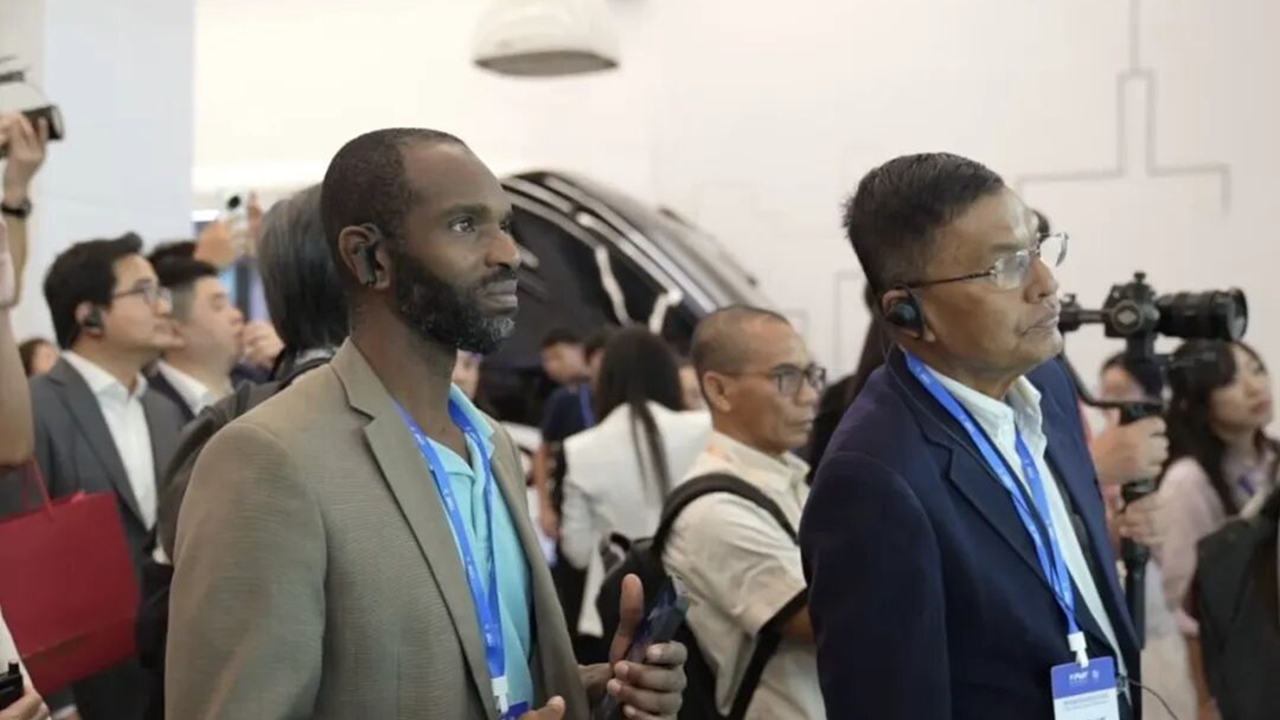
Donovan Martin SR. (L), CEO and editor-in-chief of Canadian media outlet Daily Scrum News, during a visit in Shenzhen on Sept. 4.
The call for practical cooperation was also reflected in a new partnership between Pakistani mainstream media outlet Daily Kasoti and Shenzhen Daily. Within 24 hours of arriving in Shenzhen, Daily Kasoti editor-in-chief Amjad Aziz Malik signed a content co-creation agreement with Shenzhen Daily, praising its digital transformation and international communication capabilities.
“This is exactly the partner we have been looking for,” Malik said. The two sides plan to explore cooperation in technology sharing, content co-creation and talent exchanges, focusing on green development and technological innovation under the China-Pakistan Economic Corridor.
From a shared commitment to openness and innovation to concrete cooperation among media organizations, the forum demonstrated that media can do more than report regional development. Through dialogue, collaboration and people-to-people exchanges, they can also help build understanding, trust and a stronger sense of shared prosperity across the Asia-Pacific.