
 Share
Share


 Print
PrintIntl. media applaud SZ 'tech companions'
Writer: Sun Jin, Qiu Weibin, Windy Shao | Editor: Lin Jiayi | From: Original | Updated: 2026-09-04
What else can journalists use in Shenzhen besides a camera and notebook?
An English guide to the city, AI glasses for translation, a pocket-sized gimbal camera and an AI city card that brings Shenzhen landmarks to life — these are some of the tools visiting journalists discovered in Shenzhen.
For Asia-Pacific media professionals, these technologies offered a glimpse into how AI and smart devices are becoming part of everyday journalism.
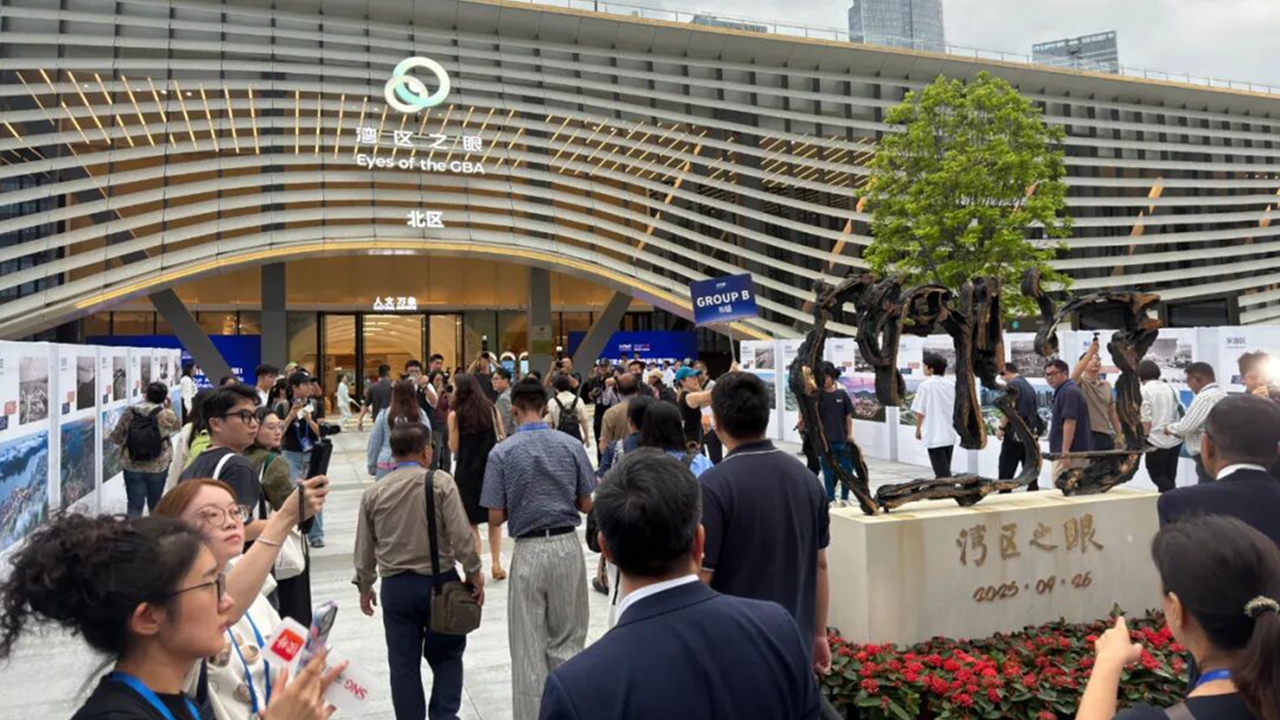
A group of delegates attending the Asia-Pacific Media Forum arrive at Eyes of the GBA for the first stop of their Shenzhen tour today. Jiao Ziyu
The Asia-Pacific Media Forum (APMF) will be held in Shenzhen on Sept. 5 under the theme “Building a Path to Shared Prosperity for the Asia-Pacific Community: Media Consensus and Action.” Since Sept. 3, media leaders, senior journalists and online content creators from across the Asia-Pacific have been visiting Shenzhen for field trips and reporting.
For the English-language Shenzhen Daily, reporting in English is part of everyday work — from learning about a city and finding information to conducting multilingual interviews and shooting videos. These familiar tasks offer another way to see Shenzhen.
The exchange also raised a shared question: as technology reshapes journalism, how can AI and other tools help journalists do better job for global audiences?
32 pages of Shenzhen stories
For journalists visiting Shenzhen for the first time, Shenzhen Daily's 32-page APMF special edition offers a convenient starting point.
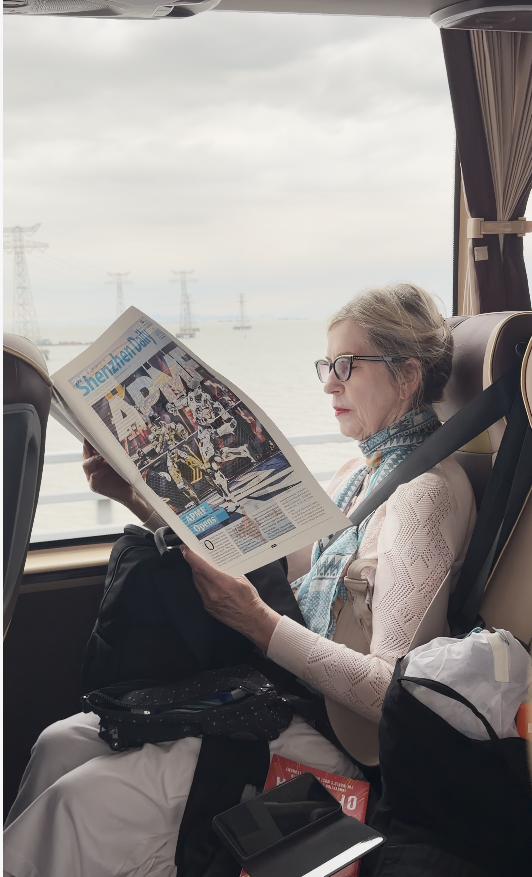
A journalist reads Shenzhen Daily's APMF special edition on the bus.
It covers reform and opening up, urban and industrial development, investment opportunities, eco-friendly city, tourism, transport and public services, providing both a snapshot of the city and potential story leads.
The edition also features stories of international residents who have built careers and lives in Shenzhen, giving the city a more personal face.Two city guidebooks prepared alongside the special edition provides practical information for first-time visitors.
AI glasses for multilingual interviews
Could translation and teleprompting be easier at interviews? Nimo AI glasses bring both functions into the field of view. With real-time translation and teleprompting, the glasses display text in front of the wearer, helping with multilingual communication and on-site reporting.
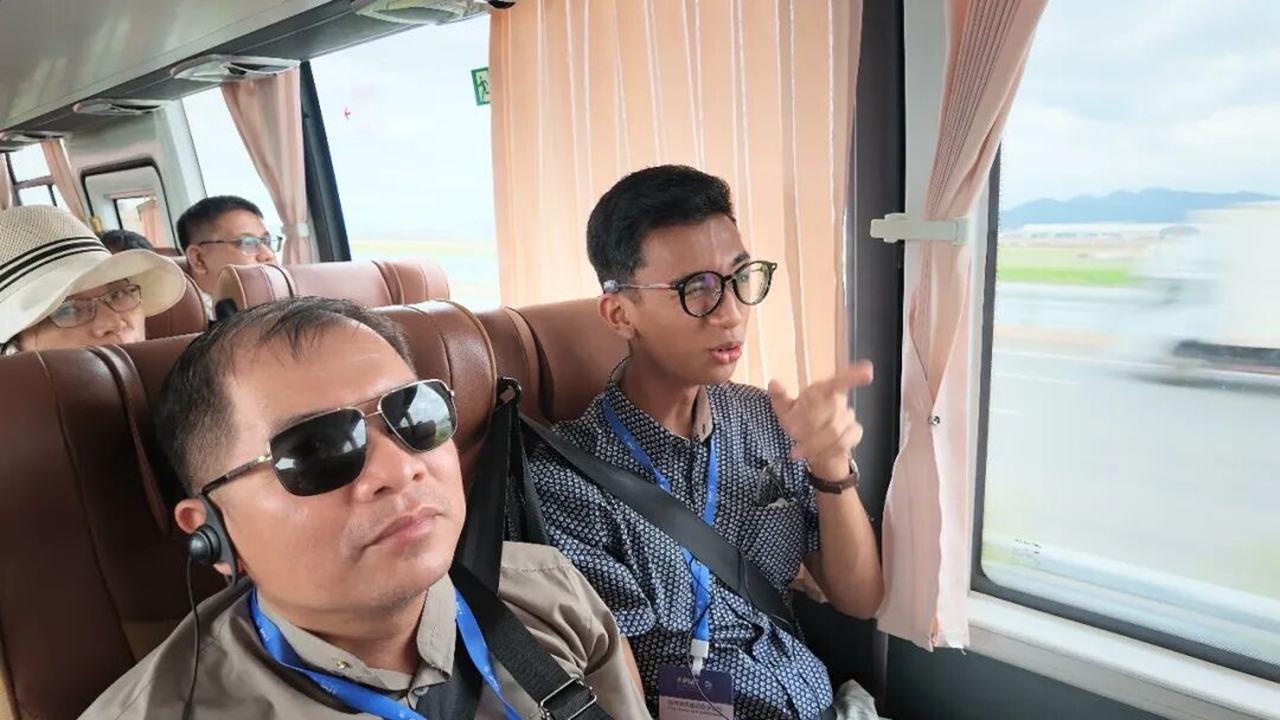
A journalist tries on Nimo AI glasses on the bus.
For journalists, the appeal is practical: smoother communication, timely prompts and more attention for the person being interviewed. AI is moving from a technology concept into an everyday tool for news gathering.
A pocket-sized “camera partner”
For journalists who need to interview and shoot video at the same time, a pocket-sized gimbal camera can be a useful companion.The pocket gimbal camera used by Shenzhen Daily features three-axis stabilization and smart tracking, helping reduce camera shake and follow selected subjects.
From recording moments during a visit to reporting in front of the camera, the compact device meets a common need among journalists: lighter equipment and more flexible shooting. Shenzhen-made technology is not only appearing in the news. It can also become a tool for reporting the stories behind the news.
One postcard, nine languages
A postcard can capture a view — or open the door to a city’s wider story.
Shenzhen Daily developed an AI city card in the form of a postcard. Scanning its QR code allows users to explore Shenzhen landmarks, access forum media materials and visit the nine-language Amazing Shenzhen portal.
For visiting journalists, this means their connection with Shenzhen does not have to end when the trip is over. The platform can provide follow-up information and potential story leads.
A small postcard can keep a short encounter going.
Technology changes, journalism connects
From an English newspaper to AI glasses, pocket cameras and multilingual digital platforms, the tools are changing, but the questions remain familiar: how do we understand a city, discover new opportunities and tell its stories to audiences from different cultures?
Shenzhen offers stories — and increasingly, the tools to tell them. Media professionals from across the Asia-Pacific will take their discoveries home and share more stories of Shenzhen with the world.