
 Share
Share


 Print
Print'Vessel as Rhetoric' painting exhibition opens at L-Art Gallery in Futian
Writer: Chang Zhipeng | Editor: Zhang Chanwen | From: Original | Updated: 2026-08-31
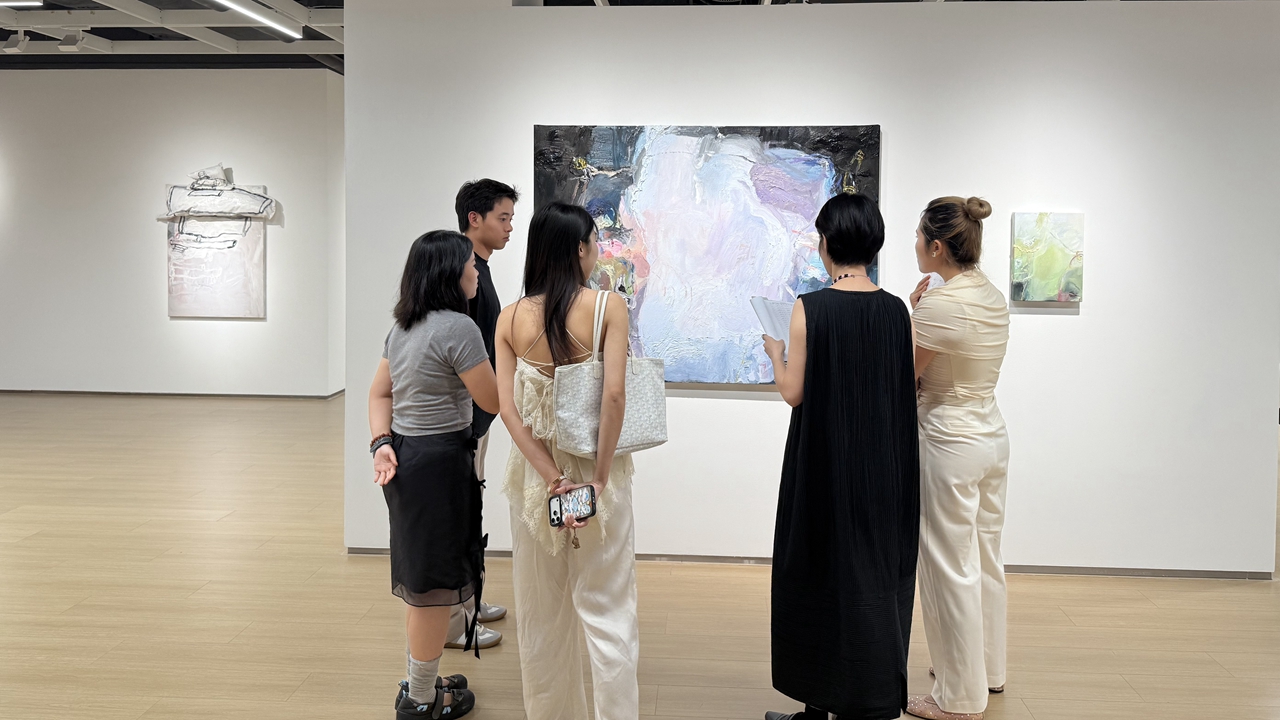
Gan Ting (in black dress), curator of the exhibition, introduces an art work to visitors. Photos by Chang Zhipeng except otherwise stated
A two-person exhibition, Vessel as Rhetoric, opened Aug. 28 at L-Art Gallery on the second floor of the Shenzhen Museum of Contemporary Art and Urban Planning in Futian District.
The exhibition brings together dozens of works by Xu Jiawei and Olga Shcheblykina, including ink paintings, mixed-media works on canvas and installations. Working respectively between Hong Kong and Hangzhou, and in Vienna, the artists converge around the vessel as a primordial image: Xu repeatedly renders classical European objects in ink and color on xuan paper, while Shcheblykina constructs expansive soft forms from textiles, pigment and thread.
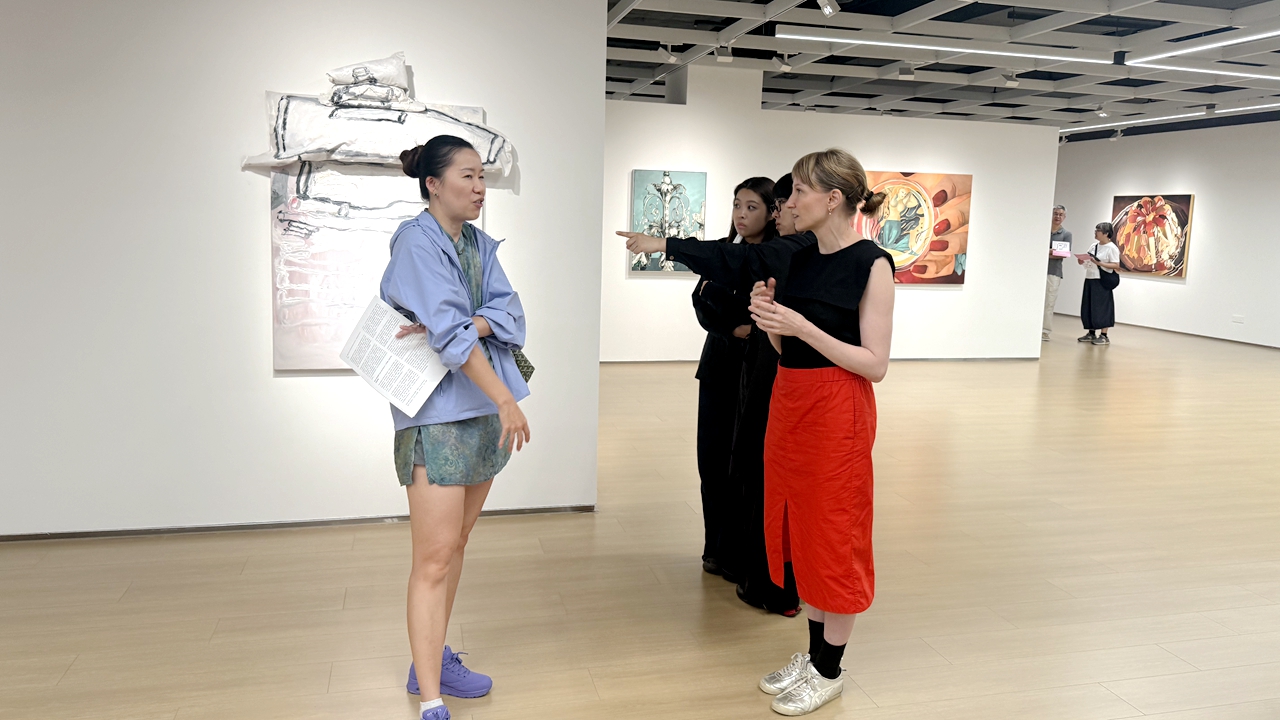
Olga Shcheblykina (R) talks to visitors at L-Art Gallery.
At the opening ceremony, Shcheblykina spoke about the close connection between the exhibition’s title and her artistic practice. For her, a vessel is never simply a functional object. What interests her is the moment when something intended to serve a clear purpose begins to become something else — organic and fragile, appearing to grow, fall apart or take on a life of its own. A vessel, she suggested, can also be understood as something that carries a body, a memory, an emotion or something that cannot be clearly named.
In the section featuring Xu’s works, curator Gan Ting introduced a series of crystal goblets, wine bottles, silver platters, suits of armor and empty chairs that appear to hover within a color-washed void. There is no horizon, tabletop or visible light source — only the faint inner starlight emitted by the objects themselves.
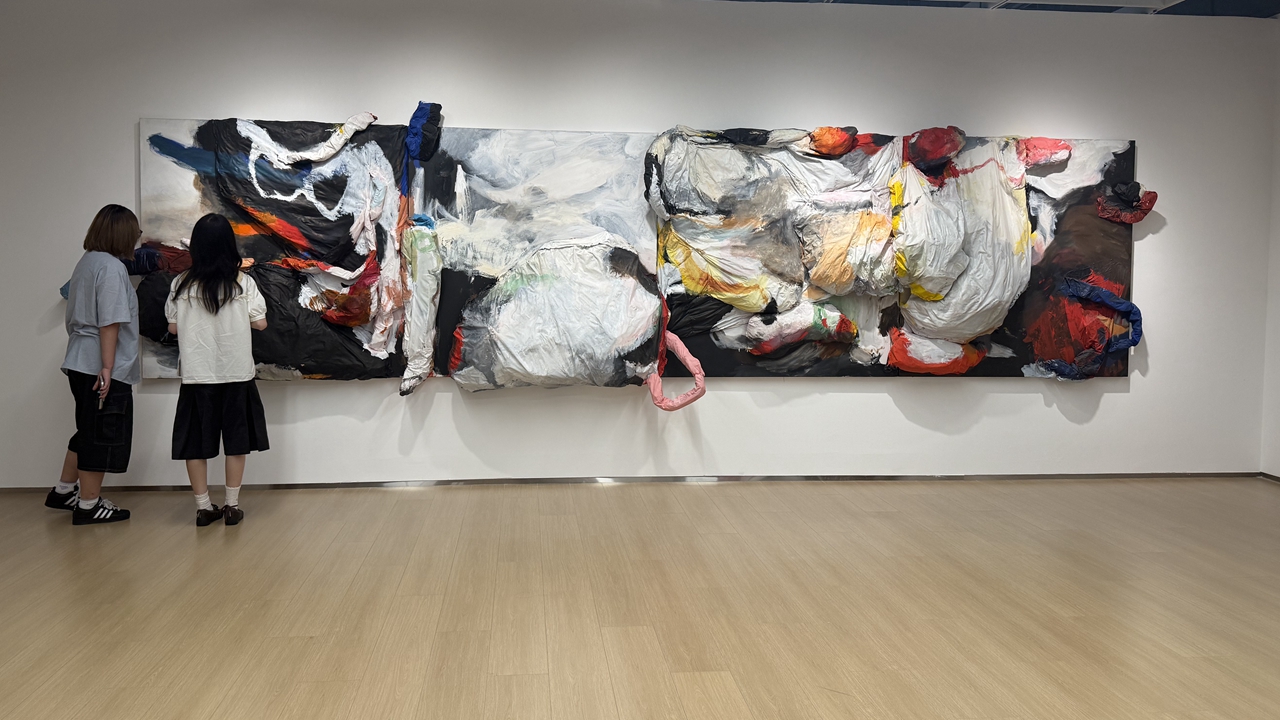
Visitors appreciate the exhibits.
These recurring objects serve first as carriers of emotion and memory, and also as a dialectical space for history, containing traces of colonialism, global trade and cross-cultural memory. Ink, with its fluidity, permeability and breathlike movement, reflects the vessel’s open boundaries and its role as a mediator between inside and outside. Xu’s rendering of Western objects in ink thus becomes an inverted “Chinese gaze.”
The exhibition runs through Oct. 20 and is free to the public.
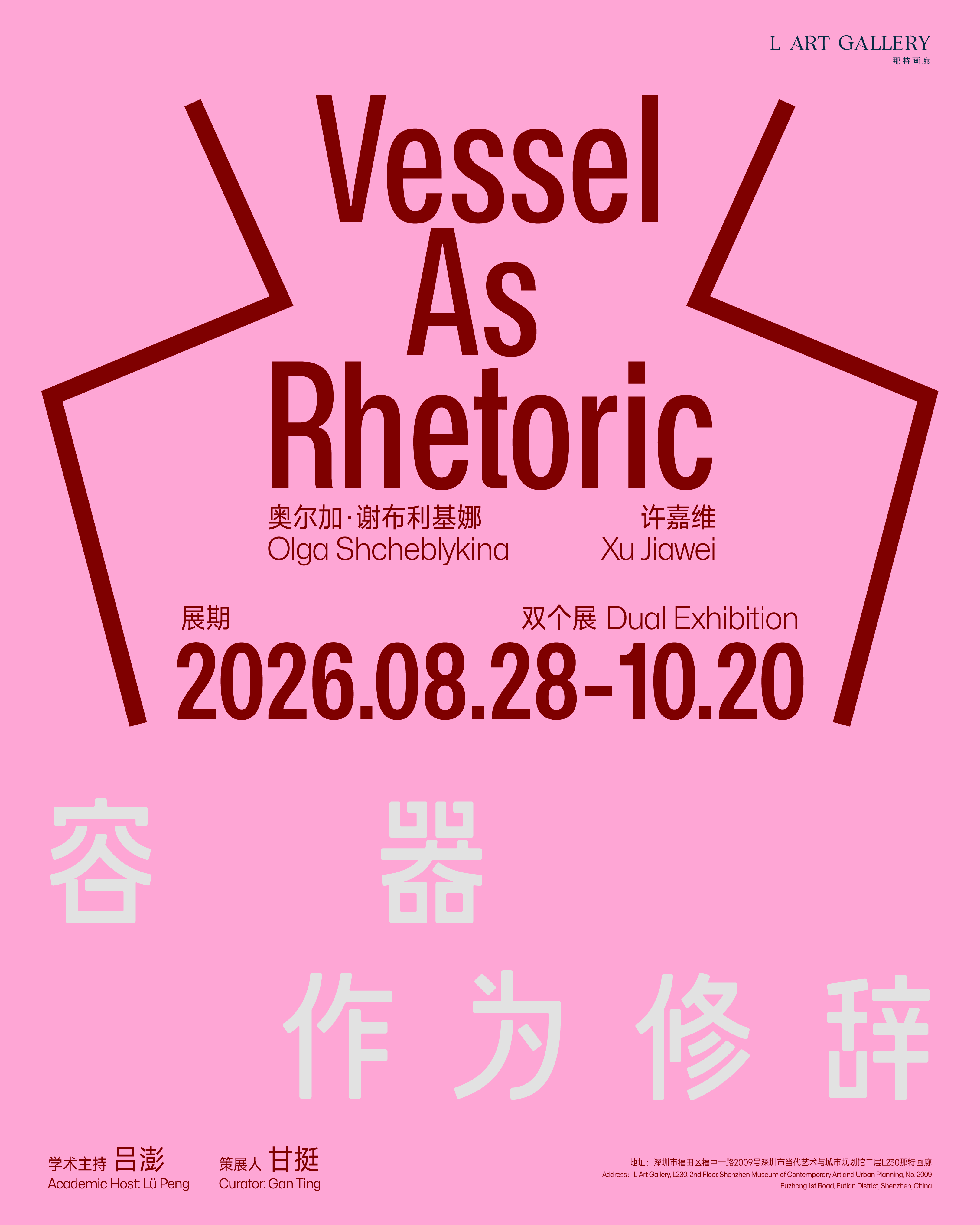
An exhibition poster. File photo