
 Share


 Print
Honor's Lightning robots race past human benchmarks
Writer: Cynthia Song | Editor: Lin Qiuying | From: Shenzhen Daily | Updated: 2026-08-24
Video by Shao Jingfeng
Humanoid robots developed by Shenzhen-based smartphone maker Honor claimed four track medals at the 2nd World Humanoid Robot Games in Beijing, recording times faster than human world marks across distances ranging from 100 to 1,500 meters.
In the 1,500-meter large-size final Sunday, two of Honor’s Lightning robots took silver and bronze, finishing in 2 minutes, 30 seconds and 2:30.22, respectively. Both surpassed the men’s human world record of 3:26.00.
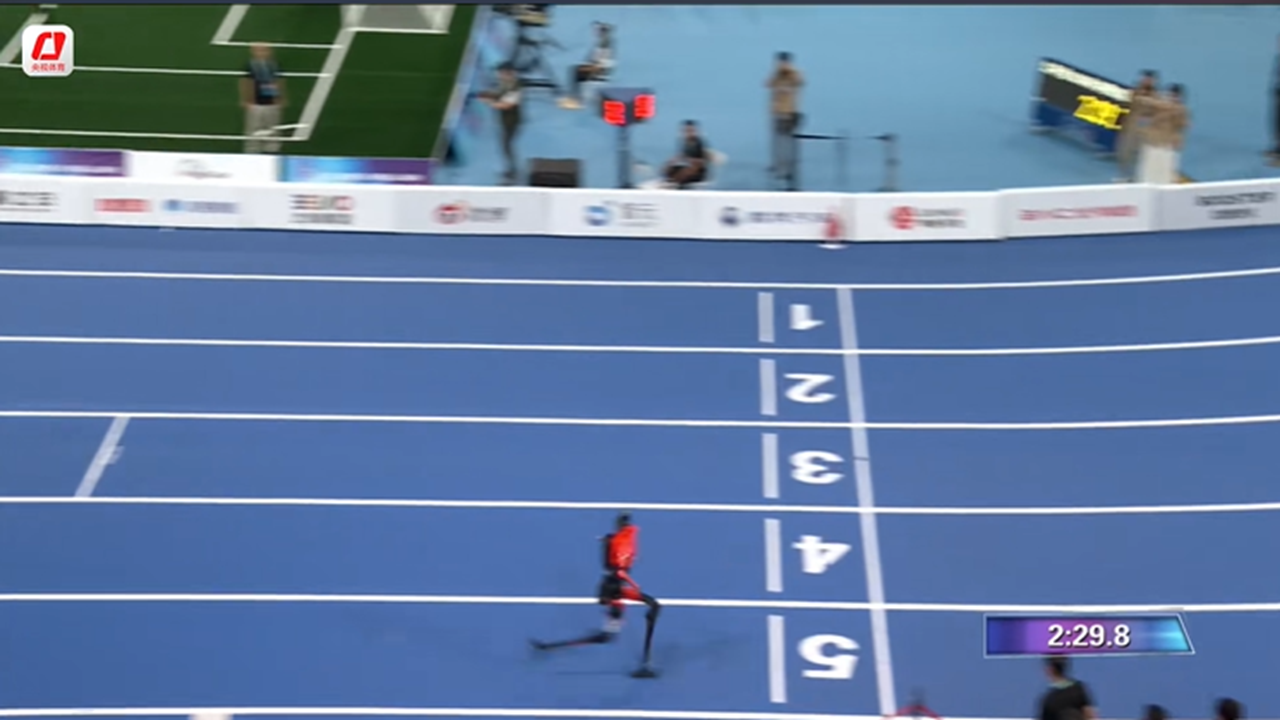
An Honor-developed Lightning robot crosses the finish line in the 1,500-meter large-size final at the 2nd World Humanoid Robot Games in Beijing on Sunday. Lightning robots took silver and bronze in the event. Screenshot from CCTV News
Tiangong Ultra, developed by the Beijing Humanoid Robot Innovation Center with Shenzhen-based UBTECH, won the race in 2:21.64, a substantial improvement on the 6:34.40 winning time at last year’s inaugural games.
Earlier Sunday, Lightning robots claimed silver and bronze in the 400-meter large-size final with times of 39.45 and 39.66 seconds. Tiangong Ultra won in 38.15 seconds. All three medalists finished faster than the men’s human world record of 43.03 seconds, set by South African sprinter Wayde van Niekerk at the 2016 Rio Olympics.
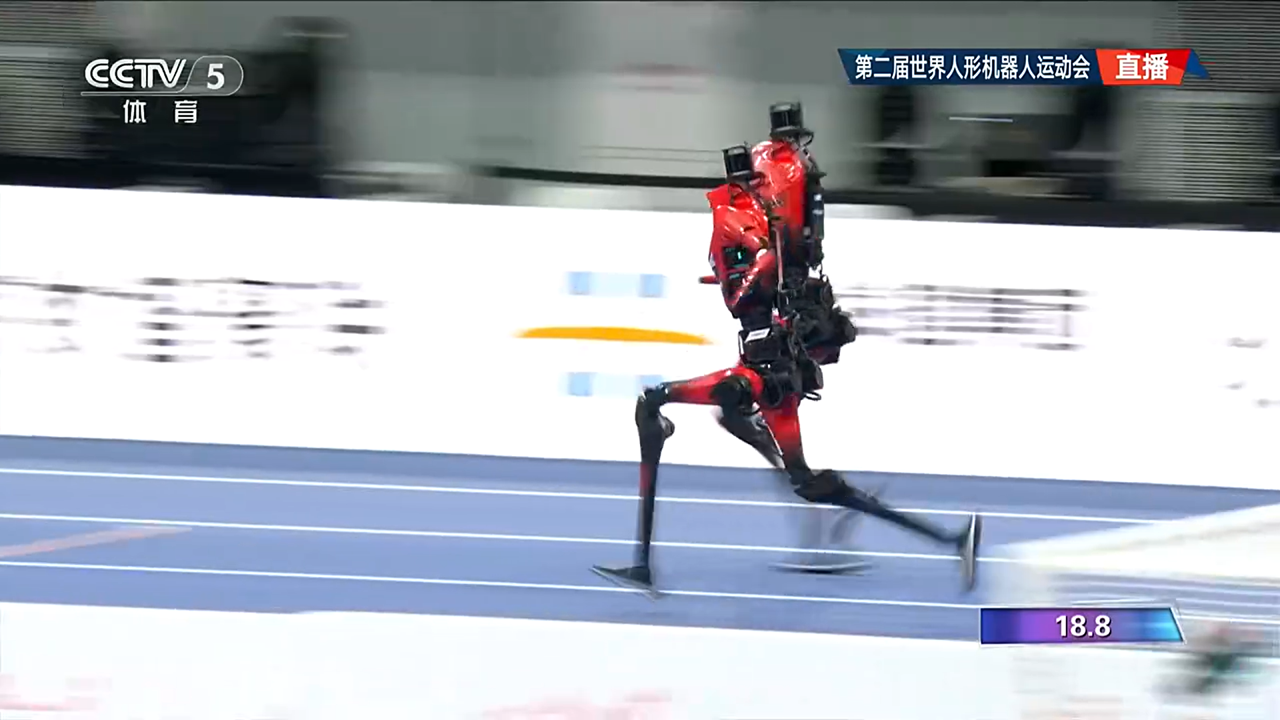
Honor-developed Lightning robots compete in a track event at the 2nd World Humanoid Robot Games in Beijing. The robots claimed four medals across the 400- and 1,500-meter large-size events Sunday. Screenshot from CCTV-5
Van Niekerk responded with a video congratulating Honor. “Your Honor robot Lightning has broken my 400-meter world record. Congratulations,” he said.
Lightning had already attracted international attention during preparations for the games, completing a 100-meter test in 9.32 seconds and reaching a peak speed of 14.5 meters per second. The test time surpassed Usain Bolt’s 9.58-second human world record set in Berlin in 2009.
Tesla CEO Elon Musk shared a post on X highlighting the result. The post also noted that Lightning remained intact after running into a safety barrier beyond the finish line.
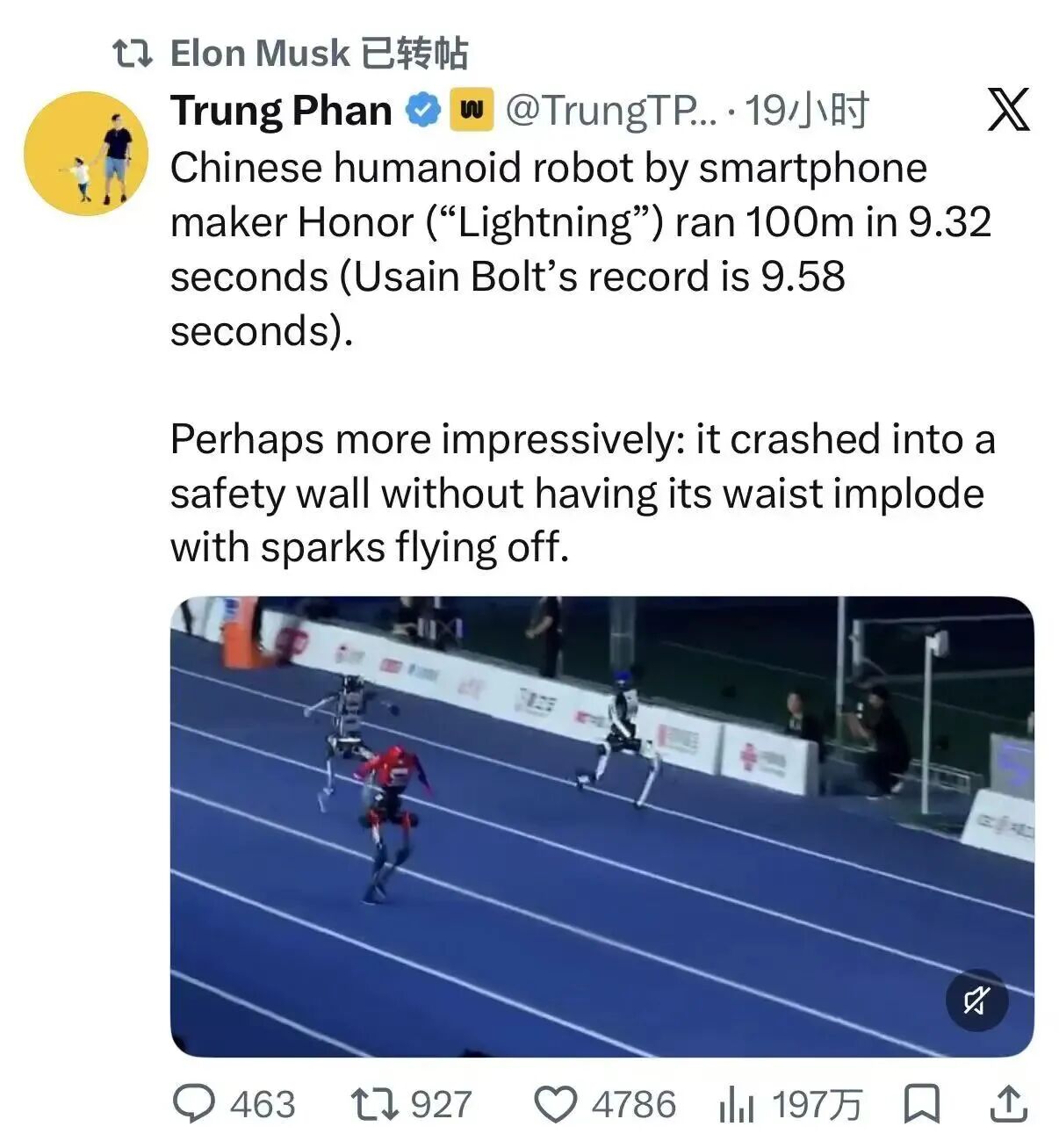
A screenshot shows Tesla CEO Elon Musk reposting an X post about Lightning’s 9.32-second pre-competition 100-meter test. The time was faster than Usain Bolt’s 9.58-second human world record. Screenshot from X
In Saturday’s official 100-meter preliminary race, Lightning finished in 9.47 seconds, behind Tiangong Ultra’s 9.39 seconds. Both surpassed Bolt’s mark and represented a sharp improvement over the results at last year’s games.
By fielding Lightning in the 100-, 400- and 1,500-meter events, Honor tested the robot across three distinct physical challenges: explosive acceleration, sustained speed and heat management, and longer-distance pacing and endurance.
Running draws on some of a humanoid robot’s most fundamental systems, including power supply, joint modules, motion control, balance, perception and motor feedback. Improvements in these capabilities could eventually support robots operating in manufacturing, logistics and other real-world environments.
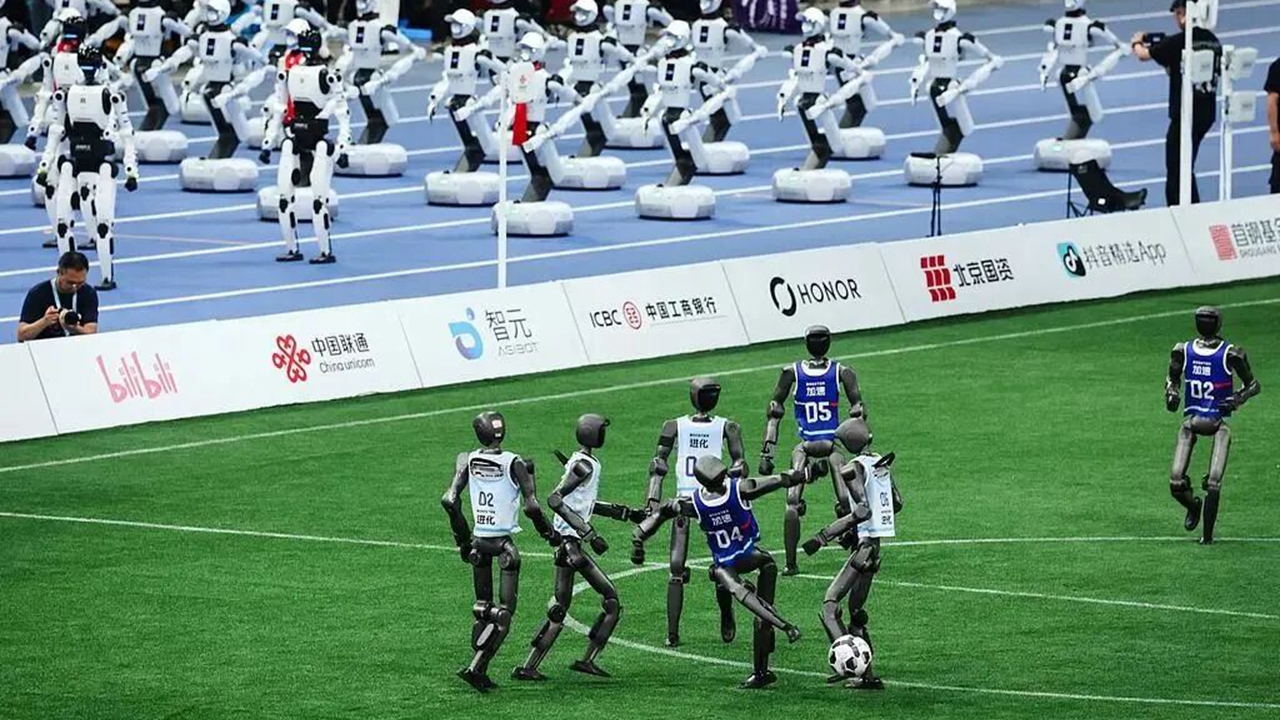
Humanoid robots compete in a soccer match at the 2nd World Humanoid Robot Games in Beijing. The five-day event features 51 events and 1,301 competitions involving 2,056 robots from 666 teams. Photo from WeChat account "深视新闻"
The games, which run through Wednesday at Beijing’s National Speed Skating Oval, feature 51 events and 1,301 competitions. A total of 666 teams and 2,056 humanoid robots are taking part, with contests ranging from track events to practical tasks in household, hotel and logistics settings.