
 Share
Share


 Print
PrintSZ well-positioned to offer APEC an open, innovative model
Writer: Li Jing | Editor: Zhang Chanwen | From: Shenzhen Daily | Updated: 2026-08-20
As host city of APEC 2026, Shenzhen should draw on its achievements in openness and innovation to offer a Chinese model for advancing the APEC Putrajaya Vision 2040, said Liu Chenyang, director of the APEC Study Center at Nankai University and dean of the China APEC Research Institute.
APEC economies expect Shenzhen to use its strengths to build consensus and promote openness, innovation and cooperation, while looking to China to inject stability and create broader development opportunities across the Asia-Pacific, Liu said.
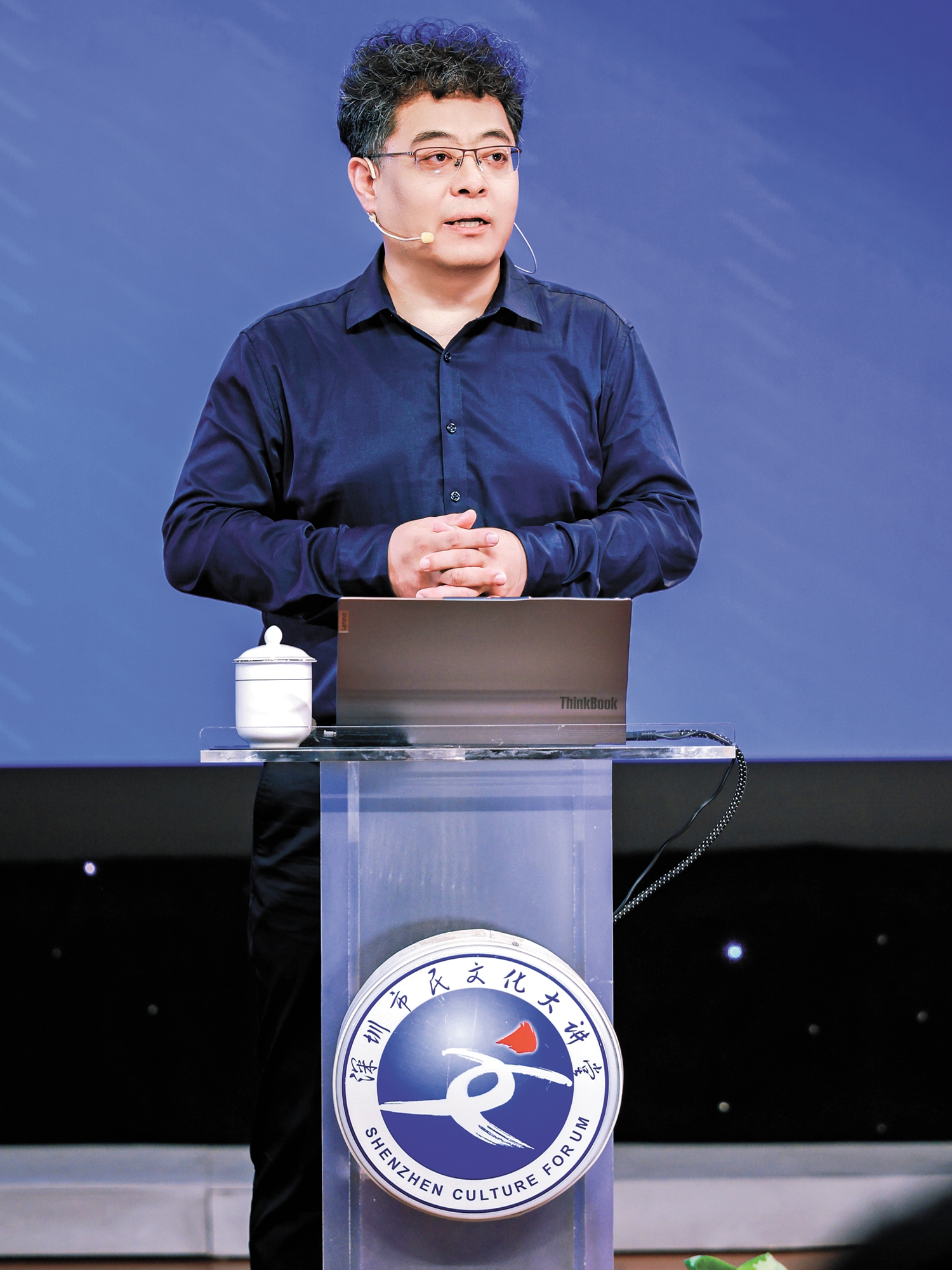
Liu Chenyang
APEC was established in 1989, when its 12 founding economies sought to advance economic globalization and regional integration. After the end of the Cold War in 1991, it became an important platform for regional cooperation and has since grown into the Asia-Pacific’s primary channel for economic cooperation.
APEC now comprises 21 economies, including most of the world’s major manufacturing and trading powers outside the EU.
“Over the past few decades, the Asia-Pacific economy has been widely recognized as the main engine driving global economic growth,” Liu said. “Therefore, regional economic cooperation here concerns not only the region itself but also global stability and prosperity.”
Because of the diversity among its economies, APEC has developed a cooperation model based on flexibility, gradual progress and openness. It emphasizes mutual respect, equality, mutual benefit, consensus-building and voluntary participation, while combining unilateral and collective actions.
These features allow APEC to play a unique role amid international tensions, Liu said.
He described APEC as a “regulator” through leaders’ meetings, a “pressure valve” that helps ease geopolitical tensions, a “stabilizer” when the regional economic order is disrupted, and an “incubator” for rules and cooperation models on emerging issues such as the digital economy and artificial intelligence governance.
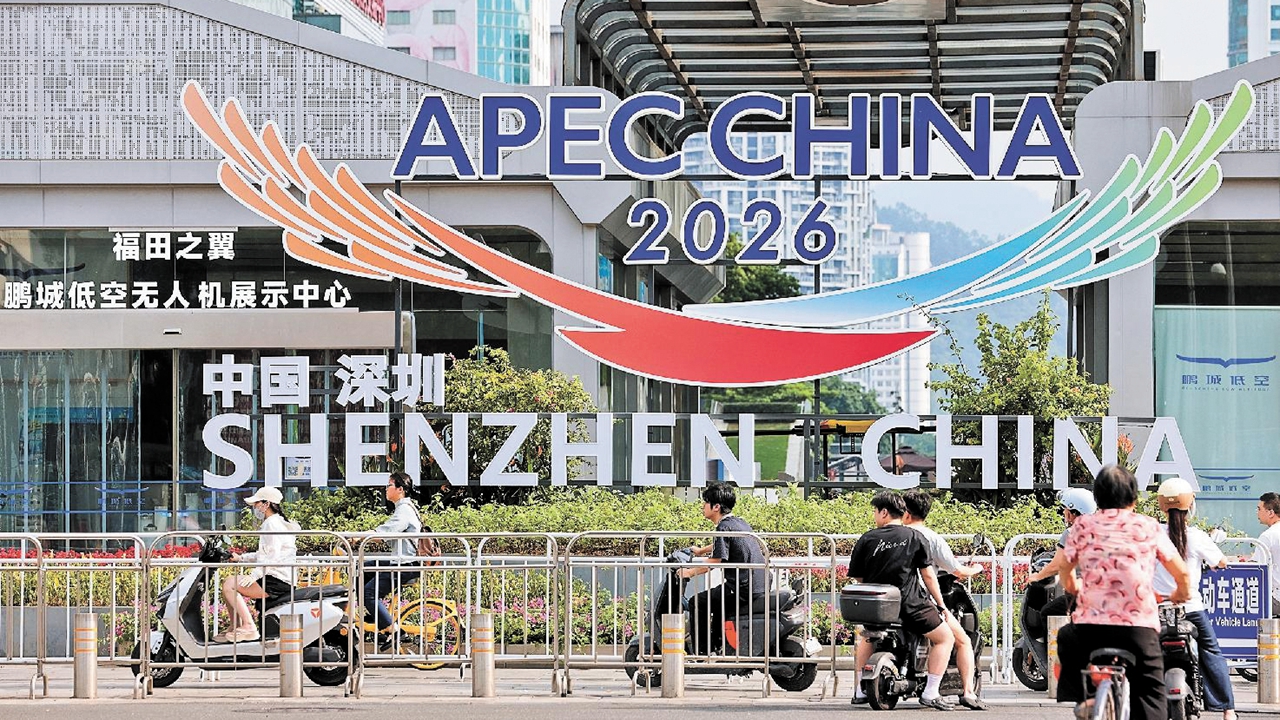
Floral displays, billboards and banners decorate Shenzhen Bay Checkpoint, as the city is welcoming the 33rd APEC Economic Leaders’ Meeting, set for Nov. 18-19 in Shenzhen. Xinhua
Liu said the 2026 meeting would mark two milestones: the 35th anniversary of China’s accession to APEC and the fifth anniversary of the implementation of the Putrajaya Vision 2040. Economies are expected to review progress on the vision and chart its next phase at the meeting.
For China, effectively using the APEC platform to advance new forms of South- South and North-South cooperation, while strengthening communication and policy coordination with all APEC economies, will be essential to hosting the meeting successfully, Liu said.
He called for particular attention to China-U.S. relations to limit the impact of geopolitical rivalry on regional cooperation and safeguard stability.
“This will not only help create a better international environment for the first year of the 15th Five-Year Plan,” Liu said. “More importantly, it will respond to the aspirations of the vast majority of economies for stability and cooperation in the Asia-Pacific.”
APEC should focus on the three pillars of the Putrajaya Vision: trade and investment; the digital economy and innovative growth; and inclusive and sustainable growth, Liu said.
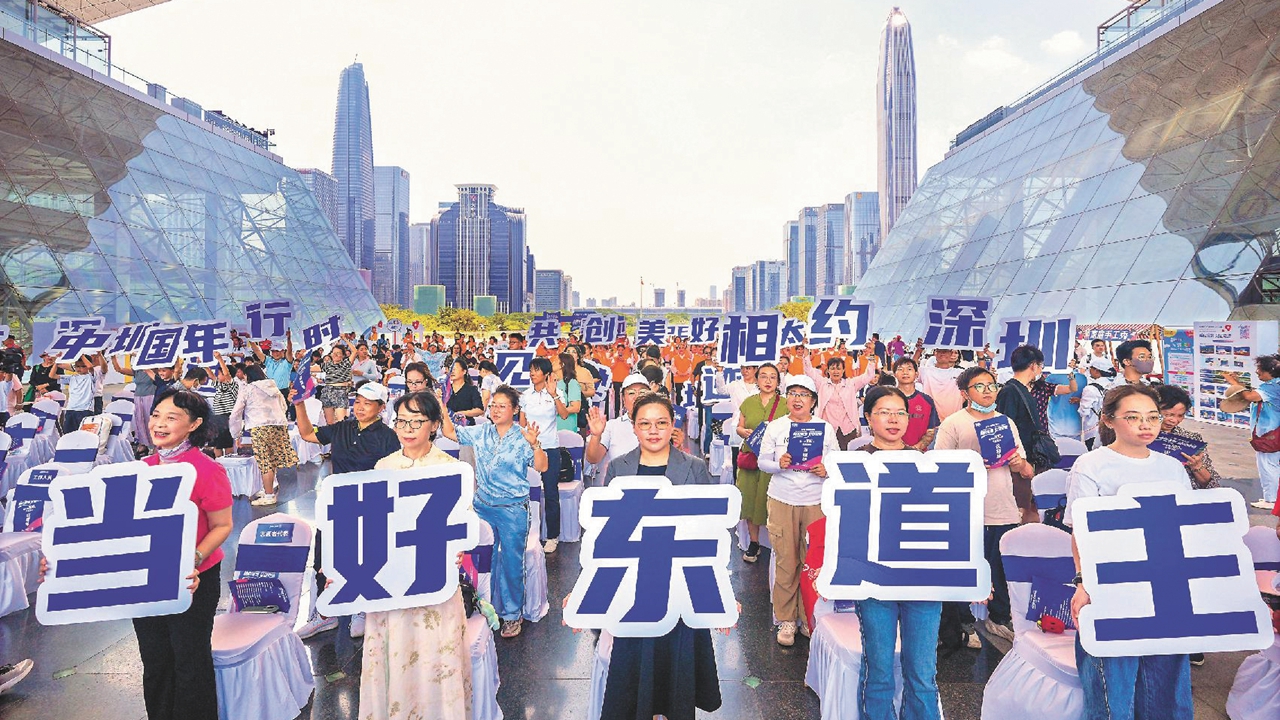
Participants gather for an event marking the 100-day countdown to the 33rd APEC Economic Leaders’ Meeting at the Civic Center in Futian District on Aug. 10. Photo provided to Shenzhen Daily
The meeting’s success will depend on whether it can translate the vision of an Asia-Pacific community into concrete action and mark meaningful progress in implementing the Putrajaya Vision 2040, he said.
Looking ahead, Shenzhen should use the meeting to establish long-term cooperation mechanisms, align its development plans with APEC’s agenda, and pursue achievements in the digital and green sectors, Liu said.