
 Share
Share


 Print
PrintAI empowers fintech unicorn's rapid expansion
Writer: Debra Li | Editor: Lin Qiuying | From: Original | Updated: 2026-08-14
In our digital era, where AI startups pop up every day, established companies are also finding new strength from this game-changing technology.
XTransfer, China’s leading B2B cross border trade payment platform, grew its customer base from 700,000 to over one million in a single year — driven in large part by AI, CEO and co founder Bill Deng told an audience of 4,500 at the XTransfer Summit 2026 in Shenzhen on Wednesday.

Attendees are seen at the Xtransfer Summit '26 held at the Shenzhen World Exhibition & Convention Center in Bao'an District on Wednesday. Photos courtesy of Xtransfer unless otherwise stated
The company’s growth is fueled partly by its proprietary AI tool, TradePilot, whose workflow incorporates 72 AI agents trained on local data. Covering KYC (know your customer) onboarding, transaction authenticity verification, and ongoing AML (anti-money laundering) monitoring, TradePilot enhances risk-control accuracy while delivering a smooth user experience.
According to Deng, risk management is a critical component of the platform. "All liquidity introduced through our local bank partners is screened by our AI-driven risk management infrastructure," he said. "This helps us ensure that only legitimate and compliant transactions enter the network, significantly reducing risks such as account freezes and unwitting involvement in money laundering."

Attendees line up to try coffee brewed by a robot barista outside the main venue of the XTransfer Summit 2026 in Bao'an on Wednesday.
Siriporn Reangjit, president of Kasikornbank (China) Co., Ltd. — a traditional bank that has served SMEs in East and Southeast Asia for 81 years — confirmed that XTransfer’s technological edge has attracted banks to become partners.
"Previously, when it came to B2B payments, most of the process was manual," she explained. "By working together, we adopted XTransfer’s API-based solution. Now, the exchange of information and data can be automated and standardized, which minimizes manual work in payment services and risk control."
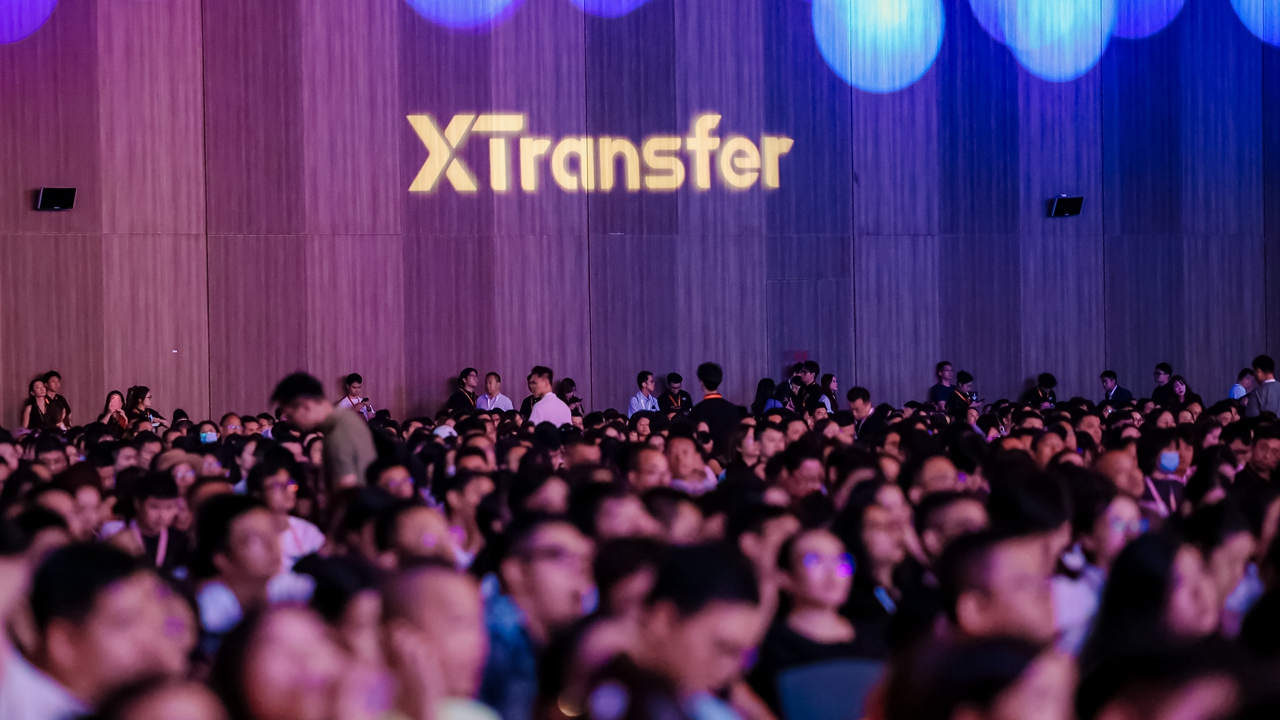
Attendees listen to a speech at the XTransfer Summit '26.
Deng revealed that while XTransfer now handles a much larger business volume, its risk management team has remained stable, with the extra workload handled by AI.
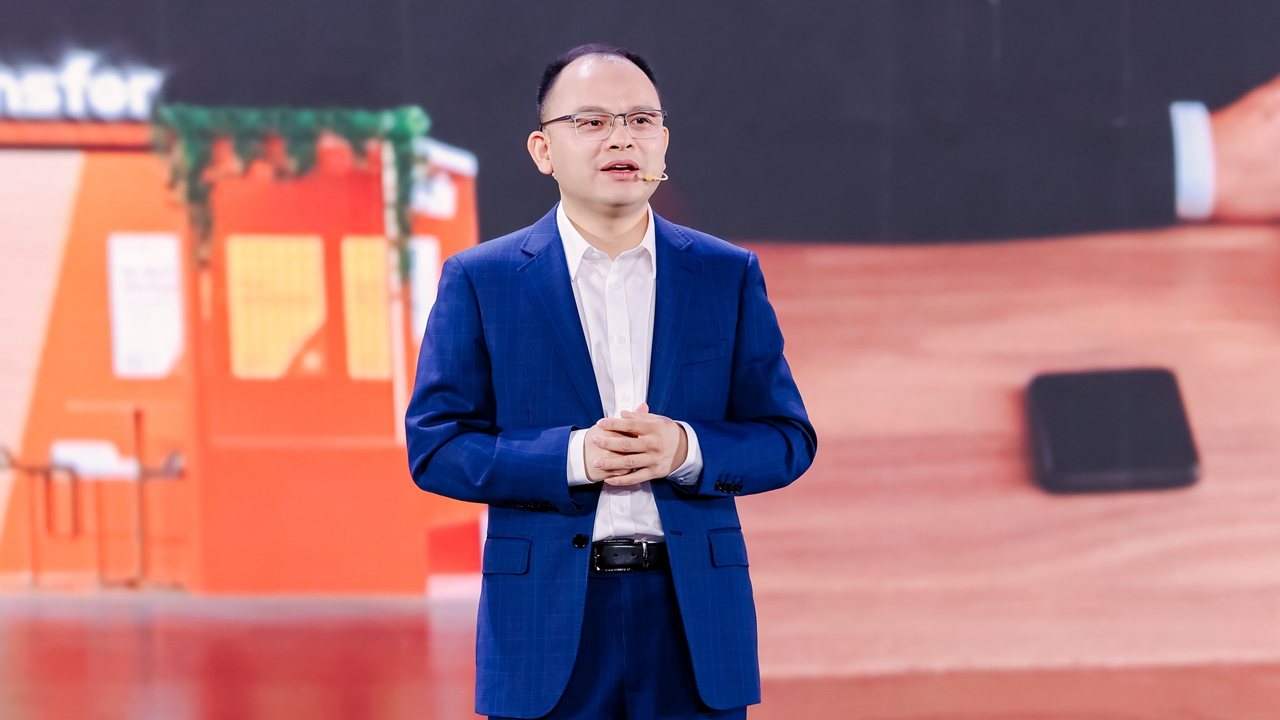 Bill Deng speaks at the summit.
Sachil Dagur, CEO of Habib Bank Zurich (Hong Kong) Ltd., noted that XTransfer’s large user base appeals to banks looking to reach more SME clients.
An increasing number of local banks are joining XTransfer’s X-Net, which enables their customers to send money directly into China, bypassing correspondent banks and with 24/7 instant payments.
With the core technology infrastructure already in place, Deng said the company’s incremental investment will now focus more on expanding market reach and its partner network. "We will continue to grow our bank-partner relationships, especially in emerging markets, including Africa, South Asia, Southeast Asia, and Latin America."
At the 8th edition of this major foreign trade event, guests from trading companies, consulting firms, and more than 50 top banks gathered to discuss global trade opportunities, business growth strategies, and the digital transformation of the industry.

Robots and human dancers perform ahead of the opening of the summit. Photo by Li Dan
According to an XTransfer client survey, Chinese SMEs are reporting healthier payment collections and stronger bargaining power in international markets in the past year, despite ongoing geopolitical tensions and shipping disruptions.
As of March 31, 2026, XTransfer provides payment services across more than 200 countries and regions through partnerships with financial institutions. It has obtained financial service licenses in major hubs, including the Chinese Mainland, Hong Kong SAR, the United Kingdom, the United States, Singapore, the Netherlands, Australia, and Canada. The company processed transactions totaling US$60.5 billion in 2025.