
 Share
Share


 Print
PrintSZ, where AI innovation races toward the future
Writer: Li Jing | Editor: Lin Qiuying | From: Original | Updated: 2026-08-13
“Fast, ambitious and experimental” — that is how Alveiro Mateus, co-founder of OptimOps.ai, describes Shenzhen after more than a decade in the city.
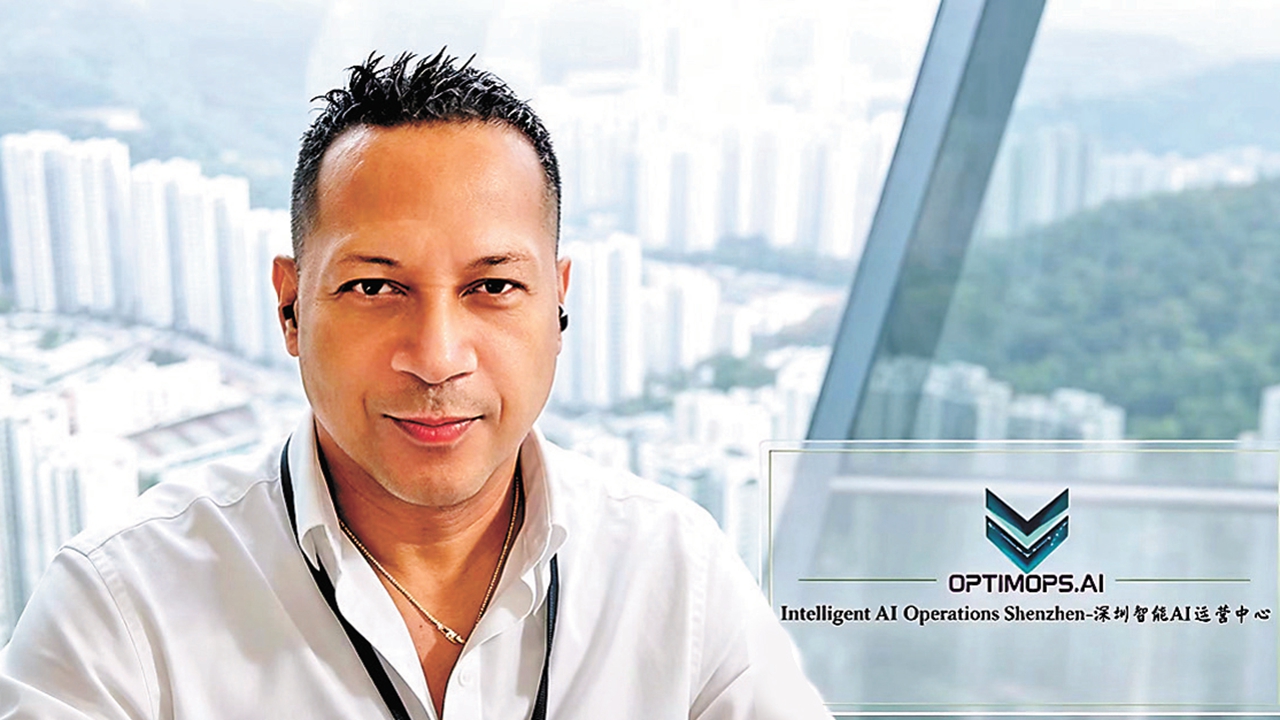
Alveiro Mateus, co-founder and chief architect of OptimOps.ai. Photo provided to Shenzhen Daily
After working at Microsoft, IBM, Huawei and Accenture, the U.S. AI expert eventually founded his own AI company, building a career that spans Europe, the United States and Asia. Among all the cities where he has worked and lived, he calls Shenzhen “the most energetic city I have ever lived in.”
To Mateus, Shenzhen’s appeal lies not only in its world-class industrial ecosystem, but also in its distinctive culture of innovation — one that encourages experimentation, embraces rapid iteration and pushes boundaries.
As the 2026 APEC meeting nears, Mateus hopes more visitors from across the Asia-Pacific region will discover new AI-era cooperation opportunities in this young city.
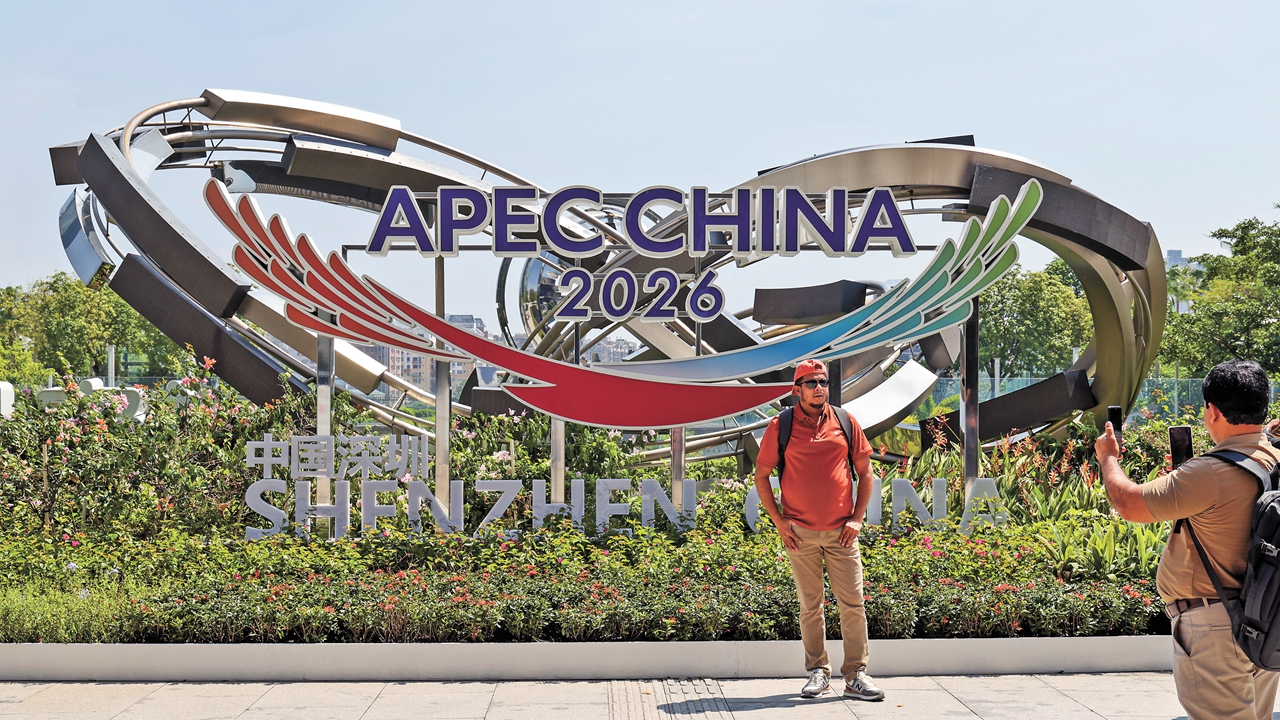
A foreign visitor poses for photos at the east square of Shenzhen North Railway Station on Aug. 10. With floral displays, billboards, and banners brightening the cityscape, Shenzhen is rolling out the red carpet for the upcoming 33rd APEC Economic Leaders’ Meeting. Xinhua
Mateus first came to China in 2011, when the country’s internet industry was booming. Mobile payments, e-commerce and cloud computing were reshaping the economy, as a number of innovative cities began to emerge on the global technology map.
“I was amazed by the speed of development,” he recalled, citing the rapid progress in infrastructure, technological innovation and industrial growth. “If you want to be at the forefront of tech development, China is a place you have to come to.”
His work at Huawei gave him an inside look at Chinese R&D models and deepened his understanding of the country’s innovation ecosystem. “Western companies often perfect a product before launch, while Chinese firms release quickly and improve based on market feedback,” he observed. That insight reshaped his approach to product development.
These experiences eventually led him to entrepreneurship. While working with global enterprises, Mateus noticed that many companies were eager to adopt AI but struggled to generate real business value. That realization inspired him to found OptimOps.ai, helping organizations integrate AI into their business processes.
Asked why he chose Shenzhen, Mateus points to its innovation ecosystem — one where manufacturers, software firms, researchers and investors are closely interconnected, allowing ideas to move quickly from lab to market.
“People here are not afraid of failure,” he said. That culture of experimentation, he believes, provides fertile ground for continuous innovation.
Beyond work, he values Shenzhen’s international connectivity, world-class infrastructure and comfortable living environment.
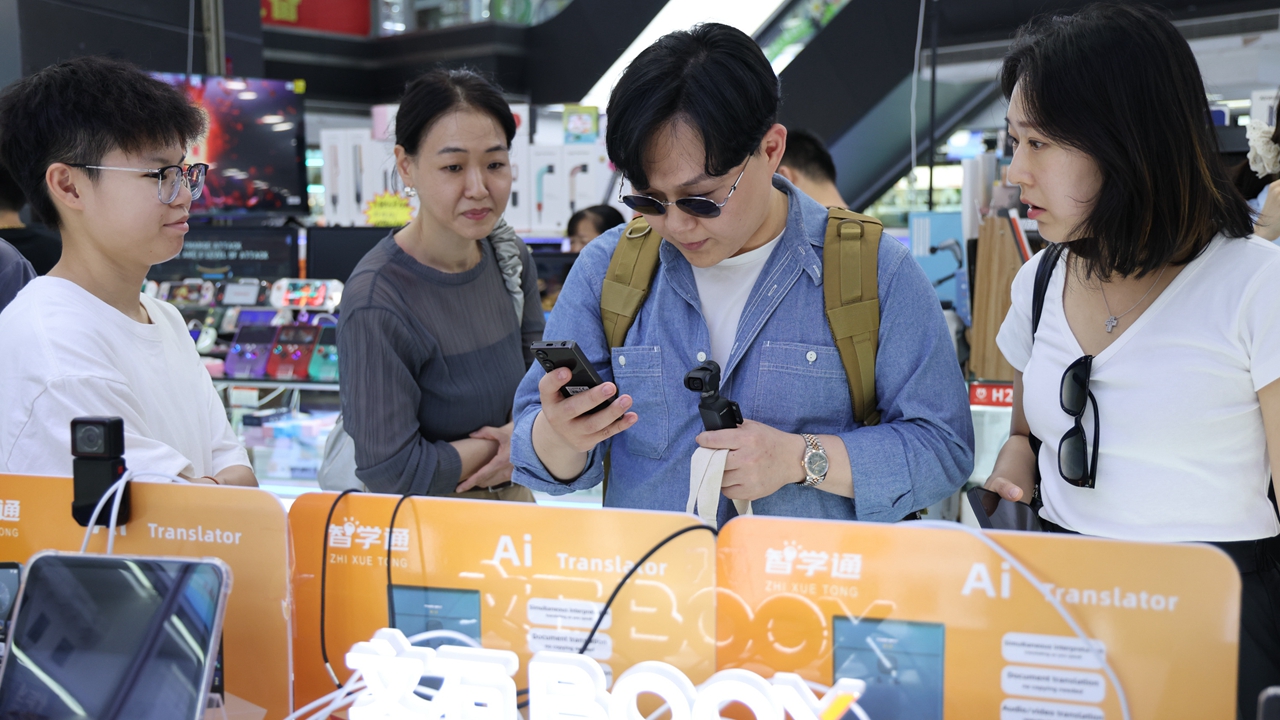
Korean tourists shop for AI translation devices at Huaqiangbei on June 24. Xinhua
“There are beautiful parks, diverse food options, and people from all over the world,” he said. “It is a city suitable both for pursuing ambitions and enjoying life.”
Today, Mateus’ focus has shifted to agentic AI. “In the past, engineers wrote every line of code themselves. Today, software development is increasingly about collaboration between humans and AI agents,” he said.
OptimOps.ai is exploring how AI can participate across the software engineering lifecycle. His team has developed several agentic AI systems, including the AI Agent Factory, WealthForge (an AI-powered financial adviser) and CrewSync.
CrewSync builds a “virtual engineering team” of AI agents that work together to automate software development — from requirements analysis to code generation, testing and deployment.
“Over the next decade, AI will take over much of the repetitive work, allowing people to focus more on creativity, strategy and human interaction,” Mateus said.
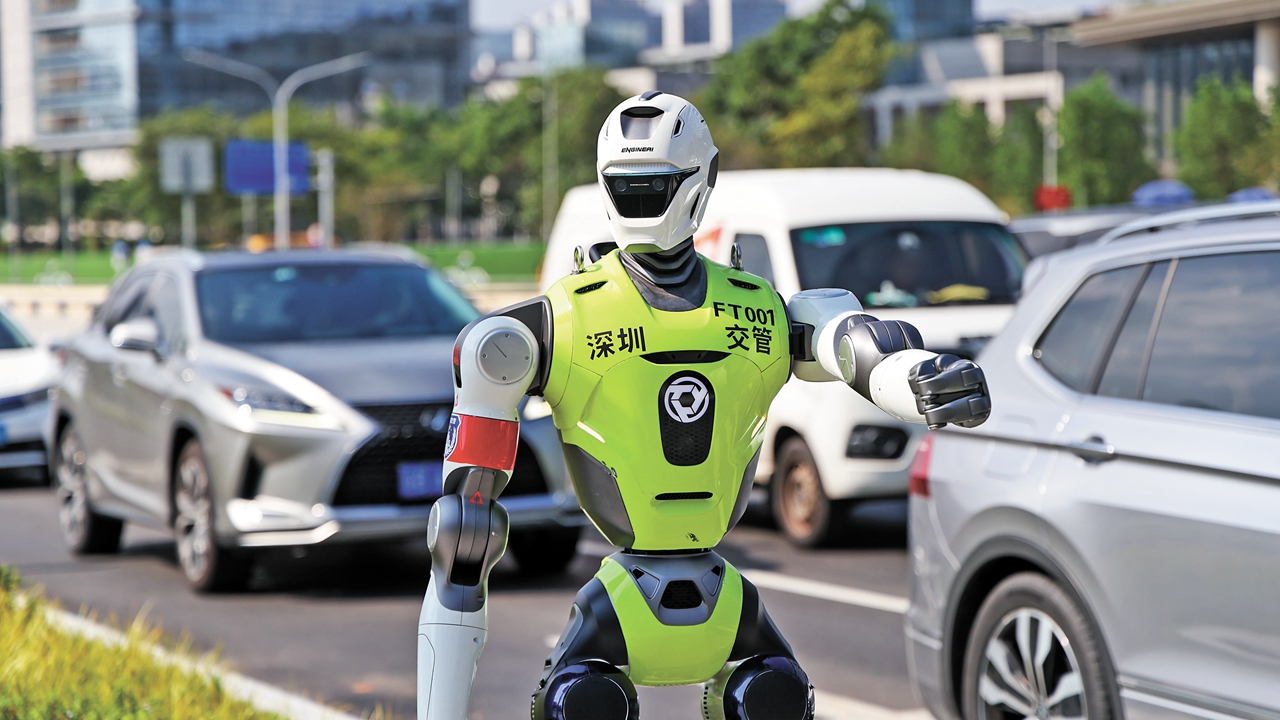
A humanoid robot “on duty” at Xiangmihu Road in Futian District on Aug. 6. Xinhua
He sees Shenzhen’s selection to host APEC as international recognition of the city’s innovation capabilities. The meeting, he says, offers a valuable opportunity for Shenzhen to showcase its strengths.
Mateus hopes Shenzhen will use the APEC meeting not only to showcase cutting-edge technologies but also to foster deeper international cooperation. Shenzhen has all the key ingredients for AI development — and more importantly, the ability to rapidly turn innovation into practical applications.
He believes Shenzhen is well positioned to become not only a global hub for AI innovation, but also a key platform for AI cooperation across the Asia-Pacific region.
“Truly valuable innovation is not about chasing trends,” he said. “It is about solving real problems.”
In his view, AI development has only just begun — and in Shenzhen, he sees a city that is already shaping what comes next.