
 Share
Share


 Print
PrintShenzhen braces for five days of intense heat
Writer: Cynthia Song | Editor: Lin Qiuying | From: Original | Updated: 2026-08-07
Shenzhen is set to endure five days of intense heat through Monday, with temperatures expected to climb further over the weekend, the Shenzhen Meteorological Observatory said yesterday afternoon.

A pedestrian shields her face from the sun amid hot weather in Shenzhen. The city is expected to experience prolonged high temperatures in the coming days. Chen Yu
A yellow alert for high temperatures is now in effect across Shenzhen, including the Shenshan Special Cooperation Zone. The observatory said the alert was expected to be upgraded to orange tomorrow and remain at that level Saturday.
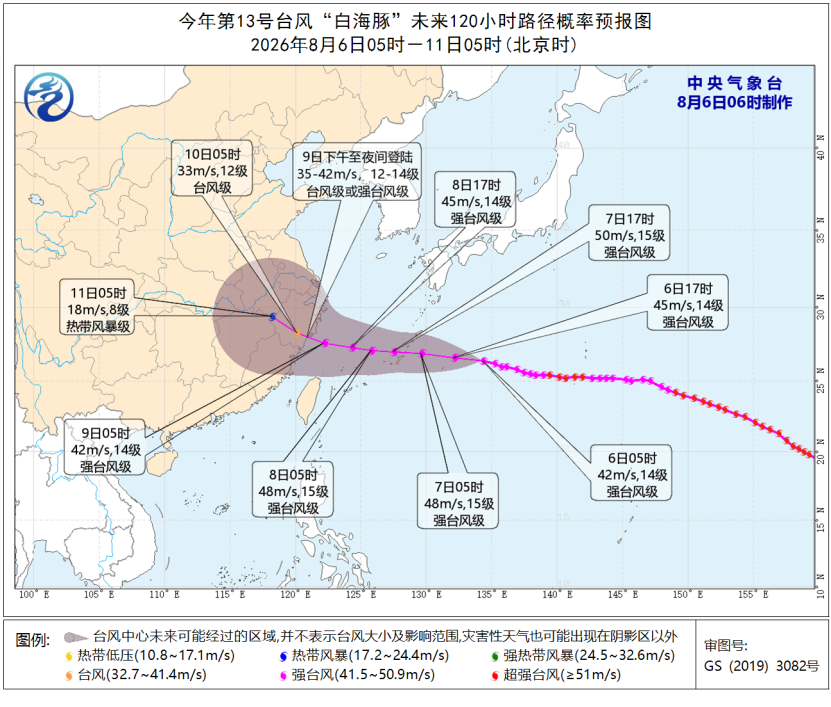
The projected path of Typhoon White Dolphin from Thursday through Tuesday. Courtesy of the National Meteorological Center
The prolonged heat is being driven by the sinking northerly air on the outer edge of White Dolphin, a powerful typhoon forecast to make landfall along China’s eastern coast around Sunday, according to the observatory.
The heat is expected to intensify from Saturday through Monday. Despite the hot weather, localized thunderstorms capable of producing brief but intense rainfall remain possible.
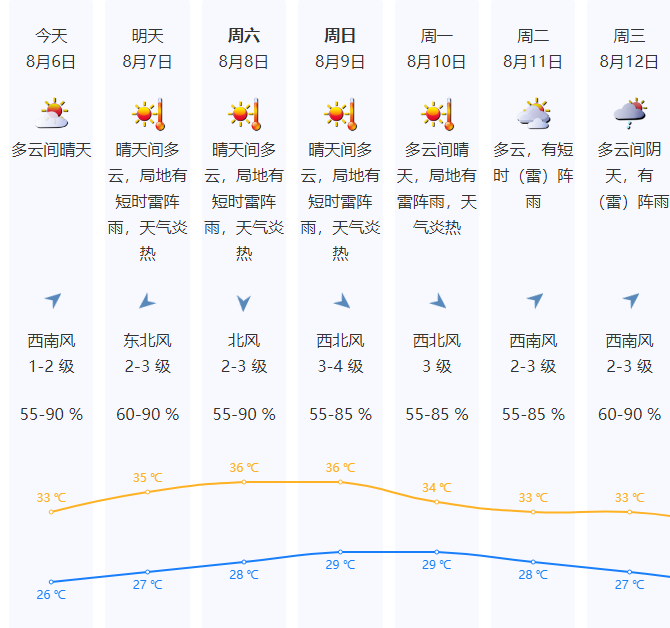
Shenzhen’s seven-day forecast shows temperatures peaking at 36 degrees Celsius over the weekend, with occasional thunderstorms expected. Courtesy of the Shenzhen Meteorological Observatory
The observatory described the heat wave as extensive and prolonged, and advised residents to take precautions against heatstroke. Particular attention should be paid to children, older people, outdoor workers and those with chronic health conditions.
Authorities and businesses were urged to safeguard electricity supplies as demand for air conditioning rises. The city also faces a high risk of ozone pollution throughout the five-day period.
Residents are advised to limit prolonged outdoor activity during the hottest part of the day, stay hydrated and avoid leaving children or pets unattended in parked vehicles.
The observatory also called for continued vigilance against secondary hazards such as ground subsidence and landslides following recent rainfall, as well as localized severe convective weather.