
 Share
Share


 Print
PrintShenzhen records first contiguous seagrass beds in a decade at Baguang
Writer: Zhang Chanwen | Editor: Lin Qiuying | From: Original | Updated: 2026-08-05
Extensive seagrass meadows have been rediscovered at Baguang, Dapeng New District, by naturalists from Xinhai Qinyang Nature Education (Shenzhen) Co., Ltd. This marks the city’s first recorded sighting of contiguous seagrass beds in a decade, filling a critical gap in Shenzhen’s portfolio of typical marine ecosystems.
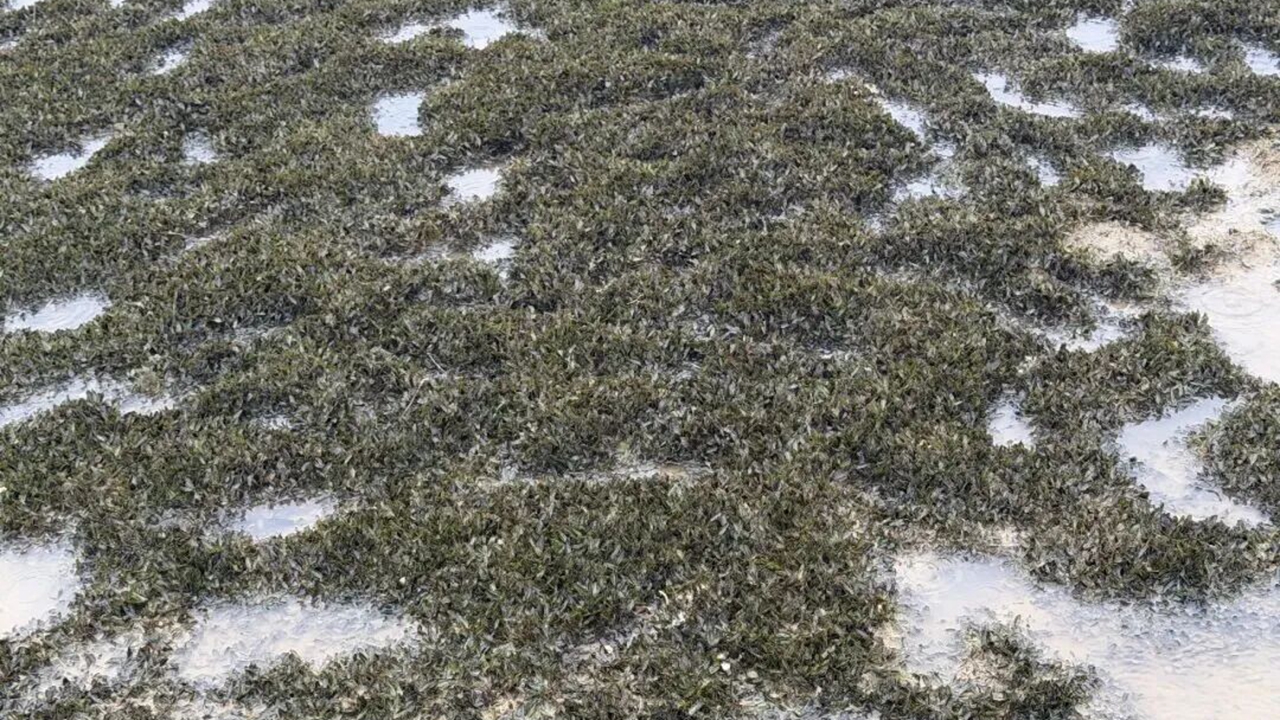
A seagrass meadow spreads across the intertidal zone in Baguang, Dapeng New District. Naturalists recently recorded the return of a Halophila ovalis habitat in the area after years of decline. Photos courtesy of Shenzhen Dapeng Coral Conservation Volunteer Federation
Research by the Shenzhen Dapeng Coral Conservation Volunteer Federation identifies the species as Halophila ovalis. The meadows currently cover approximately 200-300 square meters, forming scattered patches across soft sedimentary substrates. Propagating via creeping rhizomes, these established beds now provide a vital foundation for the development of subsequent biological communities. Close-up view of Halophila ovalis, a seagrass species identified in a newly recorded habitat in Shenzhen’s Dapeng New District. Seagrass beds provide shelter for marine organisms and contribute to coastal ecosystem stability.
Alongside mangrove forests and coral reefs, seagrass beds constitute one of the three major nearshore marine ecosystems. They play a crucial role in stabilizing sediments and attenuating currents, while serving as essential nurseries and shelters for fish, crustaceans, and mollusks. Furthermore, they represent a significant component of global "blue carbon" ecosystems.
Historical records indicate that vast seagrass habitats existed along the Daya Bay coastline from the 1990s through 2010. However, widespread shrinkage occurred due to land reclamation, aquaculture, and siltation. The resurgence of these beds at Baguang stands as a testament to the improving health of Shenzhen’s marine environment.
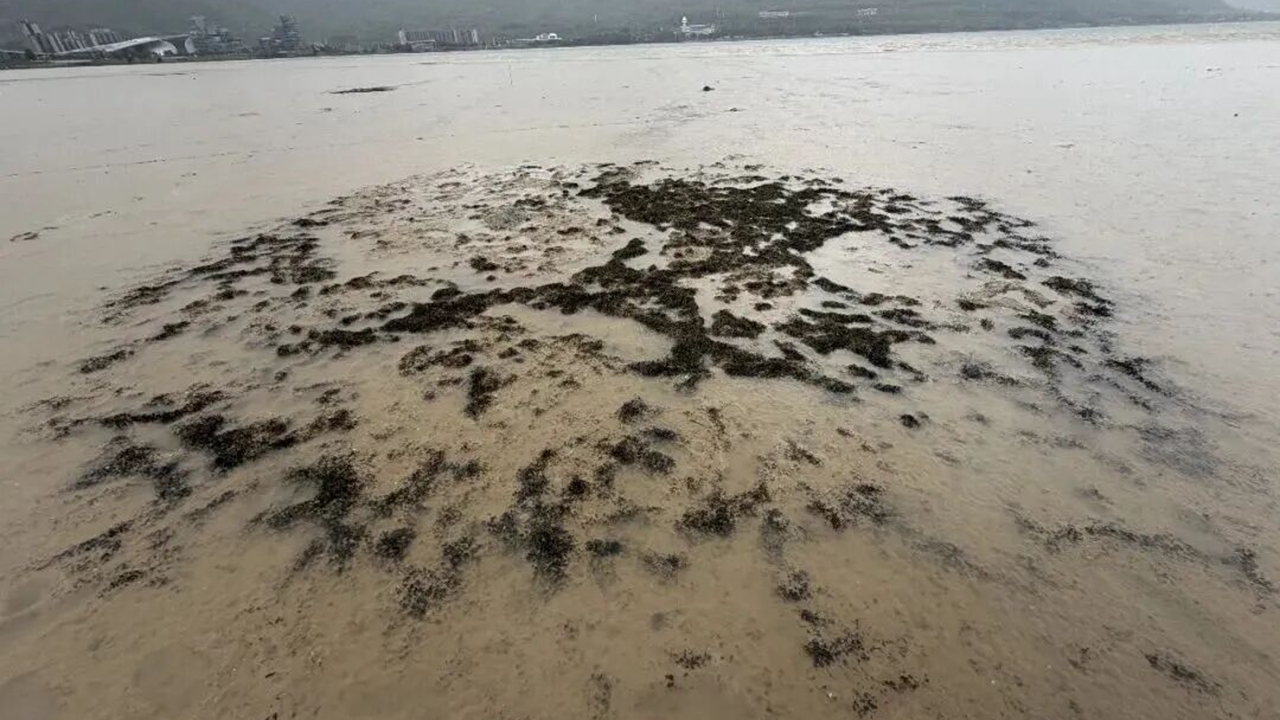
A restored coastal environment surrounds a seagrass habitat in Baguang.
In response, authorities such as the Shenzhen Ocean Development Promotion Center have implemented management protocols to deter coastal foragers and prevent physical trampling, ensuring the survival of these fragile habitats.
With China’s second codified national law — the “Ecological and Environmental Code of the People’s Republic of China” — set to take effect Aug. 15, netizens are urging Shenzhen to expedite the introduction of specific local protective measures.