
 Share
Share


 Print
PrintSZ releases white paper on human-nature harmony
Writer: Zhang Yu | Editor: Lin Qiuying | From: Original | Updated: 2026-08-04
Shenzhen released a white paper today titled “A City of Symbiosis: The Shenzhen Practice of Harmonious Coexistence between Humanity and Nature,” detailing its approach to ecological development in the densely populated metropolis of over 18 million permanent residents.
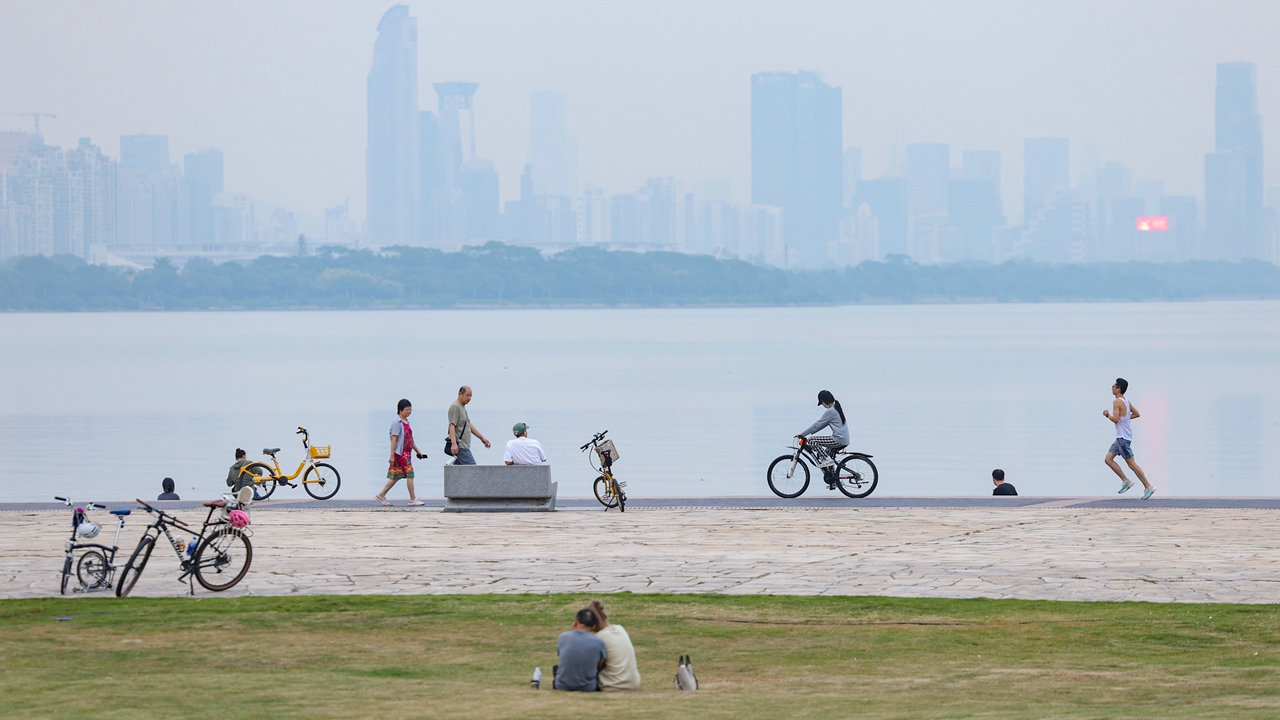
Residents enjoy a workout along the waterfront at Shenzhen Bay Park in Nanshan District. Xinhua
The document, released during a municipal press conference, is structured in six chapters and includes 19 case studies showcasing the city’s environmental initiatives.
Its release follows the APEC Ministerial Meeting on Forestry held in Shenzhen in July, a key event of the APEC “China Year” that brought high-level representatives from member economies to discuss forest conservation and sustainable management.
The white paper aims to provide a comprehensive overview of Shenzhen’s concepts, practices, and achievements in building a modern, beautiful city that balances urban development with nature, and to share Shenzhen’s experience and insights with the international community.
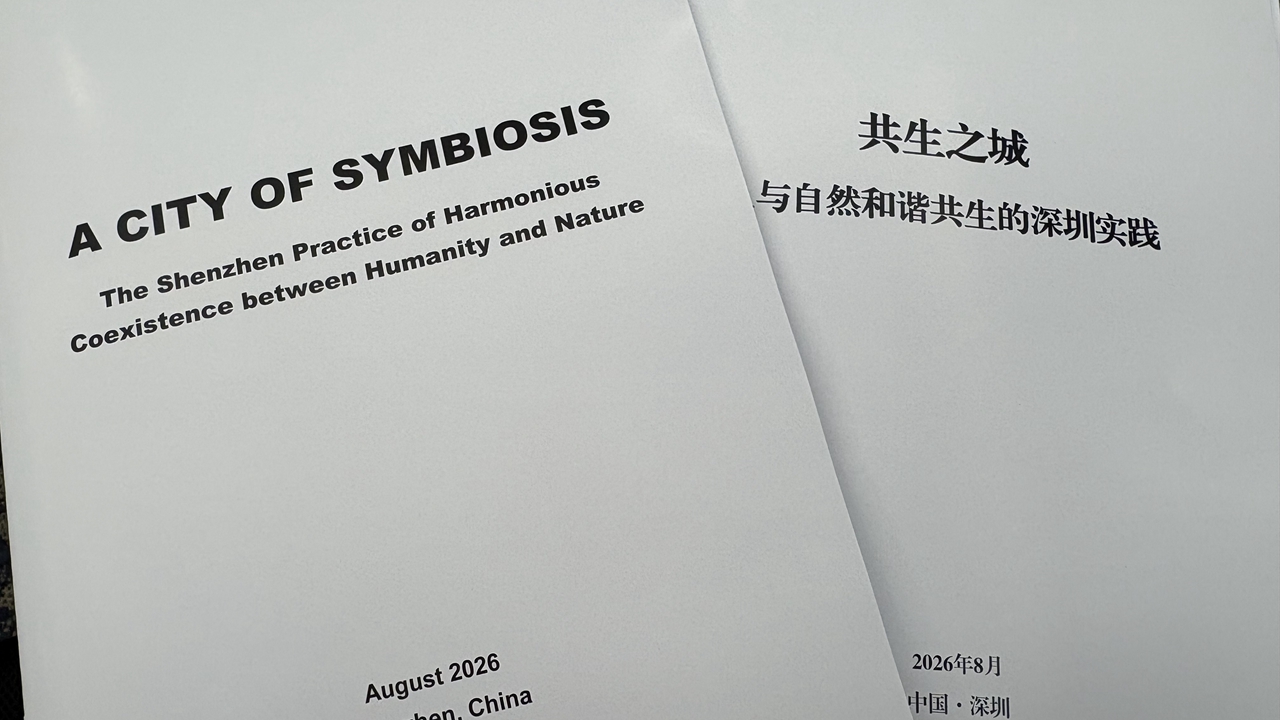
The white paper “A City of Symbiosis: Shenzhen’s Practice in Promoting Harmony Between Humanity and Nature,” released yesterday, outlines the city’s approach to ecological development in a densely populated metropolis. Zhang Yu
The city’s ecological strategy is rooted in a series of concrete actions. In the early 1990s, city planners famously rerouted a major coastal highway, the Binhai Boulevard, 200 to 260 meters northward to protect the mangroves in Futian District, the only national-level nature reserve located in the heart of a major city.
This act of “giving way to nature” set a precedent for subsequent policies, including the construction of the nation’s first large-span prefabricated composite wildlife crossing, the Kunpeng Trail No.1 Bridge, and the release of guidelines for bird-friendly urban planning and design.
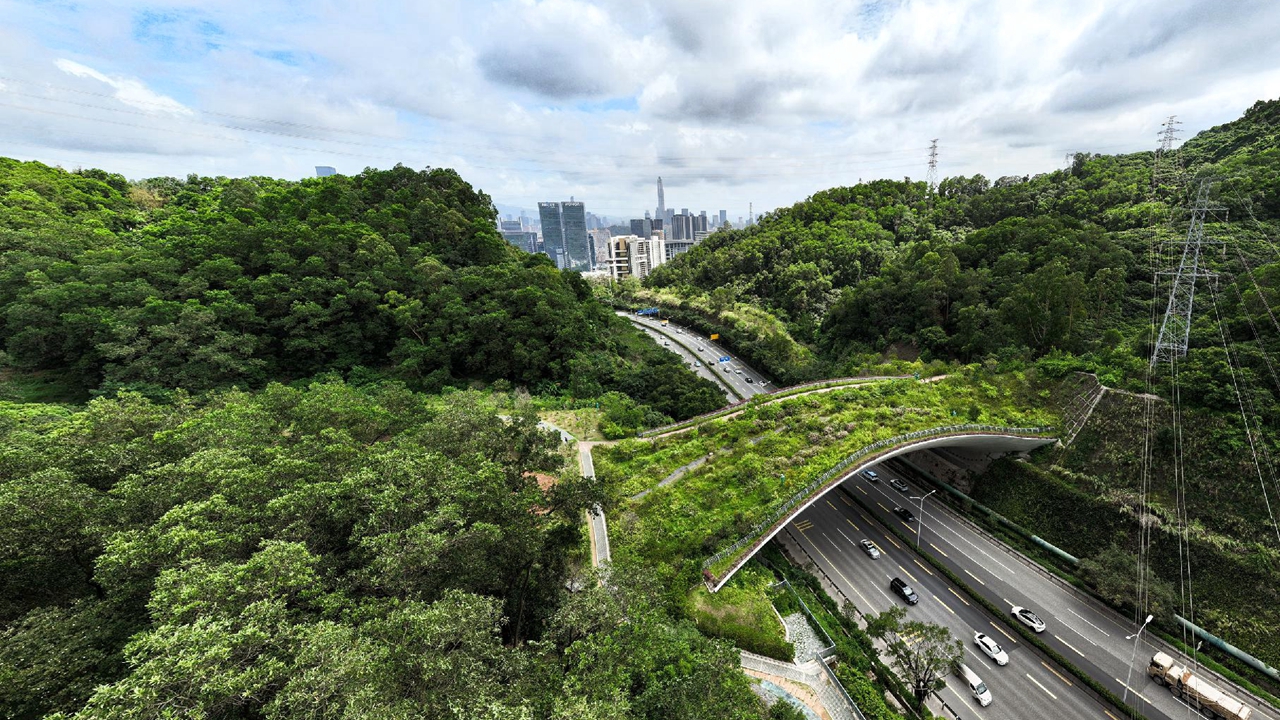
Kunpeng Trail No. 1 Bridge is China’s first large-span prefabricated composite wildlife crossing. Lu Ying
Shenzhen has since evolved into a “City of a Thousand Parks,” with over 1,350 parks and an extensive network of more than 4,000 kilometers of greenways and 1,000 kilometers of ecological corridors. The city has also pioneered ecological valuation mechanisms, facilitating the country’s first public auction of blue carbon credits from mangrove conservation.
The white paper was released after the secretariat of the International Mangrove Center was launched in Shenzhen this July.
The center, a global initiative proposed by China in 2022, officially entered its operational phase on July 26 with an inauguration ceremony and its first council meeting. With its secretariat now operational, the center aims to promote joint research and capacity-building programs to coordinate global mangrove conservation efforts.