
 Share
Share


 Print
PrintPedrosa's view of SZ's future through tech and nature
Writer: Jian Zhen | Editor: Lin Qiuying | From: Shenzhen Daily | Updated: 2026-08-03
Video by Zhao Xiaochen
Two months ago, Eduardo Pedrosa, Executive Director of the APEC Secretariat, caught a flying device as it gently landed in his palm at Shenzhen Bay Culture Plaza.
Two months later, a breeze swept through Shenzhen’s mangrove forests, where leaves swayed along the coastline — offering another perspective on the relationship between innovation and nature.
From a smart device designed to serve people, to a green ecosystem protecting the city, Pedrosa has been searching for the same answer during his visits to Shenzhen:
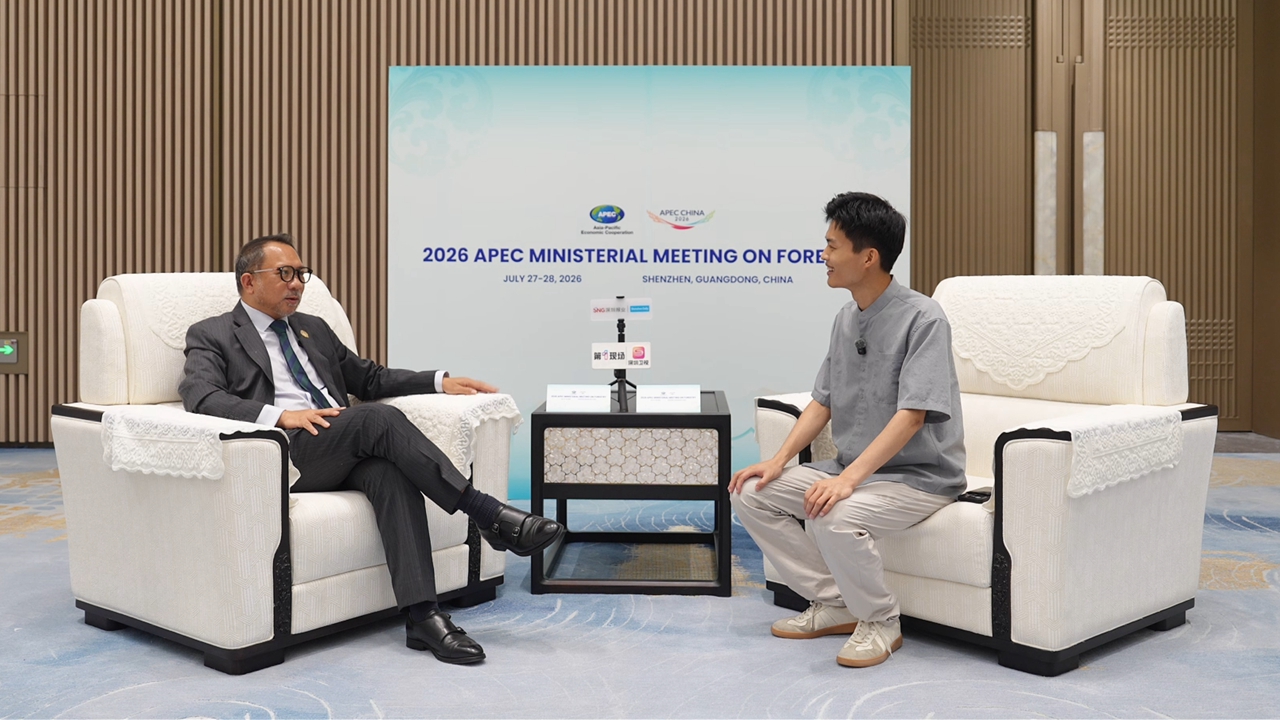
Eduardo Pedrosa (L), Executive Director of the APEC Secretariat, at an interview with Shenzhen Daily journalist Kyle Ma. Photos by Wang Haolan and Lin Jianping
The value of technology lies not in technology itself, but in how it improves lives, solves challenges and creates a more sustainable future.
From technology solutions to green development
For Pedrosa, forestry is not only an environmental issue, but also a shared challenge linking technology, industry and human development.
In a previous interview, Pedrosa shared his view that meaningful innovation should always start with people’s needs.
He noted that technologies such as digital finance and smart mobility create value not simply because they are advanced, but because they address real challenges in people’s daily lives. The same principle applies to the forestry sector, where technology should serve practical needs and help solve global environmental challenges.
At the APEC Ministerial Meeting on Forestry, he highlighted the role of innovation in addressing challenges such as illegal timber trade. He noted that technology can help trace timber sources, distinguish legal and illegal products, and strengthen certification systems.
“Technology and innovation can help us track what is legal, what is illegal, and how to certify,” he said.
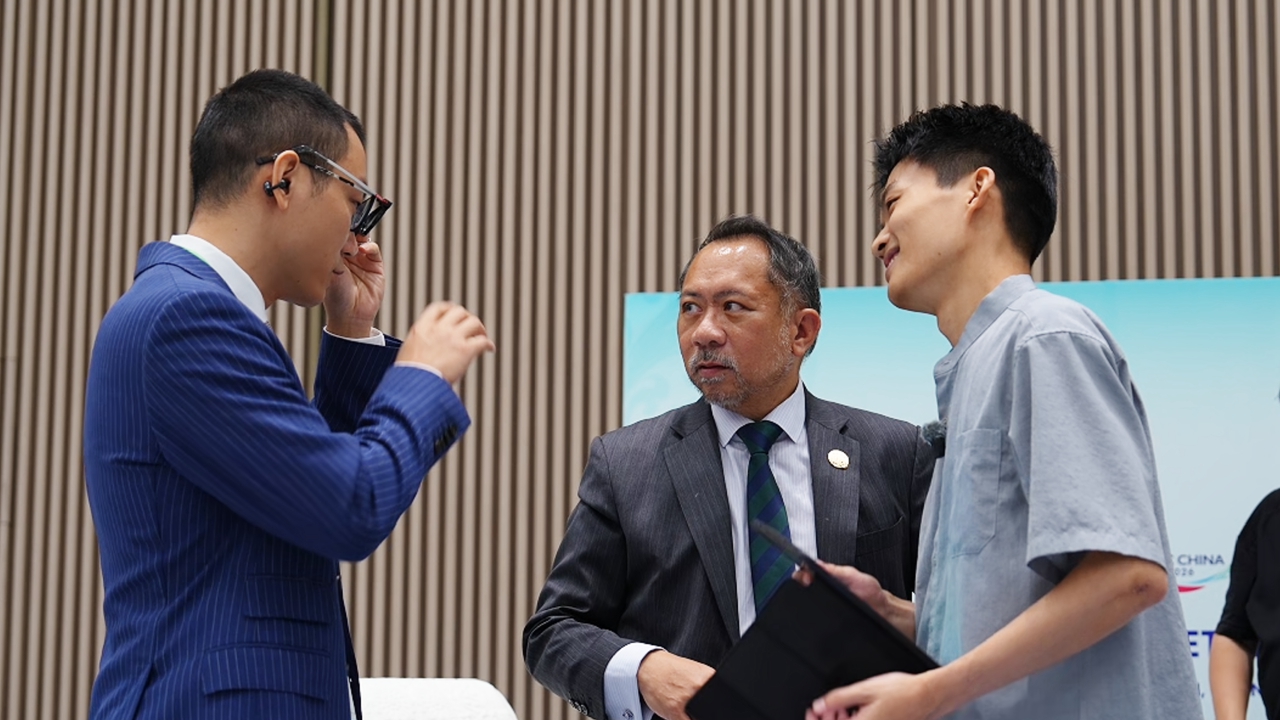 Pedrosa experiences a pair of smart glasses.
Pedrosa believes technology should not simply create advanced tools, but help people solve real-world problems.”
“Shenzhen, as an innovation hub, has rich experience in this area and can make further contributions,” he said.
He added that Shenzhen’s innovation capabilities can not only support its own development, but also provide references for other APEC economies pursuing green transformation.
Where innovation meets nature
Shenzhen has become an important window through which Pedrosa observes the relationship between urban development and ecological protection.
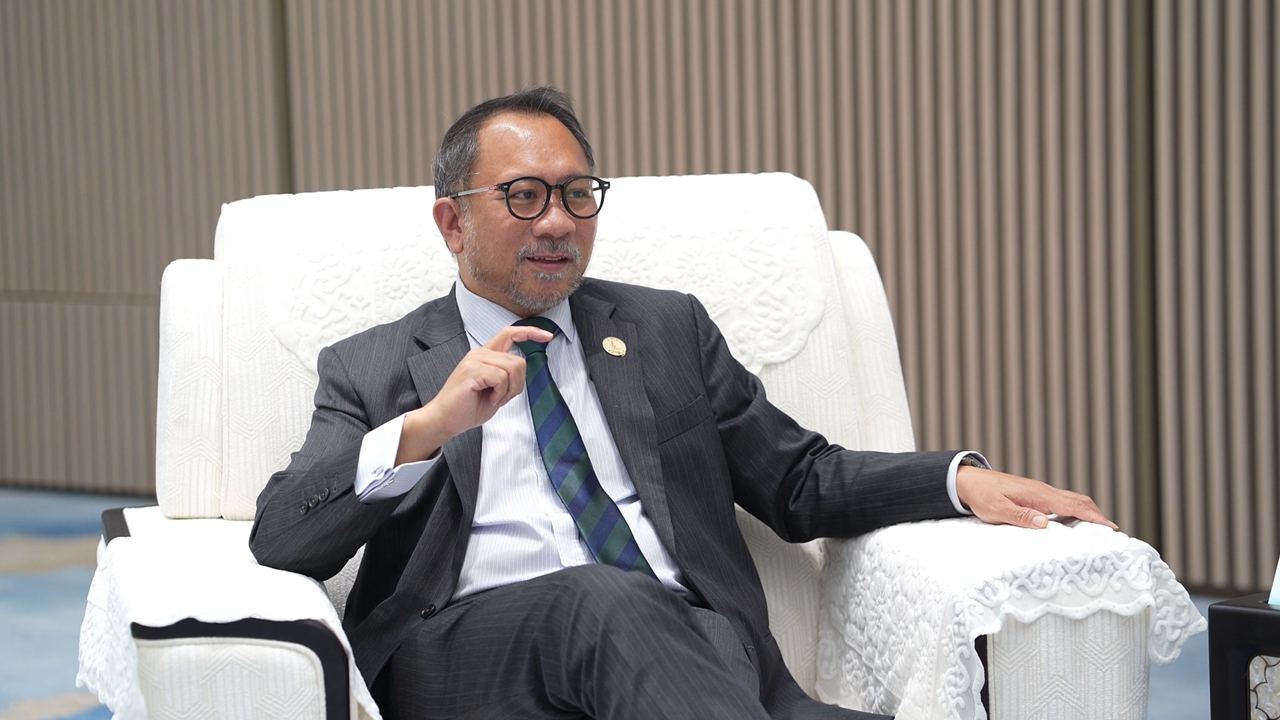
Pedrosa shares his views about technology and nature.
“Shenzhen’s development over the past 20 years has been impressive,” he said.
The city combines modern urban spaces with protected ecological areas, including mangrove forests. For Pedrosa, Shenzhen demonstrates that urban growth does not have to come at the expense of nature.
“We need to think about how, as we urbanize, we remain green and sustainable,” he said.
For many rapidly developing economies, balancing economic growth and environmental protection remains a shared challenge. Shenzhen offers one possible path: using innovation to drive sustainable development.
Connecting different solutions through cooperation
Pedrosa believes that neither technological innovation nor forest conservation can be achieved by one economy alone.
“APEC provides a platform for dialogue,” he said.
In his view, APEC’s role is not to create a single development model, but to connect different experiences and encourage cooperation.
Through his two visits to Shenzhen, Pedrosa has seen more than technological progress. He has seen how a city can use innovation to respond to real needs and build a stronger connection between people and nature.
Two months ago, a flying device landed in his palm.
Two months later, mangrove leaves moved with the sea breeze.
Together, these moments reflect Shenzhen’s vision for the future: a world where technology, cities and nature move forward together.