
 Share
Share


 Print
PrintIntl. Mangrove Center in Shenzhen begins operations
Writer: Song Yingwen | Editor: Lin Qiuying | From: Shenzhen Daily | Updated: 2026-07-27
The International Mangrove Center officially began operations in Shenzhen after holding its first council meeting and unveiling ceremony, marking the launch of the world’s first intergovernmental organization dedicated specifically to protecting and restoring mangrove ecosystems.
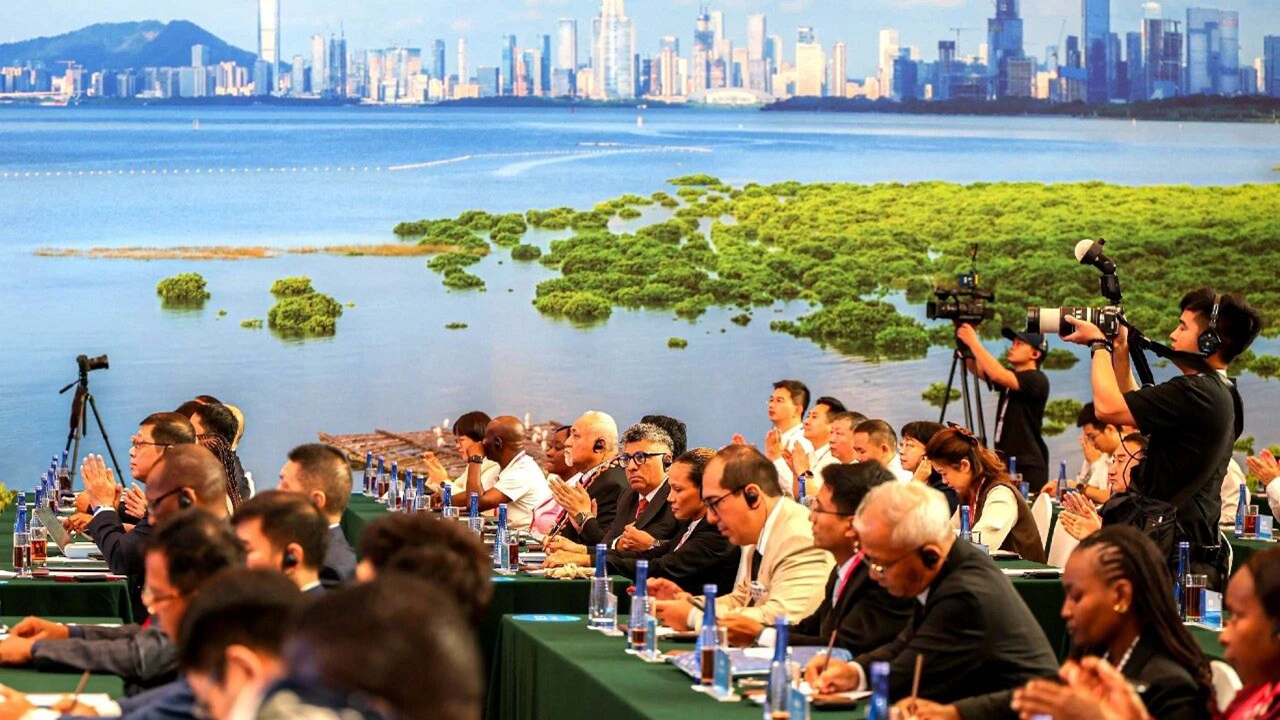
Delegates attend the first council meeting of the International Mangrove Center in Shenzhen yesterday. The meeting marked the official launch of the intergovernmental organization, which aims to strengthen international cooperation on mangrove conservation, restoration and sustainable development. Qin Yiwei, Lin Jiexing
Yesterday's ceremony on World Mangrove Day marked the transition of the center from an international initiative into a permanent institution that will coordinate cooperation among countries on mangrove conservation, scientific research and sustainable development.
The center was proposed by China in November 2022 during the 14th Meeting of the Conference of the Contracting Parties to the Ramsar Convention on Wetlands, with Shenzhen selected as its headquarters. In September 2023, the Convention on Wetlands recognized the initiative as a regional mechanism. An agreement to establish the center was signed by representatives of 18 countries in Shenzhen in November 2024 and officially took effect in June 2026.
The organization currently has eight member states and 13 signatory countries, representing major mangrove regions across Asia, Africa and the Americas.
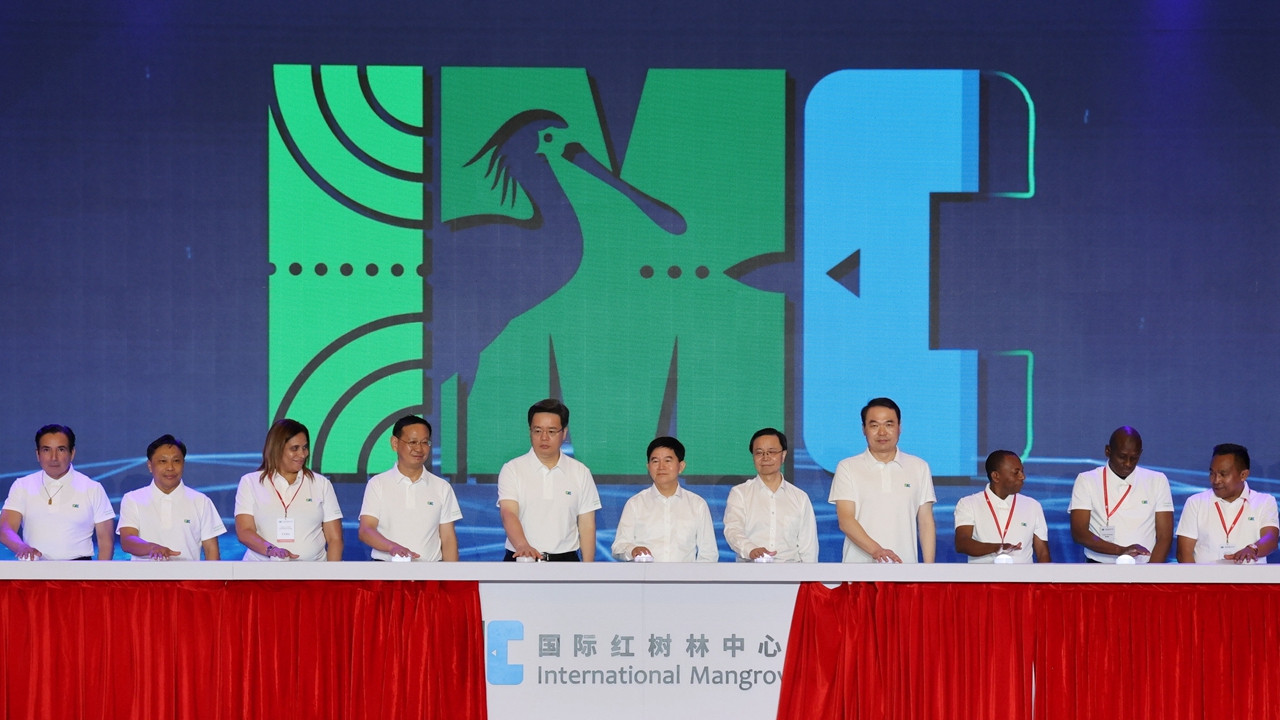
Representatives attend the unveiling ceremony of the International Mangrove Center in Shenzhen yesterday. Xinhua
At its inaugural council meeting, representatives approved the center’s strategic plan and operating rules, and appointed its secretary-general and deputy secretary-general. The center’s secretariat will be permanently based in Shenzhen.
Mangroves, often described as coastal “green shields,” play a crucial role in protecting shorelines from storms, supporting marine biodiversity and storing carbon. The new center will focus on sharing scientific knowledge, improving conservation practices and helping countries develop solutions for restoring and sustainably managing mangrove ecosystems.
During its preparation phase, the center conducted research on global mangrove resources and conservation challenges, with studies covering areas including blue carbon policies, ecological governance, community participation and financing mechanisms. It also hosted six international training programs, bringing together 137 participants from 30 countries.
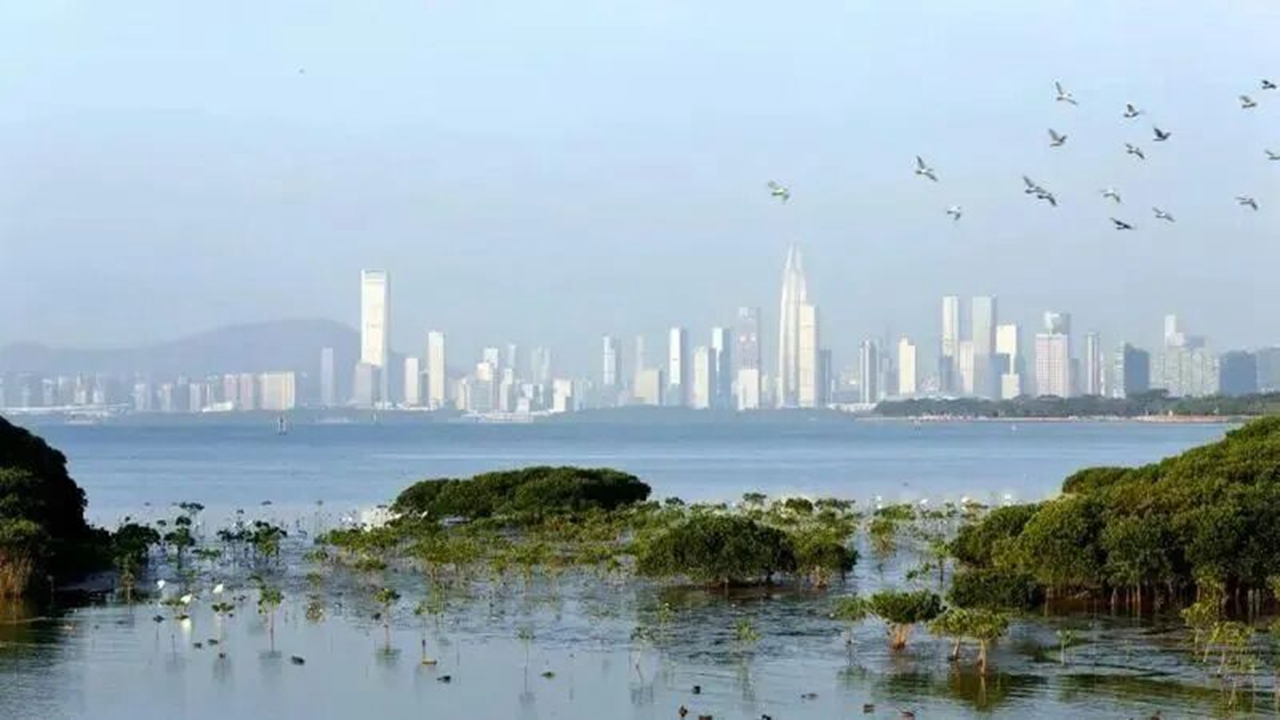
Mangrove forests line the coast of Futian, Shenzhen. Hu Liuliu
China has expanded its mangrove coverage to 31,700 hectares, a 44% increase from the beginning of the century, according to data released by Chinese authorities. The country is among the few nations worldwide to have achieved sustained growth in mangrove areas, following efforts including wetland protection legislation, conservation planning and restoration programs.
The Secretariat of the Convention on Wetlands praised China’s role in establishing the International Mangrove Center and said it would support cooperation between the center and participating countries.
Chinese officials said the center would work with member states to strengthen data sharing, joint research, technical training and demonstration projects, contributing to global efforts on biodiversity conservation, climate change response and sustainable development.
Representatives from participating countries said the center would provide a platform for policy dialogue, technology exchange and sharing of conservation experience, helping accelerate the protection and restoration of mangrove ecosystems worldwide.