
 Share
Share


 Print
PrintMilan delegation visits LICC
Writer: Jian Zhen | Editor: Lin Qiuying | From: Original | Updated: 2026-07-21
Standing inside the exhibition hall of the Longhua International Cooperation Center (LICC) in Shenzhen, Tommaso Sacchi, Councillor for Culture of Milan, was impressed by the center’s role in facilitating global exchanges and building connections between enterprises.
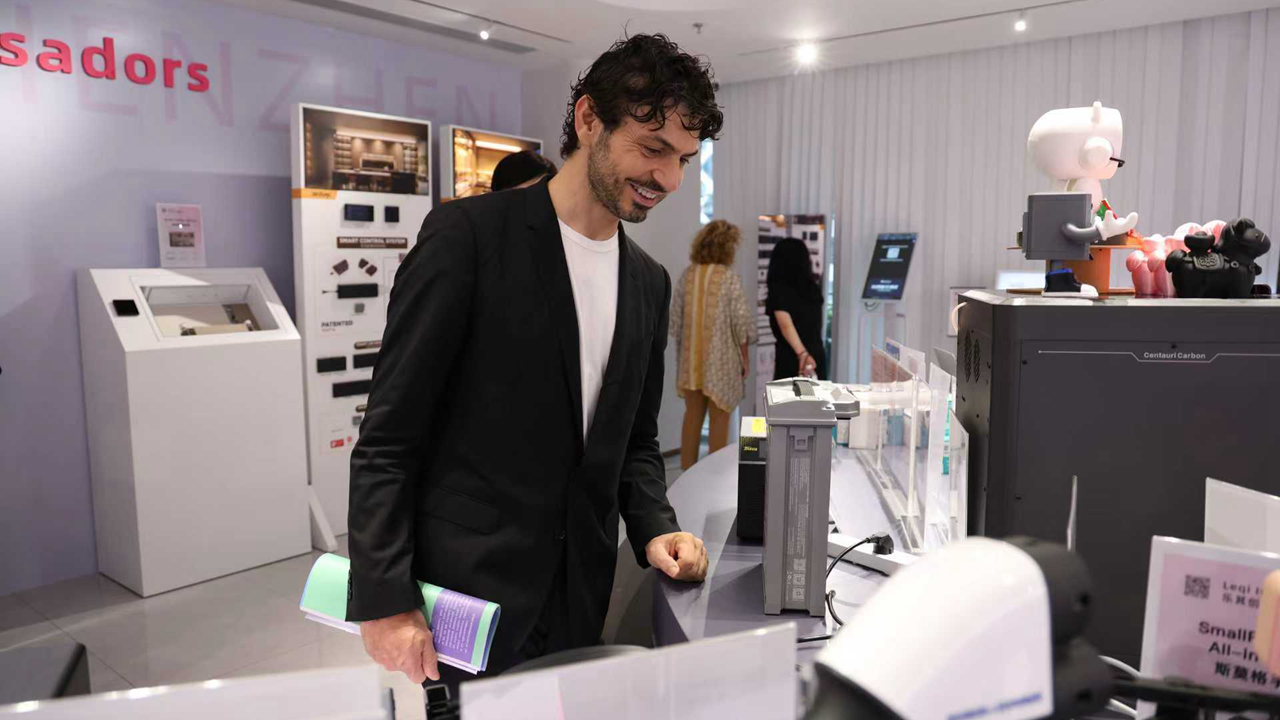
Tommaso Sacchi, Councilor for Culture of Milan, visits the Longhua International Cooperation Center. Photos courtesy of LICC
“Here, you can truly see how an international platform connects companies, industries and cities,” He said.
During the visit, the Milan delegation gained a deeper understanding of how LICC serves as a bridge between Longhua and the global market. The center connects local firms with international resources, fostering collaboration in technology, creativity, design and emerging industries.
A platform connecting Longhua with global opportunities
For Sacchi, one of the most impressive aspects of LICC was its ability to create connections between enterprises and international markets.
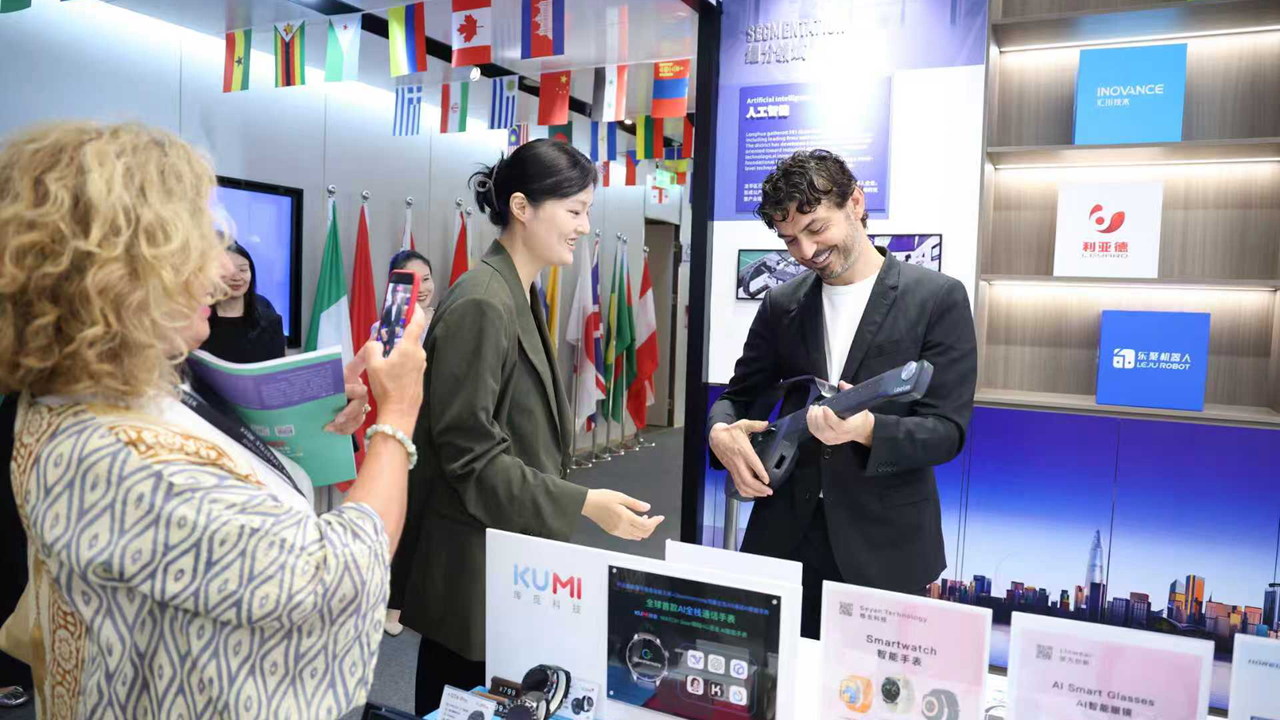
Tommaso Sacchi experiences a stringless guitar during his visit to the LICC.
“It is really interesting to see how the center facilitates trade and fosters relationships between companies,” Sacchi said.
He believes that platforms like LICC provide more than a space for exchanges—they offer a framework that helps enterprises grow and expand globally.
According to Sacchi, international cooperation platforms can help companies overcome geographical barriers, connect with overseas partners and explore new opportunities.
As an important international cooperation platform in Shenzhen, LICC has continued to strengthen connections between local enterprises and global resources. The center has established connections with more than 500 foreign-related business associations, building an extensive international cooperation network. Through business matchmaking, international exchanges and resource coordination, LICC helps enterprises better understand overseas markets while helping global partners to explore Shenzhen’s innovation ecosystem.
Sacchi said that this type of platform creates a foundation for deeper cooperation between cities.
From Milan’s creativity to Longhua’s innovation
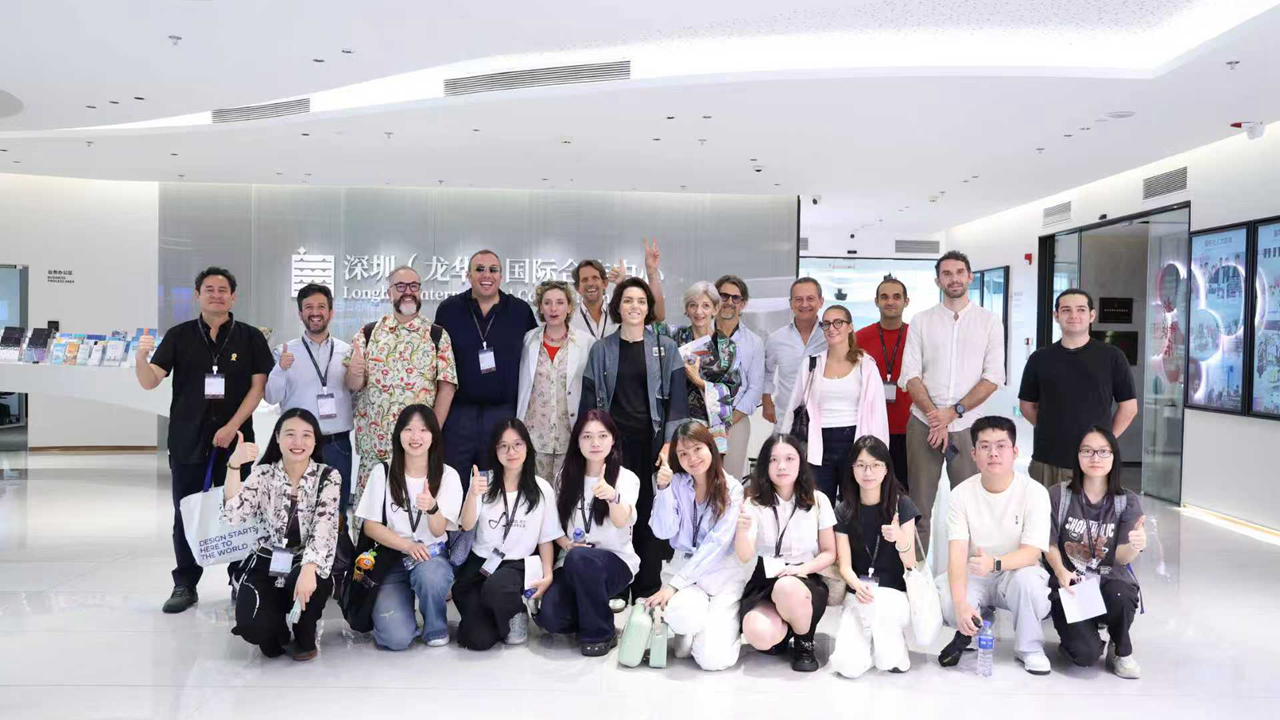
Members of the Milan delegation pose for a group photo with staff of the Longhua International Cooperation Center during their visit.
Beyond business connections, the visit also highlighted the complementary strengths between Milan and Longhua. Milan, widely recognized as Italy’s capital of design and fashion, has built global influence through its creativity, cultural heritage and design industries. Meanwhile, Longhua has become known for digital innovation, advanced technologies and emerging industries.
Sacchi believes the two sides can combine their strengths to find new ways to cooperate.
“Milan can bring to this part of the world some knowledge arising from our roots and history,” Sacchi said, referring to Milan’s experience in design and fashion.
At the same time, he noted that Longhua represents the future of digital technologies and innovation.
During the visit, Sacchi also learned more about Longhua’s technology industries, including digital applications, drone technology and innovative enterprises. He said cooperation between Milan and Longhua should focus on creating shared opportunities.
“We can try to develop a project that can be useful both for Italy and Milano and for Shenzhen and Longhua,” he said.
He described the exchange as an important step toward connecting “two cultures, two cities and two areas that are so relevant for the world.”
Building bridges for business connections
For Alessandro Cormio, creative director of Shenzhen Naturality Marketing Services Co., Ltd., international cooperation platforms provide valuable support for companies seeking global growth. Originally from Naples, Italy, Cormio has worked in international brand design and marketing for many years. After moving to Shenzhen, he founded Naturality Digital, helping Chinese companies develop international branding strategies and expand overseas.
He said one of the biggest challenges for companies entering new markets is understanding differences in culture, consumer habits and business environments.
“Companies cannot simply apply the same marketing methods from one country to another. The cultural backgrounds of people are different,” Cormio said.
Having worked with companies expanding overseas, Cormio believes platforms like LICC can help enterprises overcome these challenges.
“Many companies want to enter new markets, but they may not fully understand how those markets work,” he said. “A platform like this can provide education and connections, helping companies make better decisions.””
He added that LICC’s international network and cooperation resources can help companies find suitable partners and better prepare for overseas expansion.
From Milan’s creative industries to Longhua’s digital innovation ecosystem, the visit demonstrated how international cooperation platforms can bring together different strengths and create new possibilities. For the Milan delegation, LICC was more than a place to visit—it represented a gateway for future collaboration, where companies, ideas and opportunities can meet.